


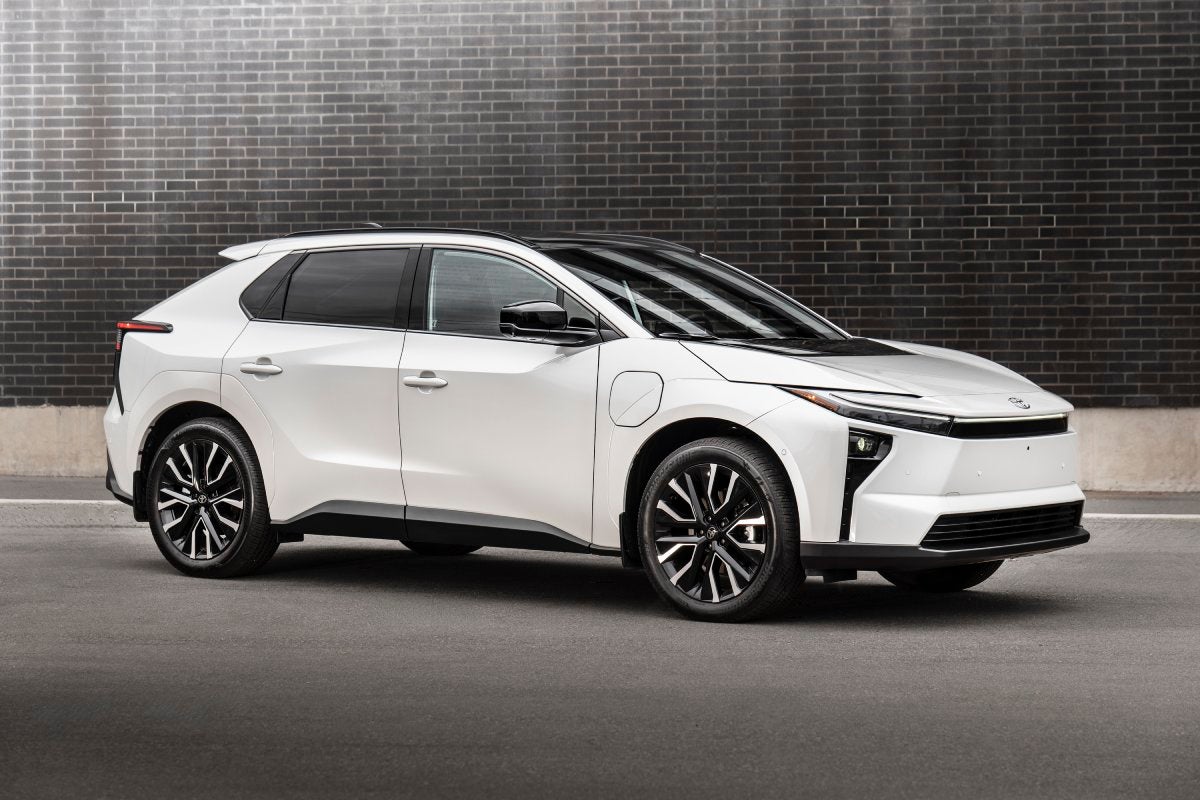
Compact electric SUVs have gotten a lot more interesting lately, and two of the more compelling options for Southern California drivers are the 2026 Toyota bZ and the Chevrolet Equinox EV. Both promise solid range, modern tech, and a reasonable price of entry into EV ownership. We've put together a side-by-side comparison that looks past the spec sheet and into what actually matters for daily driving around El Monte and the greater LA area. You can also browse our new Toyota bZ inventory while you read to see what's available right now.
2026 Toyota bZ vs. Chevrolet Equinox EV: Two Compact Electric SUVs, One Clear Winner
The 2026 Toyota bZ vs Chevrolet Equinox EV matchup comes down to a handful of real differences: how easily each one charges, how it actually performs day to day, what's built into the interior, and what ownership costs look like a few years down the road.
The Equinox EV wins on headline front-wheel-drive range, and we'll say that plainly. On price, though, the two are much closer than the advertised numbers suggest, and the bZ actually comes in lower once destination charges are counted on both sides. Add charging infrastructure, standard features, and Toyota's reliability reputation, and the bZ pulls ahead in the categories that matter most once you own the vehicle rather than just when you're shopping for it. We'll walk through each vehicle's strengths individually before getting into the head-to-head comparison that decides this one.
2026 Toyota bZ: Distinctive Features and Strengths
Toyota rebuilt the bZ from the ground up for 2026, fixing some of the shortcomings that held back the outgoing bZ4X. The lineup now spans three trims: XLE, XLE Plus, and Limited, with pricing from $36,350 for the XLE FWD up to $46,750 for a fully loaded Limited AWD. Toyota's own figures put the redesigned bZ at roughly 25% more range and 50% more power than the outgoing model, and the trim-by-trim numbers back that up.
Range, Efficiency, and Real-World Performance
The XLE FWD Plus leads the lineup at an EPA-estimated 314 miles, while the Limited FWD is rated at 299 miles, the XLE AWD reaches 288 miles, the Limited AWD comes in at 278 miles, and the base XLE FWD is rated at 236 miles.
Efficiency on the XLE FWD Plus checks in at 130 MPGe combined, or 144 city and 117 highway, the strongest rating in the lineup. Power ranges from 168 horsepower on the base XLE and 221 horsepower with a roughly 8.0-second 0-60 mph time on the XLE Plus, up to 338 horsepower and a 4.9-second sprint on any AWD model.
Real-world testing has been kind to the bZ. In one independent range test, an XLE FWD Plus covered 331 miles on a single charge, roughly 17 miles past its 314-mile EPA rating, while consuming about 23.3 kWh per 100 miles against an EPA estimate of 26. A standard heat pump and battery preconditioning on every trim are a big part of why the bZ holds its numbers together in everyday conditions. For anyone tired of watching an EV's range estimate collapse the moment the climate control kicks on, that's a welcome surprise.
Charging Speed and NACS Supercharger Access
The bZ ships with a native NACS port on every trim, meaning it plugs directly into Tesla Supercharger stations without an adapter. Toyota rates DC fast-charging at up to 150 kW, taking the battery from 10% to 80% in about 30 minutes under ideal conditions, and one independent test at a Tesla V3 Supercharger completed that same charge in 26 minutes. Pair that with a standard 11-kW onboard Level 2 charger that fills the pack in roughly seven hours at home, and the bZ covers both daily commuting and longer road trips without much friction.
For El Monte drivers heading out toward the desert or up the coast, being able to pull into a Supercharger without fumbling for an adapter is worth more than the spec sheet lets on.
2026 Chevrolet Equinox EV: Trim Lineup and Highlights
Chevrolet keeps the Equinox EV lineup simple with three trims: LT1, LT2, and RS. Pricing runs from $34,995 for the LT1 up to $44,095 for the RS before an $1,800 destination charge, which works out to $36,795 through $45,895 as delivered. GM built the Equinox EV on the battery architecture it originally branded Ultium, and the lineup delivers strong range figures right out of the gate, which has made it a popular choice among value-focused EV shoppers.
LT1, LT2, and RS Trim Overviews
The LT1 is the value play, with FWD and a 220-horsepower motor producing 243 lb-ft of torque and an EPA-estimated 319 miles of range, a figure shared by every front-wheel-drive trim in the lineup. Step up to LT2 or the sportier RS trim and you get the option of AWD with 300 horsepower and 355 lb-ft of torque, though range drops to 307 miles and 0-60 mph times land around 6 seconds.
Heated front seats aren't standard until the LT2 trim, and features like ventilated seats, heated rear seats, and a head-up display require the $3,100 Convenience Package II, an added cost worth factoring into any features comparison.
Pricing and Value: Which EV Delivers More for Your Money
The two are closer on price than the advertised figures suggest, because those figures aren't always measured the same way. Chevrolet's $34,995 LT1 price excludes an $1,800 destination charge, while Toyota's widely quoted $36,350 for the bZ XLE FWD already includes its $1,450 destination charge.
Line them up the same way and the bZ comes out ahead on both counts: $34,900 versus $34,995 on base MSRP, and $36,350 versus $36,795 as delivered. Step up to the XLE FWD Plus at $39,350 delivered and you get an EPA-estimated 314 miles, which keeps the bZ squarely competitive on price per mile of range against a $36,795 LT1, before any current Toyota incentives are applied.
Incentive amounts change month to month and vary by region, and the federal clean vehicle tax credit expired on September 30, 2025, so it no longer applies to new EV purchases. State, local, and utility programs may still be available depending on your situation, so we'd recommend confirming current numbers with our finance team before you buy. You can get pre-qualified online to see what your numbers look like before you ever step onto the lot.
Technology, Interior Comfort, and Everyday Livability
Inside, the Equinox EV brings a bigger footprint with a 17.7-inch touchscreen running Google built-in, but it drops both Apple CarPlay and Android Auto entirely, a gap that's likely to frustrate phone-first shoppers in this segment. The bZ's 14-inch touchscreen is smaller on paper, but every trim comes with standard wireless Apple CarPlay and Android Auto plus dual wireless phone chargers, so day-to-day connectivity clearly favors the Toyota.
Cargo space runs close between the two, and the bZ has the edge where most people actually use it. Toyota lists 27.7 cubic feet behind the rear seats against the Equinox EV's 26.4, and with the seats folded the two are effectively tied at 56.9 cubic feet for the bZ and 57.2 for the Chevy. The bZ measures 184.6 inches long, 73.2 inches wide, and 65 inches tall, with 8.2 inches of ground clearance against the Equinox EV's 6.4, which is a meaningful difference on steep driveways and rougher trailheads.
The Limited trim adds a panoramic glass roof, SofTex upholstery, ventilated front and heated rear seats, and a digital rearview mirror, features that come standard rather than bundled into an optional package. If you want to get a feel for the cabin before visiting us in person, our virtual test drive tool is a good place to start.
Safety, Reliability, and Warranty Confidence
Reliability comparison is where Toyota's reputation carries real weight. Consumer Reports rates the Equinox EV's predicted reliability as "Average," noting scattered 12-volt battery and charging issues. IIHS testing on the bZ shows a Good rating in the side-crash test, an Acceptable rating in small and moderate overlap front tests, and Good marks for front crash prevention systems and LATCH ease of use. As of April 2026, NHTSA and IIHS have not yet published crash-test results for this generation of the Equinox EV, so we can't compare that data directly, and we'd caution against assuming either outcome until results are released.
Warranty coverage is one area where the two are close but not identical. The bZ carries a 3-year/36,000-mile basic warranty, a 5-year/60,000-mile powertrain warranty, and an 8-year/100,000-mile battery warranty, plus 2 years or 25,000 miles of free scheduled maintenance and 2 years of roadside assistance. The Equinox EV matches the 8-year/100,000-mile coverage on its battery and EV components, so buyers get similar peace of mind on the parts that matter most for long-term EV ownership.
Side-by-Side Spec Comparison Table
For a quick side-by-side comparison, here's how the two lineups stack up on the specs that matter most:
Frequently Asked Questions
Which EV has more usable range, the bZ or Equinox EV?
The Equinox EV has the longest headline range at an EPA-estimated 319 miles across its front-wheel-drive trims, edging out the bZ's XLE FWD Plus at 314 miles. In practice the gap is small, and independent testing has seen an XLE FWD Plus beat its EPA figure and cover 331 miles on a charge, so the two land in similar territory in everyday driving.
Is the Toyota bZ more reliable than the Chevrolet Equinox EV?
It's difficult to say definitively, since Consumer Reports predicts about average reliability for the Equinox EV and hard 2026-specific data is still developing for both models. Toyota's broader track record for reliability across its lineup gives the bZ an edge in consumer confidence, and the bZ builds on a battery and drivetrain architecture Toyota has been refining in this segment since 2022.
Which SUV charges faster on road trips?
The bZ has a practical advantage here because every trim uses a native NACS port that plugs directly into Tesla Superchargers, with independent testing showing a 10-80% charge in as little as 26 minutes. The 2026 Equinox EV uses a CCS1 port and needs a separately purchased adapter to reach the same Supercharger network. Chevrolet is adding a native NACS port for the 2027 model year, so anyone shopping current 2026 inventory should budget for the adapter.
The Verdict: Why the 2026 Toyota bZ Comes Out on Top at Longo Toyota
When we look at the full 2026 Toyota bZ vs Chevrolet Equinox EV comparison, the Equinox EV genuinely wins on headline FWD range, and we think shoppers deserve to know that upfront. On price the bZ actually starts lower once destination is counted on both sides, and it pulls further ahead with native NACS charging, standard wireless Apple CarPlay and Android Auto, more cargo room behind the rear seats, more ground clearance, real-world range that holds up under actual driving conditions, and Toyota's long-standing reliability reputation. Add those up and you get a stronger overall ownership experience, especially for anyone doing regular road trips out of Southern California.
Visit Us in El Monte, CA
As the world's largest Toyota dealership, we carry the inventory and service capacity to back that up, whether you're comparing trims, weighing financing options, or just want to sit in both vehicles before deciding. Stop by our showroom in El Monte, take the bZ for a spin, and contact our team when you're ready to talk numbers. We're here seven days a week to help you make the right call.