

Longo Toyota

#1 in the World since 1967*

Based on Toyota Motor Sales, USA 2025 Sales Report*
Based on Toyota Motor Sales, USA 2023 Sales Report*
Blog / Service

How To Change Your Toyota Air Filter

Toyota Air Filter replacement

It's essential to perform routine maintenance on your Toyota to keep it running at its peak. That includes oil changes, tire rotations, brake service, and more. However, replacing the cabin air filter is one of the most commonly overlooked maintenance items.

Every Toyota built in the last two decades has a cabin air filter. When the cabin air filter gets dirty, it restricts clean air from entering the cabin. Your cabin air filter removes road dust, pollen, spores, and soot from entering the cabin. As a result, you breathe in fewer contaminants, and your car smells fresh.

 In addition to affecting the air quality you breathe, the filter also prevents the defroster, cooling, and heating systems from operating correctly. So, to keep these systems running at their peak and prevent unwanted odors, we recommend changing your cabin air filter at least every 15,000 miles. 

Your owner's manual has the exact interval. However, your driving habits and the environment can affect how often you need to change the filter.

Tools You Need To Change Your Cabin Air Filter

We recommend you always wear protective eyewear when working on your Toyota. For this job, your protective glasses will help keep dirt and dust from entering your eyes as you work. We also suggest a pair of latex or similar material gloves. These protect your hands from getting dirty while keeping the dexterity in your fingertips. You'll only need a screwdriver, most likely a Phillips head or cross point.

And, of course, you'll want the new cabin air filter. You can find replacement filters at most chain auto parts stores. However, these stores often use aftermarket air filters, which we don't recommend. We strongly suggest you use genuine original equipment manufacturer (OEM) Toyota parts for all your maintenance and repair needs. 

Aftermarket parts only need to fit right and work to earn the label. These manufacturers aren't held to the high standards as OEM parts manufacturers. You can consider an OEM part to be the exact same part used when your Toyota was first built. It's made from the same materials, works to the precise standard, and is precisely the same size as the original. So, you can count on OEM parts to fit right, work properly, and last longer than parts produced by third-party manufacturers.

Longo Toyota's parts department has an expansive inventory of cabin air filters at competitive prices. You can order your filter online, and we'll have it ready when you arrive. Once you have what you need, you're ready to begin.

Step 1: Remove the Glove Box Pin

Most cabin air filters sit behind the glove box. We recommend emptying the glove box before you begin to prevent it from spilling its contents when you remove it. Next, locate the pin on the outside of the glove box. Use your screwdriver to remove the screw holding the pin in. Then, simply slip the pin out of the hole on the screw arm. Make sure you put the screw someplace safe.

Step 2: Lower the Glove Box

Some glove boxes have a band that prevents the glove box from falling when you remove the pin. If you see a band, remove it and put it next to your screw. Next, you'll need to gently squeeze both sides of your glove box to the inside. This will remove the tabs from the grooves that the glove box uses to slide open and closed. 

Your glove box will hang from its hinges at this point, so be careful not to push down on it and risk damaging the hinges. You should see the side of your cabin air filter fit snugly in its slot.

Step 3: Remove the Old Cabin Air Filter

Your cabin air filter is held in place by a cover panel. Squeeze tabs are found on either side of the panel to remove it. Once you remove the cover, gently pull out the old air filter. Be sure to note the airflow directional arrow, and remember, your old filter is likely filled with dust and debris. Your glasses will come in handy now.

Step 4: Clean the Filter Housing

If you have a vacuum cleaner with an attachment to reach small places, we recommend you use it to clean the filter housing. However, a damp cloth with a gentle cleaner will also do the job. 

Step 5: Insert the New Cabin Air Filter

Before inserting the new cabin air filter, confirm the airflow direction is correct. Be gentle. Your cabin air filter is delicate, and you don't want to rip or break it. Once you have it in place, you can replace the cover panel.

Step 6: Put the Glove Box Back in Place

The next step is steps 1 and 2 in reverse. Raise the glove box and squeeze the sides to put the tabs back in their grooves. If you removed a band, put it back on now. Then, you need to return the pin and secure it with the screw. Now it's safe to return the contents of your glove box.

Congratulations. You're done.

Can I Get Professional Help To Change My Cabin Air Filter?

At Longo Toyota, we know not everyone has the time or inclination to perform maintenance at home. Even a simple job such as changing your cabin air filter can present problems. Parts can break, screws can get lost, etc. If you don't feel like changing your cabin air filter at home, we can help. 

Our service center technicians have the training and experience to change your cabin air filter quickly and for much less than you might imagine. In most cases, we can perform this service during your routine oil change or tire rotation without adding time to your visit.

Schedule Your Cabin Air Filter Service in El Monte, California

If you can't recall the last time you had your cabin air filter changed, it's probably time to do so. Even if you don't detect funky odors, your Toyota systems may not be operating at their peak. We invite you to schedule a service online. Pick a day and time that works for you, and let us handle the rest.

Cabin Air Filter Change by Ryan Gsell is licensed with CC BY 2.0

Posted in:

Related Posts

2025 Toyota Corolla

The Secret to The Toyota Corolla's Legendary Reliability

The Toyota Corolla has built its rock-solid reputation as a dependability champion through years of proven performance and satisfied owners. This car consistently tops reliability charts, making it perfect for El Monte drivers who'd rather skip flashy bells and whistles in favor of a ride that just works. At Longo Toyota, we'll explore the factory methods, engineering, and real-life statistics that explain why Toyota Corollas are reliable and continue to set the bar in 2025. more The Philosophy Behind Toyota's Reliability Toyota's reliability comes from its Toyota Production System (TPS), a manufacturing methodology that prioritizes quality through continuous improvement and rigorous checks, which is inspired by the Japanese philosophy known as Kaizen. TPS is based on two pillars: Just-in-Time production (manufacturing at a pace that meets only the immediate needs, thereby reducing excess and waste) and Jidoka (smart automation with human oversight for quality control). This combination allows Toyota to efficiently and effectively build top-quality cars. Toyota has also chosen to stick with proven methods instead of chasing tech and flashy marketing. It makes careful, incremental improvements rather than complete overhauls, a strategy that has delivered results, with J.D. Power ranking Toyota third out of 29 car brands for overall dependability. Core Engineering Features That Make Corollas Last The Corolla's longevity starts with a straightforward engine. There's one choice: a 2.0-liter four-cylinder engine that produces 169 horsepower and 151 pound-feet of torque. It's not as powerful as some other engines, but it's built to last, not win races. The Corolla's front-wheel drive with a continuously variable automatic transmission is a simple setup, but this means there are fewer things to break. Toyota engines typically last around 200,000 miles and often reach beyond 300,000 miles before needing major work. Toyota's careful approach shows throughout the Corolla. Parts are built tougher than needed — a buffer that other carmakers often skip to save money or boost performance statistics. The suspension and frame contribute to long-term strength, while electrical systems keep working year after year. Real-World Reliability Data: What the Statistics Show The Corolla's reliability isn't just talk. Hard facts show its dependability, with the 2022 model scoring 85 out of 100 from J.D. Power and winning the Compact Car award in J.D. Power's 2025 Vehicle Dependability Study. Consumer Reports expects the 2025 Corolla to beat most new cars in reliability, while RepairPal ranks the Toyota Corolla first among 36 compact cars with a reliability rating of 4.5 out of 5 stars. Both the National Highway Traffic Safety Administration and the Insurance Institute for Highway Safety gave the 2025 Corolla high safety marks. The Toyota brand backs up the Corolla's success. Consumer Reports’ 2025 rankings place Toyota third for reliability, just behind Subaru and Lexus. J.D. Power ranks it third in the mass market with 162 problems per 100 vehicles, just behind Lexus (140) and Buick (143). Resale and trade-in values for the Corolla also speak to its reliability. CarEdge ranks the Toyota Corolla first for the lowest five-year depreciation, and Kelly Blue Book describes the 2025 model's resale value as “enviable.” Most and Least Reliable Corolla Model Years (2015-2025) Some Corolla years shine brighter than others. The 2015 models stand out as exceptional performers with nicer interiors, roomier cabins, improved legroom, and upgraded materials. For newer options, 2018-2021 Corollas offer modern features and advanced safety. Consumer Reports picks the 2019 model as a top used car choice, featuring adult-friendly back seats, the Toyota Safety Sense P system, and a combined fuel economy of 32 mpg. Not all years hit the same notes. The 2014 Corolla experienced interior rattles, wobbly dashboard pieces, and airbag issues. This year sticks out as a rare miss in Corolla's normally strong track record. Common Problems and How Toyota Addresses Them Even reliable cars such as the Corolla face occasional hiccups. Some 2024 owners report infotainment issues, including slow startup times, poor Bluetooth connections, and random music playback. Other reported issues include trouble with the exhaust system parts (muffler, pipes, catalytic converter) and with engine and transmission behavior. Toyota tackles these issues through software updates and factory improvements. It typically addresses problems promptly via service bulletins, recalls when needed, and design tweaks in later model years. This quick response to fixing things helps maintain its strong reputation for reliability. It's not about never having problems — it's about solving them properly when they happen. Maintenance Requirements That Support Long-Term Reliability Proper care helps Corollas reach impressive mileage numbers. A well-maintained Toyota Corolla can run for 250,000 to 300,000 miles, with many owners keeping them for 15 years or more. Toyota's recommended maintenance schedule includes tire rotations every 5,000 miles, oil changes every 10,000 miles, and replacement of the cabin and engine air filters every 30,000 miles. Experience the Toyota Corolla's Reliability Today If you're looking for dependable transportation in El Monte, the Toyota Corolla's careful engineering and proven track record stand out, making it a solid choice. Experience Toyota's legendary reliability and visit us at Longo Toyota to see our Corolla lineup and discover why drivers trust these cars year after year.

Toyota Key Fob Battery Changes

How to Change Your Key Fob Battery

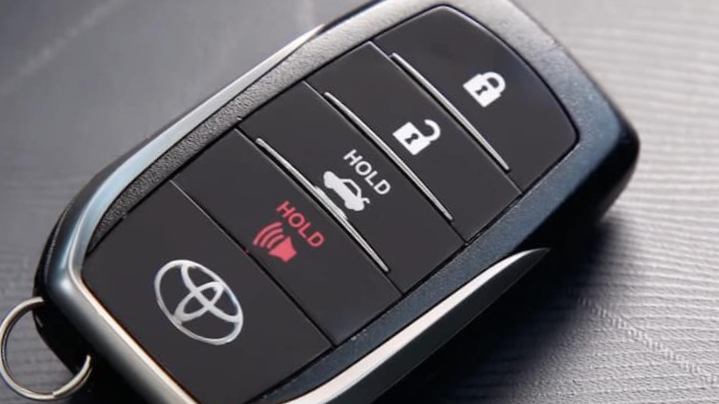
Do you remember the good old days when car keys were simple, flat metal pieces with notches on them? Nowadays, almost every car comes standard with a keyless remote that makes locking and unlocking your car doors effortless. You don't have to fiddle with a key to open the door or turn on the ignition. It's also much more secure than traditional car keys. It's amazing how far we've come, right? This keyless remote, also called a key fob, contains a radio frequency identification (RFID) chip and antenna, which uses radio frequencies to connect with the car's locking system. Compared to their archaic counterparts, these keys are super futuristic and incredibly convenient until you have a dead battery. You might find yourself suddenly stranded and unable to get into your car. Luckily for you, Longo Toyota in El Monte, California, offers service solutions for Toyota key fob battery replacement or any other vehicle issues you may be experiencing. But if you're the hands-on type, read our step-by-step guide below for how to replace your Toyota key fob battery from the comfort of your home. more How To Replace Your Toyota's Key Fob Battery Knowing how to replace a key fob battery in a pinch is crucial. Luckily, the process is relatively simple. Here's how to do it: Follow Our Video Guide We recoded the process of replacing your battery step-by-step here, but if you aren't able to watch the video, or if you prefer written instructions, feel free to follow our guide below. Remove the Metal Emergency Key From the Key Fob The first step is to locate and pull out the metal key tucked away in the key fob. To do this, press the small metal button at the top of the fob to release the key. Pull out the key and set it aside. Open the Key Fob Next, take apart the key fob to access the battery. For newer Toyotas, this involves using the hidden key blade to open the case, which conveniently fits right into the rectangular slot. If you have an earlier model Toyota, you'll need to pry open the fob using a flat-head screwdriver or something similar. Insert the screwdriver or flat tool into the little visible notch on the case and turn it to pop open the fob. Access the Battery Compartment Once the key fob is open, you'll see a green rectangular circuit board. To access the dead battery underneath, lift the circuit board or remove it altogether. Be sure to do this carefully, as you don't want to damage any of the key fob's internal components; if you do, you may need to replace the entire fob. Determine the Kind of Key Fob Battery You Need Before shopping for a replacement battery, note the kind of battery your key fob uses and how it sits in the case. You may want to take a photo of the battery, as you can easily reference the image when shopping or reassembling the fob. Most Toyota key fobs use a CR2032 battery, which you can find online and at most big-box retailers. Another way to determine the battery type your Toyota vehicle requires is to read the owners manual. The manual should provide detailed information on what battery type to use and how to replace it properly. Ensure you're buying the correct type and size, or it may not work. Replace the Dead Battery Once you have the replacement battery, you can remove the old one from the key fob. Carefully insert the new battery into the same position, keeping the battery name visible to you. Once it's in place, put the circuit board back over the new battery and snap both pieces of the key fob together. That's it; your key fob should work again. Test the Key Fob After resealing the fob, you'll want to test it to ensure everything works properly. Try unlocking and locking your car door. Open the trunk and test the alarm to ensure it works. If everything is working correctly, congratulations; you've successfully replaced the battery in your Toyota key fob. If it doesn't respond to your commands, reopen it to double-check that you fully inserted the battery into the correct position and that the circuit board is in the right place, as this can indicate if replacing the battery solved the issue or if the remote doesn't work. Signs You Need To Replace the Key Fob Battery It's easy to overlook that the key fob runs on a small battery. And like any other battery, its life span is limited. To avoid being stranded with a key fob that suddenly stops working, watch for signs that your Toyota's key fob battery is running low. Some indicators that you may need to replace the battery in the key fob include the following: You notice reduced signal strength: Generally, modern key fobs can send a signal to a vehicle within a range of 50 feet. If your keyless remote doesn't unlock or lock the car or start the engine as effectively as it should, it's probably time to replace the battery. The light on the key fob is dimmer: Like other battery-powered devices, the light on your key fob will get dimmer when the battery is low. Pay attention to the device's light and ensure you get a new battery if the illumination appears to be fading or growing dimmer. The key fob is sluggish: Although it's easy to overlook, if you feel a slight delay between pressing the button on the key fob and the device responding, it's probably time to replace the battery. A well-functioning key fob should unlock or lock your car with a single press. What Should You Do if Your Toyota Key Fob Is Inoperable? If the key fob isn't responding to your commands and you've tried replacing the battery without success, it may be time to replace the entire fob, especially if it's damaged or cracked. Longo Toyota can help. We offer a variety of genuine original equipment manufacturer (OEM) key fobs for all Toyota makes and models. Our certified service technicians will happily program and install the new key fob for you. Contact us or visit Longo Toyota's state-of-the-art service center to learn more about our key fob and battery replacement services or to ask about our vast selection of used SUVs for sale! Car Keys on White Surface by Brett Jordan is licensed with Pexels License

How Long do Brakes Last on Toyotas?

How Long Do Brake Pads Last?

A well-maintained braking system is critical to keep you, your fellow passengers, and other motorists on the road safe. Brake pads wear down over time and typically need replacing after two or three years of driving. If you fail to replace them in time, you can cause damage to other components and risk an accident due to poor braking performance. Here at Longo Toyota, our professional service team handles brake maintenance jobs daily. We've put together a guide based on some of the most common questions we get asked about brakes. more What Are Brake Pads? Brake pads are usually made from organic or ceramic material. When you hit the brake pedal, they squeeze against your vehicle's brake discs to bring your car to a swift stop. Vehicles using drum brakes have a slightly different braking mechanism, and the pads are known as brake shoes. Whether your Toyota has brake pads or shoes, they'll wear down over time and require replacing. How Can You Tell When Brake Pads Need Replacing? Most modern brake pads have a built-in mechanism to alert you when it's time to replace them. It consists of a thin metal strip located inside the pad. When the pad wears down to a certain point, the thin metal strip is exposed to the brake disc, causing a squealing sound when you hit the brakes. Your pads will still be thick enough to work for a short while afterward, giving you adequate time to book a service appointment. Keep in mind that there may be other reasons why your brakes are squeaking. For instance, brakes often squeal after a rainstorm due to moisture. If they only squeal two or three times, you don't need to worry about the condition of your pads. If you miss or ignore the built-in warning sound, you may hear a grinding or growling sound when you brake. This sound suggests that the metal backing plates are scraping directly against the brake disc. In this case, urgent action is needed to prevent severe damage to brake components that can be quite expensive to replace. Other symptoms of worn brake pads could be if your vehicle pulls to one side when you brake. You may also notice that your vehicle takes longer than usual to come to a stop. An alternative to looking out for these warning signs is to inspect the thickness of your brake pads regularly. This task can take some time since you may need to remove your vehicle's wheels. You can then look down to see the brake pad in the caliper. If it's less than a quarter-inch thick, it's time to make an appointment to get replacement pads fitted. When Do Brake Pads Need Replacing? Brake pads usually last anywhere from two to three years, and your driving habits can greatly impact their life span. For example, some drivers accelerate unnecessarily and slam on their brakes when they reach a red light or get caught in traffic. These habits will result in your pads suffering considerable wear and tear. They're much more likely to last longer if you drive at a modest speed on city roads, meaning you can use your brakes more sparingly when you need to come to a stop. The life span can also be affected by the type of material the pads are made from or the type of vehicle you drive. For instance, high-performance sports brake pads are designed to cope with high speeds better than standard brake pads, so they should wear and tear less rapidly. What Other Brake Components Require Maintenance? In addition to your brake pads, your rotors will eventually require replacing. These components tend to last longer. Their life span ranges from 50,000 to 70,000 miles, approximately four to six years for the average driver. How well you look after your pads will affect the life span of your rotors since poorly maintained brake pads can damage them. When you hit the brake pedal, fluid travels through your brake cables to apply the necessary pressure to bring your Toyota to a stop. Over time, the fluid can get contaminated due to wearing parts or debris from an external source. Your cables can also become damaged or blocked by air. To guard against these problems, your fluid should be flushed occasionally during a regular maintenance check-up, and your cables should be inspected. The most effective way to keep on top of any problems with your brakes is to have your braking system regularly inspected by a service professional. We can do that for you here at Longo Toyota as part of our multipoint inspection. These inspections allow us to look at the most important parts of your car during each maintenance visit to ensure they're in good working order. How Should I Choose Replacement Brake Pads? You can get a recommendation for the best brake pads for your Toyota by consulting your owner's manual. The recommendation may be the same original equipment manufacturer (OEM) brake pads originally put into the vehicle in the factory. If you can't find your owner's manual, one of our Toyota experts can advise you which brake pads to buy from our well-stocked parts department. If you drive a large vehicle, such as a Tundra pickup, you may require heavy-duty brake pads. Sports car drivers may prefer high-performance brake pads, while most crossovers, such as the Highlander or RAV4, can manage just fine with a standard-designed brake pad. Ready to Get Your Brakes Checked in El Monte? Now that you know more about the importance of brake maintenance and when to change your brake pads, why not reserve an appointment at our service center in El Monte, California? You can choose a time to fit your busy schedule or drop by our dealership during opening hours. If you have questions about brake pad replacements or want to buy OEM pads at an affordable price, our parts team is on hand to help. Feel free to contact us today with any questions about your brakes or other maintenance issues.