


Longo Toyota

#1 in the World since 1967*

Based on Toyota Motor Sales, USA 2025 Sales Report*
Based on Toyota Motor Sales, USA 2023 Sales Report*
Blog / New Inventory

Which Is the Best Toyota Plug-In Hybrid?

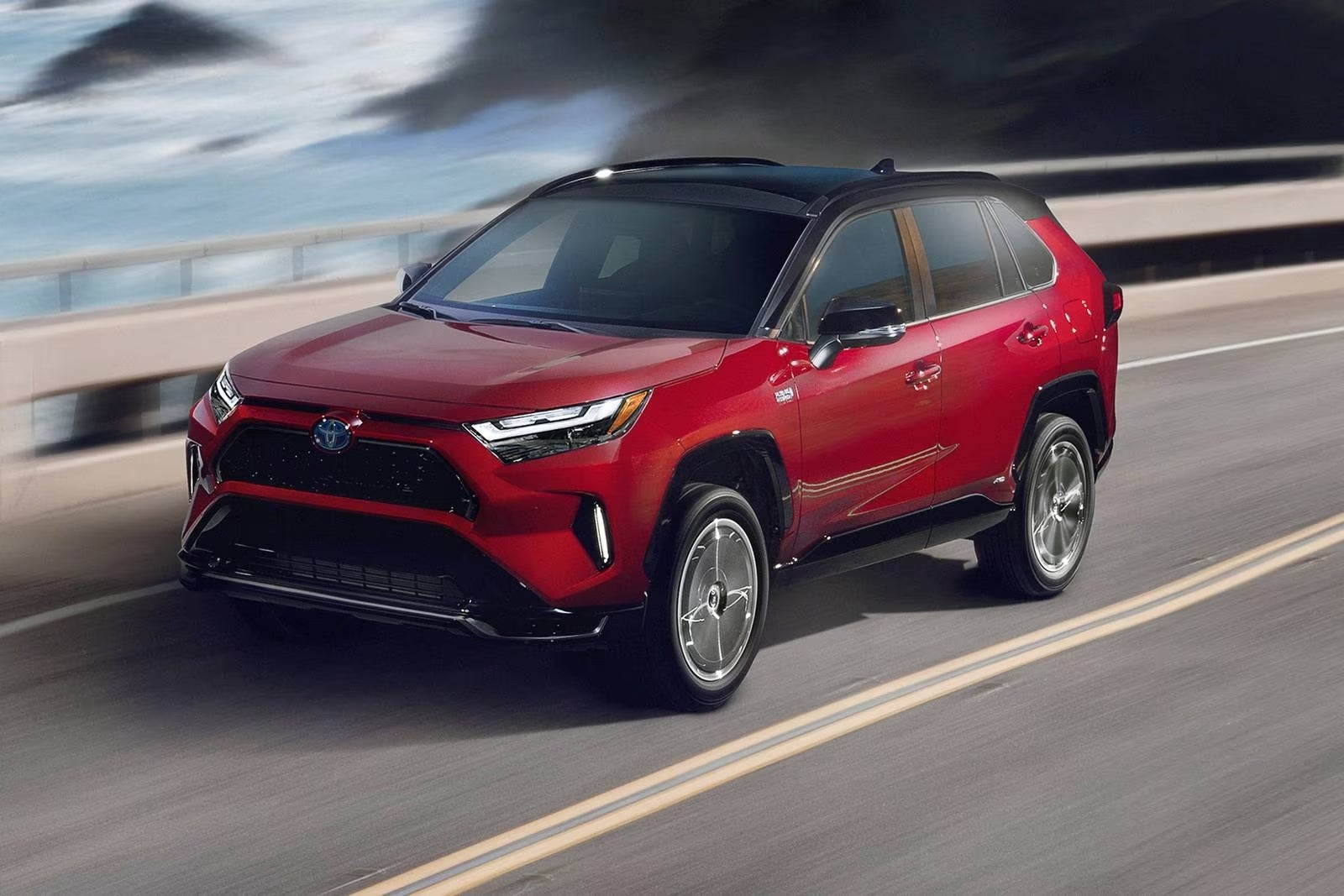
2024 Toyota RAV4 Prime

Toyota offers two prominent plug-in hybrid models in its lineup: the Toyota Prius Prime and the Toyota RAV4 Prime. Both vehicles embody Toyota's commitment to sustainability, innovation, and performance. In this article, our Longo Toyota team delves into the details of these two models, exploring their exteriors, interiors, trims, performance, and safety features. After reading, you'll have all the information needed to make an informed choice.

What's a Plug-In Hybrid Vehicle?

Despite the rise in popularity, many shoppers still don't understand what a plug-in hybrid car is and how it works. Simply put, a plug-in hybrid powertrain uses a gas-powered engine and one or more electric motors to propel the vehicle. 

The electric motor receives power from a dedicated battery, not the standard car battery used to operate typical electrical systems. This battery provides enough power to the motor to move the vehicle. Like any battery, it has a finite amount of usable energy, so it needs to be plugged in and recharged. 

A regular hybrid powertrain has a separate battery that recharges similarly to a regular car battery, using energy created from the gas engine. The larger-sized plug-in hybrid requires more electricity, which it accesses by plugging into an electrical outlet. 

Toyota Prius Prime

The Prius has been Toyota's flagship electrified vehicle for over two decades. It was the first mass-produced hybrid electric car, debuting in 2000. Toyota now offers the Prius Prime as a plug-in hybrid vehicle with more power and range, and it represents the tip of the spear for Toyota's electrified vehicle lineup.

Exterior and Trims

The Toyota Prius Prime boasts a sleek and aerodynamic design, emphasizing style and efficiency. LED lighting complements its sharp lines and modern aesthetics, enhancing visibility and adding a futuristic touch. The Prius Prime is available in three trims — the SE, XSE, and XSE Premium.

Performance

Under the hood, the Prius Prime is powered by a 2.0-liter four-cylinder engine paired with an electric motor, delivering 220 horsepower. This plug-in hybrid can travel up to 44 miles on electric power alone before switching to hybrid mode, achieving an impressive 52 mpg combined. The seamless transition between electric and hybrid modes ensures optimal efficiency and performance. The Prius Prime also features three driving modes — EV, HV, and EV Auto — allowing you to customize your driving experience based on your needs.

Interior

Inside, the Prius Prime offers a spacious, comfortable cabin with five-person seating. High-quality materials and thoughtful design elements create a modern and inviting atmosphere. The 11.6-inch multimedia display is a central feature, providing access to navigation, entertainment, and vehicle information. Apple CarPlay, Android Auto, and Amazon Alexa compatibility ensure seamless connectivity. The Prius Prime also includes convenience features such as wireless charging, a JBL sound system, and a head-up display in the higher trims.

Safety Features

Safety is a top priority for Toyota, and the Prius Prime is no exception. It comes equipped with Toyota Safety Sense 2.0, a comprehensive suite of advanced safety technologies. The suite includes a precollision system with pedestrian detection, lane departure alert with steering assist, dynamic radar cruise control, and automatic high beams. Additionally, the Prius Prime features blind-spot monitoring with rear cross-traffic alert and a backup camera, providing drivers with confidence and peace of mind.

Toyota RAV4 Prime

The RAV4 Prime arrived in 2021 when SUVs and hybrid technology were surging. The RAV4 had already carved out its leading spot in the compact SUV segment, so adding hybrid technology to this popular model was only a matter of time.

Exterior and Trims

The Toyota RAV4 Prime combines an SUV's rugged appeal with a plug-in hybrid's efficiency. The RAV4 Prime's distinctive grille, LED headlights, and available two-tone exterior color options highlight its bold and aggressive design. Toyota makes the RAV4 Prime in two trims: SE and XSE. The SE trim offers a robust set of standard features, while the XSE trim adds sportier styling elements, including 19-inch alloy wheels, a unique front bumper, and black roof rails.

Performance

The RAV4 Prime is one of the most powerful and efficient plug-in hybrids on the market. It features a 2.5-liter four-cylinder engine paired with dual electric motors, producing a combined 302 horsepower. This plug-in hybrid can accelerate from zero to 60 mph in just 5.7 seconds, making it one of the quickest in its class. The RAV4 Prime offers an impressive 42 miles of all-electric range and achieves an estimated 94 MPGe in hybrid mode. Standard all-wheel drive ensures excellent traction and stability in various driving conditions.

Interior

Inside, the RAV4 Prime provides a spacious and versatile cabin with seating for five. High-quality materials and a modern design create a refined environment. The 9-inch multimedia display is the command center for navigation, entertainment, and vehicle settings. Apple CarPlay, Android Auto, and Amazon Alexa compatibility are standard, along with a premium JBL sound system in the XSE trim. The RAV4 Prime also offers practical features such as a hands-free power liftgate, wireless charging, and heated front seats.

Safety Features

The RAV4 Prime is equipped with Toyota Safety Sense 2.0, ensuring a high level of safety and driver assistance. Key features include a precollision system with pedestrian detection, lane departure alert with steering assist, and dynamic radar cruise control. The RAV4 Prime also includes blind-spot monitoring, rear cross-traffic alert, and a 360-degree camera system, providing comprehensive awareness of the vehicle's surroundings. These advanced safety features help prevent accidents and enhance driver confidence.

Experience the Toyota Plug-In Hybrids at Longo Toyota

The Toyota Prius Prime and RAV4 Prime represent the forefront of Toyota's hybrid technology, offering impressive performance, efficiency, and advanced features. Whether you're looking for the efficiency of the Prius Prime or the versatility of the RAV4 Prime, Toyota's plug-in hybrid lineup has something to offer.

We recommend you shop our virtual inventory. For a personal demonstration, visit our El Monte, California, dealership to test drive these innovative vehicles and experience their benefits firsthand. Our knowledgeable staff can help you find the perfect hybrid that fits your lifestyle and needs. Discover the sustainable future of driving with Toyota's plug-in hybrids.
Posted in:

Related Posts

Two Toyota sedans

Where Are Toyotas Made? U.S. Manufacturing and Tariffs Explained

If you're shopping for a new Toyota, you've probably wondered where your vehicle actually comes from. The answer surprises a lot of people: roughly half of the Toyotas sold in the U.S. are assembled on American soil, including several of the brand's highest-volume models. With tariff policy shifting through 2026, knowing where your Toyota is built matters more than ever for pricing and peace of mind. Before you browse our new Toyota inventory, we'll break down exactly where your next Camry, RAV4, or Tacoma is built and what tariffs could mean for your wallet. Toyota's U.S. Manufacturing Footprint at a Glance Toyota's U.S. manufacturing footprint is bigger than most shoppers realize. The company employs approximately 50,000 people in the United States and has been involved in the development and manufacturing of more than 35 million vehicles across 11 U.S. manufacturing plants. That production is backed by nearly $60 billion in cumulative U.S. investment since Toyota began operations here nearly 70 years ago. On November 12, 2025, Toyota announced up to $10 billion in additional U.S. investment over the next five years. On March 23, 2026, timed to the Kentucky plant's 40th anniversary, Toyota detailed that $1 billion of that would go toward Kentucky and Indiana. The Kentucky plant receives $800 million to prepare for its second battery electric vehicle and to increase Camry and RAV4 assembly capacity, while Indiana receives $200 million to increase capacity for the Grand Highlander. Increasingly, the honest answer to "where are Toyotas made?" is: more of them here every year. Inside Toyota's American Plants Toyota's manufacturing plants in the USA each specialize in a different corner of the lineup, from sedans to full-size trucks to the batteries that power the hybrids. Here's a look at each facility keeping the Toyota factory network running. Toyota Motor Manufacturing Kentucky Toyota Motor Manufacturing Kentucky (TMMK), in Georgetown, KY, is Toyota's largest manufacturing plant in the world, spanning roughly 1,300 acres and 9 million square feet. Toyota broke ground here in 1986 and built its first Camry in 1988. The plant marked 40 years in the commonwealth in 2026 and employs around 10,000 team members. TMMK currently builds the Camry, Camry Hybrid, and RAV4 Hybrid, with Lexus ES production having wrapped up in 2025. The plant is also Toyota's entry point into American EV assembly. Toyota confirmed in February 2026 that the all-electric 2027 Highlander will be built in Georgetown, making it the first three-row battery electric vehicle Toyota builds for the U.S. market, with sales expected to begin in late 2026. The March 2026 investment prepares the same plant for a second battery electric model. Toyota Motor Manufacturing Texas Toyota Motor Manufacturing Texas (TMMTX) broke ground in 2003 and started operations in 2006 in San Antonio, TX, where it builds the Tundra and Sequoia alongside rear axles. On July 6, 2026, Toyota announced a $3.6 billion expansion that will add a second assembly line for the Tacoma, create roughly 2,000 new jobs, and add 2.5 million square feet of space, effectively doubling the plant's size by 2030. Annual capacity rises from roughly 200,000 units to 350,000. That expansion also means Tacoma production is shifting away from Baja California, Mexico, to San Antonio over roughly four years, with Texas-built Tacomas expected to start rolling off the new line in 2030. Total investment in the San Antonio site now stands at $8.3 billion since groundbreaking in 2003. Toyota Motor Manufacturing Indiana Toyota Motor Manufacturing Indiana (TMMI) sits on 1,160 acres in Princeton, IN, with 4.5 million square feet of production space. It's the only U.S. plant building the Highlander and Highlander Hybrid, and it also produces the Grand Highlander, Lexus TX, and Sienna Hybrid. Toyota broke ground here in 1996 and started production in 1998. The plant marked 30 years in southern Indiana in May 2026, by which point more than 8 million vehicles had rolled off its final assembly line, making it one of Toyota's most productive North American facilities. Toyota Motor Manufacturing Mississippi Toyota Motor Manufacturing Mississippi (TMMMS), located in Blue Springs, MS, opened in October 2011 and is the North American home of the Corolla sedan. Roughly 2,400 team members work there, averaging more than 180,000 units annually. TMMMS also holds the distinction of being the first U.S. plant to assemble electrified Corolla models, part of Toyota's broader hybrid push across its lineup. The Corolla Hatchback remains an import. Toyota Motor Manufacturing Alabama and North Carolina Battery Plant Toyota's Huntsville, AL engine plant supplies engines for the Corolla, Corolla Cross, Highlander, Sequoia, Sienna, Tacoma, and Tundra. Nearby, Mazda Toyota Manufacturing USA (MTMUS) in Madison, AL builds the Corolla Cross, the only North American facility to do so, alongside the Mazda CX-50, with combined capacity for 300,000 vehicles a year. Meanwhile, Toyota Battery Manufacturing North Carolina (TBMNC) in Liberty, NC began production on November 12, 2025, as Toyota's 11th U.S. plant and its first battery plant outside Japan. Backed by roughly $14 billion in investment and up to 5,100 jobs, TBMNC spans 7 million square feet with 14 production lines and 30 GWh of capacity, supplying batteries for the Camry HEV, Corolla Cross HEV, RAV4 HEV, and an upcoming all-electric three-row model. Where Popular Toyota Models Are Actually Built The answer varies by model, and it's worth understanding the difference between "made," "built," and "assembled." A vehicle can be assembled at a U.S. plant like TMMK while still containing an engine sourced from Japan; automakers describe that vehicle as U.S.-built or U.S.-assembled, even though not every component originated domestically. That distinction matters once tariffs on parts enter the picture. Camry, Corolla, and RAV4 Production Sites The Camry is built exclusively at TMMK in Georgetown, KY. The Corolla sedan is built at TMMMS in Blue Springs, MS, while the Corolla Hatchback comes from Japan. The RAV4 is more of a mixed case: the RAV4 Hybrid comes out of Georgetown, the gas RAV4 is largely built in Ontario, Canada, and the plug-in RAV4 is imported from Japan. Tacoma, Tundra, Highlander, and Sequoia: US-Built or Imported TMMTX in San Antonio, TX handles both the Tundra and Sequoia, while TMMI in Princeton, IN is the sole source for the Highlander and Highlander Hybrid. The Tacoma is currently imported from Baja California, Mexico, though that's changing as production shifts to San Antonio over the next several years. If you're weighing a Camry against a RAV4, or curious how your Tacoma stacks up against a Tundra, explore U.S.-built models in stock and see the full lineup in person at our El Monte showroom. How to Check Where Your Specific Toyota Was Made You don't need to guess whether your particular vehicle is American-made or imported. Every Toyota carries a Vehicle Identification Number (VIN) that reveals its country of assembly, and checking it takes just a few minutes. Locate the VIN, visible through the lower driver-side windshield, on the door jamb sticker, or on your title, registration, and insurance card. Check the first character of the VIN: a 1, 4, or 5 means the vehicle was built in the USA; a 2 indicates Canada; a 3 indicates Mexico; and a J indicates Japan. Look at the 11th digit of the VIN, which identifies the specific plant code among Toyota's plant codes. Confirm with the door jamb certification label, which lists the vehicle's final assembly point along with the manufacture date. Bring the full VIN to our service or sales team if you'd like us to pull the build record and confirm sourcing details for your specific vehicle. Tariffs and Toyota: What Buyers Need to Know Tariff policy has moved repeatedly through 2026, so treat any pricing talk as conditional rather than settled. The Supreme Court struck down the reciprocal tariffs in February 2026, a temporary 10% global tariff ran from late February until it expired by law on July 24, 2026, and Section 232 duties on vehicles and parts remain in force with an exemption for qualifying USMCA content. Parts of this framework are still working through the courts. Because rates have changed several times this year, we'd point you to current federal guidance rather than quote a number that may not hold by the time you read this. Which Models and Parts Are Most Affected As of early 2026, about 23% of Toyota's U.S. sales came from vehicles imported from Japan, with roughly another 28% produced in Mexico or Canada. Exposure follows sourcing, so the models most affected are those built outside the United States, including the Prius, plug-in RAV4, Land Cruiser, Crown Signia, and 4Runner. Models largely shielded because they're U.S.-built or qualify under USMCA include the Camry, Corolla, Corolla Cross, Highlander, and Tacoma. Tariffs don't stop at finished vehicles, either. Imported OEM parts have carried duties through much of this period, and repair costs have moved with them. Even U.S.-assembled models aren't entirely immune, since a vehicle built in Kentucky can still contain components sourced abroad. How Tariffs Could Influence Prices and Availability Speaking in early 2026, Toyota indicated it might implement three price adjustments over the year rather than the usual two, citing tariffs and uncertainty around the USMCA review. Executives also described the company's stance as that of a "market follower" on pricing. None of this should be read as locked-in fact, and the picture has continued to shift since. What holds regardless is the underlying logic: imported models carry more tariff exposure than U.S.-built ones, which is one more reason to pay attention to where a vehicle is actually assembled before you buy. Why Toyota's US Manufacturing Matters for Your Next Purchase U.S. manufacturing shows up in real recognition and real value. In the 2026 Cars.com American-Made Index, the Camry jumped from 24th to 11th place, and the Tundra climbed from 51st to 19th. Toyota contributed 14 qualifying vehicles to that index, more than any other automaker, and the Lexus TX 350 landed at No. 7. Beyond rankings, Toyota's domestic build quality has long supported strong resale performance across the lineup, which matters if you plan to trade in or sell down the road. Combined with the $10 billion investment announcement and the follow-on commitments in Kentucky, Indiana, and Texas, it's clear where Toyota is putting its chips for the years ahead. Frequently Asked Questions Are Any Toyotas Still Imported From Japan Yes. While many of Toyota's highest-volume models are built in the U.S., vehicles including the 4Runner, Land Cruiser, and the plug-in RAV4 are still imported. So the notion that all Toyotas are made in Japan is a clear no, but Japan still plays a role for select models. Will Tariffs Affect Used Toyotas Too Tariffs primarily target new vehicles and imported components, but the ripple effects can reach the used market too. As new vehicle pricing shifts, demand for used alternatives can rise, indirectly affecting used Toyota pricing and availability. Explore US-Built Toyotas at Longo Toyota Dominic Longo founded this dealership in 1967, and we've been the world's largest Toyota dealership ever since, based on Toyota Motor Sales, USA sales reports. That kind of consistency comes from knowing our inventory inside and out, including which vehicles roll off American assembly lines. Now that you know where Toyotas are built, it's easier to shop with confidence. Visit Us in Southern California If you're in Southern California and want to see a U.S.-built Camry, Corolla, or Highlander in person, our El Monte, CA showroom is the place to start. Get Personalized Guidance Contact our El Monte team and ask which in-stock vehicles are U.S.-assembled; we're happy to walk you through VIN details, financing, and everything else you need for a confident purchase.

Toyota bz

2026 Toyota bZ Price Guide: Cost by Trim, from XLE to Limited

If you're wondering how much the 2026 Toyota bZ costs, pricing starts at $36,350 and tops out at $46,750 depending on trim and drivetrain. That's a wider spread than you'd expect from an EV lineup, and it comes down to battery size, horsepower, and whether you go FWD or AWD. We've broken down every trim below so you know exactly what you're paying for before you set foot on our lot in El Monte. If you want to get the paperwork moving early, you can also get pre-qualified before your test drive. 2026 Toyota bZ Pricing Overview Toyota folded the $1,450 destination fee directly into the MSRP for 2026, so the numbers below reflect what actually shows up on the window sticker. The 2026 Toyota bZ price shifts quite a bit by trim and drivetrain, and this table lays out the full picture. Trim Drivetrain Range Horsepower Battery Starting Price XLE FWD 236 mi 221 hp 57.7 kWh $36,350 XLE Plus FWD 314 mi 221 hp 74.7 kWh $39,350 XLE AWD 288 mi 338 hp 74.7 kWh $41,350 Limited FWD 299 mi 221 hp 74.7 kWh $44,750 Limited AWD 278 mi 338 hp 74.7 kWh $46,750 The base XLE dropped $2,170 compared to the outgoing model, while the Limited crept up $1,500. Every 2026 Toyota bZ trim carries the same coverage: a 3-year/36,000-mile limited warranty, a 5-year/60,000-mile powertrain warranty, and an 8-year/100,000-mile battery warranty. That makes side-by-side comparisons easier since coverage never changes by trim. 2026 Toyota bZ XLE: Price and Standard Features The XLE starts at $36,350 and sits at the entry point into the lineup. It runs the smallest battery in the family at 57.7 kWh, delivering 236 miles of EPA-estimated range, plenty for most Southern California commutes without daily charging stops. The XLE still comes loaded with useful gear. Standard equipment includes blind-spot monitoring, dual wireless phone chargers, a 14-inch touchscreen, heated front seats, SofTex seating surfaces, and 18-inch wheels. Toyota Safety Sense 3.0 comes standard across every trim, so you're not paying extra for core safety tech just because you picked the base model. For El Monte commuters who mostly stick to local highways and surface streets, this trim covers the basics well. 2026 Toyota bZ XLE Plus: Price and Added Value Step up to the XLE Plus and you're looking at roughly $39,350, about $3,000 more than the base XLE. That extra money buys a significantly larger 74.7-kWh battery pack and stretches range to 314 miles, the longest in the entire lineup. The XLE Plus keeps the same 221 hp as the base XLE, since both are FWD-only at this tier, but the range jump alone makes this trim worth a look if you do a lot of freeway driving between Southern California cities. Edmunds calls FWD the smarter pick for range-focused buyers, and real-world testing on a similarly configured model recorded 331 miles, beating the EPA estimate. 2026 Toyota bZ Limited: Price and Premium Features The Limited starts at $44,750 for FWD and jumps to $46,750 with AWD, making the AWD Limited the priciest configuration in the lineup. That premium buys a genuine step up in comfort and tech. The Limited adds ventilated front seats, heated rear seats, a Panoramic View Monitor for parking, a digital rearview mirror, Advanced Park for hands-free parking assistance, and a panoramic glass roof with a power sunshade. Wheels grow to 20 inches, and you can option a 9-speaker JBL Premium Audio system. Digital key functionality, meanwhile, is available across the entire bZ lineup, not just the Limited, and requires an active Remote Connect subscription. This is where the XLE vs. Limited comparison gets interesting, since the Limited trades some range for luxury amenities you'd expect on a vehicle costing several thousand more. FWD vs. AWD: How Drivetrain Affects Price by Trim AWD carries a $2,000 upcharge over the equivalent FWD configuration with the same 74.7 kWh battery. On the Limited, that's the difference between $44,750 (FWD) and $46,750 (AWD). On the XLE, the true AWD-only upcharge is best measured against the XLE Plus FWD at $39,350, which shares AWD's 74.7 kWh battery: stepping up from the base XLE FWD's smaller 57.7 kWh battery to XLE AWD costs $5,000 total, since that jump adds both the larger battery and the AWD hardware. That money buys a jump from 221 hp to 338 combined horsepower, plus quicker acceleration, 0 to 60 mph in about 4.9 seconds on the AWD XLE. The trade-off is that AWD range drops compared to FWD versions with the same battery, since AWD models add a rear motor and X-MODE for low-traction situations, both of which draw more energy. What Impacts Your Final Price The sticker price is just the starting point. A few other factors shape what you'll actually pay, worth understanding before you sit down at the negotiating table. Destination Fees and Optional Packages Toyota has already folded the $1,450 destination fee into the advertised MSRP for 2026, which simplifies things compared to previous years. Optional packages still add on top, though. A Panoramic Roof Package is available on the XLE, while Limited buyers can add the 9-Speaker JBL Premium Audio Package. Other options across the lineup include all-weather floor liners, carpet mats, and a Preferred Accessory Package, all of which push the final price above the base trim figure. Federal EV Tax Credit and Available Incentives The $7,500 federal new-EV tax credit ended for vehicles acquired after September 30, 2025, under the One Big Beautiful Bill Act, so don't build your budget around it. That means there's currently no point-of-sale federal discount applying to the 2026 Toyota bZ. This is a meaningful shift from how EV shopping worked just a year ago, and it's worth factoring into your budget from the start. Toyota has also reported its own promotional programs, such as a lease around $379 per month for 36 months with $3,749 due at signing, or 0% APR for 72 months paired with a cash incentive; these offers change monthly, so confirm current terms before assuming a rate. We'd recommend confirming current offers and eligibility directly with our team before assuming any specific savings apply to your purchase. Financing vs. Leasing: What It Means for Your Monthly Payment Monthly payments don't scale evenly with sticker price, and the gap between two trims on paper often narrows or widens once term length and residual value enter the picture. That's especially true with leasing, which is built around projected resale value rather than purchase price, so the least expensive trim to buy isn't automatically the least expensive to lease. Financing works the other way: you're paying toward ownership, which suits drivers keeping the car long-term, and the 8-year/100,000-mile battery coverage outlasts a typical loan by a comfortable margin. Leasing tends to mean a lower payment and the option to move into a newer model every few years, which appeals to drivers who'd rather stay current as EV tech keeps moving. Rates and residuals reset regularly, so the practical step is running real numbers on the trim and drivetrain you're weighing. Which 2026 bZ Trim Is Right for You Picking the right trim depends on your priorities. If you're a budget-conscious commuter mostly driving around El Monte and nearby communities, the base XLE at $36,350 covers your needs without unnecessary extras. If long-range driving matters most, the XLE Plus FWD's 314-mile range is the longest in the lineup and worth the roughly $3,000 premium over base. Buyers who want luxury touches and the latest tech should look at the Limited, with its ventilated seats, Panoramic View Monitor, and Advanced Park. And if you drive in varied weather or want extra confidence in wet or slick conditions, the AWD XLE at $41,350 hits a strong price-to-content balance, delivering 338 hp and all-wheel traction without stepping all the way up to Limited pricing. KBB pegs this trim as the lineup's sweet spot, and it's easy to see why. Explore 2026 Toyota bZ Pricing at Longo Toyota Why Shop With Us We've been part of the El Monte community since 1967, and today we're recognized as the world's largest and top-volume Toyota dealership. That scale means our bZ inventory spans more trims and configurations than most dealerships can offer, giving you real options rather than a limited selection to choose from. Whether you're comparing the XLE against the Limited or trying to decide if AWD is worth the upcharge, our team can walk you through current availability and financing paths that fit your situation. Get Started Today You can browse our new bZ inventory to see what's currently on our lot, or contact our team for a personalized quote tailored to your budget and driving needs. We're here seven days a week to help you find the right bZ at the right price.

Toyota Corolla

Corolla vs. Corolla Cross: Which Toyota Fits Your Lifestyle?

Picking between two vehicles from the same brand can feel oddly complicated, especially when they share a name but exist for completely different reasons. The Toyota Corolla and Toyota Corolla Cross fall into exactly that trap. Both carry Toyota's reputation for reliability, but they're built for different kinds of drivers. Below, we break down what actually separates them so you can browse our new Corolla and Corolla Cross inventory with a clear idea of which one fits your life. Corolla vs. Corolla Cross: Two Toyotas, Two Different Driving Experiences The Corolla has become one of the best-selling cars in history because it nails the basics daily drivers actually care about: dependable transportation, solid fuel economy, and a smooth ride. The Corolla Cross takes a different route. Toyota engineered it with an SUV-style silhouette and a raised driving position for drivers who want more versatility without committing to a full-size SUV like the RAV4. Sit in either one and the difference is obvious, even with that shared name on the trunk. What Is the Difference Between the Corolla and Corolla Cross? Body style is where the split starts. The Corolla is a compact sedan built for efficiency and agility, while the Corolla Cross is a subcompact SUV built for utility and space, sitting a step below the RAV4 in Toyota's SUV lineup. That one distinction ripples out into how each vehicle handles and how much you can actually fit inside it. Both share a similar powertrain foundation, but the purpose each one was designed for shapes the ownership experience in noticeable ways. Sedan vs. Compact SUV: Body Style and Design Philosophy The Corolla is built around aerodynamic efficiency and urban practicality. Its low profile cuts down on drag and helps keep fuel consumption in check, which matters when you're weaving through El Monte traffic or racking up highway miles on a daily commute. The Corolla Cross takes a bolder, more upright stance instead. Its raised body and extra ride height hint that it can handle more than grocery runs, and you feel that difference the moment you're behind the wheel. Size, Ground Clearance, and Cargo Space Compared These two vehicles take up different amounts of space on the road, and that matters depending on what you plan to do with the car. The Corolla Cross offers more interior volume and higher ground clearance, a natural fit for weekend trips or anyone hauling gear regularly. The Corolla's smaller footprint makes tight spaces and dense urban parking far less of a hassle. Weighing space against compactness is one of the biggest calls you'll need to make here. Exterior Dimensions and Ride Height Feature 2026 Corolla 2026 Corolla Cross Max Length 182.5 in 176.1 in Max Width 70.1 in 71.9 in Max Height 56.5 in 64.9 in Max Ground Clearance 5.3 in 8.1 in The Corolla Cross sits 2.8 inches higher off the ground than the Corolla. That extra height isn't just for looks; it means more confidence over uneven roads, speed bumps, or the occasional mountain trip when Southern California weather turns wet. It also improves your sightlines in traffic. The Corolla sits lower to the ground by comparison, giving it a tighter, sportier feel that works in your favor if most of your driving happens in the city. Interior Space and Cargo Capacity Feature 2026 Corolla 2026 Corolla Cross Max Cargo Volume (behind rear seats) 13.1 cu ft 24.0 cu ft Max Cargo Volume (seats folded) Not available 46.9 cu ft Max Rear Leg Room 34.8 in 32.0 in Max Rear Head Room 37.1 in 39.0 in Both models seat five passengers without issue, but the Corolla Cross offers nearly double the cargo room behind the rear seats and almost 47 cu ft with them folded down. That extra space matters if you're regularly packing for road trips, hauling sports equipment, or shuttling a family with a lot of gear. The Corolla counters with more rear legroom, so if you're usually driving alone or with one passenger, the Corolla's cabin is still plenty comfortable without the added bulk. If cargo room and ride height top your list, the Corolla Cross wins out. If rear legroom and a smaller footprint matter more to you, stick with the Corolla. Pricing and Trim Levels: Which Toyota Fits Your Budget? Both the Corolla and Corolla Cross come in a range of trim levels, so you can pick features that actually match how you drive. Corolla trims move up in equipment and available features, including a hybrid powertrain that boosts fuel economy considerably. Corolla Cross trims add more available technology and, on select trims, available all-wheel drive for extra traction. Because pricing and offers change frequently, we'd rather point you to accurate, current numbers than list anything that could be outdated. Browse our new Corolla and Corolla Cross inventory to see trim-by-trim availability, or reach out through our contact page and our team will walk you through pricing and financing options. Driving Experience: Handling, Power, and Everyday Comfort How a car feels day to day often matters more than anything on a spec sheet. The Corolla and Corolla Cross are both refined and built for everyday usability, but they get there through different means. Both share a base engine producing 169 horsepower, and each is available as a hybrid, though the Corolla's hybrid system delivers up to 50 mpg combined (roughly 53 city / 46 highway on FWD trims), one of the strongest fuel economy figures in its class. Corolla: Nimble and Efficient on City Streets The Corolla is built for exactly the situations most daily drivers deal with. Its compact size and responsive steering make lane changes and tight turns feel almost effortless, and parking in crowded lots or squeezing down narrow El Monte streets is far less stressful than it would be in something bigger. If you're putting real miles on the car each week, the fuel savings add up fast. Corolla Cross: Confidence and Versatility for Weekend Trips The Corolla Cross offers a different kind of confidence on the road. Its higher center of gravity gives it more presence, and available all-wheel drive adds real traction when conditions turn rough. Whether you're heading into the mountains for the weekend or dealing with wet roads during a rare Southern California downpour, the Corolla Cross handles it without much fuss. It shifts easily between weekday commuting and weekend adventures. Which Toyota Fits Your Lifestyle? The right choice comes down to how you use your car day to day. Each one is built for a different kind of routine, so it's less about which is "better" and more about which matches how you actually live. Best for Commuters and City Drivers Daily freeway commute in and around El Monte. Frequent city driving with tight parking. Priority on fuel economy and low daily operating costs. Preference for a smaller, more agile footprint. If that sounds like you, the Corolla is the better call. It's efficient, easy to maneuver, and doesn't skimp on comfort for its size. Best for Drivers Wanting Extra Ground Clearance and Cargo Room Regular road trips or weekend getaways. Hauling outdoor gear or sports equipment. Driving through occasional rain or mountain roads. Preference for a higher seating position and more cargo space. If that's closer to your routine, the Corolla Cross makes more sense. It works well for families and active drivers who need to fit more into their car on a regular basis. Test Drive the Corolla and Corolla Cross at Longo Toyota Reading about the differences only takes you so far. The real way to figure out which Toyota fits your life is to get behind the wheel of both. Visit Our El Monte Showroom At Longo Toyota, located at 3534 North Peck Road in El Monte, CA, you'll find a large inventory of Corolla and Corolla Cross models available for test drives seven days a week, from 9 AM to 8 PM. Our 50-acre campus includes a modern showroom, and our sales team can walk you through trims, features, and financing options. Schedule a Test Drive or Virtual Tour If you're not ready to visit in person, we also offer virtual test drives so you can get a feel for each model from home. When you're ready, browse our new Corolla and Corolla Cross inventory, or reach our sales team at 626-539-2113 or contact us online to set up a visit. Making a confident decision starts with driving both, and we're here to make that part easy.