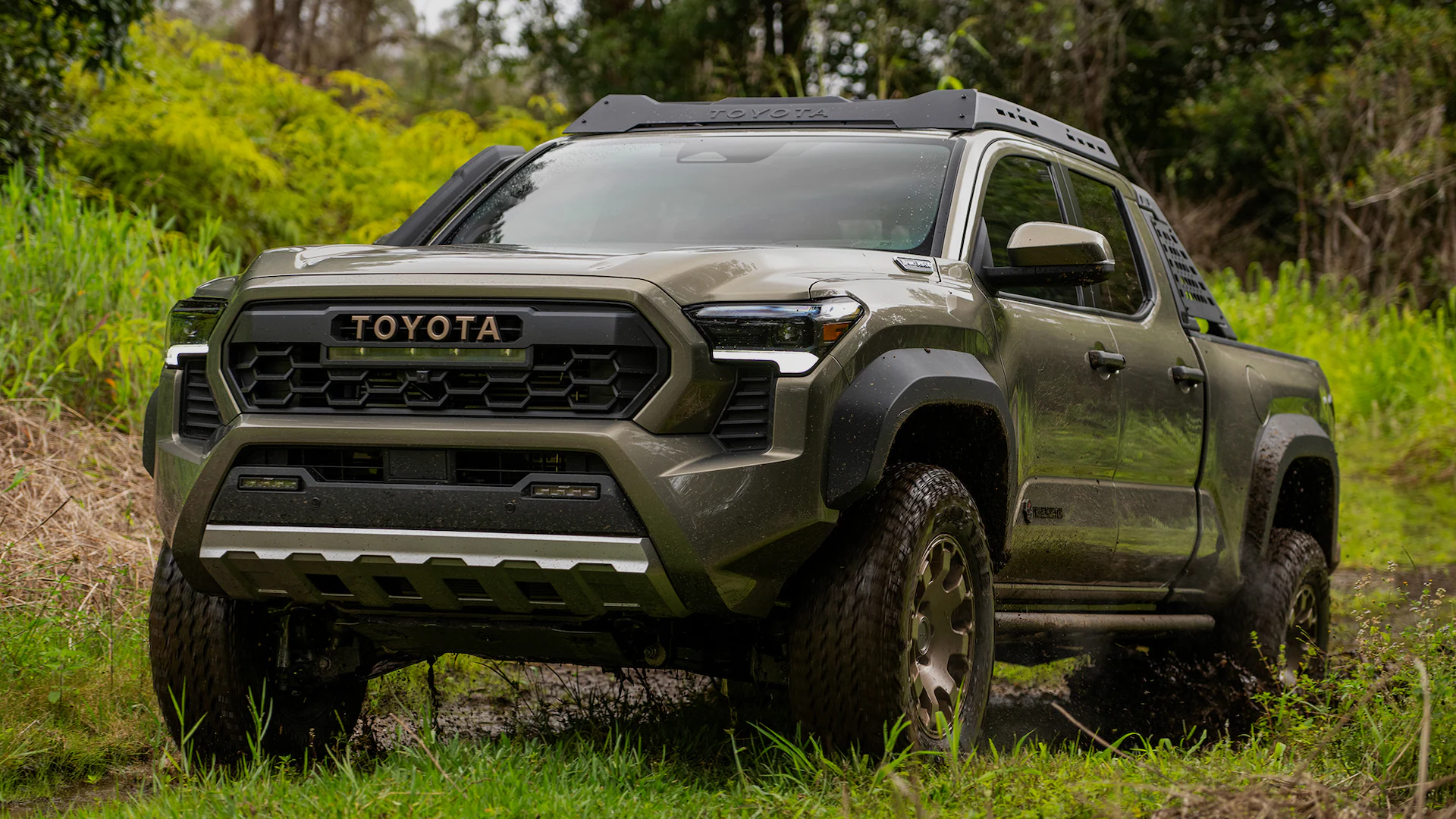
If you're shopping for a new Toyota, you've probably wondered where your vehicle actually comes from. The answer surprises a lot of people: roughly half of the Toyotas sold in the U.S. are assembled on American soil, including several of the brand's highest-volume models. With tariff policy shifting through 2026, knowing where your Toyota is built matters more than ever for pricing and peace of mind. Before you browse our new Toyota inventory, we'll break down exactly where your next Camry, RAV4, or Tacoma is built and what tariffs could mean for your wallet. Toyota's U.S. Manufacturing Footprint at a Glance Toyota's U.S. manufacturing footprint is bigger than most shoppers realize. The company employs approximately 50,000 people in the United States and has been involved in the development and manufacturing of more than 35 million vehicles across 11 U.S. manufacturing plants. That production is backed by nearly $60 billion in cumulative U.S. investment since Toyota began operations here nearly 70 years ago. On November 12, 2025, Toyota announced up to $10 billion in additional U.S. investment over the next five years. On March 23, 2026, timed to the Kentucky plant's 40th anniversary, Toyota detailed that $1 billion of that would go toward Kentucky and Indiana. The Kentucky plant receives $800 million to prepare for its second battery electric vehicle and to increase Camry and RAV4 assembly capacity, while Indiana receives $200 million to increase capacity for the Grand Highlander. Increasingly, the honest answer to "where are Toyotas made?" is: more of them here every year. Inside Toyota's American Plants Toyota's manufacturing plants in the USA each specialize in a different corner of the lineup, from sedans to full-size trucks to the batteries that power the hybrids. Here's a look at each facility keeping the Toyota factory network running. Toyota Motor Manufacturing Kentucky Toyota Motor Manufacturing Kentucky (TMMK), in Georgetown, KY, is Toyota's largest manufacturing plant in the world, spanning roughly 1,300 acres and 9 million square feet. Toyota broke ground here in 1986 and built its first Camry in 1988. The plant marked 40 years in the commonwealth in 2026 and employs around 10,000 team members. TMMK currently builds the Camry, Camry Hybrid, and RAV4 Hybrid, with Lexus ES production having wrapped up in 2025. The plant is also Toyota's entry point into American EV assembly. Toyota confirmed in February 2026 that the all-electric 2027 Highlander will be built in Georgetown, making it the first three-row battery electric vehicle Toyota builds for the U.S. market, with sales expected to begin in late 2026. The March 2026 investment prepares the same plant for a second battery electric model. Toyota Motor Manufacturing Texas Toyota Motor Manufacturing Texas (TMMTX) broke ground in 2003 and started operations in 2006 in San Antonio, TX, where it builds the Tundra and Sequoia alongside rear axles. On July 6, 2026, Toyota announced a $3.6 billion expansion that will add a second assembly line for the Tacoma, create roughly 2,000 new jobs, and add 2.5 million square feet of space, effectively doubling the plant's size by 2030. Annual capacity rises from roughly 200,000 units to 350,000. That expansion also means Tacoma production is shifting away from Baja California, Mexico, to San Antonio over roughly four years, with Texas-built Tacomas expected to start rolling off the new line in 2030. Total investment in the San Antonio site now stands at $8.3 billion since groundbreaking in 2003. Toyota Motor Manufacturing Indiana Toyota Motor Manufacturing Indiana (TMMI) sits on 1,160 acres in Princeton, IN, with 4.5 million square feet of production space. It's the only U.S. plant building the Highlander and Highlander Hybrid, and it also produces the Grand Highlander, Lexus TX, and Sienna Hybrid. Toyota broke ground here in 1996 and started production in 1998. The plant marked 30 years in southern Indiana in May 2026, by which point more than 8 million vehicles had rolled off its final assembly line, making it one of Toyota's most productive North American facilities. Toyota Motor Manufacturing Mississippi Toyota Motor Manufacturing Mississippi (TMMMS), located in Blue Springs, MS, opened in October 2011 and is the North American home of the Corolla sedan. Roughly 2,400 team members work there, averaging more than 180,000 units annually. TMMMS also holds the distinction of being the first U.S. plant to assemble electrified Corolla models, part of Toyota's broader hybrid push across its lineup. The Corolla Hatchback remains an import. Toyota Motor Manufacturing Alabama and North Carolina Battery Plant Toyota's Huntsville, AL engine plant supplies engines for the Corolla, Corolla Cross, Highlander, Sequoia, Sienna, Tacoma, and Tundra. Nearby, Mazda Toyota Manufacturing USA (MTMUS) in Madison, AL builds the Corolla Cross, the only North American facility to do so, alongside the Mazda CX-50, with combined capacity for 300,000 vehicles a year. Meanwhile, Toyota Battery Manufacturing North Carolina (TBMNC) in Liberty, NC began production on November 12, 2025, as Toyota's 11th U.S. plant and its first battery plant outside Japan. Backed by roughly $14 billion in investment and up to 5,100 jobs, TBMNC spans 7 million square feet with 14 production lines and 30 GWh of capacity, supplying batteries for the Camry HEV, Corolla Cross HEV, RAV4 HEV, and an upcoming all-electric three-row model. Where Popular Toyota Models Are Actually Built The answer varies by model, and it's worth understanding the difference between "made," "built," and "assembled." A vehicle can be assembled at a U.S. plant like TMMK while still containing an engine sourced from Japan; automakers describe that vehicle as U.S.-built or U.S.-assembled, even though not every component originated domestically. That distinction matters once tariffs on parts enter the picture. Camry, Corolla, and RAV4 Production Sites The Camry is built exclusively at TMMK in Georgetown, KY. The Corolla sedan is built at TMMMS in Blue Springs, MS, while the Corolla Hatchback comes from Japan. The RAV4 is more of a mixed case: the RAV4 Hybrid comes out of Georgetown, the gas RAV4 is largely built in Ontario, Canada, and the plug-in RAV4 is imported from Japan. Tacoma, Tundra, Highlander, and Sequoia: US-Built or Imported TMMTX in San Antonio, TX handles both the Tundra and Sequoia, while TMMI in Princeton, IN is the sole source for the Highlander and Highlander Hybrid. The Tacoma is currently imported from Baja California, Mexico, though that's changing as production shifts to San Antonio over the next several years. If you're weighing a Camry against a RAV4, or curious how your Tacoma stacks up against a Tundra, explore U.S.-built models in stock and see the full lineup in person at our El Monte showroom. How to Check Where Your Specific Toyota Was Made You don't need to guess whether your particular vehicle is American-made or imported. Every Toyota carries a Vehicle Identification Number (VIN) that reveals its country of assembly, and checking it takes just a few minutes. Locate the VIN, visible through the lower driver-side windshield, on the door jamb sticker, or on your title, registration, and insurance card. Check the first character of the VIN: a 1, 4, or 5 means the vehicle was built in the USA; a 2 indicates Canada; a 3 indicates Mexico; and a J indicates Japan. Look at the 11th digit of the VIN, which identifies the specific plant code among Toyota's plant codes. Confirm with the door jamb certification label, which lists the vehicle's final assembly point along with the manufacture date. Bring the full VIN to our service or sales team if you'd like us to pull the build record and confirm sourcing details for your specific vehicle. Tariffs and Toyota: What Buyers Need to Know Tariff policy has moved repeatedly through 2026, so treat any pricing talk as conditional rather than settled. The Supreme Court struck down the reciprocal tariffs in February 2026, a temporary 10% global tariff ran from late February until it expired by law on July 24, 2026, and Section 232 duties on vehicles and parts remain in force with an exemption for qualifying USMCA content. Parts of this framework are still working through the courts. Because rates have changed several times this year, we'd point you to current federal guidance rather than quote a number that may not hold by the time you read this. Which Models and Parts Are Most Affected As of early 2026, about 23% of Toyota's U.S. sales came from vehicles imported from Japan, with roughly another 28% produced in Mexico or Canada. Exposure follows sourcing, so the models most affected are those built outside the United States, including the Prius, plug-in RAV4, Land Cruiser, Crown Signia, and 4Runner. Models largely shielded because they're U.S.-built or qualify under USMCA include the Camry, Corolla, Corolla Cross, Highlander, and Tacoma. Tariffs don't stop at finished vehicles, either. Imported OEM parts have carried duties through much of this period, and repair costs have moved with them. Even U.S.-assembled models aren't entirely immune, since a vehicle built in Kentucky can still contain components sourced abroad. How Tariffs Could Influence Prices and Availability Speaking in early 2026, Toyota indicated it might implement three price adjustments over the year rather than the usual two, citing tariffs and uncertainty around the USMCA review. Executives also described the company's stance as that of a "market follower" on pricing. None of this should be read as locked-in fact, and the picture has continued to shift since. What holds regardless is the underlying logic: imported models carry more tariff exposure than U.S.-built ones, which is one more reason to pay attention to where a vehicle is actually assembled before you buy. Why Toyota's US Manufacturing Matters for Your Next Purchase U.S. manufacturing shows up in real recognition and real value. In the 2026 Cars.com American-Made Index, the Camry jumped from 24th to 11th place, and the Tundra climbed from 51st to 19th. Toyota contributed 14 qualifying vehicles to that index, more than any other automaker, and the Lexus TX 350 landed at No. 7. Beyond rankings, Toyota's domestic build quality has long supported strong resale performance across the lineup, which matters if you plan to trade in or sell down the road. Combined with the $10 billion investment announcement and the follow-on commitments in Kentucky, Indiana, and Texas, it's clear where Toyota is putting its chips for the years ahead. Frequently Asked Questions Are Any Toyotas Still Imported From Japan Yes. While many of Toyota's highest-volume models are built in the U.S., vehicles including the 4Runner, Land Cruiser, and the plug-in RAV4 are still imported. So the notion that all Toyotas are made in Japan is a clear no, but Japan still plays a role for select models. Will Tariffs Affect Used Toyotas Too Tariffs primarily target new vehicles and imported components, but the ripple effects can reach the used market too. As new vehicle pricing shifts, demand for used alternatives can rise, indirectly affecting used Toyota pricing and availability. Explore US-Built Toyotas at Longo Toyota Dominic Longo founded this dealership in 1967, and we've been the world's largest Toyota dealership ever since, based on Toyota Motor Sales, USA sales reports. That kind of consistency comes from knowing our inventory inside and out, including which vehicles roll off American assembly lines. Now that you know where Toyotas are built, it's easier to shop with confidence. Visit Us in Southern California If you're in Southern California and want to see a U.S.-built Camry, Corolla, or Highlander in person, our El Monte, CA showroom is the place to start. Get Personalized Guidance Contact our El Monte team and ask which in-stock vehicles are U.S.-assembled; we're happy to walk you through VIN details, financing, and everything else you need for a confident purchase.