


Longo Toyota

#1 in the World since 1967*

Based on Toyota Motor Sales, USA 2025 Sales Report*
Based on Toyota Motor Sales, USA 2023 Sales Report*
Blog / New Inventory

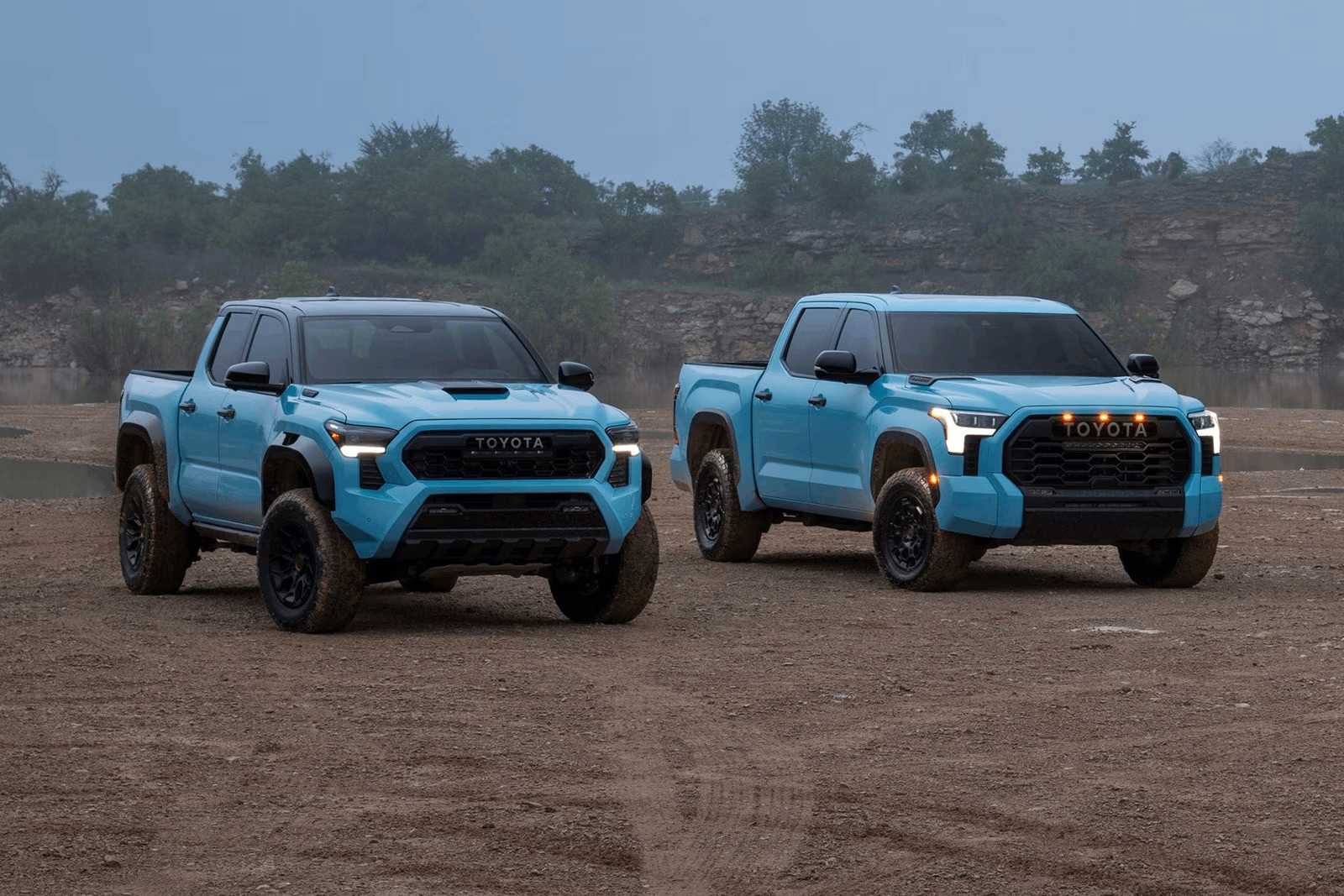
2026 Toyota Tundra vs. Tacoma: Which Truck Is Right for You?

Toyota Tacoma vs Tundra

The Tundra vs. Tacoma question comes up constantly among Toyota truck buyers, and honestly, it's worth taking seriously. Both trucks are reliable, well-equipped, and genuinely capable. But they're built for different jobs. At Longo Toyota in El Monte, CA, we work with buyers every day who are navigating exactly this decision. This guide covers the 2026 models on everything that matters: size, power, towing, off-road ability, fuel economy, and fit for your lifestyle. Explore our new inventory to see what's available right now.

Tundra vs. Tacoma: Understanding the Core Difference Before You Choose

Here's what people often miss: these aren't competing trucks. They serve genuinely different purposes. The Tundra is a full-size truck built for heavy hauling, larger payloads, and drivers who need serious capability on a regular basis. The Tacoma is midsize, designed for versatility, whether that's city streets, weekend trail runs, or light-to-moderate work.

The simplest way to think about it is this: how much truck do you actually need? Answering that honestly gets you to the right choice faster than any spec sheet will.

Size, Cab Configurations, and Bed Options

Size is where these two trucks diverge most visibly, and it affects everything from parking ease to interior room and cargo capacity. The Tacoma is compact enough to feel manageable in urban environments without giving up the utility that makes a truck worth owning.

2026 Tacoma Dimensions and Configurations

The 2026 Tacoma comes in two cab styles: XtraCab and Double Cab, with bed lengths of 5 feet or 6 feet. That's a practical footprint for most driveways, parking garages, and trailheads around Southern California. Four adults fit comfortably, and the bed handles gear, lumber runs, and recreational equipment without complaint.

2026 Tundra Dimensions and Configurations

The Tundra is offered in Double Cab and CrewMax configurations, with bed options of 5.5 feet, 6.5 feet, or 8.1 feet. Rear seats in the CrewMax are genuinely spacious, making long drives comfortable for families or work crews. If you regularly haul large items or need to seat five or more adults without squeezing anyone in, the Tundra's size is a real practical advantage.

Engine and Performance: How Each Truck Is Powered

Both 2026 Toyota trucks offer turbocharged powertrains and hybrid options, but their outputs are matched to their respective roles.

2026 Tacoma Powertrain Options

Three engine choices come with the 2026 Tacoma. The base i-FORCE 2.4L Turbo 4-Cylinder produces 228 hp and 243 lb-ft of torque, handling daily driving and light hauling well. Higher trims step up to 278 hp and 317 lb-ft, which makes a noticeable difference in highway merging and loaded driving. The i-FORCE MAX 2.4L Turbo Hybrid brings 326 hp and 465 lb-ft for those who want efficiency alongside performance. Most trims pair with an 8-speed automatic, though a 6-speed manual is available.

2026 Tundra Powertrain Options

The Tundra starts with serious power. The base i-FORCE 3.4L Twin-Turbo V6 produces 348 hp and 405 lb-ft of torque. Higher trims push that to 389 hp and 479 lb-ft, all paired with a 10-speed automatic. Upgrade to the i-FORCE MAX 3.4L Twin-Turbo V6 Hybrid and output climbs to 437 hp and 583 lb-ft. These powertrains are engineered for sustained heavy use, not just the occasional loaded run.

Towing and Payload: Which Truck Can Handle Your Haul?

This is where the size and power gap translates into real-world numbers, and the difference is substantial.

The 2026 Tacoma maxes out at 6,500 lbs of towing capacity with a maximum payload of 1,705 lbs. That covers a mid-size boat, a loaded utility trailer, or recreational gear without issue. What it isn't built for is sustained heavy commercial loads.

The 2026 Tundra tows up to 12,000 lbs with a maximum payload of 1,850 lbs. For buyers who regularly pull fifth-wheel campers, horse trailers, or equipment trailers on SoCal freeways, that extra capacity isn't a luxury. If your hauling needs routinely push past 6,500 lbs, the Tundra isn't just a preference; it's the only practical choice.

Have questions about which configuration fits your towing needs? Contact our team at Longo Toyota and we'll help you sort it out.

Off-Road Capability: How the TRD Packages Stack Up

Both trucks offer TRD off-road packages and both are genuinely capable on dirt, but the experience differs in meaningful ways.

The Tacoma has earned a strong reputation as one of the most capable midsize off-road trucks you can buy. TRD Off-Road and TRD Pro trims include multi-terrain select, crawl control, a locking rear differential, and skid plates. The Trailhunter package goes further, pairing the i-FORCE MAX hybrid powertrain with electronically disconnecting antiroll bars for serious articulation on technical terrain. The Tacoma's lighter weight, shorter wheelbase, and tighter turning radius give it a real agility advantage on the narrow trails throughout Southern California's backcountry.

The Tundra's TRD Off-Road and TRD Pro trims bring comparable technology, including an electronic locking rear differential, crawl control, and multi-terrain select. Where the Tundra earns its reputation is in stability and confidence on rugged terrain. The extra power and size create a commanding presence the Tacoma simply can't match at scale. Where the Tacoma is nimble, the Tundra is powerful. Both are valid off-road approaches, but the right one depends on the trails you're actually driving.

Fuel Economy and Daily Drivability: Tacoma vs. Tundra MPG

Fuel economy is one area where the Tacoma has a natural edge, mostly because of its smaller engines and lighter curb weight.

The 2026 Tacoma with the base engine is EPA-estimated at up to 20 MPG city and 26 MPG highway. The i-FORCE MAX hybrid improves those figures further. For a truck this capable, those numbers are competitive.

The 2026 Tundra with the standard twin-turbo V6 is rated at 18 MPG city and 24 MPG highway. The i-FORCE MAX hybrid improves on that meaningfully, making it a smart pick for buyers who want full-size capability without constant fuel stops.

One other thing worth noting: both trucks come standard with Toyota Safety Sense, though versions differ. The Tacoma includes Toyota Safety Sense 3.0, while the Tundra includes Toyota Safety Sense 2.5.

Both trucks are comfortable on the highway and easy to live with daily. The Tundra's larger cabin and smoother highway manners make long drives feel more relaxed; the Tacoma's smaller footprint keeps city and suburban driving genuinely manageable.

Value and Long-Term Ownership: Tacoma vs. Tundra

Both trucks represent strong long-term value, though for different reasons. If your needs fit within what the Tacoma can do, its smaller footprint, better fuel economy, and lower operating costs add up over time. There's no benefit in buying more truck than you'll actually use.

On the other hand, if you're regularly pushing a truck to its limits with heavy towing, large payloads, or full-family comfort, the Tundra's additional capability is an investment in tools you'll actually use. Both trucks hold their value well, which is a direct reflection of the durability Toyota is known for. The best value is whichever one matches your realistic use case, not whichever one has more features on paper.

2026 Tacoma vs. Tundra: Side-by-Side Specs

Specification2026 Tacoma2026 Tundra
ClassificationMidsize PickupFull-Size Pickup
Standard Engine (Base)i-FORCE 2.4L Turbo 4-Cyli-FORCE 3.4L Twin-Turbo V6
Horsepower / Torque (Base)228 hp / 243 lb-ft348 hp / 405 lb-ft
Horsepower / Torque (Higher Trims)278 hp / 317 lb-ft389 hp / 479 lb-ft
Hybrid Option (i-FORCE MAX)326 hp / 465 lb-ft437 hp / 583 lb-ft
Transmission8-Spd Auto / 6-Spd Manual10-Spd Automatic
Cab ConfigurationsDouble Cab, XtraCabDouble Cab, CrewMax
Bed Lengths5 ft, 6 ft5.5 ft, 6.5 ft, 8.1 ft
Max Towing Capacity6,500 lbs12,000 lbs
Max Payload Capacity1,705 lbs1,850 lbs
Fuel Economy (City / Hwy)Up to 20 / 26 mpg18 / 24 mpg
Standard Safety SuiteToyota Safety Sense 3.0Toyota Safety Sense 2.5

Which Toyota Truck Is Right for You?

If you've been going back and forth on this, here's how to cut through it by buyer profile.

Weekend off-roaders and overlanders who prioritize trail agility, lighter weight, and technical terrain performance should go with the Tacoma, specifically the TRD Pro or Trailhunter trim. The hardware is purpose-built for exactly that kind of use.

Daily commuters and urban drivers in El Monte, CA and the surrounding area who want a capable, fuel-efficient truck without wrestling a full-size into tight parking spots belong in a Tacoma. Its smaller footprint makes routine driving noticeably less stressful.

Contractors, tradespeople, and anyone who regularly hauls heavy equipment or tows large trailers should choose the Tundra. The 12,000-lb towing capacity and 1,850-lb payload aren't extras; they're the reason to buy it.

Families who spend significant time on road trips or need genuine rear-seat comfort for adults will be better served by the Tundra's CrewMax cab and expanded bed options.

Want to get a feel for both trucks before committing? Take a virtual test drive to explore each model from home.

Explore the 2026 Tundra and Tacoma at Longo Toyota

Specs only tell you so much. The clearest way to settle this debate is to get behind the wheel of both. We carry the 2026 Tundra and 2026 Tacoma across a wide range of trims and configurations at our El Monte, CA location.

Explore our new inventory to see current availability, or get a trade-in estimate if you're ready to move on from your current vehicle. Our team is here to help you find the right configuration for your needs. Contact our team with any questions or to schedule a visit.

Posted in:

Related Posts

Toyota bz

2026 Toyota bZ Price Guide: Cost by Trim, from XLE to Limited

If you're wondering how much the 2026 Toyota bZ costs, pricing starts at $36,350 and tops out at $46,750 depending on trim and drivetrain. That's a wider spread than you'd expect from an EV lineup, and it comes down to battery size, horsepower, and whether you go FWD or AWD. We've broken down every trim below so you know exactly what you're paying for before you set foot on our lot in El Monte. If you want to get the paperwork moving early, you can also get pre-qualified before your test drive. 2026 Toyota bZ Pricing Overview Toyota folded the $1,450 destination fee directly into the MSRP for 2026, so the numbers below reflect what actually shows up on the window sticker. The 2026 Toyota bZ price shifts quite a bit by trim and drivetrain, and this table lays out the full picture. Trim Drivetrain Range Horsepower Battery Starting Price XLE FWD 236 mi 221 hp 57.7 kWh $36,350 XLE Plus FWD 314 mi 221 hp 74.7 kWh $39,350 XLE AWD 288 mi 338 hp 74.7 kWh $41,350 Limited FWD 299 mi 221 hp 74.7 kWh $44,750 Limited AWD 278 mi 338 hp 74.7 kWh $46,750 The base XLE dropped $2,170 compared to the outgoing model, while the Limited crept up $1,500. Every 2026 Toyota bZ trim carries the same coverage: a 3-year/36,000-mile limited warranty, a 5-year/60,000-mile powertrain warranty, and an 8-year/100,000-mile battery warranty. That makes side-by-side comparisons easier since coverage never changes by trim. 2026 Toyota bZ XLE: Price and Standard Features The XLE starts at $36,350 and sits at the entry point into the lineup. It runs the smallest battery in the family at 57.7 kWh, delivering 236 miles of EPA-estimated range, plenty for most Southern California commutes without daily charging stops. The XLE still comes loaded with useful gear. Standard equipment includes blind-spot monitoring, dual wireless phone chargers, a 14-inch touchscreen, heated front seats, SofTex seating surfaces, and 18-inch wheels. Toyota Safety Sense 3.0 comes standard across every trim, so you're not paying extra for core safety tech just because you picked the base model. For El Monte commuters who mostly stick to local highways and surface streets, this trim covers the basics well. 2026 Toyota bZ XLE Plus: Price and Added Value Step up to the XLE Plus and you're looking at roughly $39,350, about $3,000 more than the base XLE. That extra money buys a significantly larger 74.7-kWh battery pack and stretches range to 314 miles, the longest in the entire lineup. The XLE Plus keeps the same 221 hp as the base XLE, since both are FWD-only at this tier, but the range jump alone makes this trim worth a look if you do a lot of freeway driving between Southern California cities. Edmunds calls FWD the smarter pick for range-focused buyers, and real-world testing on a similarly configured model recorded 331 miles, beating the EPA estimate. 2026 Toyota bZ Limited: Price and Premium Features The Limited starts at $44,750 for FWD and jumps to $46,750 with AWD, making the AWD Limited the priciest configuration in the lineup. That premium buys a genuine step up in comfort and tech. The Limited adds ventilated front seats, heated rear seats, a Panoramic View Monitor for parking, a digital rearview mirror, Advanced Park for hands-free parking assistance, and a panoramic glass roof with a power sunshade. Wheels grow to 20 inches, and you can option a 9-speaker JBL Premium Audio system. Digital key functionality, meanwhile, is available across the entire bZ lineup, not just the Limited, and requires an active Remote Connect subscription. This is where the XLE vs. Limited comparison gets interesting, since the Limited trades some range for luxury amenities you'd expect on a vehicle costing several thousand more. FWD vs. AWD: How Drivetrain Affects Price by Trim AWD carries a $2,000 upcharge over the equivalent FWD configuration with the same 74.7 kWh battery. On the Limited, that's the difference between $44,750 (FWD) and $46,750 (AWD). On the XLE, the true AWD-only upcharge is best measured against the XLE Plus FWD at $39,350, which shares AWD's 74.7 kWh battery: stepping up from the base XLE FWD's smaller 57.7 kWh battery to XLE AWD costs $5,000 total, since that jump adds both the larger battery and the AWD hardware. That money buys a jump from 221 hp to 338 combined horsepower, plus quicker acceleration, 0 to 60 mph in about 4.9 seconds on the AWD XLE. The trade-off is that AWD range drops compared to FWD versions with the same battery, since AWD models add a rear motor and X-MODE for low-traction situations, both of which draw more energy. What Impacts Your Final Price The sticker price is just the starting point. A few other factors shape what you'll actually pay, worth understanding before you sit down at the negotiating table. Destination Fees and Optional Packages Toyota has already folded the $1,450 destination fee into the advertised MSRP for 2026, which simplifies things compared to previous years. Optional packages still add on top, though. A Panoramic Roof Package is available on the XLE, while Limited buyers can add the 9-Speaker JBL Premium Audio Package. Other options across the lineup include all-weather floor liners, carpet mats, and a Preferred Accessory Package, all of which push the final price above the base trim figure. Federal EV Tax Credit and Available Incentives The $7,500 federal new-EV tax credit ended for vehicles acquired after September 30, 2025, under the One Big Beautiful Bill Act, so don't build your budget around it. That means there's currently no point-of-sale federal discount applying to the 2026 Toyota bZ. This is a meaningful shift from how EV shopping worked just a year ago, and it's worth factoring into your budget from the start. Toyota has also reported its own promotional programs, such as a lease around $379 per month for 36 months with $3,749 due at signing, or 0% APR for 72 months paired with a cash incentive; these offers change monthly, so confirm current terms before assuming a rate. We'd recommend confirming current offers and eligibility directly with our team before assuming any specific savings apply to your purchase. Financing vs. Leasing: What It Means for Your Monthly Payment Monthly payments don't scale evenly with sticker price, and the gap between two trims on paper often narrows or widens once term length and residual value enter the picture. That's especially true with leasing, which is built around projected resale value rather than purchase price, so the least expensive trim to buy isn't automatically the least expensive to lease. Financing works the other way: you're paying toward ownership, which suits drivers keeping the car long-term, and the 8-year/100,000-mile battery coverage outlasts a typical loan by a comfortable margin. Leasing tends to mean a lower payment and the option to move into a newer model every few years, which appeals to drivers who'd rather stay current as EV tech keeps moving. Rates and residuals reset regularly, so the practical step is running real numbers on the trim and drivetrain you're weighing. Which 2026 bZ Trim Is Right for You Picking the right trim depends on your priorities. If you're a budget-conscious commuter mostly driving around El Monte and nearby communities, the base XLE at $36,350 covers your needs without unnecessary extras. If long-range driving matters most, the XLE Plus FWD's 314-mile range is the longest in the lineup and worth the roughly $3,000 premium over base. Buyers who want luxury touches and the latest tech should look at the Limited, with its ventilated seats, Panoramic View Monitor, and Advanced Park. And if you drive in varied weather or want extra confidence in wet or slick conditions, the AWD XLE at $41,350 hits a strong price-to-content balance, delivering 338 hp and all-wheel traction without stepping all the way up to Limited pricing. KBB pegs this trim as the lineup's sweet spot, and it's easy to see why. Explore 2026 Toyota bZ Pricing at Longo Toyota Why Shop With Us We've been part of the El Monte community since 1967, and today we're recognized as the world's largest and top-volume Toyota dealership. That scale means our bZ inventory spans more trims and configurations than most dealerships can offer, giving you real options rather than a limited selection to choose from. Whether you're comparing the XLE against the Limited or trying to decide if AWD is worth the upcharge, our team can walk you through current availability and financing paths that fit your situation. Get Started Today You can browse our new bZ inventory to see what's currently on our lot, or contact our team for a personalized quote tailored to your budget and driving needs. We're here seven days a week to help you find the right bZ at the right price.

Toyota Corolla

Corolla vs. Corolla Cross: Which Toyota Fits Your Lifestyle?

Picking between two vehicles from the same brand can feel oddly complicated, especially when they share a name but exist for completely different reasons. The Toyota Corolla and Toyota Corolla Cross fall into exactly that trap. Both carry Toyota's reputation for reliability, but they're built for different kinds of drivers. Below, we break down what actually separates them so you can browse our new Corolla and Corolla Cross inventory with a clear idea of which one fits your life. Corolla vs. Corolla Cross: Two Toyotas, Two Different Driving Experiences The Corolla has become one of the best-selling cars in history because it nails the basics daily drivers actually care about: dependable transportation, solid fuel economy, and a smooth ride. The Corolla Cross takes a different route. Toyota engineered it with an SUV-style silhouette and a raised driving position for drivers who want more versatility without committing to a full-size SUV like the RAV4. Sit in either one and the difference is obvious, even with that shared name on the trunk. What Is the Difference Between the Corolla and Corolla Cross? Body style is where the split starts. The Corolla is a compact sedan built for efficiency and agility, while the Corolla Cross is a subcompact SUV built for utility and space, sitting a step below the RAV4 in Toyota's SUV lineup. That one distinction ripples out into how each vehicle handles and how much you can actually fit inside it. Both share a similar powertrain foundation, but the purpose each one was designed for shapes the ownership experience in noticeable ways. Sedan vs. Compact SUV: Body Style and Design Philosophy The Corolla is built around aerodynamic efficiency and urban practicality. Its low profile cuts down on drag and helps keep fuel consumption in check, which matters when you're weaving through El Monte traffic or racking up highway miles on a daily commute. The Corolla Cross takes a bolder, more upright stance instead. Its raised body and extra ride height hint that it can handle more than grocery runs, and you feel that difference the moment you're behind the wheel. Size, Ground Clearance, and Cargo Space Compared These two vehicles take up different amounts of space on the road, and that matters depending on what you plan to do with the car. The Corolla Cross offers more interior volume and higher ground clearance, a natural fit for weekend trips or anyone hauling gear regularly. The Corolla's smaller footprint makes tight spaces and dense urban parking far less of a hassle. Weighing space against compactness is one of the biggest calls you'll need to make here. Exterior Dimensions and Ride Height Feature 2026 Corolla 2026 Corolla Cross Max Length 182.5 in 176.1 in Max Width 70.1 in 71.9 in Max Height 56.5 in 64.9 in Max Ground Clearance 5.3 in 8.1 in The Corolla Cross sits 2.8 inches higher off the ground than the Corolla. That extra height isn't just for looks; it means more confidence over uneven roads, speed bumps, or the occasional mountain trip when Southern California weather turns wet. It also improves your sightlines in traffic. The Corolla sits lower to the ground by comparison, giving it a tighter, sportier feel that works in your favor if most of your driving happens in the city. Interior Space and Cargo Capacity Feature 2026 Corolla 2026 Corolla Cross Max Cargo Volume (behind rear seats) 13.1 cu ft 24.0 cu ft Max Cargo Volume (seats folded) Not available 46.9 cu ft Max Rear Leg Room 34.8 in 32.0 in Max Rear Head Room 37.1 in 39.0 in Both models seat five passengers without issue, but the Corolla Cross offers nearly double the cargo room behind the rear seats and almost 47 cu ft with them folded down. That extra space matters if you're regularly packing for road trips, hauling sports equipment, or shuttling a family with a lot of gear. The Corolla counters with more rear legroom, so if you're usually driving alone or with one passenger, the Corolla's cabin is still plenty comfortable without the added bulk. If cargo room and ride height top your list, the Corolla Cross wins out. If rear legroom and a smaller footprint matter more to you, stick with the Corolla. Pricing and Trim Levels: Which Toyota Fits Your Budget? Both the Corolla and Corolla Cross come in a range of trim levels, so you can pick features that actually match how you drive. Corolla trims move up in equipment and available features, including a hybrid powertrain that boosts fuel economy considerably. Corolla Cross trims add more available technology and, on select trims, available all-wheel drive for extra traction. Because pricing and offers change frequently, we'd rather point you to accurate, current numbers than list anything that could be outdated. Browse our new Corolla and Corolla Cross inventory to see trim-by-trim availability, or reach out through our contact page and our team will walk you through pricing and financing options. Driving Experience: Handling, Power, and Everyday Comfort How a car feels day to day often matters more than anything on a spec sheet. The Corolla and Corolla Cross are both refined and built for everyday usability, but they get there through different means. Both share a base engine producing 169 horsepower, and each is available as a hybrid, though the Corolla's hybrid system delivers up to 50 mpg combined (roughly 53 city / 46 highway on FWD trims), one of the strongest fuel economy figures in its class. Corolla: Nimble and Efficient on City Streets The Corolla is built for exactly the situations most daily drivers deal with. Its compact size and responsive steering make lane changes and tight turns feel almost effortless, and parking in crowded lots or squeezing down narrow El Monte streets is far less stressful than it would be in something bigger. If you're putting real miles on the car each week, the fuel savings add up fast. Corolla Cross: Confidence and Versatility for Weekend Trips The Corolla Cross offers a different kind of confidence on the road. Its higher center of gravity gives it more presence, and available all-wheel drive adds real traction when conditions turn rough. Whether you're heading into the mountains for the weekend or dealing with wet roads during a rare Southern California downpour, the Corolla Cross handles it without much fuss. It shifts easily between weekday commuting and weekend adventures. Which Toyota Fits Your Lifestyle? The right choice comes down to how you use your car day to day. Each one is built for a different kind of routine, so it's less about which is "better" and more about which matches how you actually live. Best for Commuters and City Drivers Daily freeway commute in and around El Monte. Frequent city driving with tight parking. Priority on fuel economy and low daily operating costs. Preference for a smaller, more agile footprint. If that sounds like you, the Corolla is the better call. It's efficient, easy to maneuver, and doesn't skimp on comfort for its size. Best for Drivers Wanting Extra Ground Clearance and Cargo Room Regular road trips or weekend getaways. Hauling outdoor gear or sports equipment. Driving through occasional rain or mountain roads. Preference for a higher seating position and more cargo space. If that's closer to your routine, the Corolla Cross makes more sense. It works well for families and active drivers who need to fit more into their car on a regular basis. Test Drive the Corolla and Corolla Cross at Longo Toyota Reading about the differences only takes you so far. The real way to figure out which Toyota fits your life is to get behind the wheel of both. Visit Our El Monte Showroom At Longo Toyota, located at 3534 North Peck Road in El Monte, CA, you'll find a large inventory of Corolla and Corolla Cross models available for test drives seven days a week, from 9 AM to 8 PM. Our 50-acre campus includes a modern showroom, and our sales team can walk you through trims, features, and financing options. Schedule a Test Drive or Virtual Tour If you're not ready to visit in person, we also offer virtual test drives so you can get a feel for each model from home. When you're ready, browse our new Corolla and Corolla Cross inventory, or reach our sales team at 626-539-2113 or contact us online to set up a visit. Making a confident decision starts with driving both, and we're here to make that part easy.

Toyota Corolla

How Much Is the 2026 Toyota Corolla? Pricing by Trim Explained

If you're asking how much the 2026 Toyota Corolla costs, the short answer is it starts just above $23,125 and climbs from there depending on powertrain, trim, and body style. The 2026 Corolla lineup covers gas sedans, hybrid sedans, and a hatchback, each with its own trim ladder and price point. Below, we break down MSRP by trim so you know what you'd pay before browsing our new Corolla inventory at Longo Toyota. Actual pricing may vary with incentives, added equipment, or market adjustments, so treat these figures as a starting point rather than a locked-in number. 2026 Toyota Corolla Pricing at a Glance The core trims break down like this on price, powertrain, and efficiency: Trim Starting MSRP Powertrain Drivetrain Fuel Economy (EPA combined) Highlight LE (Sedan) $23,125 2.0L 4-cyl, 169 hp FWD 35 MPG Toyota Safety Sense 3.0 standard SE (Sedan) $25,565 2.0L 4-cyl, 169 hp FWD 34 MPG Sport-tuned suspension XSE (Sedan) $28,840 2.0L 4-cyl, 169 hp FWD 34 MPG Standard BSM and RCTA Hybrid LE $24,975 1.8L hybrid, 138 hp net FWD/AWD 50 MPG Best fuel economy in the lineup Hybrid SE $27,415 1.8L hybrid, 138 hp net FWD/AWD 47 MPG Sport styling + hybrid efficiency Hybrid XLE $29,340 1.8L hybrid, 138 hp net FWD 50 MPG SofTex® seats, 12.3-inch digital cluster Hatchback SE $24,580 2.0L 4-cyl, 169 hp FWD 35 MPG Sport-tuned suspension Hatchback FX $27,180 2.0L 4-cyl, 169 hp FWD 33 MPG Special-edition wheels, rear wing Hatchback XSE $27,575 2.0L 4-cyl, 169 hp FWD 33 MPG Moonroof, JBL audio Now let's look at what each trim actually gets you for the money. 2026 Toyota Corolla LE: The Value-Packed Starting Point The LE starts at $23,125, and it's where the 2026 Corolla story begins. As the entry-level trim, it covers the essentials without padding the price with extras most buyers won't use: a 2.0L 4-cylinder engine putting out 169 hp and 151 lb-ft of torque, a CVT, LED headlights, 16-inch steel wheels, fabric seats, and an 8-inch touchscreen with Apple CarPlay and Android Auto. Toyota Safety Sense 3.0 is standard here too, so every LE buyer gets a solid set of driver-assist features from day one. EPA estimates land at 32 city / 41 highway / 35 combined MPG, which keeps running costs low for daily commuters navigating El Monte traffic or longer Southern California freeway stretches. 2026 Toyota Corolla SE: Sporty Style for a Modest Upgrade The SE starts at approximately $25,565, a modest step up from the LE that brings real visual and dynamic upgrades. It runs the same 169-hp 2.0L engine but adds a sport-tuned suspension with a multi-link rear setup, 18-inch graphite alloy wheels, a sport grille, and sport fabric seats. EPA ratings dip slightly to 31 city / 40 highway / 34 combined MPG, a small trade-off for sharper handling. The SE tends to appeal to drivers who want their commute to feel a bit more engaging without jumping to a premium price point. 2026 Toyota Corolla XSE: Premium Features at the Top of the Lineup At the top of the gas sedan range, the XSE starts at $28,840. This trim brings a power moonroof, heated front seats, Qi wireless charging, a nine-speaker JBL audio system, and 18-inch wheels. It also comes with standard Blind Spot Monitor (BSM) and Rear Cross-Traffic Alert (RCTA), which are now standard across all 2026 Corolla gas sedan grades. EPA estimates come in at 31 city / 38 highway / 34 combined MPG. The XSE works well for buyers who want the Corolla's proven reliability without settling for a bare-bones setup, especially if you're planning to keep the car for several years. 2026 Toyota Corolla Hybrid Trims and Pricing The hybrid trims change the math in a real way. You'll pay more upfront than the gas equivalents, but the fuel savings can close that gap faster than you'd expect, especially if you're putting a lot of miles on the car. All hybrid trims use Toyota's 1.8L hybrid powertrain (138 hp net) and come standard with an 8-inch touchscreen plus a 7-inch digital instrument cluster. Electronic On-Demand AWD is available on the Hybrid LE for an extra $1,450 and on the Hybrid SE for an extra $1,400. To put the fuel savings in perspective: at roughly 50 combined MPG versus 35 MPG for the gas LE, a driver covering 15,000 miles a year could burn hundreds fewer gallons of gas annually. Over time, that adds up to a meaningfully lower cost per mile, even after you factor in the higher sticker price. Hybrid LE The Hybrid LE starts at $24,975 and is the most accessible entry point into the Corolla Hybrid lineup. It pairs the standard hybrid powertrain with essential safety tech and delivers an EPA-estimated 53 city / 46 highway / 50 combined MPG in FWD configuration. Hybrid SE The Hybrid SE starts at approximately $27,415 and adds the same sporty styling touches found on the gas SE. FWD models are rated at 50 city / 43 highway / 47 combined MPG, while AWD versions come in slightly lower at 47 / 41 / 44. Hybrid XLE The Hybrid XLE starts at $29,340 and sits at the premium end of the hybrid range. It adds SofTex®-trimmed heated front seats, a power tilt/slide moonroof, a 12.3-inch digital instrument cluster and an 8-inch touchscreen, plus standard BSM and RCTA. FWD models return an EPA-estimated 53 city / 46 highway / 50 combined MPG. 2026 Corolla Hatchback: SE, FX, and XSE Pricing Overview The Corolla Hatchback is its own body style, sportier in profile with more usable cargo space. There's no hybrid or AWD option here, and all three trims share the same 169-hp 2.0L engine. The Hatchback SE starts at $24,580 and brings the same sport-tuned suspension found on the sedan SE. The FX is a limited/special edition with retro white-finished 18-inch alloy wheels and a rear wing, built for buyers who want something a little different. The Hatchback XSE starts at $27,575 and tops the range with a moonroof and JBL audio, matching its sedan counterpart's premium feel. If you need hatchback practicality without giving up the fun factor, this lineup is priced fairly for what it delivers. Beyond the Sticker Price: Fees, Taxes, and Add-Ons MSRP only tells part of the story when you're budgeting for a new Corolla. Toyota's $1,195 destination fee applies to every new vehicle and is usually folded into the advertised MSRP already. Beyond that, a few other cost categories come into play. California sales tax and registration fees vary by county and city, so it's worth confirming exact numbers with our team rather than going off a general estimate. Dealerships also typically charge a documentation fee to process paperwork, and it's fair to ask for that in writing before finalizing anything. Then there are optional extras: paint protection, extended warranties, accessories, dealer-installed packages. Some of these are genuinely worth it, others are easy to skip depending on what matters to you. If financing is part of your plan, our team can walk you through current rates and terms so you understand the full monthly payment, not just the vehicle price, before you sign anything. Which 2026 Corolla Trim Fits Your Budget? Choosing the right trim really comes down to matching your priorities against your budget. If you're watching costs closely, the LE gives you everything you need in a dependable, well-equipped sedan. If fuel efficiency is the priority, the Hybrid LE delivers the best mileage in the lineup, which matters most for daily commuters. Drivers who want a sportier feel can look at the SE sedan or hatchback, for styling and handling upgrades at a modest premium. For buyers chasing the most complete feature set, the XSE or the Hybrid XLE delivers the fullest experience right out of the gate. And if cargo flexibility matters more than trunk space, the Corolla Hatchback gives you that without sacrificing driving character. Think about how long you plan to keep the car, how many miles you rack up each year, and which features you'd actually miss if they weren't there. That combination usually points pretty clearly toward one trim over the rest. Get Your Best Price on a 2026 Toyota Corolla at Longo Toyota As the #1 volume Toyota dealership in the U.S., Longo Toyota carries an extensive inventory of new 2026 Corolla trims, from the value-focused LE to the fully-loaded Hybrid XLE. Located on over 50 acres in El Monte, we serve shoppers across Southern California with in-stock availability across the lineup and a team that can walk you through total cost, not just sticker price. Contact Longo Toyota for a Personalized Quote Pricing shown here reflects Toyota's MSRP and is subject to change; actual pricing may vary with fees, incentives, and current market conditions. To get an accurate, up-to-date quote for the trim you want, contact us online or call our sales team, available seven days a week from 9 AM to 8 PM at 626-539-2113. We also offer financing and leasing on-site, so you can leave with clarity on both the vehicle price and your monthly payment.