

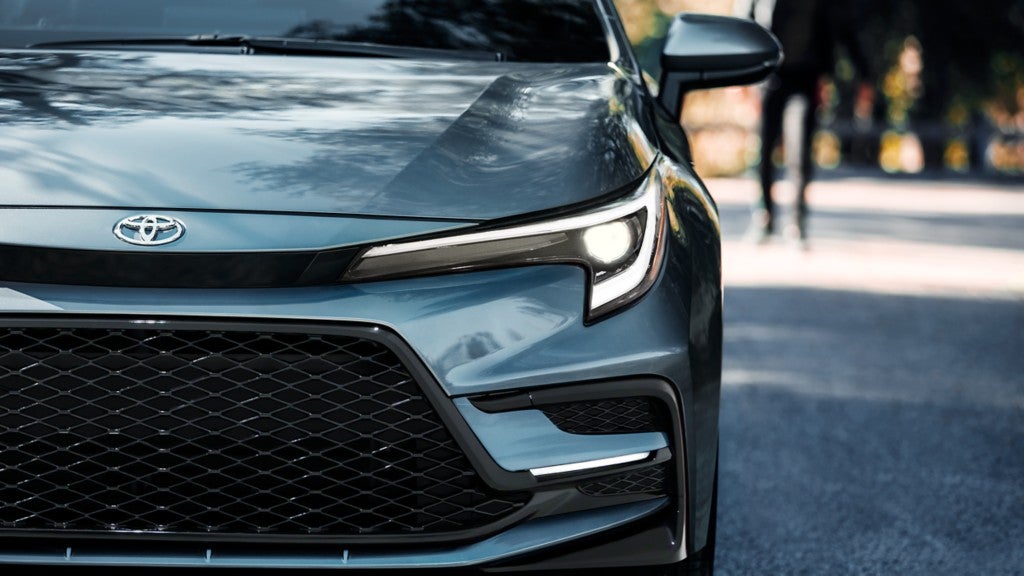
Compact sedans remain some of the most practical vehicles on the market, and the 2026 Toyota Corolla and 2026 Nissan Sentra are two of the strongest options in the segment. Both deliver good value and competitive fuel efficiency at accessible price points, with modern features that punch above their price tag. Below is a side-by-side look at what each model brings to the table so you can decide which one fits your priorities.
2026 Toyota Corolla vs. 2026 Nissan Sentra: First Impressions
The 2026 Toyota Corolla carries decades of earned reputation for reliability. Its cabin is practical, and the lineup is broad, including a popular hybrid variant with available AWD. The Nissan Sentra has matured into a genuinely competitive option, known for its smooth ride and standard safety features. Both cars make a strong case, but for different priorities.
The Corolla's biggest wins come from its hybrid powertrain with available AWD, higher combined MPG across the lineup, ten standard airbags, and Toyota Safety Sense 3.0 on every grade. The Sentra counters with a slightly lower entry price and a bit more trunk space. Where they overlap: both use similarly sized 2.0L four-cylinder engines, both run CVT transmissions, and both seat five comfortably.
If you'd like to compare trims in person, you can browse Corolla inventory at Longo Toyota in El Monte, CA, anytime.
Quick Comparison Table: Pricing, Trims, and Key Specs
| Feature | 2026 Toyota Corolla | 2026 Nissan Sentra |
|---|---|---|
| Available Grades | LE, SE, XSE; Hybrid LE, SE, XLE | S, SV, SR, SL |
| Engine | 2.0L Dynamic Force 4-cylinder | 2.0L naturally aspirated 4-cylinder |
| Horsepower/Torque | 169 hp / 151 lb-ft | 149 hp / 146 lb-ft |
| Transmission | CVT | Xtronic CVT |
| Combined MPG | 35 (gas) / 50 (hybrid) | 32-33 (varies by trim) |
| Cargo Capacity | 13.1 cu. ft. | 14.3 cu. ft. |
| AWD Availability | Yes, on Hybrid grades | No, FWD only |
Pricing and Trim Levels Compared
Both sedans target budget-conscious buyers without sacrificing much comfort or technology, and both open at similar entry points in the compact segment. The Sentra starts marginally lower, but the gap is small enough that it rarely decides the purchase on its own. What separates them is what each dollar buys further up the range.
The Corolla lineup runs from the well-equipped LE through the sportier SE and feature-rich XSE, then adds three separate hybrid grades in LE, SE, and XLE. That gives you six distinct configurations and a genuine choice between gas and hybrid at nearly every price point. Nissan keeps things simpler with S, SV, SR, and SL, and skips a hybrid option entirely, so Sentra buyers who want electrified efficiency have to look elsewhere.
Pricing shifts with incentives, regional offers, and equipment, so the most reliable way to compare is against current inventory. Our team at Longo Toyota in El Monte can walk you through the full Corolla lineup and help identify which grade fits your budget.
Fuel Economy and Powertrain Performance
Both sedans use a 2.0L four-cylinder engine, but the numbers tell different stories. The Corolla's Dynamic Force engine produces 169 hp and 151 lb-ft, compared to the Sentra's naturally aspirated 2.0L rated at 149 hp and 146 lb-ft. That difference shows up on the highway, in merging and passing situations that matter for drivers logging freeway miles around Southern California.
Fuel efficiency favors the Corolla at every level. Gas grades return 32 city / 41 highway / 35 combined on the LE and 31 / 40 / 34 on the SE and XSE, against the Sentra's 33 combined on S and SV and 32 on SR and SL. The Sentra's Xtronic CVT is smooth in daily driving, but the Corolla holds the efficiency edge across the entire comparison.
The hybrid is where the gap becomes decisive. The Corolla Hybrid LE and XLE reach an EPA-estimated 53 city / 46 highway / 50 combined, roughly 50 percent better than anything in the Sentra lineup. Toyota's hybrid system pairs a 1.8-liter engine with electric motors for 138 net combined horsepower, tuned for efficiency rather than outright output, and the payoff is a car that can go well past 500 miles between fill-ups. Choose all-wheel drive and you still see 48 combined on the LE, or 44 on the SE AWD, figures no front-wheel-drive Sentra comes close to matching. The Sentra offers no hybrid and no AWD at any trim.
The Sentra has no hybrid or AWD counterpart, so buyers who want either feature will only find them on the Corolla.
Interior Comfort, Technology, and Safety Features
The Sentra's cabin is well finished for the segment, with quilted leatherette arriving on the top SL grade, and its trunk edges out the Corolla at 14.3 cubic feet versus 13.1.
The Corolla answers with a cabin that scales further as you move up. A 7-inch digital instrument cluster is standard on LE and SE, with a 12.3-inch display on the XSE and Hybrid XLE and available on SE grades through the Premium Package. Apple CarPlay and Android Auto are standard across both lineups.
On safety, both cars arrive well-equipped. Toyota Safety Sense 3.0 is standard on every Corolla grade, covering Pre-Collision with Pedestrian Detection, Lane Departure Alert with Steering Assist, Full-Speed Range Dynamic Radar Cruise Control, Lane Tracing Assist, Road Sign Assist, and Proactive Driving Assist. Nissan matches the general approach with its own standard suite including automatic emergency braking and blind-spot monitoring.
The clearest measurable difference is occupant protection: every Corolla carries ten airbags as standard equipment, including a front passenger seat cushion airbag, against eight on the Sentra.
Reliability, Resale Value, and Long-Term Ownership Costs
Toyota's reliability record is consistently rated among the best in the industry by sources like Consumer Reports and J.D. Power, and the Corolla has long been a benchmark for low-maintenance, long-lasting transportation.
Resale value follows a similar pattern. The Corolla historically depreciates slower than most compact sedans, which helps owners recover more of their investment at trade-in or resale. Nissan's competitive pricing has helped the Sentra close some of that gap, though it still trails the Corolla on long-term value retention.
Toyota backs the Corolla with a 3-year/36,000-mile basic warranty, and the model is widely recognized for strong long-term ownership value.
The Verdict: Which Compact Sedan Is Right for You?
The 2026 Toyota Corolla vs. 2026 Nissan Sentra comparison comes down to what matters most to you. If maximum cargo space or the lowest possible entry price is the priority, the Sentra is a capable, well-equipped choice with standard safety tech across every trim.
For most Southern California and El Monte drivers, though, the Corolla comes out ahead. It offers better combined fuel economy at every comparable grade, a hybrid powertrain with available AWD that the Sentra lineup has no answer for, Toyota Safety Sense 3.0 and ten airbags standard on every grade, and a well-established reliability and resale record. Those advantages compound over a five-plus year ownership window, even with both models opening at similar price points. Those advantages add up to smarter total-ownership value over a five-plus year window, even with both models starting at similar price points.
Visit Longo Toyota
If you're ready to explore the 2026 Toyota Corolla, engineered by Toyota Motor Corporation, in person, browse our new inventory across all Corolla trims. Longo Toyota is located at 3534 North Peck Road in El Monte, CA, with a full showroom and financing department on-site to make car buying easier.
Call our sales team at 626-539-2113 or contact us online to schedule a test drive.
Frequently Asked Questions
Is the Corolla or Sentra more reliable?
The Corolla has a longer, more established reputation for durability and low maintenance needs, with reliability ratings from Consumer Reports and J.D. Power consistently among the best in the compact car segment. Sentra build quality has come a long way in recent years, but it hasn't quite caught up to Toyota's track record.
Which has better gas mileage, the Corolla or Sentra?
The Corolla leads at every level. Gas grades return 34 to 35 combined depending on trim, against 32 to 33 for the Sentra. The Corolla Hybrid widens the gap dramatically, reaching an EPA-estimated 50 combined on LE and XLE grades and 44 to 48 with all-wheel drive, an option the Sentra doesn't offer at all.
Which holds its value better, the Corolla or Sentra?
The Corolla historically retains its value better than the Sentra, making it the stronger pick for buyers planning to sell or trade in within a few years. The Sentra is narrowing the gap with competitive pricing, but the Corolla still leads on long-term resale performance.
Does the Corolla or Sentra offer more standard safety features?
Both offer full standard safety suites. Toyota Safety Sense 3.0 comes standard on every Corolla grade, covering Pre-Collision with Pedestrian Detection, Lane Departure Alert with Steering Assist, Lane Tracing Assist, and Proactive Driving Assist. Nissan equips every Sentra with its own standard suite including automatic emergency braking and blind-spot monitoring. The Corolla adds a measurable edge in passive protection with ten standard airbags to the Sentra's eight.