

Longo Toyota

#1 in the World since 1967*

Based on Toyota Motor Sales, USA 2025 Sales Report*
Based on Toyota Motor Sales, USA 2023 Sales Report*
Blog / Comparison

Blog

All Comparison New Inventory Local Electric Vehicle Vehicle Tips Review Hybrid Service Toyota News Locaal
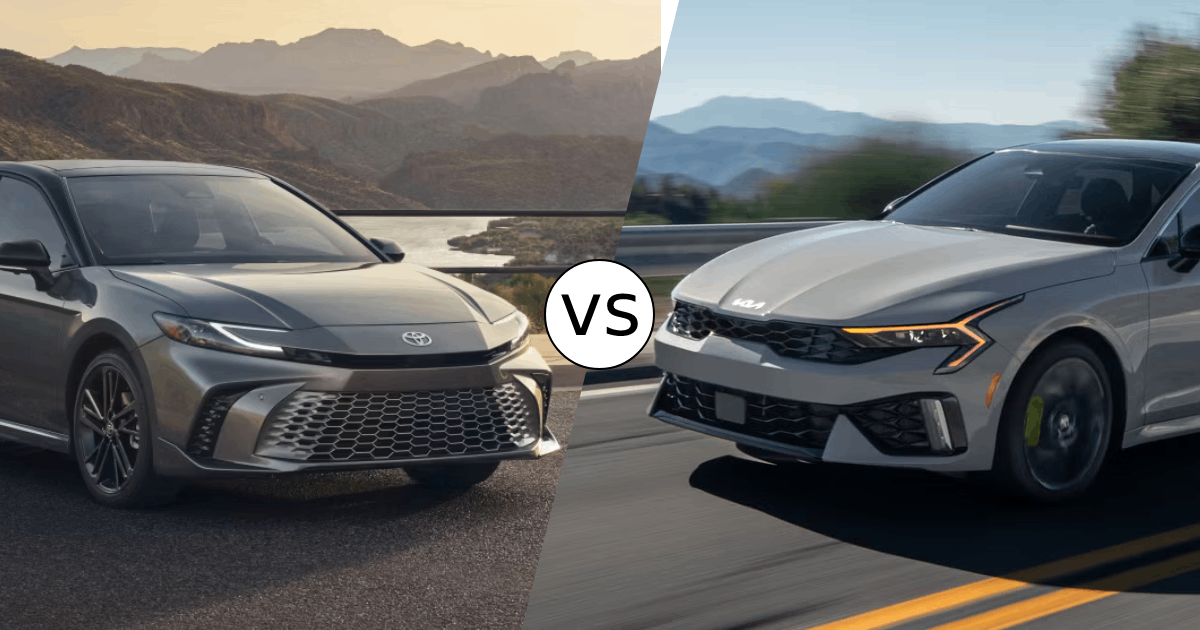
2026 Toyota Camry vs. Kia K5

2026 Toyota Camry vs. Kia K5: Which Sedan is Right for You?

Midsize sedans have never been more competitive, and the 2026 Toyota Camry vs. Kia K5 is one of the most debated matchups in the segment right now. At Longo Toyota, the world's largest Toyota dealership on 50+ acres in El Monte, CA, we talk with cross-shoppers every day who want a clear, honest answer. Both cars have genuine appeal, and neither is a bad choice. When you stack them side by side across the categories that matter most to everyday drivers, though, the Camry's standard hybrid efficiency and long-term ownership value give it a decisive edge. Explore our new Camry inventory to see current trims and configurations while you read through our comparison. more Meet the 2026 Toyota Camry: What Sets It Apart The 2026 Toyota Camry is built on Toyota's TNGA-K platform with a fully hybrid powertrain lineup across every trim. It delivers everyday practicality and driving refinement without asking you to trade fuel savings for performance or comfort for technology. Powertrain Options and Hybrid Advantage One of the most significant changes to the 2026 Camry is its move to an all-hybrid lineup. Every trim includes hybrid technology, and the practical benefits are hard to ignore. For daily commuters, the electric motor provides immediate, smooth torque in stop-and-go traffic, cuts down on fuel stops per week, and lowers running costs meaningfully over time. The standard FWD setup pairs a 2.5-liter four-cylinder engine with an electric motor for a combined 225 hp. The available AWD system raises output to 232 hp without a steep efficiency penalty. The K5's base 2.5-liter engine produces 191 hp on gasoline alone, and the performance-oriented K5 GT jumps to 290 hp with its turbocharged engine. That turbo output is impressive, but it comes with a corresponding increase in fuel consumption. Interior Refinement and Cabin Quality Inside the 2026 Camry, soft-touch surfaces and a clean instrument panel with well-positioned controls create a comfortable environment for daily commutes and longer trips alike. Front seat comfort is a standout, with available ventilated seats and a power-adjustable driver's seat across most trims. The infotainment system features a large touchscreen with wireless Apple CarPlay and Android Auto. A standard Qi-compatible wireless charger and an available JBL Premium Audio system round out the tech package. Rear passenger space is generous, making the Camry a practical choice for families. The K5 offers an available Bose Premium Audio option and a stylish interior, but material quality in lower trims doesn't quite match what the Camry delivers at similar price points. Toyota Safety Sense 3.0 and Standard Tech Toyota Safety Sense 3.0 comes standard on every 2026 Camry, regardless of trim. The suite includes a Pre-Collision System with Pedestrian Detection, Lane Departure Alert with Steering Assist, Automatic High Beams, Full-Speed Range Dynamic Radar Cruise Control, and Proactive Driving Assist. These aren't reserved for higher trims. They're part of every Camry from the base model up, which matters when you're comparing total value at comparable price points. Meet the Kia K5: What It Brings to the Table The Kia K5 is a legitimate competitor, and it deserves honest credit. Its exterior design stands out with sharper lines and a more aggressive stance than most traditional sedans in the class. The K5 GT's turbocharged 2.5-liter engine produces 290 hp and delivers a spirited, performance-forward character that appeals to drivers who prioritize driving excitement. The GT-Line trim adds sporty visual details and chassis tuning that reinforce that athletic positioning. For buyers whose priorities lean heavily toward bold styling and performance feel, the K5 makes a compelling case. When the focus shifts to efficiency, proven reliability, and total ownership value, however, the K5 shows its limitations relative to the Camry. 2026 Toyota Camry vs. Kia K5: Full Specs Comparison Feature 2026 Toyota Camry 2026 Kia K5 Powertrain 2.5L Hybrid (all trims standard) 2.5L naturally aspirated / 2.5L Turbo (GT) Base Output 225 hp (FWD) / 232 hp (AWD) 191 hp (base) / 290 hp (GT) Combined MPG Up to 51 MPG combined (LE FWD, EPA-estimated); 47 MPG combined (SE/Nightshade/XLE/XSE) 30 MPG combined (base LXS FWD, EPA-estimated) Standard Safety Suite Toyota Safety Sense 3.0 (all trims) Kia Drive Wise (standard) 5-Year Depreciation 34.3% (iSeeCars) 39.8% (iSeeCars) The table tells the core story. The Camry's hybrid efficiency and across-the-board safety technology are structural advantages, not trim-level extras. The depreciation gap is especially significant for buyers thinking beyond the purchase price. Reliability and Long-Term Ownership Value The purchase price is just the starting point. Fuel costs, maintenance, and resale value determine what a car actually costs to own over time. Toyota's Proven Track Record Toyota's reliability record is one of the most thoroughly documented in the industry, consistently validated by J.D. Power, Consumer Reports, and years of real ownership data. The Camry's reputation for reaching well beyond 200,000 miles with routine maintenance is backed by decades of consumer experience, not marketing language. Toyota also includes ToyotaCare with every new Camry, covering complimentary factory-scheduled maintenance for two years or 25,000 miles, whichever comes first, plus 24-hour roadside assistance for two years with unlimited mileage. That dependability translates directly into lower total cost of ownership and stronger resale values. What the Data Says About the K5 Kia has improved its quality significantly, and the K5's warranty coverage is genuinely reassuring. The numbers still favor the Camry, though. iSeeCars data shows the Camry depreciates approximately 34.3% over five years compared to 39.8% for the K5. That roughly 5.5-percentage-point gap represents real money when you sell or trade the car. For buyers planning to keep their vehicle for many years, the Camry's deeper reliability history and stronger resale performance make it the more financially sound decision. Fuel Efficiency and Real-World Performance Fuel efficiency is where the Camry pulls decisively ahead. With its full transition to hybrid powertrains, even entry-level trims deliver fuel economy the K5 can't match. For a driver covering 15,000 miles per year, the difference between approximately 30 MPG and up to 51 MPG combined represents hundreds of dollars in annual fuel savings that compound over the life of ownership. The Camry Hybrid's electric motor delivers immediate torque that makes Southern California stop-and-go traffic significantly more manageable than a conventional gas engine allows. The K5 GT and GT-Line trims offer genuinely engaging performance, but that experience comes at the cost of efficiency and day-to-day practicality. The Camry strikes a better balance for most drivers. If you're ready to feel that efficiency in person, explore our new Camry inventory and schedule a test drive at your convenience. Why the Camry Is the Smarter Buy for Most Shoppers If head-turning design and a high-output turbo engine are your top priorities, the K5 GT delivers that experience at a competitive price. Kia has built something worth respecting. For the majority of Southern California drivers, though, the priorities look different. Long-term reliability, strong resale value, and full safety technology included without a trim-level upgrade matter more over the life of the vehicle. The Camry satisfies all of those priorities in one well-rounded package. Every trim comes hybrid, so you're not giving up efficiency to get performance. Toyota Safety Sense 3.0 is standard across the board, not reserved for pricier configurations. The depreciation data confirms what Toyota owners have experienced for decades: the Camry holds its value better than the segment average, outperforming the K5 on five-year resale value. For drivers logging significant daily miles around the LA area, the fuel savings alone make the Camry's entry price easy to justify. Experience the 2026 Camry at Longo Toyota The best way to understand what the 2026 Camry offers is to experience it yourself. We carry an extensive selection of 2026 Camry models across multiple trims at our El Monte, CA campus, so you can compare configurations and find the one that fits your lifestyle and budget. If you have questions before your visit or want to get the conversation started, reach out to our team online and we'll help you get set up. If you've been weighing the 2026 Toyota Camry vs. Kia K5 and want to move forward with confidence, a test drive at Longo Toyota is the clearest next step.

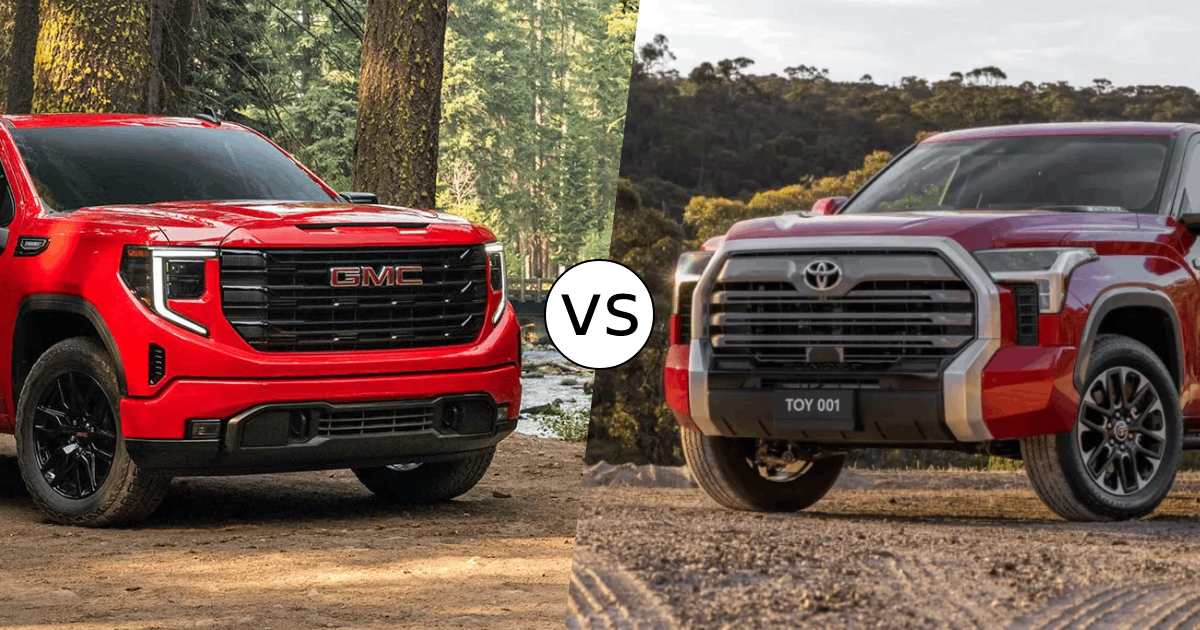
2026 Toyota Tundra vs. GMC Sierra 1500

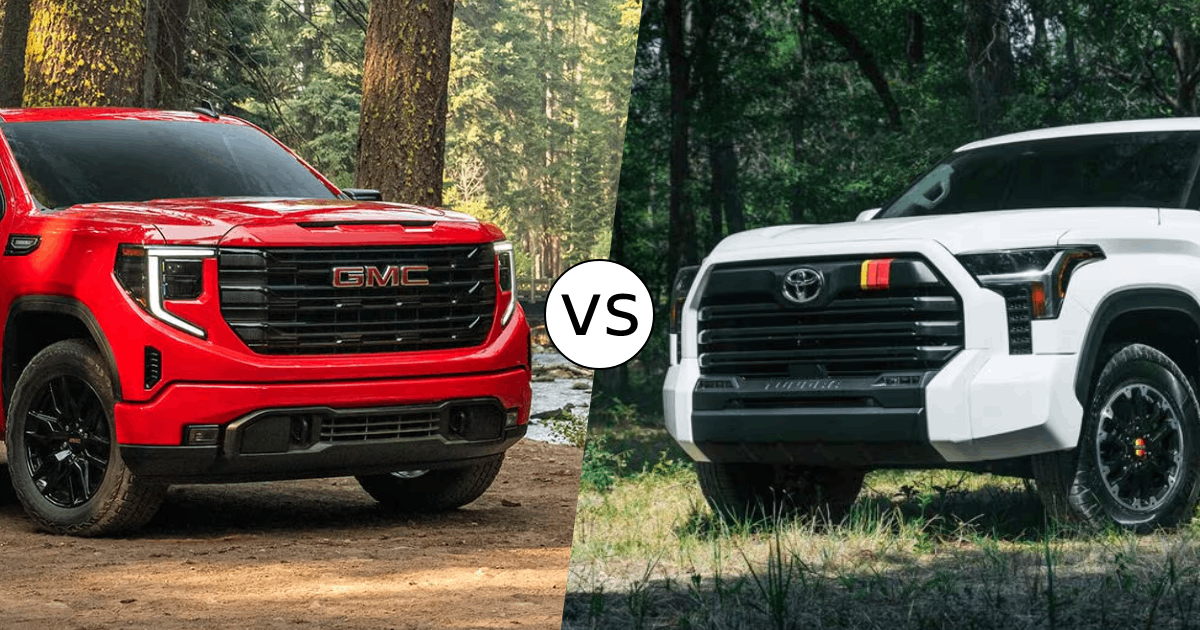
2026 Toyota Tundra vs. GMC Sierra 1500

Choosing a full-size pickup truck is rarely simple. You're not just buying a vehicle. You're committing to how you work, haul, and live for the next several years. The 2026 Toyota Tundra and the GMC Sierra 1500 both occupy serious ground in this segment, but put them side by side and real differences start to show. For buyers weighing the 2026 Toyota Tundra vs GMC Sierra, this guide covers everything from powertrain performance to long-term ownership confidence. If you already know the Tundra is your direction, browse our new Tundra inventory to see what's available now. more Why the 2026 Toyota Tundra vs GMC Sierra Comparison Matters The full-size truck market is more competitive than it's ever been. Buyers today want more than raw horsepower. They're after efficiency, technology, durability, and genuine versatility. Both the Tundra and Sierra 1500 answer that call, just in different ways, which is exactly why this comparison deserves a close look. Whether you're towing trailers on weekends, hauling materials to a job site, or grinding through Los Angeles traffic every morning, the right powertrain and feature set will make a tangible difference across years of ownership. Powertrain Advantage: The i-FORCE MAX Hybrid Changes Everything Powertrain is where the Tundra makes its most compelling argument. Toyota engineered the i-FORCE MAX hybrid system specifically for full-size truck demands, delivering serious torque alongside real efficiency gains. The Sierra 1500 sticks to conventional combustion options. Both approaches have merit, but in today's driving environment, the hybrid advantage is hard to ignore. 2026 Toyota Tundra Engine Options The Tundra offers two engine choices, both built around a 3.4L twin-turbocharged V6. The standard i-FORCE V6 produces 389 hp and 479 lb.-ft. of torque through a 10-speed automatic, delivering strong output well suited to daily driving and moderate towing. The i-FORCE MAX hybrid variant raises the bar considerably, pairing that twin-turbo V6 with an electric motor integrated into the transmission for 437 hp and 583 lb.-ft. of torque. That torque boost is immediately noticeable when pulling away from a stop or climbing grades with a loaded trailer. Toyota made the i-FORCE MAX available across multiple trim levels, so you don't have to buy at the top of the lineup to access it. 2026 GMC Sierra 1500 Engine Options The Sierra gives buyers more combustion choices: the TurboMax 2.7L V6 at 310 hp and 430 lb.-ft., a 5.3L V8 at 355 hp, a 6.2L V8 at 420 hp, and a Duramax 3.0L turbo-diesel at 305 hp and 495 lb.-ft. That variety serves specific power requirements well. The diesel's 495 lb.-ft. is the Sierra's strongest comparison point against the Tundra's hybrid, and it suits drivers who prioritize torque efficiency on long highway runs. What the Sierra doesn't offer is any electrified option in the half-ton space. Why the Tundra's Hybrid Powertrain Wins in the Real World Stop-and-go traffic is where the Tundra's hybrid system really earns its keep. The electric motor assists during low-speed acceleration, cutting fuel consumption precisely when it's most likely to spike. The diesel's advantages show up primarily on the highway, but it also demands ongoing maintenance of the SCR (selective catalytic reduction) system, DPF (diesel particulate filter), and regular DEF (diesel exhaust fluid) top-ups. Those are real ownership costs, not minor footnotes. The Tundra's hybrid delivers instantaneous low-RPM torque without the fluid requirements and regeneration management that diesel ownership involves. For drivers splitting time between city commutes and weekend hauling, that flexibility is a practical advantage the Sierra's current lineup simply can't match. Towing and Payload: Where the Tundra Pulls Ahead Both trucks are capable haulers, though they reach their limits differently. The Sierra 1500 can claim a higher maximum towing number when equipped with the 6.2L V8 or Duramax diesel and the Max Trailering Package, reaching up to 13,300 lbs. That headline matters if you're regularly pushing the upper ceiling of half-ton towing. The Tundra's gas i-FORCE V6 reaches up to 12,000 lbs when properly equipped, while the i-FORCE MAX hybrid configuration tops out at 11,450 lbs. For context, most truck owners tow somewhere between 8,000 and 10,000 lbs. At that range, both Tundra powertrains are well within capacity, and the hybrid adds meaningful fuel efficiency on every trip. Payload is where day-to-day utility becomes concrete. The Sierra 1500 edges ahead in maximum payload figures when configured for it, which matters for contractors regularly loading heavy materials. The Tundra's composite bed floor and practical cargo layout still make it a highly capable work tool, and the hybrid's torque delivery keeps loads moving confidently without the fuel penalty you'd normally expect from a conventional V8. Trim Levels and Value: Tundra vs. Sierra 1500 Lineup Breakdown Both trucks span broad ranges, from work-ready base models to near-luxury flagships. The Tundra lineup runs SR, SR5, Limited, Platinum, 1794 Edition, TRD Pro, and Capstone. Toyota Safety Sense comes standard across every trim, meaning even the entry-level SR includes advanced driver assistance without an upcharge. The i-FORCE MAX hybrid is available from the Limited through the Capstone, including the TRD Pro, so buyers don't have to sacrifice efficiency for luxury or off-road capability. The Sierra 1500 scales through Pro, SLE, Elevation, SLT, AT4, AT4X, Denali, and Denali Ultimate. GMC invests heavily in the Denali identity, and the Denali Ultimate's features (including available 16-way massage seats) represent a legitimate luxury achievement. At the top of the market, the Sierra makes a real case. The Tundra Capstone counters with its own premium interior and the hybrid powertrain available at that flagship tier. At most price points below the flagship, the Tundra's standard safety technology and hybrid availability create a stronger value argument. If you'd like to experience how the Tundra feels before committing, you can schedule a virtual test drive from anywhere. Off-Road Capability: TRD Pro vs. AT4 and AT4X The Tundra's TRD Pro comes equipped with Fox 2.5-inch internal bypass shocks, multi-terrain select with rock crawl mode, crawl control, skid plates covering the engine, transfer case and fuel tank, Goodyear Wrangler TrailRunner AT tires, and a locking rear differential. The i-FORCE MAX hybrid is available in the TRD Pro, adding trail efficiency alongside the off-road hardware. Toyota's off-road heritage runs deep, and the TRD Pro reflects that clearly. The Sierra's AT4 counters with an electronic locking rear differential, skid plates, all-terrain tires, and hill descent control. The AT4X steps up further with electronic locking front and rear differentials, enhanced suspension, and additional skid protection. For serious technical terrain, the AT4X's front locking differential gives it an edge over the TRD Pro in extreme scenarios. For most trail drivers, though, the TRD Pro's Fox suspension, crawl control, and hybrid availability deliver a more complete package at its price point. Reliability, Ownership Costs, and Long-Term Confidence Toyota's reliability reputation is consistently recognized across decades of automotive data. The Tundra has historically ranked among the most dependable full-size trucks on the market, with owners reporting high-mileage use without major mechanical issues. Toyota's hybrid components carry an 8-year / 100,000-mile warranty, which adds meaningful long-term confidence for i-FORCE MAX buyers. The Sierra 1500 is a well-engineered truck, and recent generations have improved in dependability. For buyers planning to keep their truck for a decade or more, though, Toyota's track record gives it a consistent edge in consumer satisfaction and long-term ownership studies. The diesel Sierra's DEF and DPF maintenance requirements are manageable but represent ongoing costs and service considerations the Tundra's hybrid avoids entirely. Resale value historically trends stronger for Toyota trucks in this segment, though you should verify current figures through sources like J.D. Power or Consumer Reports before making a final decision. 2026 Toyota Tundra vs. GMC Sierra 1500: Full Specs at a Glance Specification 2026 Toyota Tundra (i-FORCE MAX Hybrid) 2026 GMC Sierra 1500 (TurboMax 2.7L) 2026 GMC Sierra 1500 (Duramax 3.0L Diesel) Engine Type 3.4L Twin-Turbo V6 + Electric Motor 2.7L Twin-Turbo V6 3.0L Turbo-Diesel Horsepower 437 hp 310 hp 305 hp Torque 583 lb.-ft. 430 lb.-ft. 495 lb.-ft. Transmission 10-speed Automatic 8-speed Automatic 10-speed Automatic Max Towing 11,450 lbs. 9,400 lbs. 13,300 lbs. Fuel Economy (City/Hwy) 20/24 MPG 19/22 MPG 23/29 MPG The i-FORCE MAX's torque advantage over the base TurboMax is decisive. The Duramax diesel's towing ceiling and fuel economy are the Sierra's strongest comparison points, and they're worth acknowledging honestly. For buyers who don't need that diesel ceiling, the Tundra hybrid delivers better efficiency than the TurboMax, more torque than either Sierra gas option, and none of the diesel maintenance overhead. The Verdict: Why the Tundra Is the Smarter Truck The 2026 Toyota Tundra vs GMC Sierra debate doesn't have one universal answer, but for most buyers, the Tundra presents the stronger overall case. Its i-FORCE MAX hybrid delivers 583 lb.-ft. of torque with no diesel fluid requirements, backed by Toyota's proven hybrid reliability and an 8-year / 100,000-mile hybrid warranty. Standard safety technology across every trim, competitive towing for the vast majority of real-world use cases, and historically stronger resale values round out the long-term ownership argument. The Sierra Denali Ultimate and AT4X are legitimate achievements in their respective niches. But across the full range of buyers, the Tundra's combination of performance, efficiency, and dependability is the harder package to beat. Find Your Tundra at Longo Toyota Explore available Tundra models at Longo Toyota, the world's largest Toyota dealership, spanning over 50 acres in El Monte, CA. Whether you're interested in the TRD Pro, a hybrid-equipped Limited, or the flagship Capstone, our team can walk you through every configuration. If you currently own a truck, you can estimate your trade-in value as a natural first step toward upgrading. When you're ready to move forward, get pre-qualified for financing online or contact our team to schedule a visit to our El Monte, CA location. When the numbers are clear and the decision is close, sitting behind the wheel tends to make everything easier.

2026 Toyota Tacoma vs. Hyundai Santa Cruz

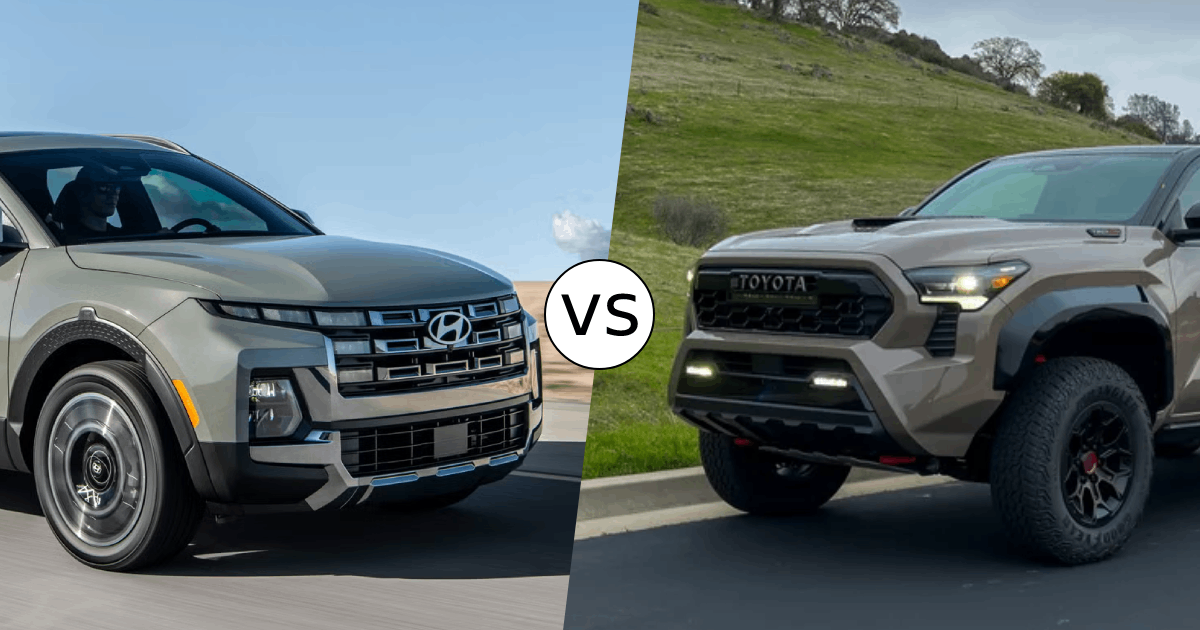
2026 Toyota Tacoma vs. Hyundai Santa Cruz

Choosing between a midsize truck and a crossover-truck hybrid sounds straightforward until you actually start digging into the details. The core tension here comes down to construction philosophy: the 2026 Toyota Tacoma is a body-on-frame truck engineered for serious capability, while the 2026 Hyundai Santa Cruz is a unibody crossover-truck built around comfort and convenience. That single distinction shapes everything from towing limits to trail performance to long-term durability. Both vehicles have genuine strengths, but when the specs sit side by side, the Tacoma consistently pulls ahead for drivers who need real utility. Browse our 2026 Tacoma inventory at Longo Toyota and see the full lineup for yourself. more Two Different Trucks With Two Very Different Visions At their core, these two vehicles represent genuinely different ideas about what a truck should be. The Tacoma is a traditional midsize pickup built around ruggedness, towing strength, and serious off-road capability. It appeals to drivers who actually use their trucks for truck things: hauling equipment, venturing off the beaten path, towing a boat on weekends across Southern California. The Santa Cruz takes a different direction. Hyundai classifies it as a Sport Adventure Vehicle, a crossover-inspired platform that borrows some pickup truck DNA while staying firmly in daily driver territory. It's comfortable, compact, and well-suited for urban environments. For buyers with serious utility needs, though, the comparison quickly reveals just how much separates these two. 2026 Toyota Tacoma vs. Hyundai Santa Cruz: Specs at a Glance Here's how the two vehicles compare across key performance categories: Specification 2026 Toyota Tacoma 2026 Hyundai Santa Cruz Body Construction Body-on-frame Unibody Engine Options Turbo I-4 / Hybrid I-4 (i-FORCE MAX) Naturally aspirated I-4 / Turbo I-4 Horsepower 228-278 hp (gas); 326 hp (hybrid) 191 hp (base); 281 hp (turbo) Towing Capacity (max) 6,500 lbs (gas); 6,000 lbs (i-FORCE MAX hybrid) 5,000 lbs (turbo) Payload Capacity Up to 1,705 lbs (gas); up to 1,710 lbs (hybrid) 1,411 lbs Ground Clearance 9.4 in. (up to 11.5 in. TRD Pro) 8.6 in. Bed Length (max) 73.5 in. (6-ft) 52.1 in. (4.3-ft) Drive Type RWD standard; 4WD available FWD standard; AWD available The Tacoma leads in towing, off-road hardware, engine performance, and bed size. The Santa Cruz offers a smoother ride and a more crossover-like daily driving experience, which genuinely suits some buyers. For drivers who need a truck to actually work like a truck, the specs make the case on their own. Powertrain Options: More Power, More Choices With the Tacoma Engine choice shapes how a vehicle performs under load, how it handles on the highway, and what you'll spend at the pump over the years of ownership. The Tacoma offers significantly more variety and capability across its trim levels. Tacoma's Turbocharged and Hybrid Lineup Toyota engineered the 2026 Tacoma around the i-FORCE turbocharged 2.4L I-4, producing 228 hp at 6,000 RPM and 243 lb-ft of torque at 1,600 RPM in the SR trim. Higher trims push those figures to 278 hp and 317 lb-ft. Then there's the i-FORCE MAX hybrid variant, which pairs the turbocharged engine with an electric motor to produce 326 hp and 465 lb-ft of torque. That combination delivers class-leading output while improving fuel efficiency in ways a conventional powertrain simply can't match. An 8-speed automatic handles most trims, and a 6-speed manual stays available for drivers who prefer to row their own gears. Santa Cruz Engine Options and Where They Fall Short The Santa Cruz does offer a turbocharged 2.5L I-4 in upper trims, producing 281 hp and 311 lb-ft of torque. The base engine is a naturally aspirated 2.5L I-4 rated at 191 hp and 181 lb-ft. That turbo variant is a capable engine for daily commuting, but even at peak output, it trails the Tacoma's hybrid numbers by a wide margin. For buyers who plan to tow regularly or carry heavy payloads, that gap is hard to ignore. Towing and Payload Capacity: The Tacoma Pulls Ahead The numbers tell a clear story. The 2026 Tacoma is rated to tow up to 6,500 lbs on gas-powered trims and up to 6,000 lbs on the i-FORCE MAX hybrid, while the Santa Cruz tops out at 5,000 lbs with its turbocharged engine. Payload capacity follows a similar pattern: the Tacoma carries up to 1,705 lbs on gas trims and up to 1,710 lbs on the hybrid, compared to a maximum of 1,411 lbs for the Santa Cruz. For contractors, outdoor enthusiasts towing ATVs, or anyone regularly moving heavy cargo, the Tacoma's advantage is real and practical. Toyota designed its frame, suspension, and powertrain with actual work in mind, not just the appearance of capability. Off-Road Capability: Built for the Trail vs. Built for the Weekend Once you leave paved roads, the difference between these two vehicles becomes even more obvious. The Tacoma comes with 9.4 inches of ground clearance in standard configuration, with the TRD Pro reaching up to 11.5 inches of running ground clearance when the suspension is fully articulated. The Santa Cruz offers 8.6 inches. Those numbers reflect a meaningful difference in what each vehicle can actually handle. Tacoma TRD Off-Road and Trailhunter Configurations Toyota offers dedicated off-road trims that turn the Tacoma into a genuine trail machine. The TRD Off-Road comes standard with a locking rear differential, crawl control, Multi-Terrain Select, skid plates, and suspension tuned specifically for rough terrain. The Trailhunter goes further, arriving from the factory with advanced suspension, underbody protection, and hardware built for sustained off-road use. Whether you're exploring Angeles National Forest trails or running fire roads in the San Gabriel Mountains, these configurations are mechanically ready before you ever touch a modification. Santa Cruz Off-Road Limitations The Santa Cruz offers AWD and handles light gravel roads or mild trails reasonably well. There's no comparable off-road-specific trim in its lineup, though. Its unibody construction, which works beautifully for a smooth pavement ride, limits its ability to flex and absorb punishment on rougher terrain. The Santa Cruz is capable for casual weekend adventure, and it does that job well. It simply wasn't built for the sustained off-road work the Tacoma handles as a baseline expectation. Cargo Bed Utility and Real-World Hauling Bed design is one of the most practical differences between these two trucks. The Tacoma's bed reaches 73.5 inches in its 6-foot configuration, accommodates standard accessories like toolboxes and bed liners, and handles sustained weight without issue. The Santa Cruz offers a 52.1-inch bed (roughly 4.3 feet), which limits what can fit without folding the tailgate down. Hyundai did include a clever underfloor storage bin that keeps smaller items dry and organized. It's a useful feature, but it doesn't compensate for reduced overall capacity. For real-world hauling, the Tacoma's bed is simply more versatile. Long-Term Value, Resale, and What the Future Holds Resale value is one of the most underappreciated factors in any vehicle purchase, and this is where the Tacoma's track record really stands out. The Tacoma consistently ranks among the highest-retained midsize trucks in the country, driven by its reliability reputation, a dedicated owner community, and steady demand for used units. Buyers who purchase a Tacoma today can reasonably expect a strong return when they eventually sell or trade in. The Santa Cruz entered the market in 2022 and hasn't yet built the same depth of resale history. It's a genuine innovation in its segment. Worth noting for buyers thinking long-term, though: multiple industry reports indicate Hyundai is moving up its timeline to end Santa Cruz production, originally planned for the second quarter of 2027, with production reportedly being scaled back significantly in early 2026. Hyundai has not made a formal announcement confirming the end date, but the direction is clear: the Santa Cruz is approaching the end of its production run. This shift has practical implications for resale value, parts availability, and long-term dealer support. It doesn't make the Santa Cruz a bad vehicle today, but for anyone weighing a five- or ten-year ownership horizon, the Tacoma's established ecosystem offers a far more predictable path. Explore the 2026 Toyota Tacoma at Longo Toyota We're here to help you find the right Tacoma configuration for your needs. View our current Tacoma inventory at Longo Toyota in El Monte, or contact us to schedule a test drive with one of our team members. Getting behind the wheel is the most convincing argument we can offer. There's no pressure, no guesswork, and no unanswered questions left on the table. We've been serving drivers across the San Gabriel Valley for decades, and that experience shows up in every conversation on the floor. We're open seven days a week at 3534 North Peck Road in El Monte, and we're ready when you are.

2026 Toyota RAV4 vs. 2026 Honda CR-V

2026 Toyota RAV4 vs. 2026 Honda CR-V

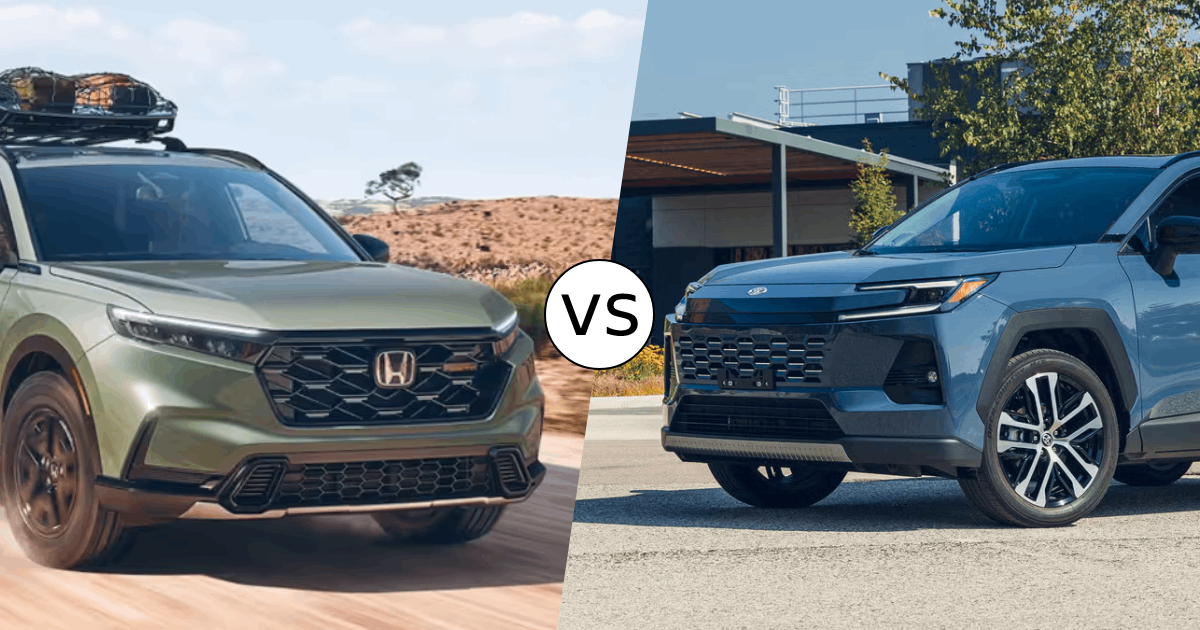
Walk into any dealership these days and you'll hear the 2026 Toyota RAV4 vs 2026 Honda CR-V debate constantly. Both SUVs have built loyal followings, but Toyota just made a bold move that changes everything. The entire RAV4 lineup went hybrid-only. No gas engine option. No choice to make. It's hybrid power across the board. Honda took a different path with the CR-V, keeping both traditional and hybrid options available. Want the familiar turbocharged engine? You got it. Prefer hybrid efficiency? That's there too. This flexibility worked before, but the automotive world is racing toward electrification faster than ever. Toyota jumped ahead by going all-in on hybrid technology, setting up the RAV4 for buyers who want proven fuel savings without dealing with charging infrastructure. Ready to explore our new Toyota inventory? Let's see what separates these popular SUVs. more 2026 Compact SUV Showdown: RAV4's All-Hybrid Revolution vs. CR-V Toyota didn't just add a few hybrid models to the 2026 RAV4 lineup. They completely rewrote the playbook. Every single RAV4 now runs with electric assistance, no exceptions. This bold move demonstrates Toyota's confidence in their hybrid tech. While other manufacturers are still figuring out electrified systems, Toyota has been perfecting hybrids across millions of vehicles globally. That experience really shows in how smoothly the RAV4's hybrid system operates. HEV Trim Lineup: Power and Efficiency The standard hybrid trims span from the practical LE to the fully-loaded XSE, all using a 2.5L hybrid system that produces 226 hp with FWD or 236 hp with AWD. Meanwhile, the CR-V's hybrid system delivers 204 hp from its 2.0L setup, while gas-only CR-V models manage just 190 hp from their 1.5L turbo engine. The 2026 RAV4 HEV lineup covers LE, XLE Premium, Limited, Woodland, SE, and XSE trims. The LE handles what most families need: dependable transportation, excellent gas mileage, and Toyota's famous durability. Step up through the trim levels and you'll find genuine improvements like better interior materials, enhanced safety technology, or upgraded infotainment. The brilliant part about going all-hybrid? You get outstanding fuel economy regardless of which trim appeals to you. PHEV Trims: Plug-In Performance The plug-in RAV4 models take efficiency to another level with 324 hp and standard AWD across SE, XSE, Woodland, and GR SPORT variants. These PHEV models deliver up to 54 miles of all-electric driving range on the SE trim, which works perfectly for drivers with predictable daily commutes around Southern California who can plug in at home nightly. Running errands without using any gas creates real savings over time. The GR SPORT variant adds some personality to the plug-in lineup, mixing environmental benefits with sportier suspension tuning and aggressive styling. It proves you don't have to sacrifice driving excitement when choosing efficiency. 2026 Honda CR-V: Gas and Hybrid Configurations Honda takes a different approach with the 2026 CR-V by maintaining both turbocharged gas and hybrid powertrains. Base LX, EX, and EX-L trims use the traditional 1.5L turbo engine, while efficiency-focused buyers can upgrade to Sport Hybrid, TrailSport Hybrid, Sport-L Hybrid, or Sport Touring Hybrid variants. The CR-V hybrid has received positive reviews for smooth operation and solid fuel economy. Honda's system performs well and provides meaningful efficiency gains over gas-only models. But splitting development between conventional and hybrid powertrains keeps Honda from becoming a pure efficiency champion in this Honda CR-V vs Toyota RAV4 battle. The market is clearly moving toward electrification, and the RAV4's complete hybrid commitment places it ahead of that trend. Powertrain Efficiency: Why RAV4's All-Hybrid Strategy Wins Comparing the 2026 RAV4 vs CRV efficiency numbers shows Toyota's clear edge. EPA estimates demonstrate the RAV4 hybrid's impressive fuel economy across its lineup: FWD LE/SE/XLE Premium: 47 city / 40 highway / 43 combined mpg AWD LE/SE: 46 city / 39 highway / 42 combined mpg AWD XLE Premium: 47 city / 40 highway / 43 combined mpg AWD XSE/Limited: 44 city / 39 highway / 42 combined mpg Woodland: 41 city / 35 highway / 38 combined mpg The CR-V hybrid's EPA estimates tell a different story: FWD hybrids: 43 city / 36 highway / 40 combined mpg AWD Sport/Sport-L/Sport Touring: 40 city / 34 highway / 37 combined mpg TrailSport AWD: 38 city / 33 highway / 35 combined mpg The RAV4 beats the CR-V hybrid in every single configuration, with some trims delivering up to 5 mpg better city efficiency and up to 3 mpg better combined efficiency. For drivers logging serious annual mileage around El Monte and across Southern California, these differences add up to substantial fuel savings. Toyota's advantage goes beyond just numbers. The RAV4 hybrid system has been refined through multiple generations, producing real-world fuel economy that actually shows up in your monthly gas expenses. Toyota didn't rush their hybrid development. They invested time to perfect it, and that patience delivers a more polished, better-integrated system throughout the lineup. At Longo Toyota, the nation's largest Toyota dealership, we consistently see RAV4 hybrid owners reporting fuel economy that meets or beats EPA estimates. That real-world performance builds trust in the technology. Interior Design, Comfort, and Technology Compared Cabin Quality and Passenger Space Climb inside the 2026 Honda CRV vs 2026 Toyota RAV4 and you'll see two distinct philosophies. The CR-V focuses on upscale materials and a premium feel, creating interiors that seem more expensive than their actual prices. The RAV4 goes for a more durable approach without compromising comfort. Materials feel built to withstand years of use, which makes sense for an SUV many owners take camping and on family adventures. Passenger space works well in both vehicles. The CR-V provides slightly more rear legroom, while the RAV4 offers generous cargo space for groceries, sports equipment, and weekend trip supplies. Both SUVs seat five passengers comfortably. Infotainment and Safety Features The RAV4 comes with a standard 10.5-inch touchscreen on most trims, plus an available 12.9-inch upgrade that includes JBL audio. The CR-V uses a 9-inch touchscreen on all trims. The RAV4's larger available screen creates a more modern, intuitive interface with better visibility. Safety technology comes standard on both vehicles. The RAV4 includes Toyota Safety Sense 4.0 across all trims, while the CR-V features Honda Sensing. Both systems provide automatic emergency braking, lane departure warnings, and adaptive cruise control. The RAV4's Toyota Safety Sense suite has been refined across millions of vehicles, building its reputation for reliable performance. Long-Term Value: Reliability, Resale, and Ownership Costs When examining RAV4 vs CR V reliability, Toyota's track record provides a decisive edge. The RAV4 consistently ranks among the most dependable vehicles in reliability surveys, earning this reputation by building SUVs that simply keep running. This reliability directly impacts your finances through fewer surprise repairs and lower maintenance costs down the road. The CR-V has developed its own solid reliability reputation. However, Toyota's hybrid systems have proven themselves across millions of miles in every climate and driving situation imaginable. That extensive real-world validation gives buyers confidence that RAV4 hybrids will perform consistently long after the warranty expires. Resale value mirrors reliability trends, and the RAV4 holds its value exceptionally well. Used car buyers consistently pay premium prices for RAV4 models because they understand they're purchasing a vehicle with plenty of life remaining. This strong resale performance means RAV4 owners recover more of their initial investment when it's time to upgrade, effectively reducing total ownership costs. The Verdict: Why the 2026 RAV4 Is the Smarter Choice This 2026 Toyota RAV4 vs Honda CRV comparison shows a clear winner for buyers prioritizing efficiency, reliability, and long-term value. Toyota's all-hybrid commitment positions the RAV4 as the best compact hybrid SUV for drivers ready to embrace proven electrified technology. The CR-V remains a capable, comfortable SUV. Its divided focus between gas and hybrid powertrains prevents complete commitment to either approach though. In a market sprinting toward electrification, the RAV4's hybrid-only strategy looks increasingly brilliant. Fuel costs alone justify choosing the RAV4, especially for drivers covering significant annual mileage. The savings accumulate quickly, offsetting any price premium for hybrid technology. Combined with Toyota's reliability reputation and strong resale values, the RAV4 delivers a compelling total ownership package. Experience the RAV4 at Longo Toyota For Southern California residents considering the Honda CRV and RAV4 comparison, visiting Longo Toyota provides hands-on access to the complete RAV4 lineup. Our experienced team at our El Monte, CA location can explain differences between HEV and PHEV models, help identify which trim level fits your needs, and discuss financing options that make switching to hybrid power more affordable. Browse our current RAV4 selection online or schedule a test drive by calling 626-539-2113 during our convenient hours, Monday through Sunday from 9 AM to 8 PM. Longo Toyota's state-of-the-art service facilities keep your RAV4 running perfectly for years to come. Factory-trained technicians use genuine Toyota parts and follow manufacturer specifications to maintain your hybrid's efficiency and reliability. Schedule service Monday through Friday from 7 AM to 7 PM or Saturday from 7 AM to 5:30 PM by calling 626-539-2126. Frequently Asked Questions What is better, Honda CR-V or Toyota RAV4? The RAV4 wins thanks to its all-hybrid lineup, superior reliability record, and stronger resale value. The CR-V offers a more premium interior feel and slightly more rear-seat space, but the RAV4's proven hybrid technology and lower long-term ownership costs make it the smarter investment. How does the RAV4 hybrid vs CR-V hybrid compare? The RAV4 hybrid benefits from Toyota's decades of hybrid expertise, resulting in smoother operation and proven long-term reliability. EPA estimates show the RAV4 achieving up to 48 city mpg compared to the CR-V hybrid's 43 city mpg in comparable configurations. Is the Toyota RAV4 vs Honda CR-V price competitive? Pricing varies by trim level and available incentives, but both SUVs compete in similar ranges. The RAV4's standard hybrid powertrain may carry a slight premium over base CR-V gas models, but lower fuel costs and stronger resale values offset that difference over time. Which offers better fuel economy, the 2026 RAV4 vs CRV? The RAV4's all-hybrid lineup delivers superior fuel economy across all trim levels compared to the CR-V's gas-only models. When comparing hybrid versions, the RAV4 achieves better efficiency thanks to Toyota's more mature hybrid technology, with some configurations offering up to 5 mpg better city fuel economy and up to 3 mpg better combined fuel economy. How do Honda hybrid vs Toyota hybrid systems compare? Toyota's hybrid systems benefit from more extensive development and real-world testing across millions of vehicles worldwide. While Honda's hybrids work well, Toyota's experience shows in smoother operation, better long-term reliability, and more consistent efficiency in varied driving conditions. Should I consider the RAV4 hybrid vs Kia Sportage hybrid? Both offer compelling hybrid options, but the RAV4's proven reliability and strong resale value give it an edge for buyers prioritizing long-term value. Toyota's reputation for dependability makes the RAV4 a safer bet for minimizing ownership headaches.

2026 Toyota Tacoma vs Ford Maverick

2026 Toyota Tacoma vs Ford Maverick

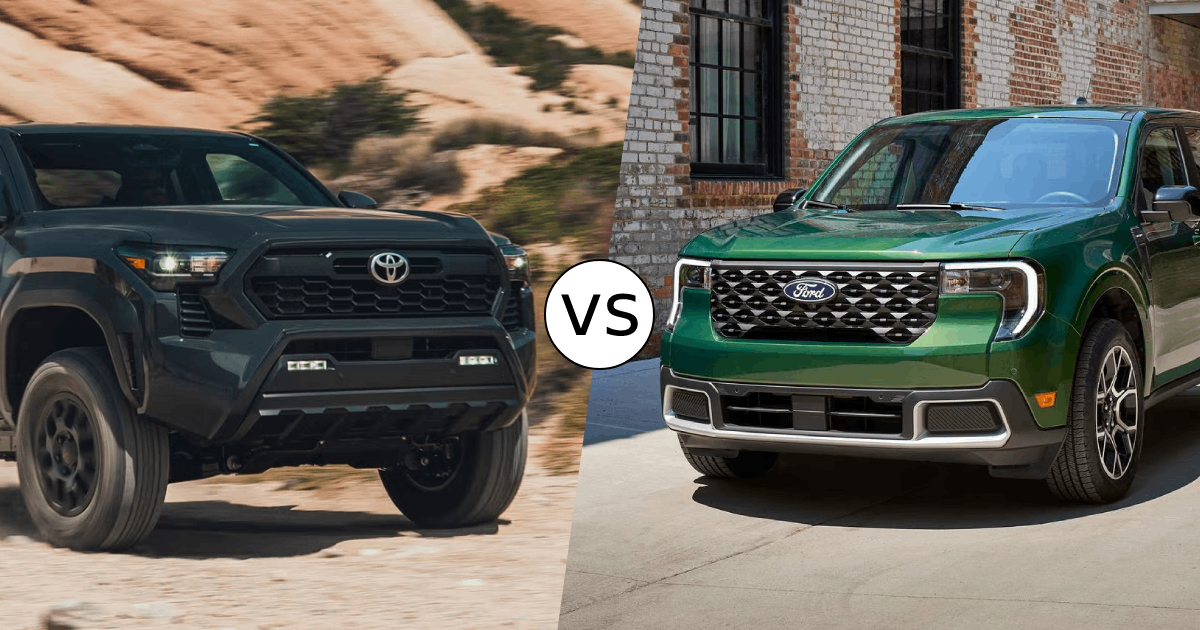
The 2026 Toyota Tacoma and Ford Maverick serve fundamentally different purposes in the pickup segment. At Longo Toyota, we help buyers understand this key distinction: the Tacoma delivers genuine truck capability with proven off-road credentials and serious towing capacity, while the Maverick functions as a compact urban pickup prioritizing efficiency over heavy-duty performance. Your choice depends on whether you need a rugged workhorse for demanding terrain and substantial loads, or a practical daily driver with occasional hauling capability. more 2026 Toyota Tacoma vs Ford Maverick: Understanding Two Different Trucks Comparing the Toyota Tacoma vs Ford Maverick means recognizing these aren't direct competitors. The Tacoma targets buyers who need real off-road capability and heavy-duty performance. Body-on-frame construction and available 4WD systems make it the pick for serious trail running and towing substantial loads. The Maverick serves urban drivers who want truck versatility in compact dimensions. Unibody construction and standard hybrid powertrain focus on efficiency and maneuverability rather than maximum capability. Power and Performance Comparison Engine Options and Specifications The 2026 Toyota Tacoma delivers substantially more power across its lineup. Here's how the engines stack up: Feature 2026 Toyota Tacoma 2026 Ford Maverick Base Engine Turbocharged 2.4L 4-cyl, 228 hp, 243 lb-ft 2.5L 4-cyl hybrid, 191 hp Higher Output Options Up to 278 hp / 317 lb-ft (most trims); i-Force hybrid up to 326 hp / 465 lb-ft Turbocharged 2.0L EcoBoost, 250 hp / 280 lb-ft Transmission 8-speed automatic or 6-speed manual CVT (hybrid); 8-speed automatic (EcoBoost) The Tacoma's turbocharged engine delivers the punch you need for highway merging and trailer towing, especially when navigating Southern California's mountain grades. The available i-Force hybrid system pushes output to 326 horsepower and 465 lb-ft of torque, providing exceptional capability for demanding conditions. This performance gap becomes obvious under load. The Tacoma's powertrain responds with urgency when you're passing on two-lane roads or accelerating up steep inclines near Angeles National Forest. Drivetrain Systems Feature 2026 Toyota Tacoma 2026 Ford Maverick Drivetrain Rear-wheel drive base; available 4WD with differential locks Front-wheel drive base; optional all-wheel drive Off-Road Focus 4WD system optimized for challenging terrain AWD suited for typical tasks The Tacoma's available part-time 4WD system includes a two-speed transfer case, locking rear differential, and multi-terrain select modes. These features provide serious control when you're navigating rocky trails or muddy backroads throughout El Monte and the surrounding region. The Maverick's intelligent all-wheel drive primarily sends power to the front wheels, engaging the rear automatically when it detects slippage. This setup handles wet pavement and light snow but wasn't engineered for serious off-road adventures. Towing, Payload, and Work Capability Towing capacity reveals the clearest performance gap between these trucks: Capability 2026 Toyota Tacoma 2026 Ford Maverick Max Towing Up to 6,500 lbs Up to 4,000 lbs Max Payload Up to 1,705 lbs Up to 1,500 lbs Curb Weight ~4,145 lbs ~3,913 lbs Fuel Tank Capacity 18.2 gallons 13.8 gallons The Tacoma's 6,500-pound towing capacity handles substantial boat trailers, campers, and equipment trailers with confidence. That's 62.5% more capability than the Maverick's 4,000-pound maximum. This difference matters for contractors and outdoor enthusiasts regularly towing heavy loads. The Tacoma's 1,705-pound payload rating accommodates building materials, equipment, and gear for extended trips. These numbers qualify the Tacoma as a genuine work truck handling demanding job sites, while the Maverick functions better as a lifestyle vehicle with occasional hauling needs. We invite you to browse our Tacoma selection and experience these capability differences firsthand. Off-Road Performance and Trail-Ready Features The Tacoma's reputation rests heavily on its off-road prowess. Ground clearance reaches 9.4 inches on base models and increases to 10.6 inches on off-road trims. Approach angles hit 29 degrees while departure angles reach 23.5 degrees, letting you tackle steep obstacles without scraping bumpers. The available crawl control system automatically manages throttle and braking on technical trails. Off-road enthusiasts appreciate the Tacoma's available locking rear differential, which ensures power reaches both wheels even when one lifts off the ground. The multi-terrain select system adjusts engine, transmission, and traction control settings for mud, sand, rock, and other challenging surfaces throughout Southern California's diverse terrain. The Maverick's 8.6 inches of ground clearance and lack of low-range gearing limit serious trail options. The truck handles dirt roads and mild trails adequately, but technical terrain quickly exceeds what it can do. Build Quality and Durability Construction Differences Aspect 2026 Toyota Tacoma 2026 Ford Maverick Chassis Body-on-frame (traditional truck durability) Unibody (lighter, efficiency-focused) Platform Shared with Land Cruiser Prado Compact crossover-based Body-on-frame construction gives the Tacoma significant durability advantages. The separate frame and body withstand twisting forces on rough terrain without transferring stress to the cab. This design philosophy has helped Toyota build trucks lasting 200,000 miles and beyond. The Maverick's unibody construction reduces weight and improves handling but sacrifices some long-term durability under harsh conditions. At the nation's largest Toyota dealership, we see Tacomas return for routine maintenance with remarkably few major repairs even after years of hard use. Cabin Design The Tacoma's cabin emphasizes ruggedness and utility. Front seats feel firm and supportive for long drives, with available leather seating and upgraded trim materials adding comfort in higher packages. The Double Cab configuration provides functional rear seating, while the deeper bed suits tall cargo better than the Maverick's design. Storage solutions prioritize different needs. The Tacoma's bed depth accommodates equipment and gear that won't fit in the Maverick's shallower design, making it superior for work and recreational hauling. Technology and Safety Features The Tacoma comes with Toyota's Audio Multimedia system on an 8-inch or 14-inch touchscreen depending on trim level. Wireless smartphone integration comes standard, and the available JBL audio system delivers impressive sound quality. Toyota Safety Sense includes pre-collision warning, automatic emergency braking, lane departure alert, and adaptive cruise control as standard equipment. Both trucks offer comparable safety technology, with available 360-degree camera systems making maneuvering easier. The Tacoma adds off-road specific technology like a multi-terrain monitor, which uses cameras to show wheel positioning and obstacles around the truck. This feature proves invaluable on tight trails where the Tacoma excels. Ready to experience these features? Schedule a virtual test drive with our team. Long-Term Value and Resale Toyota trucks historically hold their value better than most competitors. Tacomas regularly appear near the top of resale value rankings, with three-year-old models retaining significant percentages of their original price. This strong resale value offsets the higher initial purchase price and makes the Tacoma a smart long-term investment. The Maverick hasn't established a resale track record given its recent introduction. The truck's unique position should support decent resale values, though likely not matching the Tacoma's legendary retention. The Tacoma's proven reliability reputation strengthens its value proposition. While maintenance for more complex 4WD systems requires attention, our service department helps keep costs manageable with competitive pricing and genuine parts. Which Truck Should You Choose? The Tacoma makes sense if you regularly venture off-road, tow substantial trailers, or need maximum durability for work purposes. Its proven reliability, superior capability, and strong resale value justify the investment when you'll actually use these advantages. The Maverick suits urban drivers wanting truck versatility without truck-sized compromises, particularly those prioritizing efficiency for daily commuting with only occasional hauling needs. Consider these factors: The Tacoma delivers 62.5% more towing capacity, superior off-road capability with genuine 4WD systems, body-on-frame durability, and legendary resale value. These advantages matter significantly for buyers needing real truck capability rather than compact convenience. Visit us at Longo Toyota to explore the Tacoma lineup. Get pre-qualified for financing before your visit to streamline the process. We're located at 3534 North Peck Road in El Monte and open Monday through Sunday from 9 AM to 8 PM. Ready to experience the Tacoma difference? Contact our team today to schedule your test drive and discover why the Tacoma remains the choice for buyers needing genuine truck capability. Frequently Asked Questions Which truck tows more weight? The Tacoma tows up to 6,500 pounds compared to the Maverick's 4,000-pound maximum, providing 62.5% more capability when properly equipped. Can the Maverick handle serious off-roading? The Maverick handles light trails and dirt roads but lacks the ground clearance, low-range gearing, and locking differentials needed for technical terrain. The Tacoma excels in serious off-road conditions. Which truck offers better long-term reliability? Toyota's reputation for reliability and the Tacoma's proven track record suggest excellent long-term durability. The Maverick uses reliable components but hasn't established a comparable track record. How does payload capacity compare? The Tacoma offers 1,705 pounds maximum payload versus the Maverick's 1,500 pounds. The Tacoma's superior capacity handles demanding work and recreational loads more effectively. What makes the Tacoma better for work use? Body-on-frame construction, higher towing and payload ratings, available 4WD with locking differentials, and proven durability make the Tacoma the superior choice for contractors and serious work applications. Which truck has more cabin space? The Tacoma provides more spacious, rugged interior design with better rear seat room in Double Cab configurations. The design prioritizes utility and durability over compact efficiency.

2026 Toyota RAV4 vs Mazda CX-5

2026 Toyota RAV4 vs Mazda CX-5

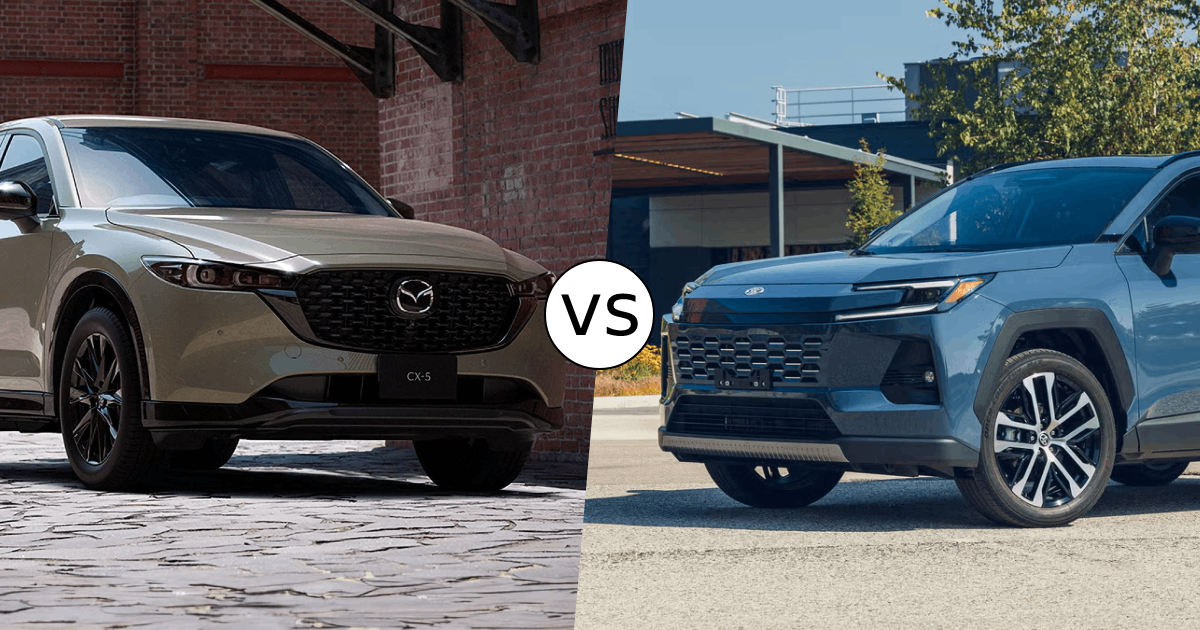
Shopping for a compact SUV means weighing priorities that matter most to your lifestyle. The 2026 Toyota RAV4 and Mazda CX-5 represent two distinct approaches to the same challenge. One delivers hybrid efficiency and legendary reliability, while the other offers premium materials and engaging dynamics. Your choice hinges on whether you prioritize fuel savings and practicality or driving pleasure and upscale finishes. more 2026 RAV4 vs CX-5: Compact SUV Showdown The 2026 Toyota RAV4 vs Mazda CX-5 comparison reveals fascinating differences beneath surface similarities. The RAV4 has embraced hybrid technology across its entire range for 2026, making fuel efficiency a cornerstone of its identity while the CX-5 continues with traditional gasoline engines. This fundamental powertrain difference translates to dramatically lower running costs and reduced environmental impact without sacrificing performance. The CX-5 takes a different path, focusing on refined interior materials and sporty handling characteristics. Design philosophies diverge noticeably as well. The RAV4 projects rugged capability with bold styling and higher ground clearance, suggesting adventure readiness. The CX-5 presents a sleeker, more sophisticated profile that conveys refinement rather than ruggedness. Ready to experience these differences firsthand? Explore our RAV4 inventory at Longo Toyota in El Monte, where we can help you find the perfect configuration for your needs. Powertrain Options and Fuel Efficiency Engine Choices and Hybrid Availability The powertrain battle clearly distinguishes these competitors. Toyota has committed to hybrid technology throughout the RAV4 lineup, combining gasoline engines with electric motors for impressive efficiency gains. The hybrid setup provides immediate electric torque, enhancing acceleration feel in city traffic while delivering robust highway performance. Feature 2026 Toyota RAV4 2026 Mazda CX-5 Base Engine 2.5L hybrid four-cylinder 2.5L naturally aspirated four-cylinder Horsepower 226 hp (FWD) / 236 hp (AWD) 187 hp Torque 163 lb-ft (engine) 186 lb-ft Transmission CVT Six-speed automatic Drive Type FWD standard; AWD available AWD standard Hybrid Availability Hybrid-only lineup None (Hybrid coming 2027) Towing Capacity (max) 3,500 lbs 2,000 lbs Mazda offers traditional gasoline engines in the CX-5, favoring proven technology over electrification. The engine delivers satisfying performance with smooth power delivery, though it lacks the fuel-sipping capability of the RAV4's hybrid system. The hybrid advantage extends beyond efficiency. Regenerative braking recovers energy typically lost during deceleration, feeding it back into the battery system. This seamless process happens without driver intervention, making efficiency gains effortless. Real-World Fuel Economy Comparison The fuel economy gap widens in real-world conditions. Urban driving particularly favors the RAV4, where frequent stops and starts allow the hybrid system to shine. Electric motors handle low-speed maneuvering efficiently, keeping the gasoline engine off whenever possible. Configuration 2026 Toyota RAV4 2026 Mazda CX-5 FWD (City/Hwy/Combined) 48/42/44 mpg N/A AWD (City/Hwy/Combined) 46/39/42 mpg 24/30/26 mpg The RAV4's 42-44 mpg combined rating significantly outpaces the CX-5's 26 mpg. Annual fuel costs differ substantially between these models, with daily drivers seeing considerable savings with the RAV4. The hybrid's efficiency translates directly to fewer gas station visits and lower monthly fuel expenses. Schedule a virtual test drive to experience the RAV4's hybrid powertrain from the comfort of your home. Safety Technology and Driver Assistance Standard Safety Features Comparison Both SUVs arrive well-equipped with modern safety technology. The RAV4 includes Toyota Safety Sense 4.0, a comprehensive suite providing multiple layers of protection: Pedestrian detection Forward collision warning Automatic emergency braking Lane departure warning and lane keeping assist Adaptive cruise control Traffic sign recognition Blind spot monitoring Rear cross-traffic alert Automatic high-beam assist Proactive Drive Assist System The CX-5 counters with Mazda's i-Activsense technology package, including Rear Automatic Emergency Braking, Rear Cross Traffic Braking, Forward Turn-Across Traffic Braking, Emergency Lane Keeping, Blind Spot Assist, Traffic Sign Recognition, and Mazda Radar Cruise Control as standard features. Both manufacturers have made these features standard rather than optional, recognizing their importance to modern buyers. Advanced Safety Systems The RAV4 offers enhanced capabilities in its higher trims, including lane-centering assistance that gently guides the vehicle within marked lanes. This feature reduces steering effort on long highway stretches, working with adaptive cruise control to create a semi-autonomous driving experience. The RAV4's parking assistance technology shows particular refinement. Available systems can handle parallel and perpendicular parking scenarios with minimal driver input. The CX-5 offers simpler parking sensors and camera views, with Lane Change Assist and 360 Degree View Monitor available on select trims. Cargo Space and Everyday Practicality Total Cargo Volume and Flexibility Behind the rear seats, the RAV4 provides generous space for groceries, sports equipment, or weekend getaway luggage. The difference becomes more pronounced with rear seats folded, where the RAV4's larger overall dimensions translate to noticeably more hauling capacity. Families transporting strollers, sports gear, or camping equipment appreciate this extra volume. The CX-5's smaller cargo area still handles everyday tasks capably, with grocery runs and typical shopping trips presenting no challenges. The trade-off comes in exterior dimensions, as the CX-5's more compact footprint aids maneuverability in tight parking situations. Both SUVs feature split-folding rear seats, allowing long items like lumber or skis to fit while maintaining rear passenger space. The RAV4 emphasizes utility with numerous cubbies, bins, and holders throughout the interior, while the CX-5 offers more refined storage solutions with better integration into the premium cabin design. Family-Friendly Features The RAV4's roomier cabin provides more breathing room for growing families. Rear-seat legroom accommodates adults comfortably, making it easier to fit car seats while maintaining space for older children. Headroom remains generous even with a panoramic sunroof installed. The CX-5's slightly tighter dimensions create a cozier environment. Rear-seat passengers have adequate space, though taller teens or adults might notice less legroom. The premium materials and sound insulation create a quieter cabin, which parents particularly appreciate during long drives. The RAV4's larger door openings and more spacious rear cabin simplify car seat installation. Both SUVs offer USB ports for rear passengers, keeping devices charged during trips. Long-Term Value and Ownership Benefits Reliability and Resale Value Toyota's legendary dependability translates directly to lower ownership costs over time. Fewer unexpected repairs mean less money spent on maintenance beyond routine services. This reputation for reliability also influences resale values, with used RAV4s commanding strong prices in the secondary market. The RAV4 typically requires only scheduled maintenance for the first several years of ownership, with major repairs remaining rare even as mileage accumulates. This predictability helps with budgeting and reduces the stress of unexpected breakdowns. The CX-5 maintains respectable reliability, though it doesn't quite match Toyota's stellar track record. Ownership experiences generally prove positive, with most buyers encountering no serious issues during typical ownership periods. Depreciation curves differ between these models. The RAV4 holds its value remarkably well, losing less of its original purchase price over the first five years of ownership. This characteristic makes leasing particularly attractive, as lower depreciation translates to lower lease payments. Warranty Coverage Comparison Toyota provides comprehensive warranty coverage: Limited warranty: 3 years/36,000 miles Powertrain warranty: 5 years/60,000 miles Hybrid components: 10 years/150,000 miles Complimentary scheduled maintenance: 2 years/25,000 miles The extended hybrid component warranty addresses buyer concerns about expensive hybrid system repairs, making the technology less risky from an ownership perspective. Toyota's extensive dealer network provides convenient service access throughout the country, with parts availability rarely presenting challenges. Mazda offers competitive warranty coverage, though without the extended hybrid protection since the CX-5 doesn't offer hybrid options until 2027. Mazda's smaller dealer network can complicate service for buyers in some regions. Which Compact SUV Is Right for You? Fuel efficiency champions should gravitate toward the RAV4, where hybrid technology delivers tangible savings with every tank of gas. Families needing maximum cargo space and rear-seat room will appreciate the RAV4's size advantage. The RAV4's superior towing capacity of 3,500 lbs versus the CX-5's 2,000 lbs makes it the clear choice for trailer hauling. Buyers prioritizing long-term reliability and strong resale values find Toyota's reputation reassuring. The decision swings toward the CX-5 when driving enjoyment and premium cabin materials matter most. The CX-5 delivers more engaging dynamics with sharper handling, and its standard AWD appeals to buyers who prioritize all-weather capability without paying for an upgrade. Budget considerations extend beyond purchase price to total ownership costs. The RAV4's superior fuel economy reduces monthly expenses, while Toyota's reliability minimizes repair spending. Test driving both vehicles proves essential, as seat comfort, visibility, and overall driving feel vary between individuals. Explore the 2026 Toyota RAV4 at Longo Toyota Ready to experience the difference firsthand? We invite you to explore the complete 2026 RAV4 lineup at our expansive El Monte facility. Learn more about Longo Toyota and discover why Southern California drivers trust us for their automotive needs. Our sales team understands that choosing between compact SUVs involves many factors. We'll walk you through available options, explaining how different trim levels and packages affect pricing and capability. Comprehensive test drives let you evaluate the RAV4's hybrid system, safety features, and overall driving dynamics on real roads around El Monte. Beyond vehicle sales, we provide complete ownership support through factory-authorized service, genuine Toyota parts, and a state-of-the-art collision repair center. The 626 Customs department can personalize your RAV4 with accessories and modifications that match your style. Contact our team or visit us at 3534 North Peck Road in El Monte. Call 626-539-2113 to schedule your test drive. Our showroom welcomes visitors seven days a week from 9 AM to 8 PM, making it easy to find time that works with your schedule.

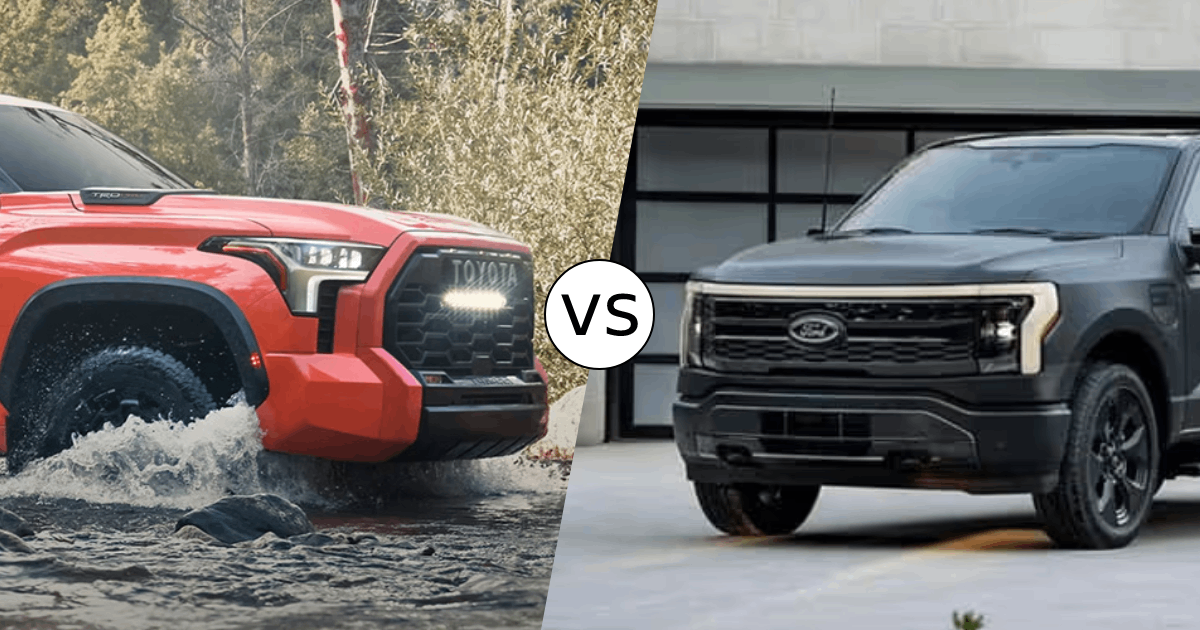
2026 Toyota Tundra vs Ram 1500

2026 Toyota Tundra vs Ram 1500

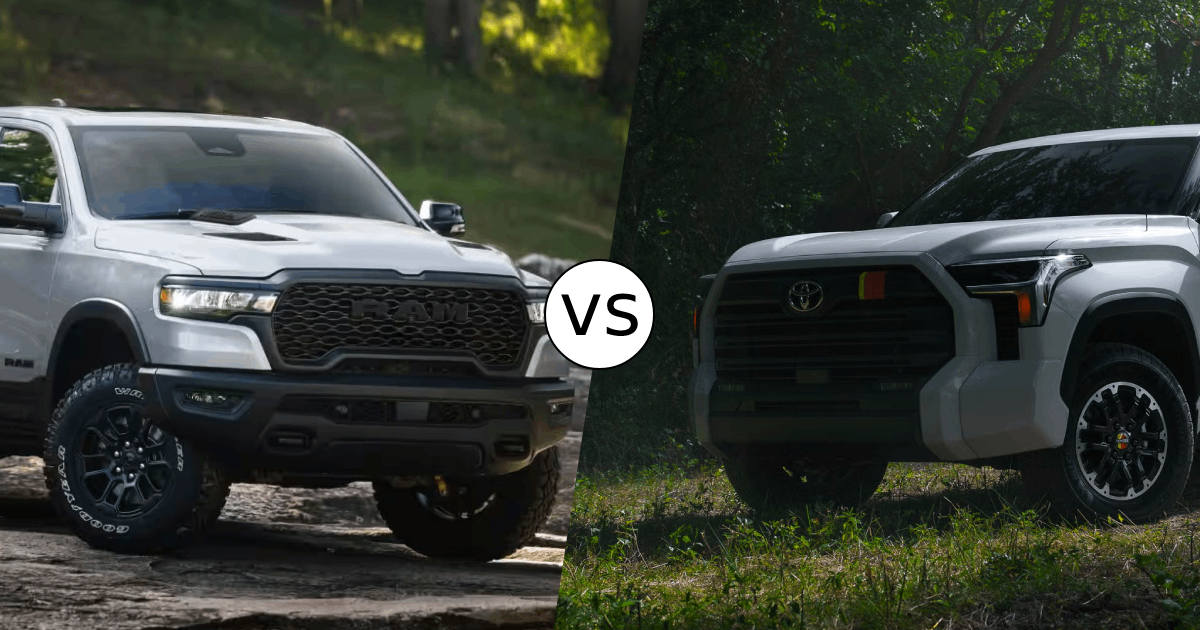
Choosing between the 2026 Toyota Tundra and Ram 1500 comes down to what kind of truck owner you are. The Tundra doubles down on hybrid tech and Toyota's rock-solid reputation, while the Ram brings serious engine choices and interiors that feel surprisingly premium. Here at Longo Toyota, we see buyers in El Monte wrestling with this decision daily. What it usually comes down to: how much do you value long-term reliability versus having options? Both companies have been refining their trucks for years, knowing how cutthroat this segment gets. The real differences show up when you dig into powertrains, towing numbers, and what you'll actually spend over five years of ownership. Let's break down how these trucks stack up where it counts. more 2026 Toyota Tundra vs Ram 1500: Key Differences at a Glance These trucks take completely different approaches to the full-size market. You've got trim levels from bare-bones work trucks to luxury models that cost more than some people's houses. Base prices stay competitive, but things get interesting when you start adding features. Feature 2026 Toyota Tundra 2026 Ram 1500 Engine Options i-FORCE MAX Hybrid (Twin-Turbo V6 + Electric Motor) Multiple options including HEMI V8, Twin-Turbo I6 Horsepower/Torque 437 hp / 583 lb-ft (i-FORCE MAX) Varies by engine (HEMI V8: 395 hp / 410 lb-ft) Maximum Towing Capacity Up to 12,000 lbs Up to 11,610 lbs Fuel Economy (EPA Combined) Approximately 20 mpg (i-FORCE MAX) Approximately 22 mpg (best configuration) Drivetrain Options 4WD, AWD 4WD, AWD Seating Capacity 5 passengers 6 passengers Standard Safety Technology Toyota Safety Sense (all trims) Available but varies by trim Toyota built their whole strategy around hybrid innovation and trucks that just keep running. Ram's answer? Better ride quality and cabins that make you forget you're in a work truck. These aren't small differences. They shape everything from your morning commute to what that truck's worth in three years. The Tundra goes all-in on efficiency without giving up capability. Ram gives you choices for whatever specific job you need done. Getting clear on these basics helps you figure out which philosophy matches your needs. Powertrain Technology and Performance Here's where the engineering philosophies really diverge. Ram spreads their bets across multiple engines: the beloved HEMI V8, a slick twin-turbo straight-six, and some other options. Toyota? They put everything into perfecting that i-FORCE MAX hybrid. Bold move, and it mostly pays off. The transmission story tells you a lot about priorities. Toyota's 10-speed automatic shifts smoother than Ram's 8-speed, especially noticeable when you're cruising at 75 mph or pulling a heavy trailer up the Grapevine. Both work fine, but those extra gears give the Tundra more flexibility across different driving situations. Your performance priorities should drive this choice. Need maximum engine variety? Ram's your answer. Want cutting-edge hybrid efficiency with torque that hits instantly? The i-FORCE MAX delivers. Toyota's i-FORCE MAX Hybrid Advantage The i-FORCE MAX represents Toyota's bet on the future. Twin-turbo 3.5-liter V6 paired with an electric motor, putting out 437 horsepower and a substantial 583 lb-ft of torque. That electric motor changes everything. No turbo lag, instant response, the kind of power delivery that makes conventional engines feel sluggish. Toyota didn't just adapt a car hybrid for truck duty. They built this system specifically for towing, hauling, and the punishment trucks endure. The electric motor fills in power gaps that traditional engines can't handle, which becomes obvious when you're pulling 10,000 pounds through mountain passes. The hybrid benefits go deeper than raw numbers. Regenerative braking captures energy when you slow down, boosting efficiency in stop-and-go traffic. The system works seamlessly too. You don't need to learn special techniques or accept compromises in truck capability. Engine Options and Efficiency Fuel economy matters when your truck is also your daily driver. The Ram 1500 manages roughly 20 city / 25-26 highway mpg in its most efficient setup, slightly beating the Tundra's numbers. Ram's eTorque mild-hybrid assists without the complexity of Toyota's full hybrid setup. The Tundra's i-FORCE MAX hits approximately 18 city / 23-24 highway mpg. Not the absolute efficiency champion, but respectable considering you're getting 437 horsepower and 583 lb-ft of torque. That's serious power for the fuel economy. Engine choice affects way more than fuel costs. Ram's variety lets you match exactly what you need, whether that's basic hauling or maximum performance. Toyota's focused approach simplifies the decision while delivering solid all-around capability. Towing Capacity and Work-Ready Capability Towing capacity shows the Tundra's engineering focus paying off. Properly equipped, it pulls up to 12,000 pounds versus the Ram 1500's roughly 11,610-pound max. That nearly 400-pound difference matters when you're towing big travel trailers or equipment around Southern California's hills. Payload tells a different story. The Ram 1500 can carry competitive weight in the bed, which helps if you prioritize cargo over trailer towing. Both handle substantial loads, but their sweet spots align with different types of work. This often comes down to how you actually use the truck. Regular heavy trailer towing? The Tundra's capacity advantage and hybrid torque make sense. Mostly loading the bed with materials? Ram's specs work just as well. Towing Technology and Integrated Features Modern towing tech has become expected on full-size trucks. Both the Tundra and Ram 1500 include trailer sway control that automatically corrects dangerous wobbling. Integrated brake controllers handle trailer brakes without needing aftermarket installations. Camera systems transform towing operations. Multiple angles help you line up hitches and monitor cargo while driving. What used to be guesswork becomes straightforward, even for occasional towers. You'll also find guidance systems that calculate turning radius with trailers attached. Both trucks provide steering suggestions for tight parking lots, reducing stress whether you're new to towing or just appreciate the help. Safety Features and Driver Assistance Safety tech shows a clear philosophical difference. The Toyota Tundra includes Toyota Safety Sense standard across every trim level. Comprehensive driver assistance without expensive option packages. Ram 1500 offers capable safety systems, but many features cost extra on lower trims. Toyota's approach means everyone gets protection that competitors reserve for premium models. Lane departure alerts, adaptive cruise control, automatic emergency braking. All standard on every Tundra, reflecting Toyota's belief that safety shouldn't be optional. Ram packages safety differently. The systems are good when you get them, but buyers often need higher trims or option packages to match what comes standard on the Tundra. This creates real cost differences when you're building comparable trucks. Toyota Safety Sense Standard Equipment Toyota Safety Sense bundles multiple active safety features. Pre-collision warning with pedestrian detection helps prevent urban accidents. Dynamic radar cruise control maintains safe following distances on highways, reducing fatigue during long drives. Lane departure alert with steering assist provides gentle lane-centering help. The system maintains natural driving feel while preventing unintended drift. These subtle assists prove valuable during momentary distractions or fatigue. Standard inclusion across all Tundra trims appeals to safety-focused buyers and families. You don't need to compromise your budget to get protection, which sets Toyota apart from competitors who reserve safety features for expensive packages. Crash Test Ratings and Structural Design Both trucks earn solid ratings from independent safety organizations. Strong frame designs and strategic crumple zones protect occupants during impacts. The Tundra's structural engineering reflects Toyota's reputation for building trucks that survive extreme conditions. Ram 1500 balances safety with ride quality through sophisticated suspension design. Good handling characteristics prevent accidents as much as crash protection helps survive them. The comfortable ride doesn't compromise structural integrity. Frame strength matters beyond crash protection. Both trucks must handle towing stress, payload weight, and off-road punishment throughout their service lives. Build quality and durability remain areas where Toyota traditionally excels. Reliability, Resale Value, and Long-Term Ownership Toyota's reliability reputation gives the Tundra clear advantages in long-term ownership. This isn't just marketing; it translates directly to higher resale values. Historical data and owner experiences consistently favor Toyota in reliability comparisons. The Ram 1500 offers compelling features and performance but hasn't matched Toyota's legendary dependability status. Modern Rams prove more reliable than previous generations, but perception affects resale values even when actual reliability differences narrow. Reliability influences total ownership costs beyond purchase price. Trucks that need fewer repairs and hold stronger resale values ultimately cost less to own. These factors matter more than initial pricing if you're planning to keep the truck for years. Predicted Reliability and Maintenance Costs Maintenance costs stay reasonable for both trucks with proper service. The Tundra's proven powertrain may lead to lower expenses over time. Hybrid components in the i-FORCE MAX system show good reliability, with Toyota's warranty coverage protecting against expensive repairs. Ram's diverse engine options could increase maintenance complexity down the road. However, modern engineering has improved reliability across all their powertrains. Regular service according to manufacturer schedules keeps both trucks running smoothly. Usage patterns heavily influence actual maintenance expenses. Trucks used for heavy towing need more frequent service than those driven mainly for commuting. Both manufacturers provide detailed service schedules that help owners plan costs. Resale Value and Warranty Protection The Tundra typically holds value better than the Ram 1500, backed by strong brand loyalty and reliability perceptions. Toyota trucks often command higher percentages of original price after five years. This advantage makes the initial investment more justifiable when considering total ownership costs. Both manufacturers offer competitive warranty packages protecting the initial ownership years. Coverage includes bumper-to-bumper and powertrain warranties extending beyond basic terms. Toyota's reputation for straightforward warranty service adds value beyond written coverage. Certified pre-owned programs provide additional protection for used truck buyers. Both Toyota and Ram offer extended warranties and vehicle inspections that reduce purchase risk. These programs help maintain resale values by providing buyer confidence. Interior Quality and Technology Integration The Ram 1500 earns recognition for upscale interiors that rival luxury vehicles. Large touchscreens, premium materials, refined design create sophisticated environments. The cabin feels more expensive than the pricing suggests, appealing to buyers who spend serious time in their trucks. The Tundra offers comfortable, functional interiors that prioritize durability. While not matching Ram's luxury feel, Toyota's cabin provides solid tech features and ergonomic controls. Design emphasizes practicality that truck buyers often value most. Technology integration varies between competitors. Ram's Uconnect system gets praise for intuitive operation and responsive touchscreens. Toyota's infotainment proves capable without feeling cutting-edge. Both support Apple CarPlay and Android Auto, ensuring modern connectivity. Which Full-Size Truck Should You Choose? This decision comes down entirely to your priorities. We recommend the 2026 Toyota Tundra for buyers seeking reliable, efficient trucks with strong resale value and superior towing capacity. The i-FORCE MAX hybrid's 437 horsepower and 583 lb-ft of torque, combined with 12,000-pound towing capacity, make it ideal for serious work and Southern California's demanding conditions. Standard Toyota Safety Sense across all trims and proven durability enhance long-term value. The Ram 1500 appeals to buyers who prioritize engine variety and luxury appointments. Diverse powertrains allow precise capability matching, while upscale interiors and refined ride quality enhance daily driving comfort. Both trucks excel in different ways, making them competitive full-size choices. The Tundra leads in reliability, resale value, and towing capacity. Ram counters with performance options and premium features. Your specific needs determine which strengths matter most. Experience the 2026 Tundra at Longo Toyota At Longo Toyota in El Monte, we help Southern California buyers experience the 2026 Tundra firsthand. As the nation's largest Toyota dealership, our 50-acre campus includes an extensive showroom where you can compare configurations and explore the i-FORCE MAX hybrid's capabilities. Start with a virtual test drive to experience the Tundra's powertrain, or browse our current inventory to find your ideal truck. Contact our sales team at 626-539-2113 to schedule your test drive and discover why the Tundra sets standards in the full-size truck segment. Whether you need maximum towing capacity for work or reliable capability for weekend adventures, experiencing the Tundra on Southern California roads helps you understand what sets it apart.

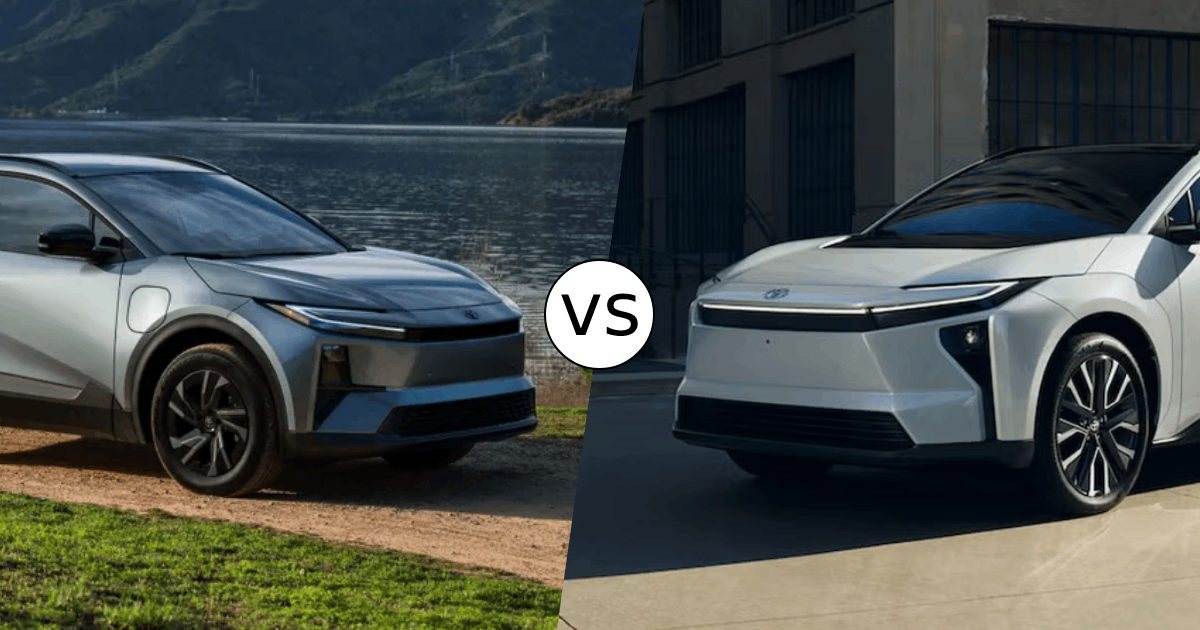
2026 Toyota C-HR vs bZ

2026 Toyota C-HR vs 2026 Toyota bZ

Picking between Toyota's two electric SUVs isn't just about choosing an EV. The 2026 Toyota C-HR and Toyota bZ represent completely different takes on electric driving. At Longo Toyota in El Monte, CA, we see customers wrestling with this choice daily. One's built for compact, sporty agility with standard all-wheel drive. The other gives you incredible flexibility with multiple powertrain setups and some of the best range numbers you'll find. Both ride on Toyota's solid e-TNGA electric platform with the same build quality you expect. But they're made for totally different lives and driving styles. Getting clear on these differences helps you figure out which one actually works for your daily routine, how far you need to go, and what kind of driving makes you happy. more 2026 Toyota C-HR vs bZ: Quick Comparison Overview Toyota built these EVs on the same electric foundation but gave them completely different jobs. The C-HR goes all-in on sporty, city-focused driving with its standard 338-horsepower AWD setup and tight dimensions. The bZ series focuses on range flexibility and family-friendly space, giving you everything from efficient FWD models to the adventure-ready Woodland trim with 375 horsepower and 3,500-pound towing capacity. This split makes sense when you look at Toyota's bigger EV game plan. Instead of trying to build one electric vehicle for everyone, they're giving you real choices that match different needs and priorities. For Southern California drivers, both deliver year-round efficiency benefits from our mild weather while cutting out gas station stops completely. Key Specifications at a Glance Specification 2026 Toyota C-HR 2026 Toyota bZ Platform e-TNGA e-TNGA Dimensions (L x W x H) 177.9 x 73.6 x 63.8 in; 108.3-in wheelbase 184.6 x 73.2 x 65.0 in; 112.2-in wheelbase Powertrain AWD: 338 hp (standard) FWD: 168-221 hp; AWD: 338 hp Battery 74.7 kWh 52 kWh (base) or 74.7 kWh EPA Range Up to 290 miles (AWD) FWD: 236-314 mi; AWD: 278-288 mi 0-60 mph ~5 sec (AWD) ~4.9 sec (AWD) Charging NACS port; 10-80% in ~30 min DC; 11 kW AC NACS port; 150 kW DC; 11 kW AC Cargo Space 25.4 cu-ft Up to 27.7 cu-ft Safety Toyota Safety Sense 3.0 standard TSS 3.0 + Safe Exit Assist; available multi-view camera, automated parking Looking at these numbers, you can see Toyota's strategy pretty clearly. The C-HR gives you standard AWD performance in a nimble package. The bZ offers configuration flexibility across four trim levels (XLE, XLE Plus, Limited, and Woodland). Powertrain and Driving Experience C-HR Electric Performance The C-HR's standard 338-horsepower AWD system delivers surprisingly spirited driving that surprises even EV veterans. This single-configuration approach keeps the buying process simple while making sure every C-HR provides confident acceleration and all-weather grip. Zero-to-sixty happens in about five seconds, making freeway merging and passing smooth and effortless. Instant electric torque changes urban driving completely. The C-HR responds right away to throttle inputs, closing gaps in traffic and handling congested Southern California freeways with confidence. Those compact dimensions plus the low center of gravity (thanks to the floor-mounted 74.7 kWh battery) create nimble handling through tight corners. Regenerative braking recovers energy while giving you natural deceleration feel. Most drivers adapt quickly to one-pedal driving modes, using accelerator lift-off to slow the car while putting charge back in the battery. This cuts brake wear and maximizes efficiency when you're stuck in stop-and-go traffic. bZ All-Electric Driving Dynamics The bZ's multiple powertrain choices let you pick what matters most to you. FWD models focus on efficiency with 168 to 221 horsepower, hitting up to 314 miles of EPA-estimated range. AWD setups provide 338 horsepower for sportier performance, while the Woodland trim tops everything with 375 horsepower and genuine off-road ability. Instant torque defines the electric experience across all bZ models. Hit the accelerator and power shows up immediately, without that lag you get with gas engines. This changes everyday driving, making gap-closing and traffic merging effortless no matter which configuration you choose. The whisper-quiet operation becomes obvious right away. Without engine noise, you only hear subtle wind and tire sounds at highway speeds. Most drivers find this quietness cuts fatigue during longer trips while creating a more premium cabin feel. The bZ's 150 kW DC fast charging works seamlessly with the standard NACS port, giving you direct access to Tesla Supercharger networks across Southern California. This dramatically expands your charging options for road trips and emergency top-ups. Design, Style, and Dimensions Sharp, angular styling defines how the C-HR looks. Aggressive character lines and a bold front end create visual drama that stands out in parking lots. The compact footprint (177.9 inches overall length) hides the spacious interior, with clever packaging that maximizes passenger and cargo room inside that sporty exterior. The bZ takes a more streamlined, aerodynamic approach. Smooth surfaces and carefully optimized details cut wind resistance, directly helping electric range. Those slightly bigger dimensions (184.6 inches long) give you noticeably more rear-seat legroom and cargo flexibility. The Woodland trim adds rugged styling touches including unique wheels and protective cladding. Both interiors focus on quality materials and modern design. The standard 14-inch touchscreen dominates the dashboard, handling navigation, entertainment, and vehicle settings. Wireless Apple CarPlay and Android Auto integration gives you seamless smartphone connectivity. Premium features include JBL audio systems and multiple USB-C charging ports throughout the cabin. Sustainable materials show up throughout both interiors, appealing to environmentally conscious buyers. Soft-touch surfaces cover high-contact areas while keeping Toyota's reputation for durability and attention to detail. Range, Efficiency, and Energy Costs C-HR Electric Range and Capabilities The C-HR's 290-mile EPA-estimated range handles typical daily driving with substantial buffer left over. This eliminates range anxiety for most commuters, whether you're navigating El Monte streets or tackling longer Southern California freeway trips. That 74.7 kWh battery provides enough juice for several days of typical use between charges. Fast charging through the standard NACS port allows 10-80% charges in about 30 minutes at DC fast charging stations. Home charging using the 11 kW onboard charger fills up the battery overnight, so you start each day fully charged. Our mild Southern California climate optimizes EV efficiency year-round, unlike extreme cold or heat that kills range in other regions. Energy costs typically beat gas expenses by a lot. Exact savings depend on local electricity rates and how you drive, but most owners see substantial monthly drops. Time-of-use utility plans make overnight home charging particularly cheap. bZ Electric Range and Configuration Options The bZ's range changes dramatically based on what you choose. Base FWD models with 52 kWh batteries give you 236 miles, fine for daily commuting but you'll charge more often. Step up to the bigger 74.7 kWh battery and FWD models hit up to 314 miles, the best in Toyota's EV lineup. AWD setups with the larger battery deliver 278 to 288 miles, balancing all-weather capability with solid range. Fast charging hits 150 kW, allowing quick top-ups during road trips. A 30-minute DC fast charging session puts back enough range for several days of commuting. That standard NACS port gives you access to Tesla Supercharger networks, dramatically expanding charging infrastructure across Southern California and beyond. Long-term operating costs favor electric powertrains over traditional gas engines. Beyond fuel savings, EVs skip oil changes and have fewer components that wear out. Brake systems last longer thanks to regenerative braking handling most of the work. These factors cut total ownership costs significantly over typical ownership periods. Interior Comfort and Technology Features Both vehicles prioritize daily comfort and long-distance ability. Roomy cabins provide generous headroom and legroom for adults, with the bZ's larger dimensions offering noticeably more rear-seat space. Smart seat design reduces fatigue during extended drives, with multiple adjustment points helping drivers find the right position. That standard 14-inch touchscreen handles all vehicle functions. Voice recognition cuts distraction, letting drivers adjust settings or find destinations without looking away from the road. The interface focuses on easy operation over complex menu systems, responding quickly to inputs. Toyota Safety Sense 3.0 comes standard on both models, providing comprehensive driver assistance tech. Adaptive cruise control, lane keeping assistance, and automatic emergency braking reduce highway driving stress while adding protection during unexpected situations. The bZ adds Safe Exit Assist and available features including multi-view cameras and automated parking assistance. Climate controls balance automatic operation with manual override, satisfying both set-it-and-forget-it users and those wanting precise temperature control. Premium features include heated and ventilated seats, power liftgates, and ambient interior lighting. Pricing and Total Value Comparison Pricing puts both vehicles competitively within the electric SUV segment. As the largest Toyota dealership in the nation, we keep extensive inventory and work with customers to maximize available federal and state EV incentives. These incentives can substantially cut effective purchase prices, making electric vehicles more accessible than initial MSRPs suggest. Total value goes way beyond purchase price. Electricity costs typically run well below gas expenses over ownership periods. Maintenance favors EVs, which skip oil changes and have fewer parts requiring regular service. Insurance, registration fees, and projected resale values complete the financial picture. We encourage customers to calculate total ownership costs based on their specific driving patterns and local utility rates. Our sales team provides detailed comparisons showing realistic five and ten-year cost projections. Browse our current inventory to see available configurations and pricing. Federal tax credits and California state incentives change periodically based on program funding and eligibility requirements. Our team stays current on all available programs, making sure customers maximize savings opportunities. Additional incentives may apply depending on income levels and local utility programs. Which Toyota Is Right for You? Your driving patterns and lifestyle priorities should drive this decision. Urban commuters and style-conscious drivers who want sporty handling find the C-HR's compact dimensions and standard 338-horsepower AWD system appealing. That 290-mile range handles daily driving with plenty of buffer, while the nimble size makes parking and maneuvering easy. Families and adventure seekers benefit from the bZ's larger interior and configuration flexibility. Multiple powertrain options let you prioritize maximum range (up to 314 miles FWD), all-weather AWD capability, or the Woodland trim's towing and off-road abilities. The extra cargo space and passenger room make longer trips more comfortable. Both vehicles offer comprehensive technology, standard Toyota Safety Sense 3.0, and NACS charging ports providing access to extensive charging networks including Tesla Superchargers. Our Southern California location provides ideal EV ownership conditions with mild year-round temperatures optimizing efficiency and extensive charging infrastructure throughout the region. Visit Longo Toyota to Find Your Perfect EV Explore virtual test drives to experience both vehicles before visiting our El Monte showroom. Our team provides side-by-side comparisons, helps calculate real-world ownership costs based on your driving habits, and makes sure you understand all available incentives. Call us at 626-539-2113 to schedule your test drive and discover which Toyota EV fits your lifestyle perfectly. Whether you're drawn to the C-HR's sporty character or the bZ's versatile practicality, experiencing both on Southern California roads helps you make the right choice.

2026 Toyota Tundra i-FORCE MAX vs Ford F-150 Lightning

2026 Toyota Tundra i-FORCE MAX vs Ford F-150 Lightning

As the automotive industry moves toward greater sustainability, the demand for hybrid and electric trucks continues to grow. Two automakers that are rising to the challenge of meeting this demand are Ford and Toyota. Both companies have already unveiled their flagship electrified trucks for 2026. The all-new Toyota Tundra i-FORCE MAX Hybrid pairs a robust gasoline engine with an electric motor for engaging performance and great fuel economy. Meanwhile, the 2026 Ford F-150 Lightning provides a fully electric driving experience with remarkable environmental benefits. But which of these two heavyweights should you buy? Here's how they compare across key areas. more Powertrain and Performance Comparison Engine output is a top priority for most buyers shopping for a workhorse truck, and this is one area where the 2026 Tundra really shines. Its available i-FORCE MAX combines a 3.4-liter Turbo V-6 with an electric motor to produce an electrifying 437 horsepower and 583 pound-feet of torque. This powertrain is paired with a 10-speed automatic transmission and is available with rear- or four-wheel drive. The all-electric 2026 Ford F-150 Lightning's powertrain comprises a lithium-ion battery pack and dual electric motors. The standard-range battery, which comes on the Pro trim, delivers a remarkable 452 horsepower. For those seeking more power and extra range, Ford offers two extended-range batteries to choose from. The 123 kWh extended-range battery delivers 536 horsepower, while the available 131 kWh battery pack boosts output to 580 horsepower. Whichever powertrain you go for, you can expect an impressive torque of 775 pound-feet. Every Lightning also comes standard with four-wheel drive. Fuel Efficiency: MPG vs. MPGe One of the 2026 Toyota Tundra's biggest selling points is its remarkable gas mileage. Rear-wheel-drive models equipped with the i-FORCE MAX engine achieve EPA-estimated fuel economy of 20 mpg in the city, 24 mpg on the highway, and 22 mpg combined. Meanwhile, four-wheel-drive variants are rated at 19 mpg in the city, 22 mpg on the highway, and 20 mpg combined. 2026 F-150 Lightning models equipped with the extended-range battery get EPA-estimated ratings of up to 79 MPGe in the city and 65 MPGe on the highway. Standard-range models are slightly less efficient, achieving fuel-economy ratings of 76 MPGe in the city and 61 MPGe on the highway. Towing and Payload Capabilities The 2026 Toyota Tundra i-FORCE MAX edges out the Ford F-150 Lightning when it comes to towing power. With a maximum towing capacity of 12,000 pounds, you can tow a trailer for your weekend getaways with utmost ease. The Lightning, for its part, offers a maximum towing capacity of 10,000 pounds, which, while impressive, is no match for the Tundra. That being said, the F-150 Lightning has an advantage in payload, offering a maximum of 2,000 pounds. By comparison, the Tundra model with the highest payload, the Limited, delivers a maximum of 1,680 pounds. When comparing the towing capabilities of these two rivals, you also have to think about range. While the Ford F-150 Lightning is highly efficient during everyday driving, towing a heavy trailer can reduce how far you're able to go on a single charge. This is crucial to know if you intend to haul heavy loads over long distances. It means you'll most likely need to make frequent stops to charge. Fortunately, this isn't something you'll need to worry about with the Toyota Tundra i-FORCE MAX. Its hybrid engine setup allows you to refuel quickly and stay on schedule. Depending on your towing habits, this difference can help you narrow down the best pick for your lifestyle. Charging and Refueling Infrastructure Ford has yet to publish charging details for the 2026 F-150 Lightning. That said, Ford's published data for the 2025 model year provides a reliable benchmark. When using a DC fast charger rated at 150 kW or higher, the Lightning can charge from roughly 15 percent to 80 percent in about 32 to 38 minutes, depending on battery size. With a Level 2 home charger, you're typically looking at about 10-13 hours for a full charge. Ford offers home charging solutions, such as the Ford Charge Station Pro and a mobile power cord that plugs into standard outlets for overnight charging. The 2026 Toyota Tundra i-FORCE MAX keeps things simple with its hybrid refueling setup. Because it uses a conventional gasoline tank along with its hybrid system, you can refuel at any gas station in minutes without worrying about charging time or charger availability. Its efficient hybrid powertrain means fewer stops on long trips and more time on the road. This is a huge plus if you tow or travel through areas with limited electric charging infrastructure. Pricing and Trim Level Breakdown The 2026 Toyota Tundra i-FORCE MAX hybrid lineup starts with the Limited at $58,560 MSRP. Next in line is the Platinum, starting at an MSRP of $70,605, followed by the 1794 Edition at $71,305 MSRP. These hybrids deliver a compelling combination of efficiency and towing capability, while also bringing some advanced in-cabin tech. If you're seeking more luxury or off-road performance, the TRD Pro i-FORCE MAX and Capstone i-FORCE MAX might be more up your alley. Starting at MSRPs of $72,565 and $80,800, respectively, these high-end hybrids provide premium touches and advanced capabilities. The 2026 Ford F-150 Lightning also has a broad price spread. Industry-reported figures indicate that the fleet-only Lightning Pro starts at around $54,780 MSRP, the STX at around $63,345, and the mid-tier Flash at around $65,995. The top-tier Lariat and Platinum trims begin at around $74,995 and $84,995, respectively. The STX replaces the former XLT trim for this model year, giving buyers refreshed choices in the lineup. Which Truck Is Right for You? Choosing between two trucks as equally matched as the Toyota Tundra i-FORCE MAX and the F-150 Lightning is no simple task. Both deliver breathtaking performance courtesy of their electrified powertrains. Even so, the Tundra ultimately offers the best value. It not only has slightly better towing capabilities than the Lightning, but its hybrid engine provides the convenience of easy refueling during long hauls. Still unsure whether the 2026 Tundra i-FORCE MAX is the truck for you? Schedule a test drive at Longo Toyota today to experience its remarkable powertrain and features for yourself.

2026 Toyota BZ vs BZ Woodland

2026 Toyota BZ vs BZ Woodland

Toyota's electric SUV lineup has expanded significantly for 2026. The old bZ4X now boasts significant upgrades and a name change to the Toyota bZ. It packs in more power, a stronger battery, and better charging options. There's also a fresh face: the bZ Woodland. This version is an adventure-focused variant that increases the platform's capabilities.  It's got all-wheel drive, rugged styling, higher ground clearance, and extra storage space that outdoor fans will appreciate. While both SUVs share Toyota's commitment to electric mobility, they're made for totally different drivers. Let's get into what sets them apart and help you figure out which one aligns with your needs. more Performance and Power Differences The 2026 Toyota bZ offers several powertrain options. The base XLE with front-wheel drive gets a single motor making 168 horsepower. This is fine for relaxed city driving. Move up to the Limited with front-wheel drive, and you get 221 horsepower. Do you want even more power? The all-wheel-drive version uses dual motors for 338 horsepower. That's a huge jump from the previous generation. The 2026 Toyota bZ Woodland keeps things simple. It comes standard with a dual-motor all-wheel-drive (AWD) system, producing 375 horsepower. That makes it the more powerful option right out of the gate. This setup supports its adventurous personality with plenty of power for highways and rough terrain. More power means quicker acceleration. The 338-horsepower all-wheel-drive bZ hits 0 to 60 mph in about 4.8 seconds, which is quick for a family SUV. The front-wheel drive (FWD) models don't have the same punch but still perform reliably. The Woodland's extra horsepower means it pulls harder and handles rough terrain better. While the 0 to 60 numbers for the Woodland aren't out yet, you can expect it to feel quick. Added tech like X-MODE and Grip Control makes off-road driving less stressful by controlling traction and wheel slip at slow speeds. Range, Charging, and Battery Specifications You'll spot some differences in range across the bZ lineup, so choosing the right model depends on how you use your SUV. The standard bZ FWD XLE uses a 57.7-kWh battery that goes about 236 miles on a charge. Other trims get a 74.7-kWh pack that boosts the range to 299 miles for the Limited FWD. The bZ Woodland puts capability first, so its range sits at 260 miles for each full charge. That's still decent for everyday use and camping, even though it won't go as far as the most efficient standard bZ model. Its extra horsepower, higher ground clearance, and weight from off-road upgrades mean it uses a bit more juice. For 2026, Toyota switched to the new NACS charging port, so charging is faster and easier on both. This makes public fast charging a lot less stressful and means you can use Tesla's Supercharger network. Fast charging from 10% to 80% takes about 30 minutes. Plug in at home, and the 11 kW onboard charger means quicker overnight charges. There's also a preconditioning feature, making sure the battery stays healthy even in cold weather. Exterior Design and Off-Road Capabilities On the outside, the differences are obvious. The 2026 Toyota bZ has a refreshed exterior with a new front end and updated lighting. It looks cleaner and more polished. Toyota ditched the awkward black plastic cladding from the old bZ4X and replaced it with body-colored panels. The result feels more premium and put-together. The Woodland grabs your attention right away. It's nearly six inches longer, has bold black fender flares, roof rails, and 18-inch alloy wheels, which you can get with all-terrain tires. All these upgrades give the Woodland more attitude and make it better for loading up outdoor gear or heading down a dirt road. If you just need to deal with rain or the occasional construction zone, the regular bZ AWD will do just fine. But for those who like to explore, the Woodland's 8.3 inches of ground clearance will help you cross rough patches and puddles effortlessly. All Woodlands use X-MODE AWD, which tweaks power and braking for loose ground and steep hills. The Woodland also steps up with a 3,500-pound tow rating, plenty for a small trailer or extra toys for a weekend trip to Big Bear Lake. Standard Features: What Sets Them Apart Toyota doesn't cut corners on tech and safety. Both SUVs have a 14-inch touchscreen that lets you use Apple CarPlay or Android Auto without plugging in. There are two wireless charging pads and USB-C ports all throughout the cabin. The new climate controls are simple dials and buttons. Toyota Safety Sense 3.0 is included, so each car has adaptive cruise, emergency braking, lane-keeping support, blind-spot alerts, and sign recognition. The regular bZ adds luxury with every trim jump, moving from synthetic or cloth seats to premium materials. The Limited makes the cabin feel even more upscale with ambient lighting, a moonroof, and power seat memory. Color choices are basic, mostly black or gray. The bZ Woodland starts higher, so you get SofTex seats that are easy to clean, heating on the front seats, and cool Stone Brown accent colors. Premium audio, a digital rearview, and a panoramic roof are available with the upgrade package. There's no front trunk, so cargo is all in the back. Cargo Space and Interior Room Space matters, whether you're running errands, carrying kids, or packing for a road trip. The standard bZ has 42.1 inches of front legroom and just over 35.3 inches in the rear. The flat floor is a win when squeezing in a third person in the back. With seats upright, you get 27.7 cubic feet behind the second row, which stretches to nearly 56.9 cubic feet with the rear seats folded down. The bZ Woodland has a bigger frame that delivers major benefits. With the longer body, cargo space in back stretches past 30 cubic feet with the seats up. The flat floor makes loading easy and roof rails mean you can easily haul bikes or skis. Test Drive a New Toyota BZ at Longo Toyota Still not sure which bZ works for you? Contact us to schedule a test drive at Longo Toyota in El Monte, California. Our team can show you both models, answer all your questions, and arrange for financing. You'll get the best feel for what's right for your day-to-day routine when you test drive them both.

2025 Toyota Tundra vs. GMC Sierra

2025 Toyota Tundra vs. GMC Sierra

Shopping for full-size pickup trucks puts you face-to-face with some major players. The 2025 Toyota Tundra and GMC Sierra 1500 sit at opposite ends of the truck-building spectrum. Toyota brings its modern hybrid know-how, while GMC sticks with V-8 muscle and engine variety. In this car specifications comparison, we'll break down everything from towing strength to gas mileage so you can decide which truck suits your lifestyle and budget. more Key Differences at a Glance These trucks are both popular in the full-size pickup category, making them an ideal starting point to compare trucks before buying. Money-wise, the Sierra 1500 wins the first round with a starting price of $39,145, while the Tundra asks for $40,090 to get you in the driver's seat. Power is a priority in this class, and here the Sierra pulls slightly ahead. It can tow up to 13,300 pounds versus the Tundra's 12,000 pounds. This difference highlights the drivers each truck targets: the Sierra appeals to those who need serious pulling power and want engine choices, including diesel, while the Tundra speaks to drivers who want hybrid technology and solid performance without paying extra. Engine Performance and Powertrain Comparison Toyota keeps it simple with the Tundra. You get two versions of the i-FORCE Twin-Turbo V-6. The regular setup delivers either 358 horsepower and 406 lb-ft of torque (base version) or 389 horsepower and 479 lb-ft of torque (upgraded). The i-FORCE MAX hybrid, which pairs the 3.4-liter twin-turbo V-6 with a 1.87 kWh nickel-metal hydride battery and electric motor, delivers 473 horsepower and 583 lb-ft of torque, which can easily get you up to speed on I-605. GMC offers more options with four engine choices. The 2.7-liter TurboMax I-4 delivers 310 horsepower and 430 lb-ft of torque, enabling towing of 9,500 pounds and hauling 2,260 pounds. You can upgrade to the 5.3-liter EcoTec3 V-8 for 355 horsepower and 383 lb-ft of torque, with 11,300 pounds of towing and 2,180 pounds of payload ability. The powerful 6.2-liter EcoTec3 V-8 delivers 420 horsepower and 460 lb-ft of torque, with 13,200 pounds of towing capacity and 1,980 pounds of payload. For diesel fans, the 3.0-liter Duramax turbo-diesel I-6 delivers 305 horsepower and 495 lb-ft of torque, with 13,300 pounds of towing capacity and 1,970 pounds of payload. In the top trims, the Sierra Denali V-8 provides 420 horsepower and 495 lb-ft of torque, while the Tundra Platinum V-6 has 389 horsepower and 479 lb-ft of torque. Add the hybrid i-FORCE MAX system, and the Tundra jumps to 437 horsepower with 583 lb-ft of torque, outperforming all Sierra engines in torque output. Towing and Payload Capabilities If hauling large loads tops your list, the GMC Sierra 1500 has an edge. It can tow between 13,200 and 13,300 pounds based on how you set it up. The Tundra achieves 12,000 pounds with regular power or 11,450 pounds with the hybrid system, which can easily haul your camper and gear to Sycamore Lake. That gives the Sierra about 1,000 pounds more pulling muscle. In the bed, the Sierra can handle up to 2,441 pounds, while the Tundra can handle up to 1,940 pounds. Fuel Economy and Efficiency Fuel efficiency is where the Tundra really shines, especially with its hybrid technology. The i-FORCE MAX hybrid in rear-wheel drive gets 20 mpg in the city and 24 mpg on the highway. Four-wheel-drive versions manage 19 mpg in the city and 22 mpg on the highway. Even nonhybrid Tundra rear-wheel-drive models manage 18 mpg in the city and 23 mpg on the highway. Overall, the 2025 Tundra averages 17 mpg in the city and 24 mpg on the highway, beating the GMC Sierra, which gets 15 mpg in the city and 19 mpg on the highway. The Sierra's best fuel numbers come from its 3.0-liter Duramax diesel engine: 23 mpg in the city and 29 mpg on the highway in two-wheel drive, or 23 mpg in the city and 27 mpg on the highway with four-wheel drive. The gas engines aren't as thrifty: the 2.7-liter turbo gets 18 mpg in the city and 22 mpg on the highway, the 5.3-liter V-8 manages 16 mpg in the city and 21 mpg on the highway, and the 6.2-liter V-8 is less efficient at 15 mpg in the city and 19 mpg on the highway. When you're dealing with LA traffic, the Tundra's hybrid shines in stop-and-go driving. Interior Design and Technology Features Both trucks offer ample space but take different approaches. The Tundra offers two cab styles, Double Cab and CrewMax, both seating up to five people, with a choice of bed lengths, including options that provide nearly 78 cubic feet of cargo room and beds up to 8 feet long. Inside, the front seats offer ample space, with 41 inches of headroom and legroom. The Sierra offers three cab styles: Regular Cab, Double Cab, and Crew Cab, seating up to six people. The Sierra Crew Cab is slightly smaller than the Tundra, with about 63 cubic feet of bed space and a wide range of bed lengths to suit your needs. Technology features make or break modern trucks. The Tundra has a large 14-inch touch screen with a 12.3-inch digital gauge cluster. You get wireless Apple CarPlay and Android Auto, plus optional JBL sound. A 10-inch head-up display and 10-way power seats add comfort. The Sierra counters with a 13.4-inch screen with Google built in, a 12.3-inch driver display, a larger 15-inch head-up display, and 16-way power seats. Bose audio is optional, and the Denali Ultimate model goes all out with 40 inches of combined digital screens. Safety gives the Tundra an edge. The 2025 Tundra Crew Cab earned the Insurance Institute for Highway Safety Top Safety Pick+ award and five stars from the National Highway Traffic Safety Administration. Every Tundra includes Toyota Safety Sense 2.5, which adds automatic braking, road sign detection, auto high beams, lane departure warning, and adaptive cruise control. Which Truck Delivers the Best Value for Your Needs? Your truck choice boils down to what matters most to you, and the 2025 Tundra makes a strong case. Its base engine outmuscles the Sierra's starter motor and main V-8 engine. If you want serious power, the Tundra is a smart choice. Despite costing slightly more upfront, its top safety ratings, stronger reliability scores, fuel efficiency, and cheaper long-term costs help you save money over time. Contact us at Longo Toyota in El Monte, California, to test-drive the 2025 Tundra and discover why more truck buyers are making the switch.

Shopping for a compact sedan can feel overwhelming. The 2025 Toyota Corolla and 2025 Nissan Sentra are two of the most popular picks if you want reliable, efficient, and affordable transportation. Our team at Longo Toyota breaks down everything from pricing to performance to help you figure out which one best fits your life. Pricing and Value Comparison The 2025 Nissan Sentra starts off strong with a $21,590 starting price compared to the Toyota Corolla's $22,325 base price, but Toyota gives you more variety across its lineup. The LE trim comes with an 8-inch touch screen plus Toyota Safety Sense 3.0. If you crave a sportier feel, the SE ($24,615) has available 18-inch alloy wheels and a sport mesh grille. The top XSE trim ($27,890) adds heated sport seats and an available moonroof, nice touches for El Monte mornings. Toyota's hybrid options for the Corolla really shine. The Hybrid LE ($23,625) delivers an incredible 53 mpg city and 46 mpg highway, while the Hybrid XLE ($27,990) boasts a bigger 10.5-inch touch screen and wireless charging. Nissan counters with solid financing deals that can make the Sentra more tempting. It's offering 3.9% annual percentage rate (APR) financing for 24 and 36 months, and 4.9% APR for 60 months. College grads and military personnel get an extra $500 discount each. Both cars come with similar three-year/36,000-mile basic and five-year/60,000-mile powertrain warranties. Toyota edges ahead with ToyotaCare, giving you two years/25,000 miles of free maintenance, while Sentra maintenance coverage includes up to three oil changes for two years or 24,000 miles. Performance and Fuel Economy Showdown Both vehicles feature 2.0-liter four-cylinder engines, but the Corolla's has more punch with 169 hp and 151 lb-ft of torque compared to the Sentra's 149 hp and 146 lb-ft of torque. That 20-horsepower difference might not sound like much, but you'll feel it when merging onto the 210 freeway during rush hour. The 2025 Toyota Corolla hits 60 mph in about 8.2 seconds, which is respectable for getting around town. Both cars use continuously variable transmissions (CVTs), which some people love. The Corolla's Dynamic-Shift CVT and the Sentra's Xtronic CVT both aim for smooth operation and improved mileage. The Corolla excels in fuel economy, delivering 32 mpg in the city and 41 mpg on the highway for a combined 35 mpg, beating the Sentra's 30 mpg in the city and 40 mpg on the highway. Interior Space and Comfort Analysis The Sentra offers 96.1 cubic feet of passenger volume compared to the Corolla's 88.6 cubic feet, with the Sentra giving you 34.9 inches of rear legroom and 43.8 inches up front, while the Corolla offers 34.8 inches of rear legroom and 42 inches of front legroom. The Sentra also beats the Corolla in trunk space with 14.3 cubic feet vs. 13.1 cubic feet. Beyond passenger space, the Sentra offers Nissan's NASA-inspired Zero Gravity seats that make long drives more comfortable and less fatiguing by minimizing pressure points. The Sentra also includes heated front seats (on higher trims), available dual-zone automatic climate control, and standard 60/40-split folding rear seats for when you need to haul large items. Nissan Sentra vs. Toyota Corolla: Reliability and Long-Term Ownership Toyota ranks third in the mass market segment, according to J.D. Power, and the Corolla earned a model-level award in the 2025 J.D. Power Vehicle Dependability Study. Toyota has a much stronger track record for long-term reliability and resale value compared to Nissan. The Sentra, unfortunately, has some known issues. Common problems include CVT transmission troubles such as sudden power loss and shuddering, plus engine stalling, misfires, excessive oil consumption, and overheating. These reliability differences show up in resale values, with the Corolla holding its value better with an estimated 33% depreciation over five years compared to the Sentra's 35% depreciation rate. The Corolla sits at No. 3 among popular sedans with steady annual sales growth, while Sentra sales showed 16% growth in Q3 2025, although that growth is from a smaller starting point. Your choice really comes down to what matters most to you. If you want something that will last for years with minimal trouble and solid fuel economy, then the Toyota Corolla is probably your best bet. Your Perfect Compact Sedan Awaits at Longo Toyota We'd love to have you stop by our dealership and take the 2025 Corolla for a test-drive. See how it feels, check out the tech features, and let our team show you everything from the practical LE to the sporty XSE and the innovative hybrid models. We'll help you find exactly what works for your budget and driving needs here in El Monte and all around Southern California. 2025 Toyota Corolla vs. 2025 Nissan Sentra

2025 Toyota Corolla vs. 2025 Nissan Sentra

Shopping for a compact sedan can feel overwhelming. The 2025 Toyota Corolla and 2025 Nissan Sentra are two of the most popular picks if you want reliable, efficient, and affordable transportation. Our team at Longo Toyota breaks down everything from pricing to performance to help you figure out which one best fits your life. more Pricing and Value Comparison The 2025 Nissan Sentra starts off strong with a $21,590 starting price compared to the Toyota Corolla's $22,325 base price, but Toyota gives you more variety across its lineup. The LE trim comes with an 8-inch touch screen plus Toyota Safety Sense 3.0. If you crave a sportier feel, the SE ($24,615) has available 18-inch alloy wheels and a sport mesh grille. The top XSE trim ($27,890) adds heated sport seats and an available moonroof, nice touches for El Monte mornings. Toyota's hybrid options for the Corolla really shine. The Hybrid LE ($23,625) delivers an incredible 53 mpg city and 46 mpg highway, while the Hybrid XLE ($27,990) boasts a bigger 10.5-inch touch screen and wireless charging. Nissan counters with solid financing deals that can make the Sentra more tempting. It's offering 3.9% annual percentage rate (APR) financing for 24 and 36 months, and 4.9% APR for 60 months. College grads and military personnel get an extra $500 discount each. Both cars come with similar three-year/36,000-mile basic and five-year/60,000-mile powertrain warranties. Toyota edges ahead with ToyotaCare, giving you two years/25,000 miles of free maintenance, while Sentra maintenance coverage includes up to three oil changes for two years or 24,000 miles. Performance and Fuel Economy Showdown Both vehicles feature 2.0-liter four-cylinder engines, but the Corolla's has more punch with 169 hp and 151 lb-ft of torque compared to the Sentra's 149 hp and 146 lb-ft of torque. That 20-horsepower difference might not sound like much, but you'll feel it when merging onto the 210 freeway during rush hour. The 2025 Toyota Corolla hits 60 mph in about 8.2 seconds, which is respectable for getting around town. Both cars use continuously variable transmissions (CVTs), which some people love. The Corolla's Dynamic-Shift CVT and the Sentra's Xtronic CVT both aim for smooth operation and improved mileage. The Corolla excels in fuel economy, delivering 32 mpg in the city and 41 mpg on the highway for a combined 35 mpg, beating the Sentra's 30 mpg in the city and 40 mpg on the highway. Interior Space and Comfort Analysis The Sentra offers 96.1 cubic feet of passenger volume compared to the Corolla's 88.6 cubic feet, with the Sentra giving you 34.9 inches of rear legroom and 43.8 inches up front, while the Corolla offers 34.8 inches of rear legroom and 42 inches of front legroom. The Sentra also beats the Corolla in trunk space with 14.3 cubic feet vs. 13.1 cubic feet. Beyond passenger space, the Sentra offers Nissan's NASA-inspired Zero Gravity seats that make long drives more comfortable and less fatiguing by minimizing pressure points. The Sentra also includes heated front seats (on higher trims), available dual-zone automatic climate control, and standard 60/40-split folding rear seats for when you need to haul large items. Nissan Sentra vs. Toyota Corolla: Reliability and Long-Term Ownership Toyota ranks third in the mass market segment, according to J.D. Power, and the Corolla earned a model-level award in the 2025 J.D. Power Vehicle Dependability Study. Toyota has a much stronger track record for long-term reliability and resale value compared to Nissan. The Sentra, unfortunately, has some known issues. Common problems include CVT transmission troubles such as sudden power loss and shuddering, plus engine stalling, misfires, excessive oil consumption, and overheating. These reliability differences show up in resale values, with the Corolla holding its value better with an estimated 33% depreciation over five years compared to the Sentra's 35% depreciation rate. The Corolla sits at No. 3 among popular sedans with steady annual sales growth, while Sentra sales showed 16% growth in Q3 2025, although that growth is from a smaller starting point. Your choice really comes down to what matters most to you. If you want something that will last for years with minimal trouble and solid fuel economy, then the Toyota Corolla is probably your best bet. Your Perfect Compact Sedan Awaits at Longo Toyota We'd love to have you stop by our dealership and take the 2025 Corolla for a test-drive. See how it feels, check out the tech features, and let our team show you everything from the practical LE to the sporty XSE and the innovative hybrid models. We'll help you find exactly what works for your budget and driving needs here in El Monte and all around Southern California.

Contact Us

Fill out this form below and we'll contact you shortly
*Required Fields