

Longo Toyota

#1 in the World since 1967*

Based on Toyota Motor Sales, USA 2025 Sales Report*
Based on Toyota Motor Sales, USA 2023 Sales Report*
Blog / Comparison

Blog

All Comparison New Inventory Local Electric Vehicle Vehicle Tips Review Hybrid Service Toyota News Locaal
2025 Toyota RAV4 vs. 2025 Honda CR-V

2025 Toyota RAV4 vs. 2025 Honda CR-V

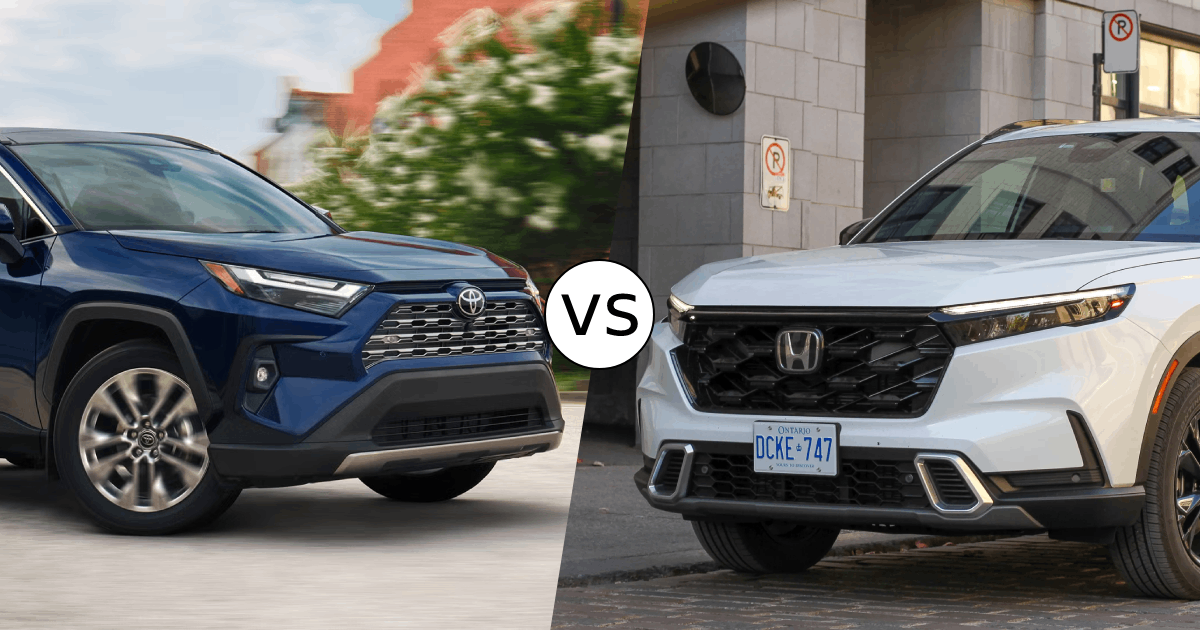
The compact SUV battle is heating up as the 2025 Toyota RAV4 squares off against the 2025 Honda CR-V. These two family favorites continue to dominate sales, each offering its own mix of comfort, efficiency, and practicality. In this Honda CR-V and Toyota RAV4 comparison, we'll dig into what sets these popular vehicles apart and help you figure out which one might better fit your daily drives around El Monte, California. more Pricing and Value for Money The 2025 Toyota RAV4 starts at $29,250, beating the CR-V's $30,100. The CR-V's hybrid trims begin at $34,650 for the Sport and reach $41,100 for the Sport Touring. If you're looking for a hybrid RAV4, they range from $32,300 for the Hybrid LE and $40,605 for the Hybrid Limited. Beginning at $50,000, Honda also has a California-exclusive hydrogen fuel cell CR-V, which is ideal if you want to be an eco-friendly El Monte driver. Reliability and Warranty Coverage No need to worry about breakdowns since both SUVs boast solid track records. J.D. Power gives the 2025 CR-V a slight edge in predicted reliability with 84 out of 100 points, compared to the RAV4's score of 80. Not a huge gap, but it might matter if you hate surprise repair bills. The warranty packages stack up pretty evenly. Honda backs the CR-V with a three-year or 36,000-mile basic warranty, five-year or 60,000-mile powertrain coverage, and eight-year or 100,000-mile protection for hybrid parts, including the battery. Toyota matches these terms but adds an extra year of free maintenance and a longer 10-year or 150,000-mile warranty on the hybrid battery. These extras could save you a chunk of change, especially if you rack up miles cruising around Southern California. New Vehicles For Sale in El Monte, CA Performance and Towing Under the hood of the CR-V, you'll find a 1.5-liter turbocharged four-cylinder engine producing 190 horsepower and 179 lb-ft of torque. Toyota counters with a beefier 2.5-liter four-cylinder pushing 203 horsepower and 184 lb-ft of torque. Both models perform comparably in a sprint from 0 to 60 mph. The CR-V finishes in 8.1 seconds versus the RAV4's 8.3-second run. If you need to tow stuff for weekend trips, the RAV4 flexes some muscle here. Toyota's hybrid RAV4s can tow up to 1,750 pounds, and the gas-powered models handle 1,500 pounds. Honda's CR-V can't quite match that. The non-hybrid versions top out at 1,500 pounds, and hybrid models manage just 1,000 pounds. Fuel Economy and Efficiency Both of these SUVs have great efficiency numbers. The hybrid CR-V trims can get up to 43 mpg city and 36 mpg highway, slightly beating the hybrid RAV4's 41 mpg city and 38 mpg highway. However, keep in mind that all RAV4 hybrids come standard with all-wheel drive. The four-wheel-drive hybrid CR-Vs get 40 mpg in the city and 34 mpg on the highway. You'll also get impressive efficiency from the gas-powered versions of these SUVs. The CR-V gets up to 28 mpg city and 34 mpg highway, and the RAV4 achieves 27 mpg city and 35 mpg highway. Similar to the hybrids, choosing all-wheel drive will decrease your fuel efficiency by a few points. Passenger Space and Interior Comfort The CR-V feels a bit more roomy than the RAV4, especially in the back. Rear passengers get a generous 41 inches of legroom versus 37.8 inches in the RAV4. Honda also wins on overall passenger space, with 106 cubic feet compared to Toyota's 98.9 cubic feet. The CR-V's larger overall size gives it an advantage here. The CR-V's cabin materials look and feel upscale, with sleek finishes. But the RAV4 fights back with an interior that's comfortable and elevated. You can also get some fancy options that aren't available in the Honda. The RAV4 offers ventilated front seats and a panoramic moonroof on certain trims. Cargo Space and Practicality Honda edges ahead when it comes to hauling. The CR-V has 39.3 cubic feet behind the back seat and expands to 76.5 cubic feet with the seats folded. Toyota's RAV4 holds slightly less at 37.6 cubic feet behind row two and 69.8 cubic feet with the seats down. Both SUVs offer clever storage throughout their cabins, but Honda's extra room gives you a bit more flexibility for groceries, sports gear, or weekend luggage. Infotainment Features and Connectivity Both SUVs keep you connected. The RAV4 includes an 8-inch screen with wireless Apple CarPlay and Android Auto, and you can upgrade to a 10.5-inch display. In the CR-V, the lower trims have a 7-inch screen with wired Apple CarPlay and Android Auto. Starting with the EX-L and up, you get a 9-inch touch screen with wireless connectivity. Safety Features and Ratings Both Toyota and Honda put safety first, as they've loaded these SUVs with many driver aids. You'll get automatic emergency braking, adaptive cruise control, and lane-keeping assist standard on either vehicle. These are handy tools for navigating congested Southern California highways. Both SUVs also scored a perfect five stars in National Highway Traffic Safety Administration crash tests. Which Is Better: Honda CR-V or Toyota RAV4? When comparing the 2025 Toyota RAV4 versus the Honda CR-V, both of these SUVs deliver excellent fuel economy, safety tech, and reliability. You may prefer the RAV4 over the CR-V if you like driving a slightly smaller vehicle. If you really need the extra space, you may want the CR-V. However, if you're focused on value, the RAV4 is tough to beat since it comes in at more affordable prices across the lineup. On top of that, the RAV4 gets better hybrid gas mileage and includes some exclusive perks. Learn More About the 2025 Toyota RAV4 at Longo Toyota If you're still undecided, we invite you to visit our dealership in El Monte and see the 2025 Toyota RAV4 in person. Taking the RAV4 for a test-drive is the best way to see all it has to offer and if it's right for you. Our staff can also help find your perfect trim and answer any of your questions. Contact us today to schedule a visit.
The 2025 Toyota Grand Highlander vs. the 2025 Honda Pilot

The 2025 Toyota Grand Highlander vs. the 2025 Honda Pilot

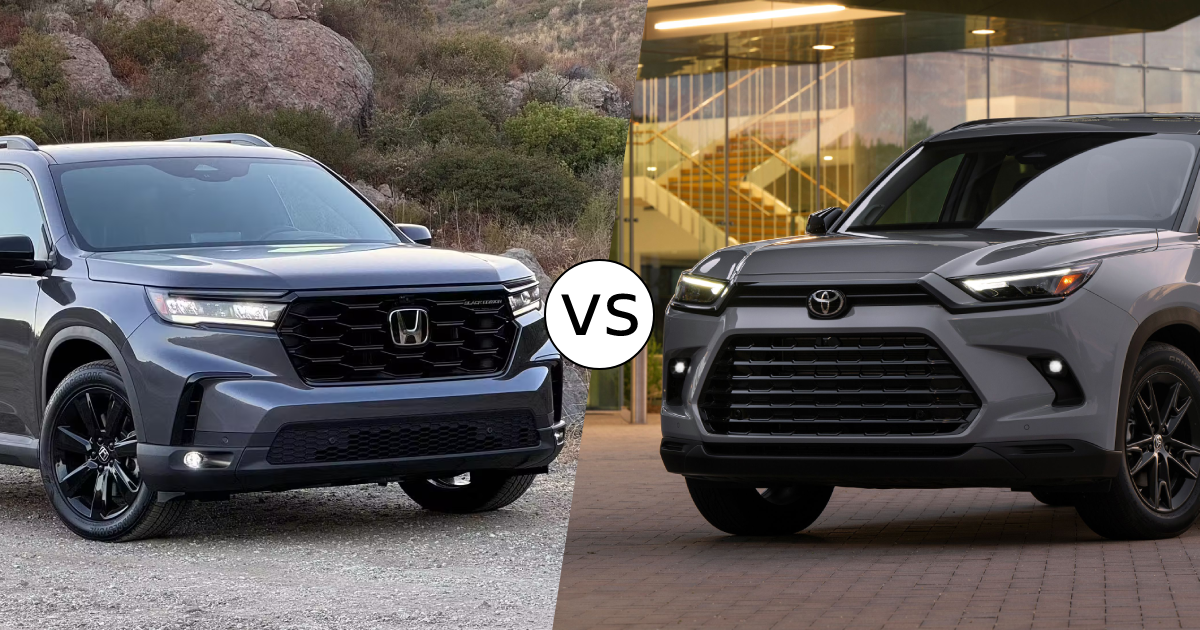
Family-friendly and capable, the 2025 Toyota Grand Highlander and the 2025 Honda Pilot are duking it out for dominance in the three-row SUV market. Both offer roomy interiors and impressive safety tech, but they're not carbon copies of each other. At Longo Toyota in El Monte, California, we'll guide you through the 2025 Toyota Grand Highlander vs. Honda Pilot comparison to help you figure out which one fits your life better. If you're looking to test-drive the new 2025 Toyota Grand Highlander, give our team a call at 626-539-2113. more Pricing and Value The 2025 Toyota Grand Highlander has a starting price of $40,860 for its base LE trim. Honda's Pilot begins just a bit lower at $40,200 for the Sport trim. That $660 difference might matter if you're pinching pennies, but smart shoppers look beyond the up-front cost. Toyota scores major points with its two-year/25,000-mile free scheduled maintenance program, and the Grand Highlander's strong resale value sweetens the deal. Honda makes a solid product, but the company doesn't match Toyota's maintenance perk, which could leave a few hundred extra bucks in your pocket during those first couple of ownership years. Performance and Efficiency Each of these vehicles presents its own approach to performance. Engine and Transmission Details Toyota offers many engine choices. The Grand Highlander's base powerplant is a zippy 265-horsepower turbocharged 2.4-liter four-cylinder engine pairing with an eight-speed automatic transmission. Hybrid options include a powertrain that combines a 2.5-liter engine with electric motors for 245 horsepower. The Hybrid MAX Limited trim marries a turbo 2.4-liter with an electric boost for a hefty 362 horsepower and 400 lb-ft of torque. Car and Driver clocked the nonhybrid Grand Highlander reaching 60 mph from a standstill in 7 seconds. Honda keeps it simple with one choice across all Pilot trims: a 285-horsepower 3.5-liter V-6 engine hooked to a 10-speed automatic transmission. It's a solid performer, but you won't find any fuel-sipping hybrid tech here. Fuel Economy and Range If fill-ups are destroying your budget, the Grand Highlander's hybrid models might be your saving grace. The standard hybrid variant delivers 37 mpg city, 34 mpg highway, and 36 mpg combined with front-wheel drive. Even the muscle-bound Hybrid MAX Limited manages a respectable 26 mpg city/27 mpg highway/27 mpg combined with all-wheel drive. The nonhybrid version still posts decent figures of 21 mpg city and 28 mpg highway. Honda's V-6-only Pilot can't touch those hybrid figures — you'll get 19 mpg city and 27 mpg highway with front-wheel drive. It even struggles against the Grand Highlander's nonhybrids; Car and Driver saw them hitting 29 mpg during their 75-mph highway test loop. Your wallet will thank you for those fewer stops at the gas pump with the Toyota. Interior and Comfort There's much to compare inside the Toyota Grand Highlander and the Honda Pilot. Seating Capacity and Passenger Space Both SUVs offer seven- or eight-passenger flexibility. The Grand Highlander has captain's chairs as standard in row two, making it a seven seater. Toyota will swap in a bench seat at no cost if you need that extra spot. Honda follows a similar playbook with captain's chairs on fancier trims. Third-row comfort is where things get interesting. An inch might not sound like much, but the Grand Highlander's 33.5 inches of third-row legroom against the Pilot's 32.5 inches makes a real difference. Ask any teenager or adult banished to the back — that extra space matters on long trips. Toyota's bigger dimensions produce a roomier feel throughout the cabin. Cargo Space and Versatility Behind the Grand Highlander's third row, you'll find 20.6 cubic feet of space, outstripping the Pilot's 18.6. Drop that third row, and the Toyota offers 57.9 cubic feet against the Honda's 48.5. Fold everything flat, and the Grand Highlander swallows a massive 97.6 cubic feet of stuff, soundly beating the Pilot's 87 cubic feet. This extra space is three more suitcases on your family vacation or that bulky furniture purchase that fits without renting a truck. Both SUVs give you power liftgates and seats that fold flat easily, but families who haul lots of gear can't ignore the Grand Highlander's sheer volume advantage. Interior Quality and Features If you're a tech fan, you'll love the Grand Highlander's standard 12.3-inch touch screen, significantly bigger than the 9-inch display in top Pilot trims. Toyota also offers an optional 12.3-inch digital gauge cluster that looks like it belongs in a luxury car. Both SUVs connect with your phone through wireless Apple CarPlay and Android Auto. Music lovers can rock to the Grand Highlander's optional 11-speaker JBL premium audio setup. The available panoramic moonroof floods the cabin with natural light, making the interior feel even roomier. Both vehicles offer wireless phone charging pads, but the Grand Highlander's bigger standard screen and that gorgeous digital dash option give it the edge in the tech department. Safety and Reliability Safety is paramount for family haulers, and both manufacturers deliver solid protection. The Grand Highlander boasts Toyota Safety Sense 3.0, which includes adaptive cruise control, lane trace assist, and auto high beams. Honda counters with its own Honda Sensing suite offering comparable features. Toyota backs the Grand Highlander with a standard three-year/36,000-mile basic warranty and five-year/60,000-mile powertrain coverage. This may not seem exceptional, but don't forget that free maintenance program. Both brands have built their reputations on making vehicles that last forever, so you'll likely pass either SUV down to your teenager before any significant issues arise. Road Handling and Driving Experience Neither of these family haulers will be carving canyon roads like sports cars, but they handle themselves with dignity. On Car and Driver's skid pad test, the Pilot achieved a slightly better grip of 0.84 g against the Grand Highlander's 0.80 g. The Pilot's edge might matter if you regularly tackle winding roads. The Grand Highlander stopped from 70 mph in 184 feet during testing, a solid performance for a vehicle of its size. Your daily driving experience will depend on which Grand Highlander powerplant you choose. The base turbo engine handles everyday tasks efficiently, while the hybrids deliver that smooth, quiet ride with instant electric torque. Opt for the Hybrid MAX Limited if you want surprising pep from your family SUV. Although the Pilot delivers consistent V-6 grunt across all trims, you'll miss out on the quiet efficiency of the Grand Highlander hybrids. Which SUV Reigns Supreme? In the Honda Pilot vs. Toyota Grand Highlander debate, we observe that both are solid family SUVs that cater to different priorities. The Grand Highlander wins on space, cargo room, and — especially with the hybrids — fuel economy. You also get a bigger standard infotainment screen and free maintenance for two years. The Honda Pilot may counter with sportier handling and the simplicity of a proven V-6 powertrain across all versions, but it's not enough to push the Toyota Grand Highlander off top spot. Test-Drive the Toyota Grand Highlander Today If you're curious about the 2025 Grand Highlander, visit our Longo Toyota dealership in El Monte, California. Our knowledgeable team will answer any questions and guide you through the vehicle's many features. To be sure the Toyota Grand Highlander is the right fit for your family's adventures, contact us today to book a test-drive.

2025 Toyota Crown Signia vs. Mazda CX-70 PHEV

Toyota Crown Signia vs. Mazda CX-70 PHEV

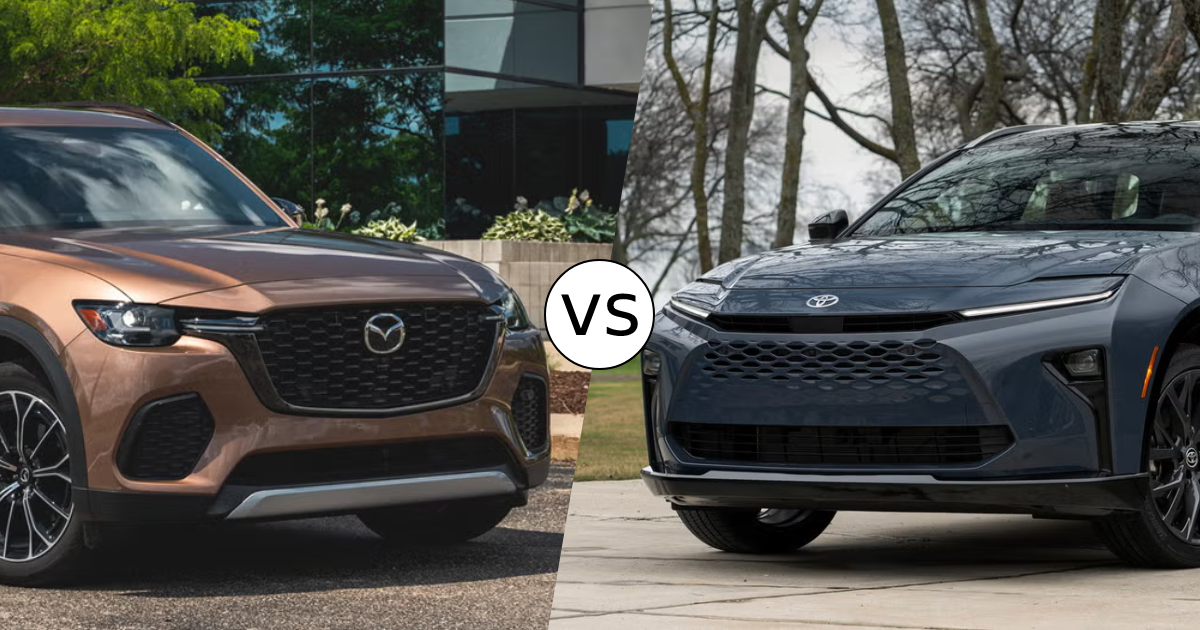
Electrified vehicles are becoming more common and are ideal if you're seeking a fuel-efficient car to reduce your carbon footprint. The 2025 Toyota Crown Signia and the 2025 Mazda CX-70 PHEV are midsize SUVs with cutting-edge technology and features designed for comfort, capability, and sustainability. Which SUV is right for you? Delve into this car brand comparison that our team at Longo Toyota in El Monte, California, has created to help with your decision. Our car comparison by features will explore interior space, functionality, and driving dynamics. more About the 2025 Toyota Crown Signia The Crown Signia is a luxury SUV with a hybrid powertrain. If you're looking for upscale materials combined with Toyota's legendary capability, the Crown Signia may be the perfect vehicle for you. About the 2025 Mazda CX-70 PHEV The 2025 Mazda CX-70 PHEV is a plug-in hybrid SUV with a roomy interior, Mazda's i-Activ all-wheel-drive system, and multiple charging options. What's New for 2025? Toyota is introducing the Crown Signia for 2025, the first SUV under the Crown brand. The CX-70 PHEV is a new plug-in hybrid for the Mazda lineup. In a car comparison showdown, these two vehicles are fairly evenly matched. However, we feel the Toyota has some clear advantages, making it the superior vehicle in our car feature comparison. Design and Aesthetic When you look at these two titans of electrified SUVs, you'll notice the sleek, futuristic styling of the Crown Signia over the boxy appearance of the CX-70. The Toyota has slick-looking cat-eye-shaped LED headlights, while the massive front grill and rectangular-shaped headlights of the CX-70 give it a more traditional Mazda design and style. Pricing and Trim Levels The 2025 Toyota Crown Signia comes in two trims: the base XLE with an MSRP of $43,590 and the Limited trim with a starting price of $47,990. The 2025 Mazda CX-70 PHEV also has two trims: the CX-70 PHEV Premium and the CX-70 PHEV Premium Plus. Prices are slightly higher, starting at $54,400 for the entry-level trim and rising to $57,450 for the top-level trim. Cargo and Utility Both SUVs have two rows of seats that can fit up to five people comfortably. With versatile seating configurations, the 2025 Crown Signia XLE trim can get between 25.8 and 68.8 cubic feet of cargo space. If you choose the Limited trim with its panoramic sunroof, you'll get between 24.8 and 66.1 cubic feet of cargo space. The CX-70 has generous cargo space ranging from 39.6 cubic feet to 75.3 cubic feet of storage. Technology Features You get cutting-edge technology features in both these SUVs. The Crown Signia comes with Toyota's infotainment system, including a 12.3-inch touch screen with wireless Apple CarPlay and Android Auto smartphone integration. You also get a wireless charging pad and five USB-C charging ports. The Limited trim adds an 11-speaker JBL audio system and digital key capability. The CX-70 PHEV has Mazda's latest infotainment system with a 12.3-inch touch screen. You get wireless Apple CarPlay and Android Auto integration, available Alexa Built-in, and an optional Bose premium sound system. Performance and Driving Dynamics Under the hood of the 2025 Toyota Crown Signia, you'll find a 2.5-liter Atkinson-cycle four-cylinder engine with a combined output of 240 horsepower. A continuously variable transmission and all-wheel drive come standard across the lineup. The Crown Signia can go from 0 to 60 mph in about 7 seconds. The CX-70 has a 2.5-liter four-cylinder DOHC engine combined with an electric motor for a combined output of 323 horsepower and 369 lb-ft of torque. An eight-speed transmission comes with this plug-in hybrid SUV, and all-wheel drive is standard. The 2025 Mazda CX-70 can go from 0 to 60 mph in about 5.9 seconds. Fuel Economy and Range When it comes to car comparison specs, the Crown Signia gets 39 mpg in the city and 37 mpg on the highway, while the CX-70 gets about 56 MPGe with an all-electric driving range of up to 26 miles when fully charged. Driver-Assistance Features Both Toyota and Mazda take safety seriously and equip the 2025 Crown Signia and CX-70 with standard and optional driver-assistance features. With the Crown Signia, you get the Toyota Safety Sense 3.0 bundle of driver-assistance features, including: Precollision system with pedestrian detection Dynamic radar cruise control Lane mitigation system Road sign assist Automatic high beams Proactive driving assist Mazda gives the CX-70 PHEV its i-Activsense safety features, including: Precollision safety technology Automatic emergency braking Lane mitigation system Adaptive cruise control Blind-spot warning Driver alertness Warranty Coverage Both Toyota and Mazda give their electrified SUVs generous warranties. The 2025 Crown Signia has the following warranties: Basic warranty of 36 months/36,000 miles Hybrid system warranty of 96 months/100,000 miles Hybrid battery warranty of 120 months/150,000 miles Powertrain warranty of 60 months/60,000 miles The 2025 CX-70 has the following warranties: Basic warranty of 36 months/36,000 miles Powertrain warranty of 60 months/60,000 miles High voltage battery limited warranty of 96 months/100,000 miles Extended battery emissions warranty of 10 years/150,000 miles Comparison of Additional Specs Comparing the 2025 Toyota Crown Signia vs. the CX-70 PHEV, the main difference is that the Crown Signia doesn't need to be recharged at an in-home or public charging station like the CX-70 does. Instead, the Crown Signia relies on regenerative braking to help charge the battery for all-electric driving. For pricing, the Crown Signia is more affordable than the CX-70 yet has numerous upscale features that you'd expect in a luxury SUV. Pros and Cons: Weighing the Options Deciding between the 2025 Toyota Crown Signia or the 2025 Mazda CX-70 PHEV is a personal choice. The Toyota is more convenient as it doesn't need to be plugged in to recharge, but the Mazda has a longer all-electric driving range. However, the total driving range of the Crown Signia is about 550 miles, while the CX-70 PHEV only has a total driving range of about 490 miles. In our professional opinion, the Crown Signia is a stand-out hybrid SUV with impressive fuel economy, a roomy interior, and handsome styling. Experience the 2025 Toyota Crown Signia Today Contact our team at Longo Toyota in El Monte, California, to learn more about the Crown Signia and schedule a time to take one for a test-drive. We also carry an extensive inventory of new Toyota vehicles that are ideal for your El Monte lifestyle.

2025 Toyota Camry vs. Honda Accord

2025 Toyota Camry vs. Honda Accord

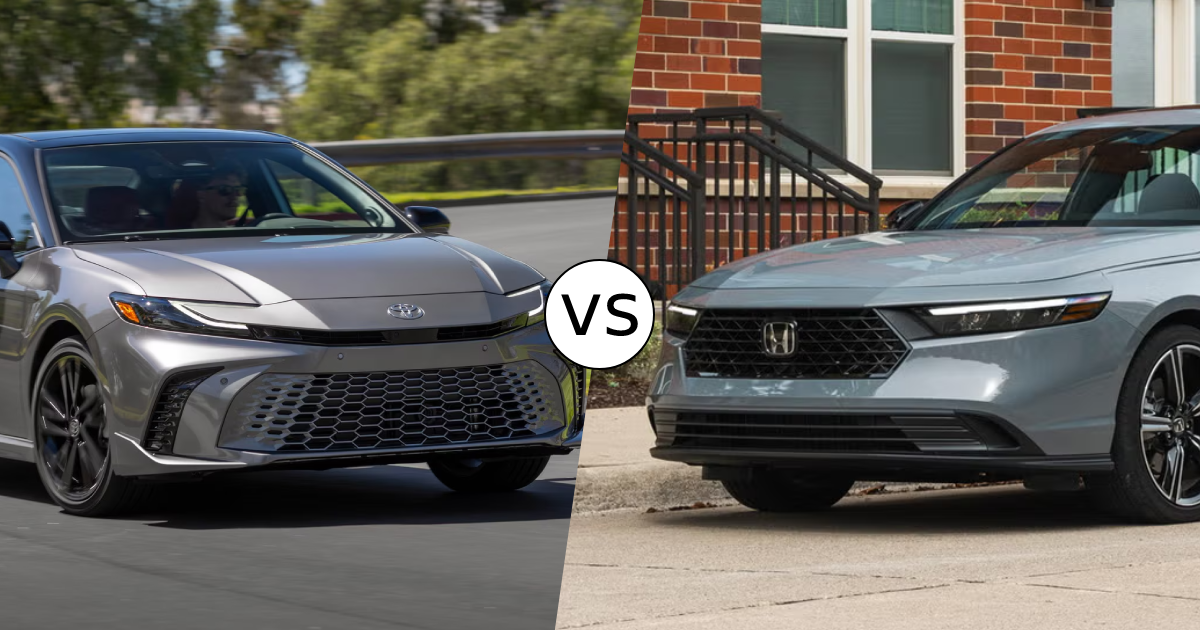
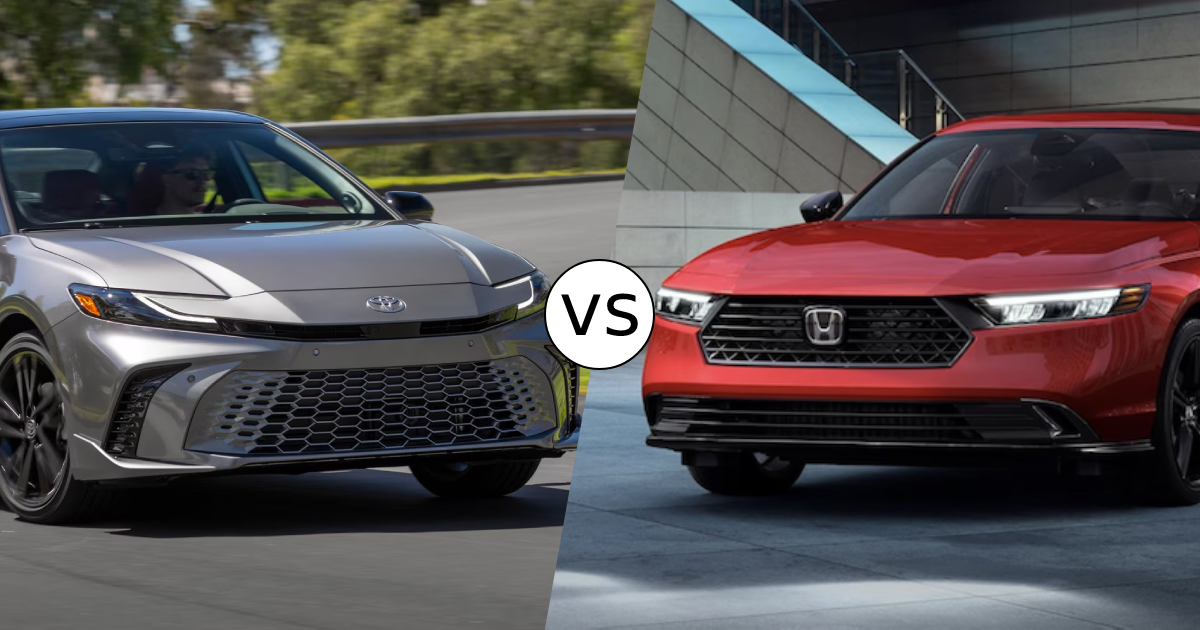
Details matter when choosing your next vehicle. For El Monte residents, dependable and fuel-efficient vehicles are the top choice for morning commuters. Let's compare two popular models, the 2025 Camry vs. Accord, and examine their features, performance, and value to help you find the best fit. more Overview of Both Models Selecting the right sedan goes beyond style. It requires balancing performance, comfort, and efficiency. The 2025 Toyota Camry and Honda Accord are favorites among families and commuters. The Camry features a hybrid-only lineup with two drivetrain options, providing efficiency and sufficient power for daily driving. It's modern design offers an upscale feel with Toyota's reliable performance. The Honda Accord is a well-rounded family sedan known for its roomy interior, smooth handling, and multiple powertrains –– including a turbocharged and a hybrid option. In El Monte's traffic, features such as fuel economy, safety technology, and user-friendly entertainment are crucial. New Toyotas For Sale in El Monte, CA Design and Exterior Comparison Let's explore each sedan's design. Visual Appeal The 2025 Toyota Camry boasts a contemporary style with sharp lines for efficiency and a redesigned front fascia for a touch of drama. The Honda Accord maintains a more elegant appearance as evident in the SE trim's eye-catching 17-inch alloy wheels and black window trim. Both sedans draw attention on El Monte streets by fusing style and utility. Size and Dimensions The Toyota Camry and Honda Accord fall into the midsize category. The Camry's dimensions make it easy to maneuver in city traffic while maintaining a solid road presence. Height: 56.9 inches Length: 193.5 inches Front-row headroom: 38.3 inches Second-row headroom: 37.6 inches Front-row legroom: 42.1 inches Second-row legroom: 38.0 inches Cargo volume: 15.1 cubic feet Here are the dimensions of the Accord: Height: 57.1 inches Length: 195.7 inches Front-row headroom: 39.5 inches Second-row headroom: 37.3 inches Front-row legroom: 42.3 inches Second-row legroom: 40.8 inches Cargo volume: 16.7 cubic feet Functional Design Features The Camry and Accord emphasize functionality. The Camry features LED daytime running lights, sleek door handles, and a practical grille design. The Accord prioritizes convenience with prominent mirrors, a large trunk, and modern accents. These design choices make these striking sedans well-equipped to handle all of California's roads. Interior, Comfort, and Technology Now, let's step inside and check out the comfort and technology the Accord and Camry have to offer. Cabin Space and Materials Both sedans are spacious and can easily fit your whole crew for long journeys. The 2025 Toyota Camry features a modern interior with soft-touch materials, a well-designed dashboard, and generous legroom. Passengers will enjoy plenty of space in both the front and back seats. The Honda Accord has an organized cabin with a streamlined design, ensuring comfort even on long journeys. Both models use high-quality materials for a premium feel at an affordable price, making them ideal for families and commuters seeking durability and comfort. Infotainment and Connectivity Options The Camry features an 8.0-inch touch screen that can be upgraded to a 12.3-inch display in higher trims. It offers wireless Apple CarPlay and Android Auto compatibility and an available nine-speaker JBL Premium Audio system. The Accord offers a 7.0- or 12.3-inch touch screen and a customizable 10.2-inch driver interface. Wireless connectivity for Apple CarPlay and Android Auto and innovative features such as a head-up display and wireless phone charger are available in higher trims. For El Monte drivers, these tech features enhance your convenience and enjoyment on the road. Performance and Driving Experience When it's time to hit the road, you'll appreciate the performance of these sedans. Engine Specs and Powertrain The 2025 Toyota Camry offers four hybrid trim options with up to 232 horsepower in front-wheel or all-wheel drive. It's designed for responsive handling and is perfect for El Monte's busy streets. The Honda Accord has a turbocharged 1.5-liter engine with 192 horsepower or a 2.0-liter hybrid engine reaching 204 horsepower. The Accord's performance is more varied, but both engines provide smooth acceleration and stability, which are important for heavy traffic and sharp turns. Ride Quality and Handling The Camry has a firmer suspension than other cars, providing better handling and a sportier driving experience. The Accord is well known for its precise steering and well-balanced handling, which make for a smooth and agile ride. Both are great for cruising on the 10 or down Garvey Avenue. Fuel Efficiency The Toyota Camry prioritizes fuel economy with an EPA estimate of up to 53 mpg in the city. Its all-wheel-drive versions also offer excellent fuel economy, benefiting drivers in stop-and-go traffic. The Honda Accord's hybrid trims also achieve great gas mileage, at about 51 mpg in the city. However, when comparing the Toyota Camry vs. Honda Accord, the Camry's advanced hybrid system provides a slight advantage, especially for fuel-conscious drivers in El Monte. Safety Features and Ratings Safety is crucial when choosing a sedan. The 2025 Toyota Camry features blind-spot detection, lane departure warning, and adaptive cruise control, earning the Camry the 2024 Top Safety Pick+ award from the Insurance Institute for Highway Safety. Its systems, including automated emergency braking with pedestrian detection, enhance safety on busy roads. The Honda Accord isn't far behind in safety tech. The Accord features Honda Sensing, a suite of driver-assistance features. These include automated emergency braking, lane-keeping assistance, and adaptive cruise control. Price Comparison Both the Camry and Accord are competitively priced. Here's how each trim stacks up for the 2025 Toyota Camry: LE: $28,700 MSRP SE: $31,000 MSRP XLE: $33,700 MSRP XSE: $34,900 MSRP Here's how the Honda Accord compares: LX: $28,295 MSRP SE: $30,560 MSRP Sport Hybrid: $33,655 MSRP EX-L Hybrid: $34,940 MSRP Sport-L Hybrid: $35,375 MSRP Touring Hybrid: $39,300 MSRP While the Accord offers more powertrain choices, the Camry's hybrid efficiency and modern styling make it a strong contender. Which One Is the Right Choice for You? When comparing the Honda Accord vs. Toyota Camry, both offer great value, but the Camry's modern upgrades, fuel economy, and design make it the preferred choice for many drivers in El Monte, California. To experience hybrid driving, visit our dealership to test-drive one of our new Toyotas for sale and explore the Camry's standout features in the midsize sedan market.

Toyota RAV4 vs. Jeep Grand Cherokee

2025 Toyota RAV4 vs. Jeep Grand Cherokee

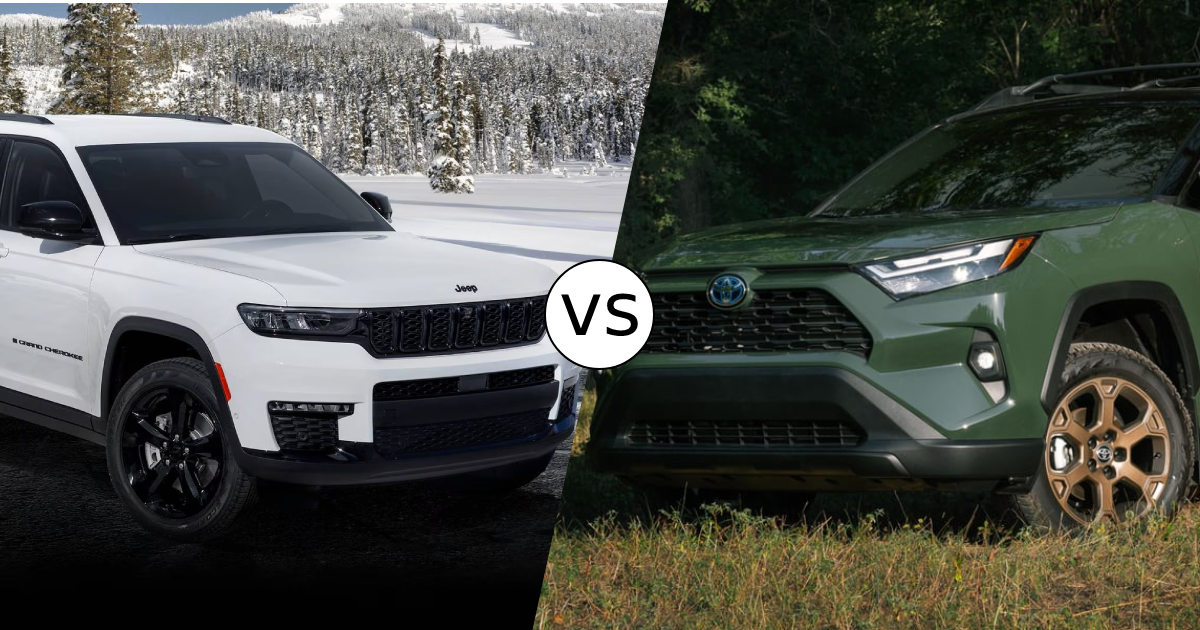
When it comes to choosing the perfect SUV, the 2025 Toyota RAV4 and the 2025 Jeep Grand Cherokee stand out as two fantastic options, each with unique offerings. This comparison explores their features, performance, and pricing to help you decide which SUV best fits your lifestyle. Whether you prioritize reliability, off-road capabilities, or interior comfort, we'll break down the essential aspects so you can make an informed decision. more Pricing and Value The 2025 Toyota RAV4 and the 2025 Jeep Grand Cherokee are both strong contenders in the SUV market, each offering unique features and pricing. The 2025 Toyota RAV4 is available in several trims, with the base LE trim starting at an MSRP of $28,850 and the top-tier Limited trim priced at $37,155. In contrast, the 2025 Jeep Grand Cherokee offers a wider range of trims, with the base Laredo A trim starting at $36,495 and the high-end Summit Reserve trim priced at $63,040. When considering the cost of ownership, the new Toyota RAV4 is estimated to cost around $41,506 over five years, which includes expenses such as depreciation, insurance, maintenance, and fuel. On the other hand, the 2025 Jeep Grand Cherokee has a higher estimated five-year ownership cost of $62,965. New Cars For Sale in El Monte, CA Performance and Engine Specifications The new RAV4 features a 2.5-liter four-cylinder engine with 203 horsepower and 184 lb-ft of torque, prioritizing fuel efficiency over performance. It also offers hybrid options, with the plug-in hybrid producing up to 302 horsepower. The standard RAV4 can tow up to 1,500 pounds, while the plug-in hybrid can tow up to 2,500 pounds. The available Dynamic Torque Vectoring All-Wheel Drive and Multi-Terrain Select enhance off-road capabilities with modes for various terrains. In comparison, the 2025 Jeep Grand Cherokee features a powerful 3.6-liter V-6 engine with 293 horsepower and 260 lb-ft of torque. Designed for comfort and off-road capability, it boasts a towing capacity of up to 6,200 pounds and offers three four-wheel-drive systems: Quadra-Trac I, Quadra-Trac II, and Quadra-Drive II. The Trailhawk trim enhances off-road performance with up to 10.9 inches of ground clearance and the Quadra-Lift Air Suspension System. Fuel Economy and Environmental Impact The RAV4 and the Grand Cherokee offer distinct differences in fuel economy and environmental impact. The 2025 Toyota RAV4, with its standard 2.5-liter four-cylinder engine, achieves an EPA-estimated 28 MPG combined (25 city/33 highway) for the gasoline model, while the hybrid variant offers up to 39 MPG combined. This results in lower greenhouse gas emissions, making the RAV4 a more environmentally friendly option. The 2025 Jeep Grand Cherokee, equipped with a 3.6-liter V6 engine, delivers an EPA-estimated 22 MPG combined (19 city/26 highway) for the gasoline model. The Grand Cherokee 4xe plug-in hybrid variant achieves 56 MPGe combined and offers up to 25 miles of electric-only range. While the Grand Cherokee 4xe provides a greener alternative within its lineup, the overall fuel economy and environmental impact of the RAV4 are generally more favorable for eco-conscious drivers. Interior Comfort, Cargo, and Seating Comfort is key to your driving experience, and the new RAV4 excels in this area. It has a spacious and practical interior with seating for five and durable materials. Higher trims include SofTex seats and a leather-wrapped steering wheel for added luxury. With 37.5 cubic feet of cargo space behind the second row and up to 69.8 cubic feet with the rear seats down, it's great for families and storage needs. The cabin also features multiple compartments and an 8-inch touch screen with Apple CarPlay and Android Auto for user-friendly tech. Meanwhile, the 2025 Jeep Grand Cherokee offers a more luxurious and spacious interior, especially in higher trims such as the Overland and Summit. It also seats up to five passengers, but the Grand Cherokee L variant can accommodate up to seven. The Grand Cherokee features premium materials, including quilted leather upholstery and an open-pore wood trim in the higher trims. Cargo space is generous, with 37.7 cubic feet behind the second row and up to 70.8 cubic feet with the seats folded down. The Grand Cherokee also includes advanced technology, such as the Uconnect infotainment system, which is praised for its ease of use. Safety Features and Ratings Safety is crucial when selecting a vehicle. The RAV4 has a five-star overall safety rating from the National Highway Traffic Safety Administration and includes Toyota Safety Sense 2.5, featuring a precollision system, lane departure alert, and adaptive cruise control. Similarly, the Grand Cherokee, which offers safety features such as adaptive cruise control, blind-spot monitoring, and ParkSense Rear Park Assist, also received a five-star rating and is a Top Safety Pick by the Insurance Institute for Highway Safety. Reliability and Consumer Ratings In a comparison between Toyota vs. Jeep reliability, the new RAV4 stands out as a top choice. The new model is highly regarded for its reliability, earning an 80 out of 100 in the J.D. Power Quality and Reliability ratings. Consumer reviews highlight its dependable performance and low maintenance costs, making it a popular choice among compact SUVs. In contrast, the 2025 Jeep Grand Cherokee has a slightly higher J.D. Power rating of 81 out of 100 for Quality and Reliability. However, it is expected to be less reliable than the average new car, according to Consumer Reports, based on data from previous model years. Pros and Cons Summary In the Toyota RAV4 vs. Jeep Grand Cherokee debate, both vehicles come with their distinct advantages and disadvantages. For the Toyota RAV4, the pros include its affordability, impressive fuel economy, and strong reliability ratings. You'll enjoy a comfortable interior with ample cargo space and a robust suite of safety features. The cons might include less power compared to the Grand Cherokee and limited off-road capabilities. In contrast, the Jeep Grand Cherokee offers numerous engine options, exceptional off-road capabilities, and a luxurious interior. However, its higher price point, lower fuel economy, and potential reliability concerns may deter you. Choose Wisely: Your Perfect SUV Awaits Both the 2025 Toyota RAV4 and the 2025 Jeep Grand Cherokee have their unique strengths and weaknesses. If you prioritize fuel economy, reliability, and value, the RAV4 stands out as a fantastic option. However, if you crave power, luxury, and off-road capability, the Grand Cherokee might be the SUV for you. We invite you to visit us at Longo Toyota in El Monte, California, to explore the RAV4 further, and our knowledgeable team will be happy to assist you in making the right choice for your lifestyle. Your next adventure starts here.

2025 Toyota 4Runner vs. Honda Pilot

2025 Toyota 4Runner vs. Honda Pilot

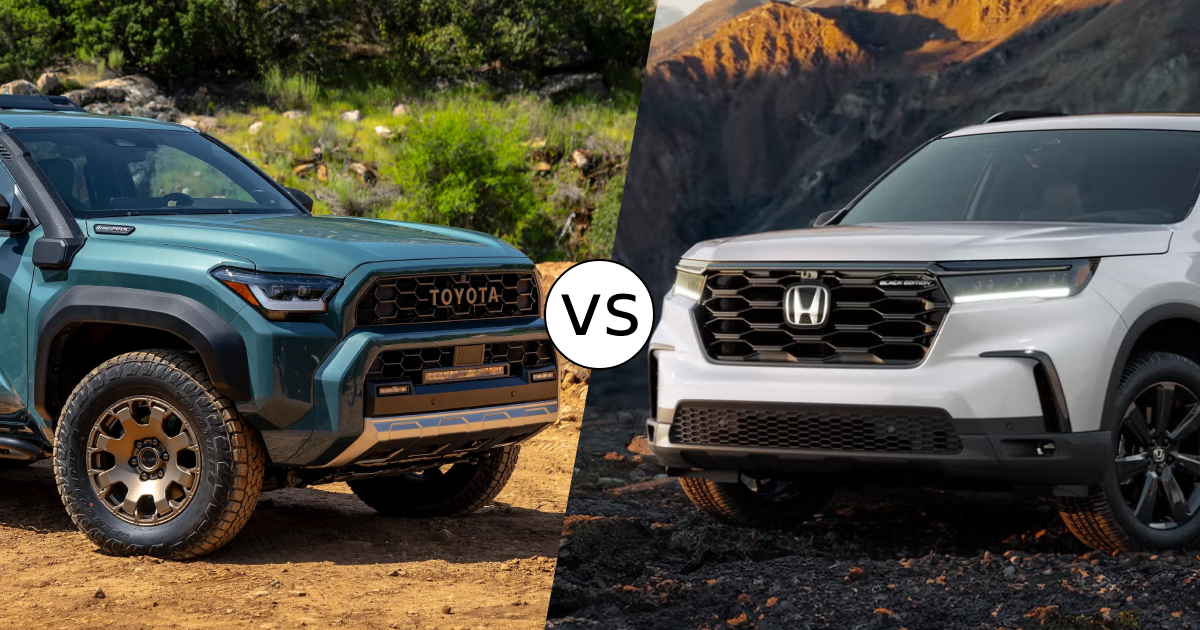
The midsize SUV segment offers compelling choices for buyers seeking versatility, comfort, and capability. Two standout options are the 2025 Toyota 4Runner and the 2025 Honda Pilot. The 4Runner excels in off-road adventures, while the Pilot focuses on family-friendly driving. Let's compare these vehicles to help you determine which best suits your needs. more Design and Style When comparing the 2025 Toyota 4Runner vs. Honda Pilot, you'll immediately notice their distinct design philosophies. The 4Runner maintains a rugged, adventurous appearance with a muscular body and high ground clearance. The Pilot takes a more refined approach, with sleek, modern styling that appeals to family-oriented buyers. In terms of size, the Honda Pilot measures 199.9 inches long, 78.5 inches wide, and 71 inches tall. The Toyota 4Runner is more compact at 194.9 inches long and 78 inches wide but is slightly taller at 72.6 inches. For cargo, the Toyota 4Runner offers 12.1 cubic feet behind the third row, perfect for hauling gear for your next adventure. The Honda Pilot provides more room behind its third row, but both vehicles offer spacious options depending on your needs. Performance and Capability The 2025 models bring significant powertrain updates. The 4Runner offers a 2.4-liter turbocharged powertrain producing 278 horsepower and 317 lb-ft of torque. The Pilot's 3.5-liter V-6 engine generates 285 horsepower and 262 lb-ft of torque. The Pilot features a 10-speed automatic transmission, while the 4Runner uses an eight-speed automatic. Towing capacity favors the 4Runner, which can pull up to 6,000 pounds compared to the Pilot's 5,000 pounds. The SUVs attain similar fuel efficiency, with the 4Runner achieving 20 mpg city, 26 mpg highway, and 22 mpg combined, compared to the Pilot's 19 mpg city, 27 mpg highway, and 22 mpg combined. Road Capabilities Comparison Significant differences in ground clearance and off-road capabilities separate these SUVs. The 4Runner SR5 offers 8.1 inches of ground clearance, while other trims, such as the Limited and the TRD Pro, offer an impressive 10.1 inches. In comparison, the Pilot TrailSport provides 8.3 inches of ground clearance, with the standard model sitting at 7.3 inches –– a notable difference that impacts off-road performance. A comprehensive suite of advanced features further enhances the 4Runner's off-road ability. These include active traction control for optimal grip in challenging conditions, an electronic locking rear differential that ensures power delivery to both rear wheels, and a center locking differential for enhanced stability. Toyota's Multi-Terrain Select system allows drivers to optimize vehicle performance for different surface conditions, while Crawl Control is a low-speed cruise control system ideal for technical off-road driving. Additional features such as downhill and hill-start assist control make the 4Runner particularly adept at handling steep terrain. These systems work together to maintain vehicle control and stability during descents and prevent rollback when starting on inclines. While the Pilot TrailSport offers some off-road enhancements, it can't match the 4Runner's extensive off-road technology suite and exclusive capabilities. The 4Runner is a true all-terrain SUV, while the Pilot TrailSport represents a more modest approach for occasional off-road excursions. Fundamental differences in design and capability make the 4Runner the top choice for off-road enthusiasts. Driver Comfort and Handling The Honda Pilot and Toyota 4Runner offer distinct driving experiences. Families may appreciate the quiet refinement of the Pilot, with testing revealing noise levels at 39 decibels compared to the 4Runner TRD Off-Road's 43 decibels. At 70 mph, the Pilot registers 66 decibels versus the 4Runner's 69 decibels, with both reaching 76 decibels under full acceleration. The Pilot's unibody construction and independent suspension provide smooth handling and comfort, particularly in urban and highway settings. In contrast, the 4Runner's body-on-frame design and off-road suspension excel in rugged terrain. These differences are noticeable during quick maneuvers, where the Pilot may offer a more responsive feel. Practicality and Versatility The Toyota 4Runner offers a potent combination of practicality and versatility. The 2025 model introduces an optional hybrid powertrain, balancing efficiency and performance unavailable in the Pilot. Also, while the Honda Pilot comes with a fixed three-row configuration, the 4Runner allows you to choose between two- or three-row seating for greater customization depending on passenger and cargo needs. Further, the 4Runner's signature roll-down rear window enhances convenience and functionality, making it easier to access gear or improve cabin ventilation. This combination of features makes the 4Runner a versatile option for a range of driving scenarios. Safety and Reliability Both vehicles include comprehensive safety packages, including pre-collision systems with pedestrian detection, lane departure alerts with steering assist, full-speed range dynamic radar cruise control, lane tracing assist, road sign assist, and automatic high beams. Notably, Toyota provides longer scheduled maintenance coverage for the 4Runner at two years/25,000 miles compared to Honda's one-year/12,000 miles for the Pilot. Pricing, Value, and Available Trims The 2025 Toyota 4Runner starts at $40,770, slightly higher than the Honda Pilot's $40,200 base price. The 4Runner's hybrid versions range from $51,990 to $66,900, whereas the top Honda Pilot trim reaches $54,580. The 4Runner offers 12 trim levels: the SR5, the TRD Sport, the TRD Sport Premium, the TRD Off-Road, the TRD Off Road Premium, the Limited, the TRD Off-Road i-FORCE MAX, the TRD Off-Road Premium i-FORCE MAX, the Limited i-FORCE MAX, the Platinum, the TRD Pro, and the Trailhunter. The Pilot has six trims: the Sport, the EX-L, the TrailSport, the Touring, the Elite, and the new Black Edition. Making the Right Choice: 4Runner or Pilot Your lifestyle should guide your choice between these capable SUVs. Choose the Toyota 4Runner if you prioritize off-road adventures, high towing capacities, and ample cargo space. Its new hybrid powertrain offers drivers improved efficiency without compromising capability. The family-friendly Honda Pilot may be for you if you desire maximum passenger space and prefer on-road comfort for daily commuting and family trips. Explore the 2025 Toyota 4Runner in El Monte, California To explore the 2025 Toyota 4Runner and experience its capabilities firsthand, visit Longo Toyota in El Monte or contact us online. Our team is here to help you compare trim levels and find the perfect configuration for your needs.

2025 Toyota Camry vs Lexus ES

Toyota Camry vs. Lexus ES: Which is Right for You?

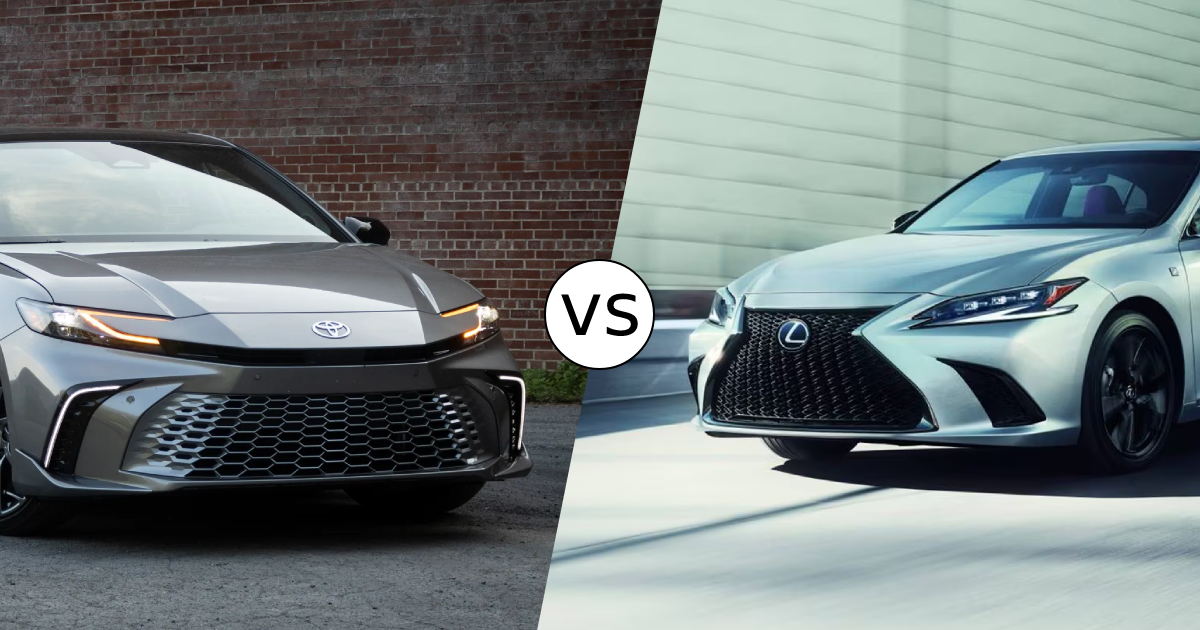
When it comes to choosing a luxury sedan, the 2025 Toyota Camry and the 2025 Lexus ES consistently shine as top contenders. Both models showcase a perfect blend of style, performance, and cutting-edge technology. In this article, we'll compare the Toyota Camry and the Lexus ES to help you decide which luxury sedan aligns with your lifestyle and preferences. more Performance and Engine Options Let's kick things off by examining what lies under the hood of these two impressive sedans. The 2025 Toyota Camry and the 2025 Lexus ES offer distinct performance and engine options tailored to different driving preferences. The Camry is available with exclusive hybrid powertrains, featuring a 2.5-liter four-cylinder engine paired with electric motors. The base front-wheel-drive (FWD) setup produces a combined 225 horsepower, while the all-wheel-drive (AWD) variant boosts this to 232 horsepower. The Camry's hybrid system provides smooth acceleration, with the FWD model accelerating from 0 to 60 mph in approximately 7.4 seconds and the AWD model in about 7.1 seconds. Fuel efficiency is a strong suit for the Camry, with the FWD variant delivering an impressive EPA-estimated 51 mpg combined and the AWD variant achieving around 47 mpg combined. In contrast, the 2025 Lexus ES offers a broader range of engine options, catering to both performance enthusiasts and those seeking luxury. The base ES 250 comes with a 2.5-liter four-cylinder engine that generates 203 horsepower and 184 Ib-ft of torque. Paired with an eight-speed automatic transmission and AWD, it accelerates from 0 to 60 mph in about 8.6 seconds and offers fuel efficiency of 25 mpg city and 34 mpg highway. For more power, the ES 350 features a 3.5-liter V-6 engine delivering 302 horsepower and 267 Ib-ft of torque. With FWD, it achieves 0 to 60 mph in 6.6 seconds and has a fuel efficiency of 22 mpg city and 32 mpg highway. Additionally, the ES 300h hybrid model combines a 2.5-liter engine with electric motors to produce 215 horsepower, emphasizing fuel efficiency with an EPA-estimated 44 mpg combined and a 0-to-60 mph time of 8.1 seconds. The ES prioritizes a smooth and comfortable ride, while the F Sport trims add a touch of sportiness to the handling. Interior and Comfort Both the Camry and the ES offer comfortable and stylish interiors. The Camry features soft-touch surfaces and a user-friendly layout, including an 8-inch touch screen and standard wireless Apple CarPlay and Android Auto. Higher trims, such as the XSE and XLE, come with a 12.3-inch display and JBL audio. With supportive seats and generous legroom, the Camry ensures comfort for both short and long drives. The 2025 Lexus ES highlights luxury and refinement with premium materials such as leather upholstery and wood trims inspired by traditional Japanese swords. It includes a cutting-edge infotainment system with an 8-inch or optional 12.3-inch touch screen, wireless smartphone integration, Amazon Alexa, and a Wi-Fi hot spot. The spacious, plush seats provide excellent comfort, though the trunk space is slightly smaller at 13.9 cubic feet compared to the Camry's 15.1 cubic feet. Overall, the Lexus cabin experience is more serene and upscale. Safety and Reliability Both the Toyota Camry and the Lexus ES prioritize safety. The 2025 Camry features Toyota Safety Sense 3.0, which includes a precollision system, lane departure alert, and dynamic radar cruise control. It has received a Top Safety Pick+ rating from the Insurance Institute for Highway Safety (IIHS) for its crashworthiness. The Camry is also known for its reliability, backed by a three-year/36,000-mile limited warranty and a five-year/60,000-mile powertrain warranty, along with coverage for hybrid components. Similarly, the Lexus ES excels in safety with its Lexus Safety System+ 2.5, featuring advanced technologies such as precollision systems, lane-tracing assist, and adaptive cruise control. It has earned a five-star overall safety rating from the National Highway Traffic Safety Administration and high marks from the IIHS. The ES also boasts strong reliability, reflected in its high J.D. Power score of 82 out of 100. It comes with a four-year/50,000-mile limited warranty, a six-year/70,000-mile powertrain warranty, and extensive hybrid coverage. Cost of Ownership The cost of ownership is a vital consideration for anyone looking to buy a new car. The Camry, known for its affordability and efficiency, has a lower overall cost of ownership, with a five-year estimate of around $33,867 on its base trim. This includes expenses such as depreciation, taxes, financing, fuel, insurance, maintenance, and repairs. Conversely, the Lexus ES, being a luxury vehicle, incurs higher costs, with a five-year estimate of around $53,690 on the base model. This higher cost is attributed to greater depreciation, more expensive insurance, and higher maintenance and repair expenses. However, the Lexus ES offers a more luxurious experience, which can justify the additional expense for those seeking premium comfort and features. Pros and Cons Analysis Let's break down the strengths and weaknesses of each model. The Toyota Camry boasts a more affordable price, excellent fuel efficiency, and a strong reputation for reliability. Its sporty handling makes it a fun drive, while the roomy interior offers plenty of space for passengers and cargo. However, some may find the Camry lacks the upscale materials and finishes that are hallmarks of luxury sedans. On the other hand, the Lexus ES dazzles with its luxurious interior, premium features, and advanced safety technology. It also provides a smooth, quiet ride that enhances the overall driving experience. However, the higher price and potentially higher maintenance costs can be drawbacks for some buyers. Additionally, while it offers great performance, it may not match the sportiness of the Camry for those who crave a more dynamic driving experience. Which Sedan Fits Your Lifestyle? In this 2025 Toyota Camry vs. 2025 Lexus ES showdown, your choice ultimately boils down to what you value most in a vehicle. If you're looking for a reliable, budget-friendly sedan with a sporty edge, the Camry is the perfect choice. However, if your priorities are comfort and advanced features, the ES delivers a superior experience. Whichever way you're leaning, at Longo Toyota in El Monte, California, we're ready to help you explore your options and make an informed decision. Visit us today to test-drive both models and discover which luxury sedan wins your heart.

Toyota Crown Signia vs. the Lexus RX350

The Toyota Crown Signia vs. the Lexus RX350

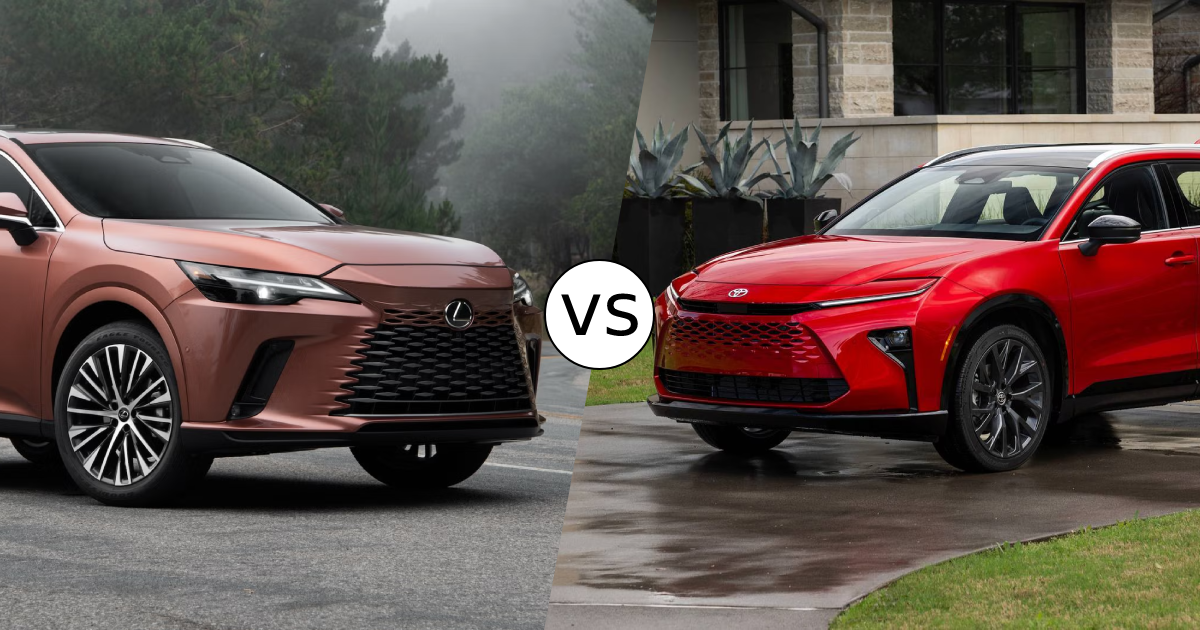
Deciding which luxury SUV to buy can be daunting when you have two strong contenders, such as the Toyota Crown Signia and the Lexus RX350, to pick from. These two midsize SUVs seem similar, with the Crown Signia taking many exterior styling cues from the Lexus, but beyond their outward similarities, they have unique features that make them stand out from each other and the competition. In this comparison, we dive deep into these luxury SUVs' features and specs to discover how they compare. more Exterior Design The 2025 Crown Signia's updated exterior is more stunning than ever. Its sleek lines give it a modern look, and its luxurious front grille has a commanding presence. It also features elegant LED daytime running lights. The Lexus RX350 has an equally stunning exterior with flowing, sophisticated lines. Its luxurious front end includes an expressive front grille and LED headlights, and its rear makes a strong impression with a futuristic LED Blade taillamp. Powertrains The new Crown Signia and the Lexus RX350 both feature robust powertrains with distinct configurations. Hybrid Options The Crown Signia uses a 2.5-liter inline-four gas engine with an electric drive motor. This traditional hybrid setup delivers an impressive 240 horsepower. Along with this hybrid powertrain, the Crown Signia features Toyota's Electronic On-Demand All-Wheel Drive (AWD) system, which sends up to 80% of power to the rear wheels and can switch to front-wheel drive for optimal fuel efficiency. While the standard Lexus RX350 doesn't have a hybrid engine, it still offers a formidable powertrain. It runs on a 2.4-liter turbocharged inline-four engine and outputs 275 horsepower. Like its predecessor, the 2025 RX350 also has a hybrid sibling, the RX350h, which has a 2.5-liter inline-four hybrid setup that delivers 246 horsepower. Fuel Efficiency With its hybrid engine and adaptable AWD system, the Crown Signia achieves estimated EPA ratings of 39 city mpg, 37 highway mpg, and 38 combined mpg. While EPA hasn't rated the 2025 Lexus RX350, the model will likely maintain its reputation as one of the most fuel-efficient vehicles in the midsize luxury SUV segment, based on stats from the 2024 model. When paired with a front-wheel drivetrain, the 2024 RX350 gets estimated EPA ratings of 22 mpg city and 29 mpg highway. Meanwhile, AWD models have estimated ratings of 21 mpg city and 28 mpg highway. Interior and Comfort The 2025 Toyota Crown Signia's beautiful cabin provides many creature comforts. Despite being the base trim, the XLE model has heated and ventilated front passenger seats to ensure you and your front passenger ride in ultimate comfort. The heated rear seats also keep passengers sitting in the back comfortable during nighttime drives. Other comfort features available on the new Crown Signia include a heated steering wheel and a fixed panoramic roof. Every square inch of the RX350's interior space uses premium materials, from open-pore wood trims to luxury leather seats. The standard model comes with heated and ventilated front and rear seats and a leather-trimmed steering wheel and shift knob. That said, the model's most outstanding interior feature is its thematic ambient lighting system that lets you personalize your cabin with up to 14 preset themes. Storage When it comes to cargo space, the Crown Signia has a slight edge over the Lexus RX350. With all seats upright, it provides 25.8 cubic feet in the trunk, while folding the rear seats expands its capacity to 68.8 cubic feet. The Lexus RX350 offers 29.6 cubic feet behind the second row and a total of 46.2 cubic feet with the rear seats folded down. Technology and Safety The new Crown Signia and the RX350 both offer top-of-the-range technologies to take the driving experience to new heights. The centerpiece of the Crown Signia's infotainment system is a 12.3-inch touch screen with wireless Apple Car Play and Android Auto compatibility. Other noteworthy features include a 12.3-inch digital information center, a panoramic view monitor, and a digital rearview camera with HomeLink. An 11-speaker JBL audio system with a subwoofer and amplifier also comes standard on the Limited trim to provide an immersive listening experience on the road. The Lexus RX350 offers an equally impressive technology suite, starting with a 14.0-inch display with crisp graphics and great responsiveness. Notable available features include a high-definition panoramic view monitor, a digital rearview mirror, and a Mark Levinson PurePlay surround-sound audio system. Safety The Crown Signia comes with the cutting-edge Toyota Safety Sense 3.0 system, which includes a dynamic radar cruise control, lane departure alert, forward collision warning with pedestrian detection, road sign assist, high beams, and more. The RX350's Lexus Safety System+ 3.0 matches this safety suite with similar features. Pros and Cons Summary The new Toyota Crown Signia and the Lexus RX350 are seemingly matched on nearly every front, with either getting a slight advantage over the other in a few areas. For instance, while the Crown Signia offers slightly better fuel economy, the RX350 wins when it comes to sheer engine power. Similarly, whereas the Lexus has a more luxurious interior, the Toyota has more cargo capacity. Schedule a Test-Drive of the 2025 Toyota Crown Signia When deciding between two closely matched contenders such as the 2025 Lexus R350 and the Toyota Crown Signia, having a first-hand experience of each can help you break the tie. Contact Longo Toyota in El Monte, California, today to book a free test-drive of the Crown Signia and discover whether it's the best option for you.

Toyota Crown Signia vs. Subaru Outback

Toyota Crown Signia vs. Subaru Outback

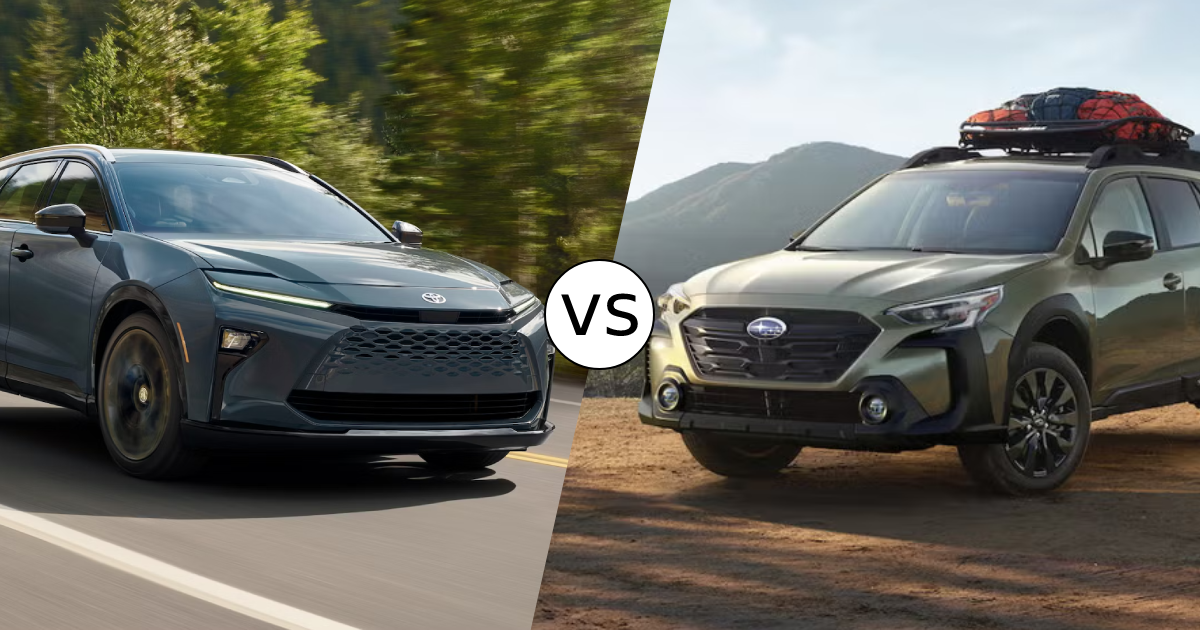
If you're shopping for a midsize SUV in El Monte, California, consider dropping by Longo Toyota to explore the amazing 2025 Toyota Crown Signia. This SUV is a popular option for families with an active lifestyle, but it faces tough competition with the 2025 Subaru Outback. In this Toyota Crown Signia vs. Subaru Outback comparison, we'll find out which model is a better fit for you. more Introduction Purchasing a new SUV is a major financial decision, so it's important to do proper research to ensure you'll end up with the right vehicle. Making vehicle comparisons can help you understand the pros and cons of different car models and determine whether they can meet your personal needs and preferences. In the case of the Toyota Crown Signia and Subaru Outback, it can be difficult to choose between the two as they're both excellent vehicles. These two SUVs deliver an impressive blend of performance, comfort, practicality, and technology, allowing them to meet the needs of a broad range of car buyers. To effectively compare cars, you need to take a closer look at their specifications, capabilities, and features, so you'll know how they fare in areas that matter to you. Comprehensive Comparison Check out this 2025 Toyota Crown Signia vs. 2025 Subaru Outback car comparison in the USA to make an informed buying decision. Performance and Fuel Efficiency When it comes to car comparison specs for performance and fuel economy, the Toyota Crown Signia has an edge over the Subaru Outback. This Toyota SUV is equipped with a 2.5-liter four-cylinder engine that combines with two electric motors for a total output of 240 horsepower and 178 lb-ft of torque. Mated to a continuously variable transmission and all-wheel drive, the powertrain delivers brisk acceleration and enough power for most driving situations. With an impressive EPA rating of 39 mpg city/37 mpg highway, the Crown Signia can help you save a lot on gas down the road. The base engine of the Subaru Outback is a 2.5-liter four-cylinder rated at 182 horsepower and 176 lb-ft of torque. Similar to the Crown Signia, the SUV also comes standard with all-wheel drive and a continuously variable transmission. However, according to a U.S. News car comparison, the Outback has an uninspiring base engine and an unrefined transmission. If you're seeking an engaging driving experience, you can go for the optional 2.4-liter turbo-four, which generates 260 horsepower and 277 lb-ft of torque. Fuel economy ratings are considerably lower than Toyota's, with the base engine returning only 26 mpg city/32 mpg highway. Interior The Toyota Crown Signia is the clear winner in terms of interior build quality and comfort. Its cabin borders on luxury territory with its top-notch fit and finish, attractive accents, and abundance of soft-touch surfaces. Despite being a little bland, the interior of the Subaru Outback is a pleasant place to spend time, but it isn't as luxurious as the Toyota. The Crown Signia also comes with plenty of standard comfort and convenience features, including dual-zone automatic climate control, remote keyless entry, and a universal garage door opener. These features are optional in the Outback. The Subaru Outback boasts slightly more spacious seats than its Toyota rival, offering 42.8 inches of front legroom and 39.5 inches of rear legroom. With 42.1 inches of front legroom and 37.1 inches of rear legroom, the Crown Signia can also comfortably accommodate most adults in both rows. As for cargo space, the Subaru provides up to 75.6 cubic feet with the rear seats folded. That's more than the Toyota's cargo capacity, which maxes out at 68.8 cubic feet. Technology To make your journeys easier and more enjoyable, the 2025 Toyota Crown Signia is fitted with a 12.3-inch touch-screen display, a 12.3-inch digital gauge cluster, a six-speaker audio system, five USB ports, wireless Android Auto and Apple CarPlay, satellite radio, a wireless device charger, and a Wi-Fi hot spot. The Subaru Outback comes up short in the car feature comparison with a less impressive list of standard tech features, which includes two 7-inch touch-screen displays, a four-speaker sound system, one USB port, wired smartphone connectivity, and satellite radio. It offers wireless smartphone integration, a Wi-Fi hot spot, and wireless device charging as upgrades. To compare cars, you also have to take their safety features into consideration. Once again, the Toyota Crown Signia has an upper hand over its Subaru rival in this department. Every Crown Signia comes with a long list of driver-assistance features, including automated high beams, pre-collision system with pedestrian detection, automatic emergency braking, road sign assist, adaptive cruise control, lane departure alert, lane-tracing assistance, blind-spot monitoring, and rear cross-traffic warning. Many of these features are also standard in the Subaru Outback, but blind-spot detection and rear cross-traffic warning are optional. Which Is Best for You? In this Toyota Crown Signia vs. Subaru Outback comparison, the Toyota comes out on top in most departments, from fuel efficiency to safety. However, its starting MSRP of $43,590 is much higher than the base Outback's by nearly $15,000. But an Outback model with the optional turbocharged engine and comparable feature content costs about the same as the entry-level Crown Signia. The Toyota Crown Signia may be a better choice if you're looking for a family-oriented SUV that provides a comfortable and enjoyable ride. It's also a practical vehicle that delivers outstanding fuel economy and safety. With its expansive cargo space, high ground clearance, and an off-road-ready trim, the Subaru Outback appeals to adventurous drivers who occasionally venture away from the pavement. Test-Drive a Crown Signia Today If you're interested in getting the 2025 Toyota Crown Signia in the El Monte area, we invite you to visit Longo Toyota to experience this awesome SUV first-hand. Our friendly and knowledgeable auto experts can answer all your questions about the Crown Signia, set you up for a test-drive, and match you with your ideal model. Contact us today to schedule a visit.
Toyota 4Runner vs. Jeep Grand Cherokee

Toyota 4Runner vs. Jeep Grand Cherokee

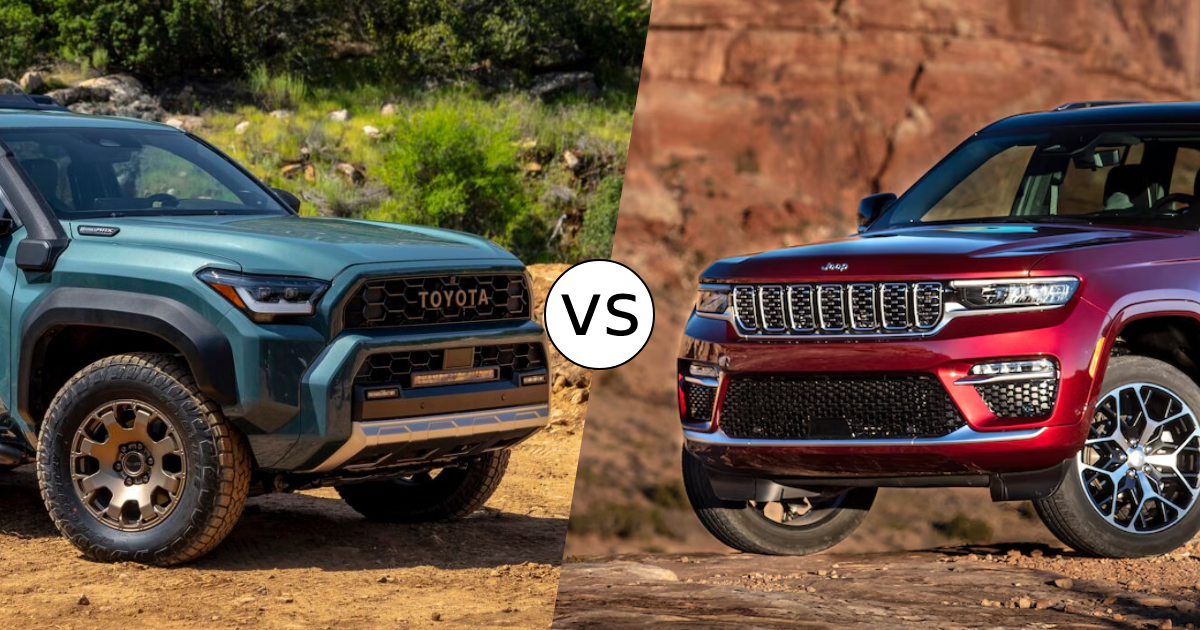
Finding the right vehicle for your requirements in the competitive SUV segment can be overwhelming. The 2025 Jeep Grand Cherokee and 2025 Toyota 4Runner stand out in this category. Both are undeniably capable vehicles that cater to a broad range of driving styles and preferences. In this article, our team at Longo Toyota of Prosper has compared these two vehicles to help you decide which one best fits your lifestyle. more Engine Performance and Off-Road Capabilities A Jeep Grand Cherokee vs. Toyota 4Runner comparison shows that each vehicle offers unique performance capabilities. Toyota 4Runner vs. Jeep Grand Cherokee Specs The 4Runner is equipped with a turbocharged 2.4-liter four-cylinder engine coupled with an eight-speed automatic transmission that delivers 278 horsepower. Rear-wheel drive is standard, with an optional full-time four-wheel drive system and a two-speed transfer case with high and low range. The 2025 Grand Cherokee has a 3.6-liter V-6 engine that delivers 293 horsepower. Although rear-wheel drive is standard, several all-wheel-drive systems are available, including one with an electronically locking limited-slip rear differential. The Grand Cherokee offers a smooth, comfortable ride, especially in higher-level trims that use air springs and adaptive dampers. Both the 2025 Grand Cherokee and the 2025 4Runner have hybrid variants. The plug-in hybrid Grand Cherokee 4xe produces 375 horsepower. The hybrid 4Runner's i-FORCE MAX powertrain combines the 278-horsepower 2.4-liter engine with a 48-horsepower electric motor to deliver a combined 326 horsepower. 4Runner vs. Jeep Off-Road Features and Technologies The Jeep vs. Toyota off-road comparison shows that both vehicles are ideal for your rugged adventures. The Jeep Trailhawk combines a Quadra-Drive II all-wheel-drive system with a front anti-roll bar disconnect, allowing for better wheel articulation on rough trails. Increased ground clearance provides the 2025 4Runner with even greater off-road prowess compared to its predecessors. A ground clearance of 9.2 inches and a 33-degree approach angle enhance its off-road capabilities. The 4Runner also offers optional disconnecting stabilizer bars, a locking rear differential, and an off-road cruise control system. The hybrid 4Runner offers extra horsepower and features such as manually adjustable dampers. Towing Capacity The Grand Cherokee's 3.6-liter V-6 offers a maximum towing capacity of 6,200 pounds. The 4Runner delivers 317 Ib-ft of torque in the non-hybrid configuration and 456 Ib-ft in the hybrid option, providing a maximum towing capacity of 6,000 pounds. Interior Comfort and Technology The base trims of the Grand Cherokee offer essential features. Higher trims such as the Summit and Overlord feature more premium touches, including quilted leather upholstery, open-pore wood trim, and high-tech digital displays. The Grand Cherokee only offers two rows of seats. If you need more space, you can opt for the three-row Grand Cherokee L. The 2025 4Runner offers an upgraded, more sophisticated, and comfortable cabin. High-quality materials and improved ergonomics create a sense of luxury while retaining functionality with features such as strategically placed storage bins throughout the cabin. Controls are easily accessible while an optional third row increases passenger capacity, making the 4Runner ideal if you have a large family. Cargo Space Comparison The two-row Grand Cherokee offers a cargo volume of 37.7 cubic feet behind the rear seats, which expands to an impressive 70.8 cubic feet with the rear seats folded. The Grand Cherokee offers a slight advantage over the three-row 4Runner in terms of cargo space. Toyota has yet to release official cargo and passenger dimensions, but since the 2025 4Runner is longer than the 2024 iteration, we can expect it to offer more room than its predecessor. For reference, the three-row 2024 4Runner offers a tight 9 cubic feet of cargo space behind the third row, expanding to 46.3 with the third row folded, and a cavernous 88.8 cubic feet with both the second and third rows down. Safety Features Both vehicles boast an impressive suite of safety and driver-assistance features. The Jeep offers the following features: Standard automatic emergency braking with pedestrian detection Standard lane-departure warning and lane-keep assist Standard adaptive cruise control Hands-Free Active Driving Assist system available in the Overland and Summit models The TSS 3.0 suite of driver-assistance and safety technologies in the 4Runner offers basic features such as automatic emergency braking with pedestrian detection and lane-departure warning with lane-keep assist. It also offers advanced technologies such as adaptive cruise control with lane centering assist. The 4Runner also offers an innovative driver-assistance system that can detect an unresponsive driver and safely bring the vehicle to a stop, if necessary. Pricing Both the Grand Cherokee and the 4Runner are available in several trim levels to cater to various budgets and driving preferences. At an MSRP of $38,290, the base trim of the Jeep is slightly lower than the base-level 4Runner at $43,000, which increases at higher trim levels. Despite the slightly higher entry-level price point, the Toyota 4Runner offers better overall affordability, with the top-of-the-range trim available at an MSRP of only $54,000. Visit Longo Toyota of Prosper Today The 2025 Jeep Grand Cherokee and Toyota 4Runner offer unique features that cater to a variety of preferences. Overall, the Toyota edges out the Jeep in terms of affordability and features. If you're in Prosper, Texas, visit Longo Toyota of Prosper to experience the 2025 4Runner firsthand. Contact us today to arrange a test drive, or stop by the dealership. Our dedicated team will answer any questions you may have and help you find the perfect vehicle for your lifestyle.

2025 Toyota Crown vs. Toyota Crown Signia

2025 Toyota Crown vs. Toyota Crown Signia

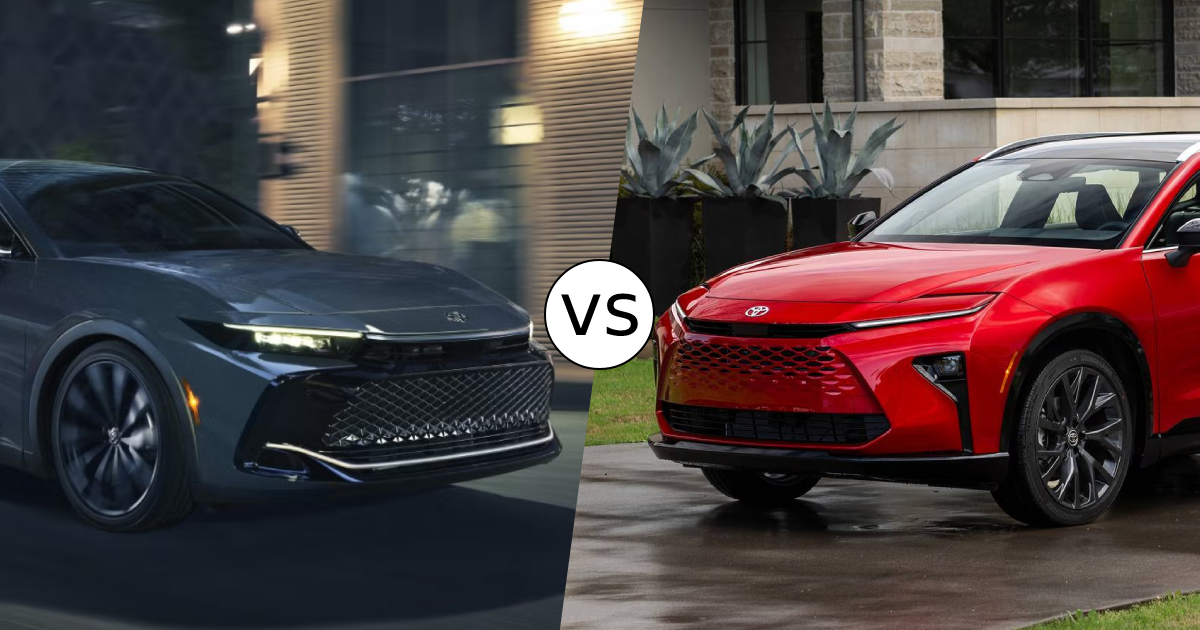
The Toyota Crown, an exciting new addition to Toyota's already impressive lineup, combines an efficient hybrid engine with advanced technology for a unique driving experience. First introduced in 2023, the Toyota Crown, now in its third edition, takes everything that made its predecessors great a step further. This is the first year that Toyota is unveiling its Crown Signia, an SUV variant of the Toyota Crown. As a more versatile addition to the lineup, it adds a more space without compromising on power. Our team at Longo Toyota in El Monte, California, is ready to further explain the differences and help you decide which is better for you. more The All New 2025 Toyota Crown The 2025 Toyota Crown is a luxury sedan combining an efficient hybrid powertrain with a sleek design and spacious interior to make it one of Toyota's most sophisticated cars yet. Its engine generates a tidy 236 horsepower for the base edition, while the Hybrid MAX can produce up to 340 horsepower. The Toyota Crown's cabin is designed with luxury in mind. All Crowns come standard with a 12.3-inch infotainment display and available Apple CarPlay and Android Auto. The Crown comes in multiple trims: XLE, Limited, Nightshade, and Platinum. Overall, the 2025 Toyota Crown is a luxurious sedan with enough space for you and your passengers. Its technology puts it on the same tier as other sedans in its segment, and its incredibly efficient hybrid engine puts it firmly in its own league. Overview of the 2025 Toyota Crown Signia The 2025 Toyota Crown Signia shares a lot with the 2025 Toyota Crown, including the same efficient hybrid technology. Its slightly stronger engine works to carry the larger frame with ease. With an estimated 39 mpg in the city and 37 on the highway, the Crown Signia is nearly as efficient as its smaller counterpart. The Crown Signia's larger design allows you to fit the whole family and all their gear. Its various trims enable you to get the custom Crown Signia you prefer. With the same wireless and charging capabilities as the Crown, you'll always be connected in the Crown Signia. Key Differences Between the 2025 Toyota Crown and Crown Signia While both the Toyota Crown and the Toyota Crown Signia have much in common, they have some key differences. Here are the most important: Body style: The biggest difference between the 2025 Toyota Crown and the 2025 Toyota Crown Signia is their body style. The Crown is a sedan while the Crown Signia is an SUV-like design. The Signia offers much more cargo space than the regular Crown, with 25.8 cubic feet of space versus the Crown's 15.2. Performance: Even though the Crown Signia is much larger, it doesn't disappoint in the performance department. The Crown Signia generates 240 horsepower, just four horsepower more than the Crown's 236. The Crown takes the cake in fuel efficiency, as its 42/41 mpg is better than the Crown Signia's 39/37 mpg. Handling and driving experience: The Crown Signia's higher ride height and SUV stance make it a better fit for drivers looking for a more commanding feel on the road. The Crown isn't as pronounced in this way as the Crown Signia, but it doesn't have to be. It focuses on a smooth ride, making it a great choice for city driving. Shared Features of the 2025 Toyota Crown and 2025 Crown Signia The 2025 Toyota Crown and Crown Signia share more in common than they have in contrast. They both have the same design philosophy, expanding Toyota's current range of cars with some of the best hybrid powertrains. Here are some of the most notable features the two cars share: Hybrid powertrains: While each model has slight differences in their total power, they share Toyota's impressive hybrid systems. Toyota has been at the forefront of hybrid technology, with the Prius being one of the most successful. The Crown and Crown Signia both benefit from hybrid powertrains that allow them to remain efficient without sacrificing power. Advanced infotainment and connectivity: Both models come with a large 12.3-inch multimedia touch screen with Apple CarPlay and Android Auto built-in. They also each have a digital gauge cluster to deliver the information you need in an easy-to-read format. You can also connect both vehicles to Toyota's app to further control your car from your phone. Audio and entertainment: Both the Crown and Crown Signia come with premium JBL speaker systems. With the added Apple CarPlay and Android Auto integration, streaming from your phone has never been easier. Safety features: Toyota is a brand known for its commitment to safety. Both the Crown and Crown Signia come with Toyota Safety Sense, which includes adaptive cruise control, lane departure alert with steering assist, automated emergency braking, blind-spot monitoring, and more. The 2025 Toyota Crown and Crown Signia at Longo Toyota The 2025 Toyota Crown and Crown Signia stand out due to their impressive hybrid powertrains and advanced technology, making them two of the most luxurious vehicles on the market. Although they share a few key features, these models have enough differences to make a choice between them worthwhile. If you're interested in seeing the Crown or the Crown Signia in person, visit Longo Toyota in El Monte and decide which you prefer. Our associates can answer your questions and give you a test drive.

2025 Toyota Camry Hybrid vs Honda Accord Hybrid

2025 Toyota Camry Hybrid vs Honda Accord Hybrid

When it comes to choosing a hybrid sedan, the ninth-generation 2025 Toyota Camry Hybrid and the new Honda Accord Hybrid are two top choices. Both vehicles offer excellent fuel efficiency, advanced technology, and a comfortable driving experience. However, there are key differences in their interiors and efficiency that may sway your decision, especially if you're considering the superior quality and features of the Toyota Camry Hybrid. Keep reading as our team at Longo Toyota compares these two hybrids to help you make an informed decision. We cover interior comfort and convenience, advanced technology, power and performance, and fuel economy to see which one comes out on top: more Interior Comfort and Convenience The interior of the 2025 Toyota Camry Hybrid is expected to be completely redesigned for the new model year. According to the latest reports, the design will focus on luxury, comfort, and cutting-edge technology. The cabin will feature high-quality materials, including standard cloth seats and dual-zone climate control. For something extra, you can opt for the XLE or XSE models for leather upholstery, heated seats, a heated steering wheel, and ambient lighting for a premium feel. The driver and passengers will appreciate the spacious seating, with ample legroom and headroom in front and rear to ensure comfort on long drives. The new Honda Accord Hybrid also offers a comfortable and well-appointed interior, though it may not match the premium feel of the Camry Hybrid. Most of the seats are upholstered with cloth and if you want leather, you'll have to fork out for the higher trims. The Accord Hybrid features high-quality materials and an ergonomic design with two spacious rows of seats. It has a generous trunk with up to 16.7 cubic feet of cargo space. This is marginally larger than the Camry's 15.1 cubic feet of cargo space, but both are more than enough for everyday needs. Advanced Technology The Camry Hybrid offers a range of advanced technology features in its high-tech interior, such as a standard 8-inch touch screen infotainment system with wireless Apple CarPlay, Android Auto, and dual Bluetooth phone connectivity. The SE offers an available larger 12.3-inch touch screen, and this comes standard on the XLE and XSE models. All trims come with a digital gauge cluster display, but the two higher models get a 10-inch Head Up Display for speed, traffic, and warning indicators on the dashboard. The available nine-speaker JBL premium audio system on the XLE and XSE delivers an exceptional listening experience. The infotainment system on the Honda Accord includes a smaller 7-inch standard touch screen with Apple CarPlay and Android Auto compatibility, providing easy access to your favorite apps and media. However, unlike the Camry, the Accord only offers wireless connectivity if you pay for the larger touch screen. Like the Camry, you can opt for a larger 12.3-inch touch screen display and a 10.2-inch digital gauge cluster is standard. The available 12-speaker premium audio system offers decent sound quality if you prioritize music on your drives. Power and Performance The new Toyota hybrid is equipped with a 2.5-liter four-cylinder engine and a fifth-generation Toyota Hybrid System for improved handling and performance. The new hybrid model delivers up to 225 horsepower with the front-wheel-drive (FWD) version and up to 232 horsepower with the all-wheel-drive (AWD) version. The AWD version comes with enhanced traction for extra grip in all weather and road conditions, but you have the choice depending on what suits you and your lifestyle best. The Accord comes with either a smaller turbocharged 1.5-liter four-cylinder on base models or a smaller 2.0-liter four-cylinder automatic (variable gear ratios) hybrid engine. Paired with two electric motors, it delivers a total of 204 horsepower. It doesn't come with the choice of AWD; instead FWD is the only choice across all trims. Regardless of the drivetrain version you choose, you're promised more power and performance and more choices with the latest version of the Toyota Camry. How Fuel Efficiency Compares Both 2025 models for the Toyota Camry Hybrid and the Honda Accord Hybrid are yet to be rated by the Environmental Protection Agency (EPA). However, when looking at previous models, we can draw some conclusions on the expectations for the newer models. The 2024 Toyota Camry Hybrid was rated at an impressive 51 mpg in the city and 53 mpg on the highway. The last hybrid model to be rated by the EPA is the 2024 Honda Accord Hybrid where it scored 51 mpg in the city and 44 mpg on the highway. While neither option is bad, the new hybrid Camry is still the better choice if you prioritize fuel efficiency and saving money at the pump. Keep in mind that it offers this fuel efficiency despite having a more powerful engine so you get the best of both worlds. Schedule a Test Drive at Longo Toyota Today The Toyota Camry and the Honda Accord are two excellent eco-friendly options, blending a mix of efficiency, performance, and modern technology. The 2025 Toyota Camry excels with its sleek design, intuitive infotainment system, and enhanced fuel economy, making it a fantastic choice for everyday driving. The best way to decide which new vehicle is right for you is with a test-drive. Visit Longo Toyota and take the new hybrid Camry out for a ride. Discover the balance of power and efficiency in this new eco-friendly variant. Ready to hit the road? Contact us today to arrange your test-drive.

Contact Us

Fill out this form below and we'll contact you shortly
*Required Fields