

Longo Toyota

#1 in the World since 1967*

Based on Toyota Motor Sales, USA 2025 Sales Report*
Based on Toyota Motor Sales, USA 2023 Sales Report*
Blog / Comparison

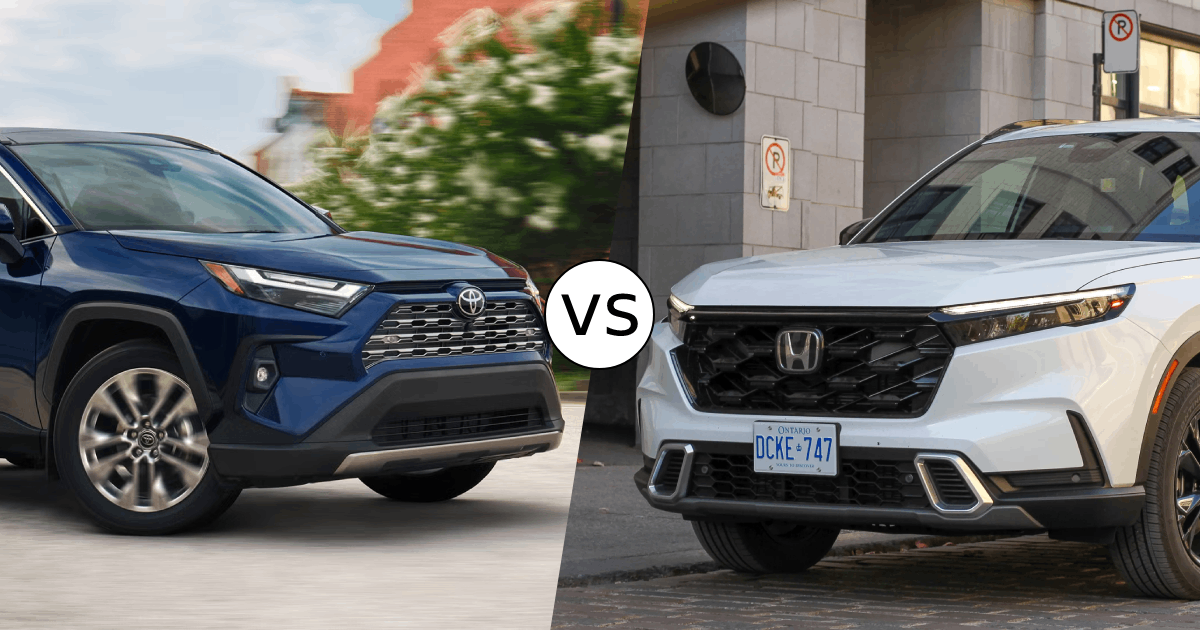
2025 Toyota RAV4 vs. 2025 Honda CR-V

2025 Toyota RAV4 vs. 2025 Honda CR-V

The compact SUV battle is heating up as the 2025 Toyota RAV4 squares off against the 2025 Honda CR-V. These two family favorites continue to dominate sales, each offering its own mix of comfort, efficiency, and practicality. In this Honda CR-V and Toyota RAV4 comparison, we'll dig into what sets these popular vehicles apart and help you figure out which one might better fit your daily drives around El Monte, California.

Pricing and Value for Money

The 2025 Toyota RAV4 starts at $29,250, beating the CR-V's $30,100. The CR-V's hybrid trims begin at $34,650 for the Sport and reach $41,100 for the Sport Touring. If you're looking for a hybrid RAV4, they range from $32,300 for the Hybrid LE and $40,605 for the Hybrid Limited. Beginning at $50,000, Honda also has a California-exclusive hydrogen fuel cell CR-V, which is ideal if you want to be an eco-friendly El Monte driver.

Reliability and Warranty Coverage

No need to worry about breakdowns since both SUVs boast solid track records. J.D. Power gives the 2025 CR-V a slight edge in predicted reliability with 84 out of 100 points, compared to the RAV4's score of 80. Not a huge gap, but it might matter if you hate surprise repair bills.

The warranty packages stack up pretty evenly. Honda backs the CR-V with a three-year or 36,000-mile basic warranty, five-year or 60,000-mile powertrain coverage, and eight-year or 100,000-mile protection for hybrid parts, including the battery. Toyota matches these terms but adds an extra year of free maintenance and a longer 10-year or 150,000-mile warranty on the hybrid battery. These extras could save you a chunk of change, especially if you rack up miles cruising around Southern California.

Performance and Towing

Under the hood of the CR-V, you'll find a 1.5-liter turbocharged four-cylinder engine producing 190 horsepower and 179 lb-ft of torque. Toyota counters with a beefier 2.5-liter four-cylinder pushing 203 horsepower and 184 lb-ft of torque. Both models perform comparably in a sprint from 0 to 60 mph. The CR-V finishes in 8.1 seconds versus the RAV4's 8.3-second run.

If you need to tow stuff for weekend trips, the RAV4 flexes some muscle here. Toyota's hybrid RAV4s can tow up to 1,750 pounds, and the gas-powered models handle 1,500 pounds. Honda's CR-V can't quite match that. The non-hybrid versions top out at 1,500 pounds, and hybrid models manage just 1,000 pounds.

Fuel Economy and Efficiency

Both of these SUVs have great efficiency numbers. The hybrid CR-V trims can get up to 43 mpg city and 36 mpg highway, slightly beating the hybrid RAV4's 41 mpg city and 38 mpg highway. However, keep in mind that all RAV4 hybrids come standard with all-wheel drive. The four-wheel-drive hybrid CR-Vs get 40 mpg in the city and 34 mpg on the highway.

You'll also get impressive efficiency from the gas-powered versions of these SUVs. The CR-V gets up to 28 mpg city and 34 mpg highway, and the RAV4 achieves 27 mpg city and 35 mpg highway. Similar to the hybrids, choosing all-wheel drive will decrease your fuel efficiency by a few points.

Passenger Space and Interior Comfort

The CR-V feels a bit more roomy than the RAV4, especially in the back. Rear passengers get a generous 41 inches of legroom versus 37.8 inches in the RAV4. Honda also wins on overall passenger space, with 106 cubic feet compared to Toyota's 98.9 cubic feet. The CR-V's larger overall size gives it an advantage here.

The CR-V's cabin materials look and feel upscale, with sleek finishes. But the RAV4 fights back with an interior that's comfortable and elevated. You can also get some fancy options that aren't available in the Honda. The RAV4 offers ventilated front seats and a panoramic moonroof on certain trims.

Cargo Space and Practicality

Honda edges ahead when it comes to hauling. The CR-V has 39.3 cubic feet behind the back seat and expands to 76.5 cubic feet with the seats folded. Toyota's RAV4 holds slightly less at 37.6 cubic feet behind row two and 69.8 cubic feet with the seats down. Both SUVs offer clever storage throughout their cabins, but Honda's extra room gives you a bit more flexibility for groceries, sports gear, or weekend luggage.

Infotainment Features and Connectivity

Both SUVs keep you connected. The RAV4 includes an 8-inch screen with wireless Apple CarPlay and Android Auto, and you can upgrade to a 10.5-inch display. In the CR-V, the lower trims have a 7-inch screen with wired Apple CarPlay and Android Auto. Starting with the EX-L and up, you get a 9-inch touch screen with wireless connectivity.

Safety Features and Ratings

Both Toyota and Honda put safety first, as they've loaded these SUVs with many driver aids. You'll get automatic emergency braking, adaptive cruise control, and lane-keeping assist standard on either vehicle. These are handy tools for navigating congested Southern California highways. Both SUVs also scored a perfect five stars in National Highway Traffic Safety Administration crash tests.

Which Is Better: Honda CR-V or Toyota RAV4?

When comparing the 2025 Toyota RAV4 versus the Honda CR-V, both of these SUVs deliver excellent fuel economy, safety tech, and reliability. You may prefer the RAV4 over the CR-V if you like driving a slightly smaller vehicle. If you really need the extra space, you may want the CR-V. However, if you're focused on value, the RAV4 is tough to beat since it comes in at more affordable prices across the lineup. On top of that, the RAV4 gets better hybrid gas mileage and includes some exclusive perks.

Learn More About the 2025 Toyota RAV4 at Longo Toyota

If you're still undecided, we invite you to visit our dealership in El Monte and see the 2025 Toyota RAV4 in person. Taking the RAV4 for a test-drive is the best way to see all it has to offer and if it's right for you. Our staff can also help find your perfect trim and answer any of your questions. Contact us today to schedule a visit.
Posted in:

Related Posts

2026 Toyota Camry vs. Kia K5

2026 Toyota Camry vs. Kia K5: Which Sedan is Right for You?

Midsize sedans have never been more competitive, and the 2026 Toyota Camry vs. Kia K5 is one of the most debated matchups in the segment right now. At Longo Toyota, the world's largest Toyota dealership on 50+ acres in El Monte, CA, we talk with cross-shoppers every day who want a clear, honest answer. Both cars have genuine appeal, and neither is a bad choice. When you stack them side by side across the categories that matter most to everyday drivers, though, the Camry's standard hybrid efficiency and long-term ownership value give it a decisive edge. Explore our new Camry inventory to see current trims and configurations while you read through our comparison. more Meet the 2026 Toyota Camry: What Sets It Apart The 2026 Toyota Camry is built on Toyota's TNGA-K platform with a fully hybrid powertrain lineup across every trim. It delivers everyday practicality and driving refinement without asking you to trade fuel savings for performance or comfort for technology. Powertrain Options and Hybrid Advantage One of the most significant changes to the 2026 Camry is its move to an all-hybrid lineup. Every trim includes hybrid technology, and the practical benefits are hard to ignore. For daily commuters, the electric motor provides immediate, smooth torque in stop-and-go traffic, cuts down on fuel stops per week, and lowers running costs meaningfully over time. The standard FWD setup pairs a 2.5-liter four-cylinder engine with an electric motor for a combined 225 hp. The available AWD system raises output to 232 hp without a steep efficiency penalty. The K5's base 2.5-liter engine produces 191 hp on gasoline alone, and the performance-oriented K5 GT jumps to 290 hp with its turbocharged engine. That turbo output is impressive, but it comes with a corresponding increase in fuel consumption. Interior Refinement and Cabin Quality Inside the 2026 Camry, soft-touch surfaces and a clean instrument panel with well-positioned controls create a comfortable environment for daily commutes and longer trips alike. Front seat comfort is a standout, with available ventilated seats and a power-adjustable driver's seat across most trims. The infotainment system features a large touchscreen with wireless Apple CarPlay and Android Auto. A standard Qi-compatible wireless charger and an available JBL Premium Audio system round out the tech package. Rear passenger space is generous, making the Camry a practical choice for families. The K5 offers an available Bose Premium Audio option and a stylish interior, but material quality in lower trims doesn't quite match what the Camry delivers at similar price points. Toyota Safety Sense 3.0 and Standard Tech Toyota Safety Sense 3.0 comes standard on every 2026 Camry, regardless of trim. The suite includes a Pre-Collision System with Pedestrian Detection, Lane Departure Alert with Steering Assist, Automatic High Beams, Full-Speed Range Dynamic Radar Cruise Control, and Proactive Driving Assist. These aren't reserved for higher trims. They're part of every Camry from the base model up, which matters when you're comparing total value at comparable price points. Meet the Kia K5: What It Brings to the Table The Kia K5 is a legitimate competitor, and it deserves honest credit. Its exterior design stands out with sharper lines and a more aggressive stance than most traditional sedans in the class. The K5 GT's turbocharged 2.5-liter engine produces 290 hp and delivers a spirited, performance-forward character that appeals to drivers who prioritize driving excitement. The GT-Line trim adds sporty visual details and chassis tuning that reinforce that athletic positioning. For buyers whose priorities lean heavily toward bold styling and performance feel, the K5 makes a compelling case. When the focus shifts to efficiency, proven reliability, and total ownership value, however, the K5 shows its limitations relative to the Camry. 2026 Toyota Camry vs. Kia K5: Full Specs Comparison Feature 2026 Toyota Camry 2026 Kia K5 Powertrain 2.5L Hybrid (all trims standard) 2.5L naturally aspirated / 2.5L Turbo (GT) Base Output 225 hp (FWD) / 232 hp (AWD) 191 hp (base) / 290 hp (GT) Combined MPG Up to 51 MPG combined (LE FWD, EPA-estimated); 47 MPG combined (SE/Nightshade/XLE/XSE) 30 MPG combined (base LXS FWD, EPA-estimated) Standard Safety Suite Toyota Safety Sense 3.0 (all trims) Kia Drive Wise (standard) 5-Year Depreciation 34.3% (iSeeCars) 39.8% (iSeeCars) The table tells the core story. The Camry's hybrid efficiency and across-the-board safety technology are structural advantages, not trim-level extras. The depreciation gap is especially significant for buyers thinking beyond the purchase price. Reliability and Long-Term Ownership Value The purchase price is just the starting point. Fuel costs, maintenance, and resale value determine what a car actually costs to own over time. Toyota's Proven Track Record Toyota's reliability record is one of the most thoroughly documented in the industry, consistently validated by J.D. Power, Consumer Reports, and years of real ownership data. The Camry's reputation for reaching well beyond 200,000 miles with routine maintenance is backed by decades of consumer experience, not marketing language. Toyota also includes ToyotaCare with every new Camry, covering complimentary factory-scheduled maintenance for two years or 25,000 miles, whichever comes first, plus 24-hour roadside assistance for two years with unlimited mileage. That dependability translates directly into lower total cost of ownership and stronger resale values. What the Data Says About the K5 Kia has improved its quality significantly, and the K5's warranty coverage is genuinely reassuring. The numbers still favor the Camry, though. iSeeCars data shows the Camry depreciates approximately 34.3% over five years compared to 39.8% for the K5. That roughly 5.5-percentage-point gap represents real money when you sell or trade the car. For buyers planning to keep their vehicle for many years, the Camry's deeper reliability history and stronger resale performance make it the more financially sound decision. Fuel Efficiency and Real-World Performance Fuel efficiency is where the Camry pulls decisively ahead. With its full transition to hybrid powertrains, even entry-level trims deliver fuel economy the K5 can't match. For a driver covering 15,000 miles per year, the difference between approximately 30 MPG and up to 51 MPG combined represents hundreds of dollars in annual fuel savings that compound over the life of ownership. The Camry Hybrid's electric motor delivers immediate torque that makes Southern California stop-and-go traffic significantly more manageable than a conventional gas engine allows. The K5 GT and GT-Line trims offer genuinely engaging performance, but that experience comes at the cost of efficiency and day-to-day practicality. The Camry strikes a better balance for most drivers. If you're ready to feel that efficiency in person, explore our new Camry inventory and schedule a test drive at your convenience. Why the Camry Is the Smarter Buy for Most Shoppers If head-turning design and a high-output turbo engine are your top priorities, the K5 GT delivers that experience at a competitive price. Kia has built something worth respecting. For the majority of Southern California drivers, though, the priorities look different. Long-term reliability, strong resale value, and full safety technology included without a trim-level upgrade matter more over the life of the vehicle. The Camry satisfies all of those priorities in one well-rounded package. Every trim comes hybrid, so you're not giving up efficiency to get performance. Toyota Safety Sense 3.0 is standard across the board, not reserved for pricier configurations. The depreciation data confirms what Toyota owners have experienced for decades: the Camry holds its value better than the segment average, outperforming the K5 on five-year resale value. For drivers logging significant daily miles around the LA area, the fuel savings alone make the Camry's entry price easy to justify. Experience the 2026 Camry at Longo Toyota The best way to understand what the 2026 Camry offers is to experience it yourself. We carry an extensive selection of 2026 Camry models across multiple trims at our El Monte, CA campus, so you can compare configurations and find the one that fits your lifestyle and budget. If you have questions before your visit or want to get the conversation started, reach out to our team online and we'll help you get set up. If you've been weighing the 2026 Toyota Camry vs. Kia K5 and want to move forward with confidence, a test drive at Longo Toyota is the clearest next step.

2026 Toyota Tundra vs. GMC Sierra 1500

2026 Toyota Tundra vs. GMC Sierra 1500

Choosing a full-size pickup truck is rarely simple. You're not just buying a vehicle. You're committing to how you work, haul, and live for the next several years. The 2026 Toyota Tundra and the GMC Sierra 1500 both occupy serious ground in this segment, but put them side by side and real differences start to show. For buyers weighing the 2026 Toyota Tundra vs GMC Sierra, this guide covers everything from powertrain performance to long-term ownership confidence. If you already know the Tundra is your direction, browse our new Tundra inventory to see what's available now. more Why the 2026 Toyota Tundra vs GMC Sierra Comparison Matters The full-size truck market is more competitive than it's ever been. Buyers today want more than raw horsepower. They're after efficiency, technology, durability, and genuine versatility. Both the Tundra and Sierra 1500 answer that call, just in different ways, which is exactly why this comparison deserves a close look. Whether you're towing trailers on weekends, hauling materials to a job site, or grinding through Los Angeles traffic every morning, the right powertrain and feature set will make a tangible difference across years of ownership. Powertrain Advantage: The i-FORCE MAX Hybrid Changes Everything Powertrain is where the Tundra makes its most compelling argument. Toyota engineered the i-FORCE MAX hybrid system specifically for full-size truck demands, delivering serious torque alongside real efficiency gains. The Sierra 1500 sticks to conventional combustion options. Both approaches have merit, but in today's driving environment, the hybrid advantage is hard to ignore. 2026 Toyota Tundra Engine Options The Tundra offers two engine choices, both built around a 3.4L twin-turbocharged V6. The standard i-FORCE V6 produces 389 hp and 479 lb.-ft. of torque through a 10-speed automatic, delivering strong output well suited to daily driving and moderate towing. The i-FORCE MAX hybrid variant raises the bar considerably, pairing that twin-turbo V6 with an electric motor integrated into the transmission for 437 hp and 583 lb.-ft. of torque. That torque boost is immediately noticeable when pulling away from a stop or climbing grades with a loaded trailer. Toyota made the i-FORCE MAX available across multiple trim levels, so you don't have to buy at the top of the lineup to access it. 2026 GMC Sierra 1500 Engine Options The Sierra gives buyers more combustion choices: the TurboMax 2.7L V6 at 310 hp and 430 lb.-ft., a 5.3L V8 at 355 hp, a 6.2L V8 at 420 hp, and a Duramax 3.0L turbo-diesel at 305 hp and 495 lb.-ft. That variety serves specific power requirements well. The diesel's 495 lb.-ft. is the Sierra's strongest comparison point against the Tundra's hybrid, and it suits drivers who prioritize torque efficiency on long highway runs. What the Sierra doesn't offer is any electrified option in the half-ton space. Why the Tundra's Hybrid Powertrain Wins in the Real World Stop-and-go traffic is where the Tundra's hybrid system really earns its keep. The electric motor assists during low-speed acceleration, cutting fuel consumption precisely when it's most likely to spike. The diesel's advantages show up primarily on the highway, but it also demands ongoing maintenance of the SCR (selective catalytic reduction) system, DPF (diesel particulate filter), and regular DEF (diesel exhaust fluid) top-ups. Those are real ownership costs, not minor footnotes. The Tundra's hybrid delivers instantaneous low-RPM torque without the fluid requirements and regeneration management that diesel ownership involves. For drivers splitting time between city commutes and weekend hauling, that flexibility is a practical advantage the Sierra's current lineup simply can't match. Towing and Payload: Where the Tundra Pulls Ahead Both trucks are capable haulers, though they reach their limits differently. The Sierra 1500 can claim a higher maximum towing number when equipped with the 6.2L V8 or Duramax diesel and the Max Trailering Package, reaching up to 13,300 lbs. That headline matters if you're regularly pushing the upper ceiling of half-ton towing. The Tundra's gas i-FORCE V6 reaches up to 12,000 lbs when properly equipped, while the i-FORCE MAX hybrid configuration tops out at 11,450 lbs. For context, most truck owners tow somewhere between 8,000 and 10,000 lbs. At that range, both Tundra powertrains are well within capacity, and the hybrid adds meaningful fuel efficiency on every trip. Payload is where day-to-day utility becomes concrete. The Sierra 1500 edges ahead in maximum payload figures when configured for it, which matters for contractors regularly loading heavy materials. The Tundra's composite bed floor and practical cargo layout still make it a highly capable work tool, and the hybrid's torque delivery keeps loads moving confidently without the fuel penalty you'd normally expect from a conventional V8. Trim Levels and Value: Tundra vs. Sierra 1500 Lineup Breakdown Both trucks span broad ranges, from work-ready base models to near-luxury flagships. The Tundra lineup runs SR, SR5, Limited, Platinum, 1794 Edition, TRD Pro, and Capstone. Toyota Safety Sense comes standard across every trim, meaning even the entry-level SR includes advanced driver assistance without an upcharge. The i-FORCE MAX hybrid is available from the Limited through the Capstone, including the TRD Pro, so buyers don't have to sacrifice efficiency for luxury or off-road capability. The Sierra 1500 scales through Pro, SLE, Elevation, SLT, AT4, AT4X, Denali, and Denali Ultimate. GMC invests heavily in the Denali identity, and the Denali Ultimate's features (including available 16-way massage seats) represent a legitimate luxury achievement. At the top of the market, the Sierra makes a real case. The Tundra Capstone counters with its own premium interior and the hybrid powertrain available at that flagship tier. At most price points below the flagship, the Tundra's standard safety technology and hybrid availability create a stronger value argument. If you'd like to experience how the Tundra feels before committing, you can schedule a virtual test drive from anywhere. Off-Road Capability: TRD Pro vs. AT4 and AT4X The Tundra's TRD Pro comes equipped with Fox 2.5-inch internal bypass shocks, multi-terrain select with rock crawl mode, crawl control, skid plates covering the engine, transfer case and fuel tank, Goodyear Wrangler TrailRunner AT tires, and a locking rear differential. The i-FORCE MAX hybrid is available in the TRD Pro, adding trail efficiency alongside the off-road hardware. Toyota's off-road heritage runs deep, and the TRD Pro reflects that clearly. The Sierra's AT4 counters with an electronic locking rear differential, skid plates, all-terrain tires, and hill descent control. The AT4X steps up further with electronic locking front and rear differentials, enhanced suspension, and additional skid protection. For serious technical terrain, the AT4X's front locking differential gives it an edge over the TRD Pro in extreme scenarios. For most trail drivers, though, the TRD Pro's Fox suspension, crawl control, and hybrid availability deliver a more complete package at its price point. Reliability, Ownership Costs, and Long-Term Confidence Toyota's reliability reputation is consistently recognized across decades of automotive data. The Tundra has historically ranked among the most dependable full-size trucks on the market, with owners reporting high-mileage use without major mechanical issues. Toyota's hybrid components carry an 8-year / 100,000-mile warranty, which adds meaningful long-term confidence for i-FORCE MAX buyers. The Sierra 1500 is a well-engineered truck, and recent generations have improved in dependability. For buyers planning to keep their truck for a decade or more, though, Toyota's track record gives it a consistent edge in consumer satisfaction and long-term ownership studies. The diesel Sierra's DEF and DPF maintenance requirements are manageable but represent ongoing costs and service considerations the Tundra's hybrid avoids entirely. Resale value historically trends stronger for Toyota trucks in this segment, though you should verify current figures through sources like J.D. Power or Consumer Reports before making a final decision. 2026 Toyota Tundra vs. GMC Sierra 1500: Full Specs at a Glance Specification 2026 Toyota Tundra (i-FORCE MAX Hybrid) 2026 GMC Sierra 1500 (TurboMax 2.7L) 2026 GMC Sierra 1500 (Duramax 3.0L Diesel) Engine Type 3.4L Twin-Turbo V6 + Electric Motor 2.7L Twin-Turbo V6 3.0L Turbo-Diesel Horsepower 437 hp 310 hp 305 hp Torque 583 lb.-ft. 430 lb.-ft. 495 lb.-ft. Transmission 10-speed Automatic 8-speed Automatic 10-speed Automatic Max Towing 11,450 lbs. 9,400 lbs. 13,300 lbs. Fuel Economy (City/Hwy) 20/24 MPG 19/22 MPG 23/29 MPG The i-FORCE MAX's torque advantage over the base TurboMax is decisive. The Duramax diesel's towing ceiling and fuel economy are the Sierra's strongest comparison points, and they're worth acknowledging honestly. For buyers who don't need that diesel ceiling, the Tundra hybrid delivers better efficiency than the TurboMax, more torque than either Sierra gas option, and none of the diesel maintenance overhead. The Verdict: Why the Tundra Is the Smarter Truck The 2026 Toyota Tundra vs GMC Sierra debate doesn't have one universal answer, but for most buyers, the Tundra presents the stronger overall case. Its i-FORCE MAX hybrid delivers 583 lb.-ft. of torque with no diesel fluid requirements, backed by Toyota's proven hybrid reliability and an 8-year / 100,000-mile hybrid warranty. Standard safety technology across every trim, competitive towing for the vast majority of real-world use cases, and historically stronger resale values round out the long-term ownership argument. The Sierra Denali Ultimate and AT4X are legitimate achievements in their respective niches. But across the full range of buyers, the Tundra's combination of performance, efficiency, and dependability is the harder package to beat. Find Your Tundra at Longo Toyota Explore available Tundra models at Longo Toyota, the world's largest Toyota dealership, spanning over 50 acres in El Monte, CA. Whether you're interested in the TRD Pro, a hybrid-equipped Limited, or the flagship Capstone, our team can walk you through every configuration. If you currently own a truck, you can estimate your trade-in value as a natural first step toward upgrading. When you're ready to move forward, get pre-qualified for financing online or contact our team to schedule a visit to our El Monte, CA location. When the numbers are clear and the decision is close, sitting behind the wheel tends to make everything easier.

2026 Toyota Tacoma vs. Hyundai Santa Cruz

2026 Toyota Tacoma vs. Hyundai Santa Cruz

Choosing between a midsize truck and a crossover-truck hybrid sounds straightforward until you actually start digging into the details. The core tension here comes down to construction philosophy: the 2026 Toyota Tacoma is a body-on-frame truck engineered for serious capability, while the 2026 Hyundai Santa Cruz is a unibody crossover-truck built around comfort and convenience. That single distinction shapes everything from towing limits to trail performance to long-term durability. Both vehicles have genuine strengths, but when the specs sit side by side, the Tacoma consistently pulls ahead for drivers who need real utility. Browse our 2026 Tacoma inventory at Longo Toyota and see the full lineup for yourself. more Two Different Trucks With Two Very Different Visions At their core, these two vehicles represent genuinely different ideas about what a truck should be. The Tacoma is a traditional midsize pickup built around ruggedness, towing strength, and serious off-road capability. It appeals to drivers who actually use their trucks for truck things: hauling equipment, venturing off the beaten path, towing a boat on weekends across Southern California. The Santa Cruz takes a different direction. Hyundai classifies it as a Sport Adventure Vehicle, a crossover-inspired platform that borrows some pickup truck DNA while staying firmly in daily driver territory. It's comfortable, compact, and well-suited for urban environments. For buyers with serious utility needs, though, the comparison quickly reveals just how much separates these two. 2026 Toyota Tacoma vs. Hyundai Santa Cruz: Specs at a Glance Here's how the two vehicles compare across key performance categories: Specification 2026 Toyota Tacoma 2026 Hyundai Santa Cruz Body Construction Body-on-frame Unibody Engine Options Turbo I-4 / Hybrid I-4 (i-FORCE MAX) Naturally aspirated I-4 / Turbo I-4 Horsepower 228-278 hp (gas); 326 hp (hybrid) 191 hp (base); 281 hp (turbo) Towing Capacity (max) 6,500 lbs (gas); 6,000 lbs (i-FORCE MAX hybrid) 5,000 lbs (turbo) Payload Capacity Up to 1,705 lbs (gas); up to 1,710 lbs (hybrid) 1,411 lbs Ground Clearance 9.4 in. (up to 11.5 in. TRD Pro) 8.6 in. Bed Length (max) 73.5 in. (6-ft) 52.1 in. (4.3-ft) Drive Type RWD standard; 4WD available FWD standard; AWD available The Tacoma leads in towing, off-road hardware, engine performance, and bed size. The Santa Cruz offers a smoother ride and a more crossover-like daily driving experience, which genuinely suits some buyers. For drivers who need a truck to actually work like a truck, the specs make the case on their own. Powertrain Options: More Power, More Choices With the Tacoma Engine choice shapes how a vehicle performs under load, how it handles on the highway, and what you'll spend at the pump over the years of ownership. The Tacoma offers significantly more variety and capability across its trim levels. Tacoma's Turbocharged and Hybrid Lineup Toyota engineered the 2026 Tacoma around the i-FORCE turbocharged 2.4L I-4, producing 228 hp at 6,000 RPM and 243 lb-ft of torque at 1,600 RPM in the SR trim. Higher trims push those figures to 278 hp and 317 lb-ft. Then there's the i-FORCE MAX hybrid variant, which pairs the turbocharged engine with an electric motor to produce 326 hp and 465 lb-ft of torque. That combination delivers class-leading output while improving fuel efficiency in ways a conventional powertrain simply can't match. An 8-speed automatic handles most trims, and a 6-speed manual stays available for drivers who prefer to row their own gears. Santa Cruz Engine Options and Where They Fall Short The Santa Cruz does offer a turbocharged 2.5L I-4 in upper trims, producing 281 hp and 311 lb-ft of torque. The base engine is a naturally aspirated 2.5L I-4 rated at 191 hp and 181 lb-ft. That turbo variant is a capable engine for daily commuting, but even at peak output, it trails the Tacoma's hybrid numbers by a wide margin. For buyers who plan to tow regularly or carry heavy payloads, that gap is hard to ignore. Towing and Payload Capacity: The Tacoma Pulls Ahead The numbers tell a clear story. The 2026 Tacoma is rated to tow up to 6,500 lbs on gas-powered trims and up to 6,000 lbs on the i-FORCE MAX hybrid, while the Santa Cruz tops out at 5,000 lbs with its turbocharged engine. Payload capacity follows a similar pattern: the Tacoma carries up to 1,705 lbs on gas trims and up to 1,710 lbs on the hybrid, compared to a maximum of 1,411 lbs for the Santa Cruz. For contractors, outdoor enthusiasts towing ATVs, or anyone regularly moving heavy cargo, the Tacoma's advantage is real and practical. Toyota designed its frame, suspension, and powertrain with actual work in mind, not just the appearance of capability. Off-Road Capability: Built for the Trail vs. Built for the Weekend Once you leave paved roads, the difference between these two vehicles becomes even more obvious. The Tacoma comes with 9.4 inches of ground clearance in standard configuration, with the TRD Pro reaching up to 11.5 inches of running ground clearance when the suspension is fully articulated. The Santa Cruz offers 8.6 inches. Those numbers reflect a meaningful difference in what each vehicle can actually handle. Tacoma TRD Off-Road and Trailhunter Configurations Toyota offers dedicated off-road trims that turn the Tacoma into a genuine trail machine. The TRD Off-Road comes standard with a locking rear differential, crawl control, Multi-Terrain Select, skid plates, and suspension tuned specifically for rough terrain. The Trailhunter goes further, arriving from the factory with advanced suspension, underbody protection, and hardware built for sustained off-road use. Whether you're exploring Angeles National Forest trails or running fire roads in the San Gabriel Mountains, these configurations are mechanically ready before you ever touch a modification. Santa Cruz Off-Road Limitations The Santa Cruz offers AWD and handles light gravel roads or mild trails reasonably well. There's no comparable off-road-specific trim in its lineup, though. Its unibody construction, which works beautifully for a smooth pavement ride, limits its ability to flex and absorb punishment on rougher terrain. The Santa Cruz is capable for casual weekend adventure, and it does that job well. It simply wasn't built for the sustained off-road work the Tacoma handles as a baseline expectation. Cargo Bed Utility and Real-World Hauling Bed design is one of the most practical differences between these two trucks. The Tacoma's bed reaches 73.5 inches in its 6-foot configuration, accommodates standard accessories like toolboxes and bed liners, and handles sustained weight without issue. The Santa Cruz offers a 52.1-inch bed (roughly 4.3 feet), which limits what can fit without folding the tailgate down. Hyundai did include a clever underfloor storage bin that keeps smaller items dry and organized. It's a useful feature, but it doesn't compensate for reduced overall capacity. For real-world hauling, the Tacoma's bed is simply more versatile. Long-Term Value, Resale, and What the Future Holds Resale value is one of the most underappreciated factors in any vehicle purchase, and this is where the Tacoma's track record really stands out. The Tacoma consistently ranks among the highest-retained midsize trucks in the country, driven by its reliability reputation, a dedicated owner community, and steady demand for used units. Buyers who purchase a Tacoma today can reasonably expect a strong return when they eventually sell or trade in. The Santa Cruz entered the market in 2022 and hasn't yet built the same depth of resale history. It's a genuine innovation in its segment. Worth noting for buyers thinking long-term, though: multiple industry reports indicate Hyundai is moving up its timeline to end Santa Cruz production, originally planned for the second quarter of 2027, with production reportedly being scaled back significantly in early 2026. Hyundai has not made a formal announcement confirming the end date, but the direction is clear: the Santa Cruz is approaching the end of its production run. This shift has practical implications for resale value, parts availability, and long-term dealer support. It doesn't make the Santa Cruz a bad vehicle today, but for anyone weighing a five- or ten-year ownership horizon, the Tacoma's established ecosystem offers a far more predictable path. Explore the 2026 Toyota Tacoma at Longo Toyota We're here to help you find the right Tacoma configuration for your needs. View our current Tacoma inventory at Longo Toyota in El Monte, or contact us to schedule a test drive with one of our team members. Getting behind the wheel is the most convincing argument we can offer. There's no pressure, no guesswork, and no unanswered questions left on the table. We've been serving drivers across the San Gabriel Valley for decades, and that experience shows up in every conversation on the floor. We're open seven days a week at 3534 North Peck Road in El Monte, and we're ready when you are.