

Longo Toyota

#1 in the World since 1967*

Based on Toyota Motor Sales, USA 2025 Sales Report*
Based on Toyota Motor Sales, USA 2023 Sales Report*
Blog / Comparison

Blog

All Comparison New Inventory Local Electric Vehicle Vehicle Tips Review Hybrid Service Toyota News Locaal
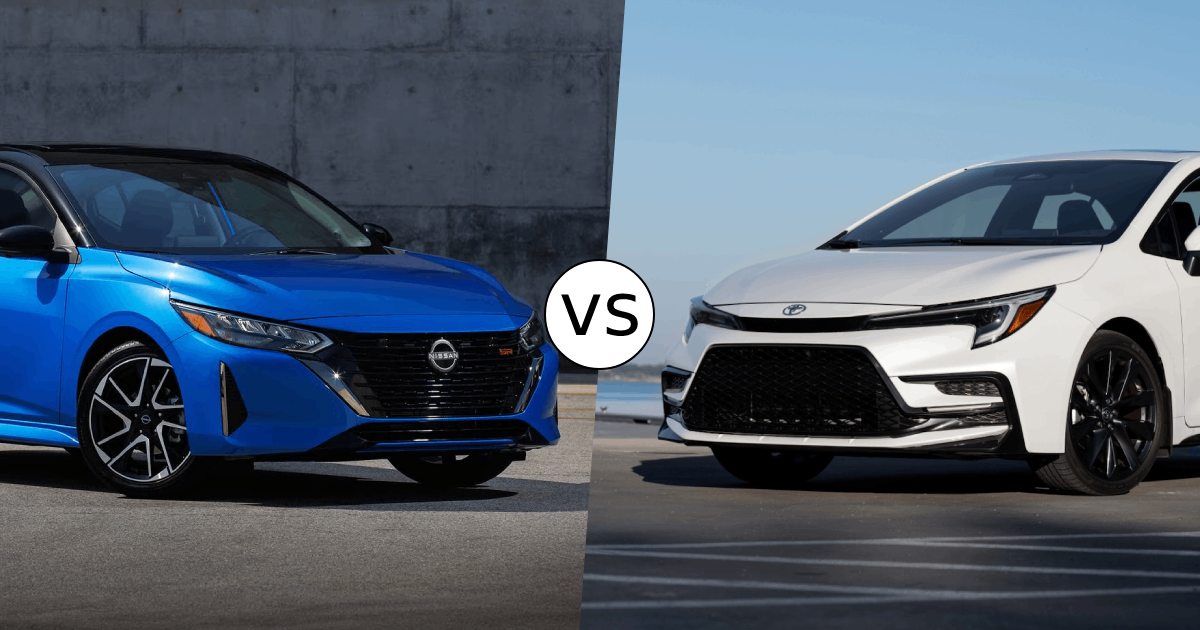
Shopping for a compact sedan can feel overwhelming. The 2025 Toyota Corolla and 2025 Nissan Sentra are two of the most popular picks if you want reliable, efficient, and affordable transportation. Our team at Longo Toyota breaks down everything from pricing to performance to help you figure out which one best fits your life. Pricing and Value Comparison The 2025 Nissan Sentra starts off strong with a $21,590 starting price compared to the Toyota Corolla's $22,325 base price, but Toyota gives you more variety across its lineup. The LE trim comes with an 8-inch touch screen plus Toyota Safety Sense 3.0. If you crave a sportier feel, the SE ($24,615) has available 18-inch alloy wheels and a sport mesh grille. The top XSE trim ($27,890) adds heated sport seats and an available moonroof, nice touches for El Monte mornings. Toyota's hybrid options for the Corolla really shine. The Hybrid LE ($23,625) delivers an incredible 53 mpg city and 46 mpg highway, while the Hybrid XLE ($27,990) boasts a bigger 10.5-inch touch screen and wireless charging. Nissan counters with solid financing deals that can make the Sentra more tempting. It's offering 3.9% annual percentage rate (APR) financing for 24 and 36 months, and 4.9% APR for 60 months. College grads and military personnel get an extra $500 discount each. Both cars come with similar three-year/36,000-mile basic and five-year/60,000-mile powertrain warranties. Toyota edges ahead with ToyotaCare, giving you two years/25,000 miles of free maintenance, while Sentra maintenance coverage includes up to three oil changes for two years or 24,000 miles. Performance and Fuel Economy Showdown Both vehicles feature 2.0-liter four-cylinder engines, but the Corolla's has more punch with 169 hp and 151 lb-ft of torque compared to the Sentra's 149 hp and 146 lb-ft of torque. That 20-horsepower difference might not sound like much, but you'll feel it when merging onto the 210 freeway during rush hour. The 2025 Toyota Corolla hits 60 mph in about 8.2 seconds, which is respectable for getting around town. Both cars use continuously variable transmissions (CVTs), which some people love. The Corolla's Dynamic-Shift CVT and the Sentra's Xtronic CVT both aim for smooth operation and improved mileage. The Corolla excels in fuel economy, delivering 32 mpg in the city and 41 mpg on the highway for a combined 35 mpg, beating the Sentra's 30 mpg in the city and 40 mpg on the highway. Interior Space and Comfort Analysis The Sentra offers 96.1 cubic feet of passenger volume compared to the Corolla's 88.6 cubic feet, with the Sentra giving you 34.9 inches of rear legroom and 43.8 inches up front, while the Corolla offers 34.8 inches of rear legroom and 42 inches of front legroom. The Sentra also beats the Corolla in trunk space with 14.3 cubic feet vs. 13.1 cubic feet. Beyond passenger space, the Sentra offers Nissan's NASA-inspired Zero Gravity seats that make long drives more comfortable and less fatiguing by minimizing pressure points. The Sentra also includes heated front seats (on higher trims), available dual-zone automatic climate control, and standard 60/40-split folding rear seats for when you need to haul large items. Nissan Sentra vs. Toyota Corolla: Reliability and Long-Term Ownership Toyota ranks third in the mass market segment, according to J.D. Power, and the Corolla earned a model-level award in the 2025 J.D. Power Vehicle Dependability Study. Toyota has a much stronger track record for long-term reliability and resale value compared to Nissan. The Sentra, unfortunately, has some known issues. Common problems include CVT transmission troubles such as sudden power loss and shuddering, plus engine stalling, misfires, excessive oil consumption, and overheating. These reliability differences show up in resale values, with the Corolla holding its value better with an estimated 33% depreciation over five years compared to the Sentra's 35% depreciation rate. The Corolla sits at No. 3 among popular sedans with steady annual sales growth, while Sentra sales showed 16% growth in Q3 2025, although that growth is from a smaller starting point. Your choice really comes down to what matters most to you. If you want something that will last for years with minimal trouble and solid fuel economy, then the Toyota Corolla is probably your best bet. Your Perfect Compact Sedan Awaits at Longo Toyota We'd love to have you stop by our dealership and take the 2025 Corolla for a test-drive. See how it feels, check out the tech features, and let our team show you everything from the practical LE to the sporty XSE and the innovative hybrid models. We'll help you find exactly what works for your budget and driving needs here in El Monte and all around Southern California. 2025 Toyota Corolla vs. 2025 Nissan Sentra

2025 Toyota Corolla vs. 2025 Nissan Sentra

Shopping for a compact sedan can feel overwhelming. The 2025 Toyota Corolla and 2025 Nissan Sentra are two of the most popular picks if you want reliable, efficient, and affordable transportation. Our team at Longo Toyota breaks down everything from pricing to performance to help you figure out which one best fits your life. more Pricing and Value Comparison The 2025 Nissan Sentra starts off strong with a $21,590 starting price compared to the Toyota Corolla's $22,325 base price, but Toyota gives you more variety across its lineup. The LE trim comes with an 8-inch touch screen plus Toyota Safety Sense 3.0. If you crave a sportier feel, the SE ($24,615) has available 18-inch alloy wheels and a sport mesh grille. The top XSE trim ($27,890) adds heated sport seats and an available moonroof, nice touches for El Monte mornings. Toyota's hybrid options for the Corolla really shine. The Hybrid LE ($23,625) delivers an incredible 53 mpg city and 46 mpg highway, while the Hybrid XLE ($27,990) boasts a bigger 10.5-inch touch screen and wireless charging. Nissan counters with solid financing deals that can make the Sentra more tempting. It's offering 3.9% annual percentage rate (APR) financing for 24 and 36 months, and 4.9% APR for 60 months. College grads and military personnel get an extra $500 discount each. Both cars come with similar three-year/36,000-mile basic and five-year/60,000-mile powertrain warranties. Toyota edges ahead with ToyotaCare, giving you two years/25,000 miles of free maintenance, while Sentra maintenance coverage includes up to three oil changes for two years or 24,000 miles. Performance and Fuel Economy Showdown Both vehicles feature 2.0-liter four-cylinder engines, but the Corolla's has more punch with 169 hp and 151 lb-ft of torque compared to the Sentra's 149 hp and 146 lb-ft of torque. That 20-horsepower difference might not sound like much, but you'll feel it when merging onto the 210 freeway during rush hour. The 2025 Toyota Corolla hits 60 mph in about 8.2 seconds, which is respectable for getting around town. Both cars use continuously variable transmissions (CVTs), which some people love. The Corolla's Dynamic-Shift CVT and the Sentra's Xtronic CVT both aim for smooth operation and improved mileage. The Corolla excels in fuel economy, delivering 32 mpg in the city and 41 mpg on the highway for a combined 35 mpg, beating the Sentra's 30 mpg in the city and 40 mpg on the highway. Interior Space and Comfort Analysis The Sentra offers 96.1 cubic feet of passenger volume compared to the Corolla's 88.6 cubic feet, with the Sentra giving you 34.9 inches of rear legroom and 43.8 inches up front, while the Corolla offers 34.8 inches of rear legroom and 42 inches of front legroom. The Sentra also beats the Corolla in trunk space with 14.3 cubic feet vs. 13.1 cubic feet. Beyond passenger space, the Sentra offers Nissan's NASA-inspired Zero Gravity seats that make long drives more comfortable and less fatiguing by minimizing pressure points. The Sentra also includes heated front seats (on higher trims), available dual-zone automatic climate control, and standard 60/40-split folding rear seats for when you need to haul large items. Nissan Sentra vs. Toyota Corolla: Reliability and Long-Term Ownership Toyota ranks third in the mass market segment, according to J.D. Power, and the Corolla earned a model-level award in the 2025 J.D. Power Vehicle Dependability Study. Toyota has a much stronger track record for long-term reliability and resale value compared to Nissan. The Sentra, unfortunately, has some known issues. Common problems include CVT transmission troubles such as sudden power loss and shuddering, plus engine stalling, misfires, excessive oil consumption, and overheating. These reliability differences show up in resale values, with the Corolla holding its value better with an estimated 33% depreciation over five years compared to the Sentra's 35% depreciation rate. The Corolla sits at No. 3 among popular sedans with steady annual sales growth, while Sentra sales showed 16% growth in Q3 2025, although that growth is from a smaller starting point. Your choice really comes down to what matters most to you. If you want something that will last for years with minimal trouble and solid fuel economy, then the Toyota Corolla is probably your best bet. Your Perfect Compact Sedan Awaits at Longo Toyota We'd love to have you stop by our dealership and take the 2025 Corolla for a test-drive. See how it feels, check out the tech features, and let our team show you everything from the practical LE to the sporty XSE and the innovative hybrid models. We'll help you find exactly what works for your budget and driving needs here in El Monte and all around Southern California.
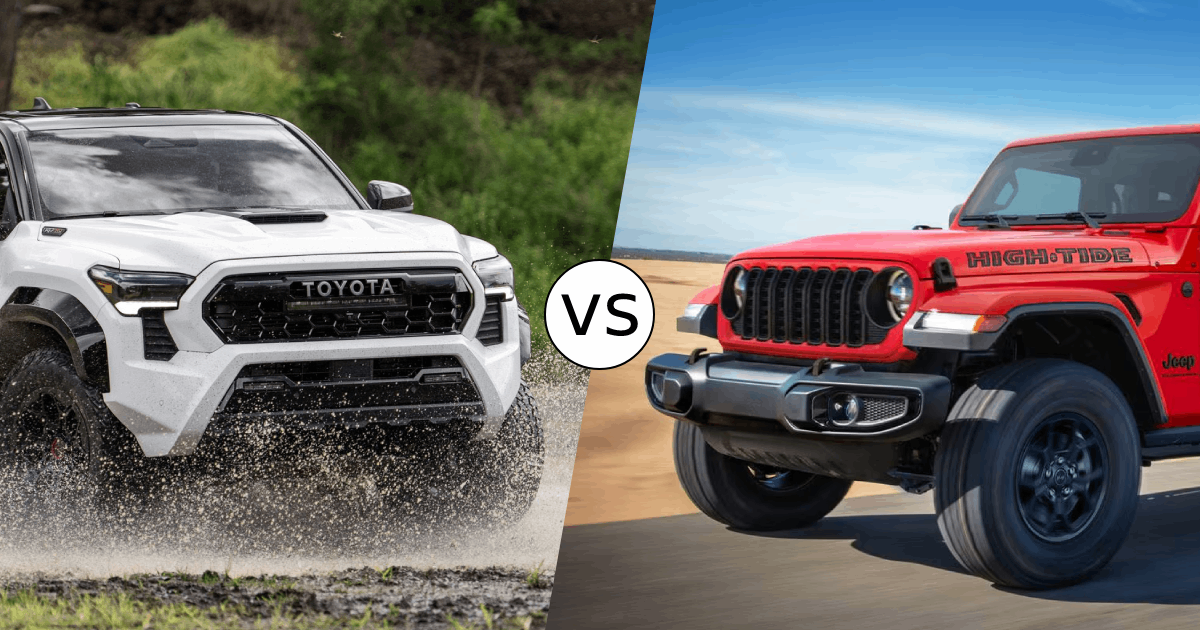
2025 Toyota Tacoma vs Jeep Gladiator

2025 Toyota Tacoma vs Jeep Gladiator

The Toyota Tacoma and Jeep Gladiator stand out as top contenders in a fiercely competitive midsize truck segment. In 2024, the Toyota Tacoma got a complete redesign, marking the start of the fourth generation. It boasts improved on-road driving, updated technology, and impressive off-road capabilities. The 2025 Jeep Gladiator maintains its spot as the only pickup with Wrangler's off-road DNA. You can remove the doors and roof panels, plus it's built for extreme off-roading. This 2025 Toyota Tacoma vs. Jeep Gladiator comparison breaks down how these two stack up, so you can choose the right one for your automotive needs. more Pricing and Value Comparison The 2025 Toyota Tacoma base SR model has a starting MSRP of $31,590. In comparison, the Jeep Gladiator Sport trim has an entry price of $38,695. This price marks a staggering difference of over $7,000, making the Tacoma the more affordable. The Gladiator also has a diverse lineup, from the Rubicon and Mojave models to the Nighthawk and Sport trim levels. Jeep targets El Monte buyers seeking a truck with robust off-road capability. However, the high entry price reduces your bargaining power when negotiating for add-ons. The Tacoma's extensive lineup and lower price make it the better choice. Engine Performance and Powertrain Options Every 2025 Tacoma features a 2.4-liter turbocharged four-cylinder engine for enhanced efficiency and balanced performance. While the base truck delivers 228 horsepower, higher trims, such as the TRD Pro, pump up to 326 horsepower and 465 lb-ft of torque of torque. Its eight-speed automatic facilitates swift gear changes while the optional six-speed manual provides an engaging driving experience. The Tacoma's upgraded suspension provides smooth handling and control behind the wheel. For a truck, the Tacoma accelerates exceptionally, accelerating from 0 to 60 mph in just 7.0 seconds. The Jeep Gladiator features a 3.6-liter V-6 engine, producing 285 horsepower and 260 lb-ft of torque. For the 2025 lineup, the manual transmission is gone, leaving an eight-speed automatic as the sole option. While the Tacoma offers a smoother ride, the Gladiator drives like a classic Jeep with a bed. Toyota's engine delivers more low-end power for merging onto busy freeways in El Monte. For this reason, the Tacoma is the better choice for a truck, as it strikes a balance between daily driving comfort and off-road capability. Fuel Economy The Tacoma has an unassailable advantage in fuel economy. The two-wheel-drive Tacoma has an EPA-estimated 21 mpg in the city and 26 mpg on the highway. Additionally, four-wheel-drive models are close behind at 20 mpg city and 23 mpg highway. These numbers are great for a truck and will save you money at the pump. The Jeep Gladiator has an EPA-estimated rating of 17 mpg in the city and 22 mpg on the highway. Some models with bigger tires, like the Mojave, get as low as 15 mpg in real-world testing. When comparing these fuel-efficiency ratings, the Tacoma's better gas mileage supports longer drivers and adds up to significant savings. Towing and Payload Capabilities The Gladiator can tow up to 7,700 pounds with the Max Tow package, while the Tacoma's maximum towing capacity is 6,500 pounds. While the Gladiator might have an upper hand in towing capacity, it requires a specific configuration to hit these numbers. The popular Rubicon trim's towing capacity drops to 7,000 pounds, meaning the Tacoma is not far off. With a payload capacity of 1,705 pounds, the Tacoma makes it easy to haul all your gear and equipment in the bed. The Gladiator's max is 1,725 pounds on Sport trim, but Rubicon models drop to 1,200 pounds. Toyota offers a hybrid version that tows up to 6,000 pounds and carries loads of up to 1,709 pounds in the bed. The Tacoma's towing and payload capabilities remain consistent across all trims, making this truck ideal for all your hauling needs. Interior Space and Comfort The 2025 Tacoma's redesigned cabin features raised seating for better road visibility. Its ergonomic seats are adjustable and boast soft upholstery for enhanced in-car comfort. The front area offers 41.8 inches of space, while the back seat has 33.7 inches of legroom for enhanced comfort during long El Monte road trips. The Gladiator offers a roomy cabin, with 41.2 inches for the driver and more than 38 inches for back seat passengers. Its dash and controls are straight from the Wrangler playbook, meaning lots of hard plastics. Tacoma feels more refined for everyday commuting, while Gladiator leans rugged for those who love open-air driving. Truck Bed and Cargo Features The Gladiator features a five-foot bed as the only option on all models. Jeep argues that a shorter length improves ride and handling when hauling heavy loads. The Tacoma offers multiple bed configurations to suit your hauling needs. XtraCab models come with a six-foot bed only, while Double Cab crew-cab versions let you pick between a six-foot box or a shorter five-foot bed. That five-foot option makes parking easier in tight spots in downtown El Monte. The Tacoma bed includes intelligent, modern touches. It's slightly deeper than the Gladiator's, so you can fit camping refrigerators under a tonneau cover. Toyota borrowed the quick-release tailgate from the Tundra. You can remove the tailgate without tools when needed. There's an optional power tailgate that opens and closes automatically. A bed view camera helps when loading cargo or lining up a trailer hitch. Both trucks are built on a strong frame, but the Tacoma offers two rear suspension setups. Base models utilize traditional leaf springs, while other trims feature modern coil springs that significantly enhance ride quality. The Gladiator features a solid axle setup, which is ideal for extreme off-roading but less comfortable on paved roads. For drivers who spend most of their time on the road, the Tacoma's coil-spring models are the better choice. Test Drive the 2025 Toyota Tacoma at Longo Toyota While the Jeep Gladiator is an off-road legend, the 2025 Toyota Tacoma is the better all-around truck. It's more comfortable, efficient, and comes loaded with modern technology. It delivers a refined driving experience without compromising the toughness and capability you would expect from a pickup. The best way to see the difference is from behind the wheel. We invite you to visit Longo Toyota in El Monte to experience the new Tacoma. Contact us today to schedule your test drive.

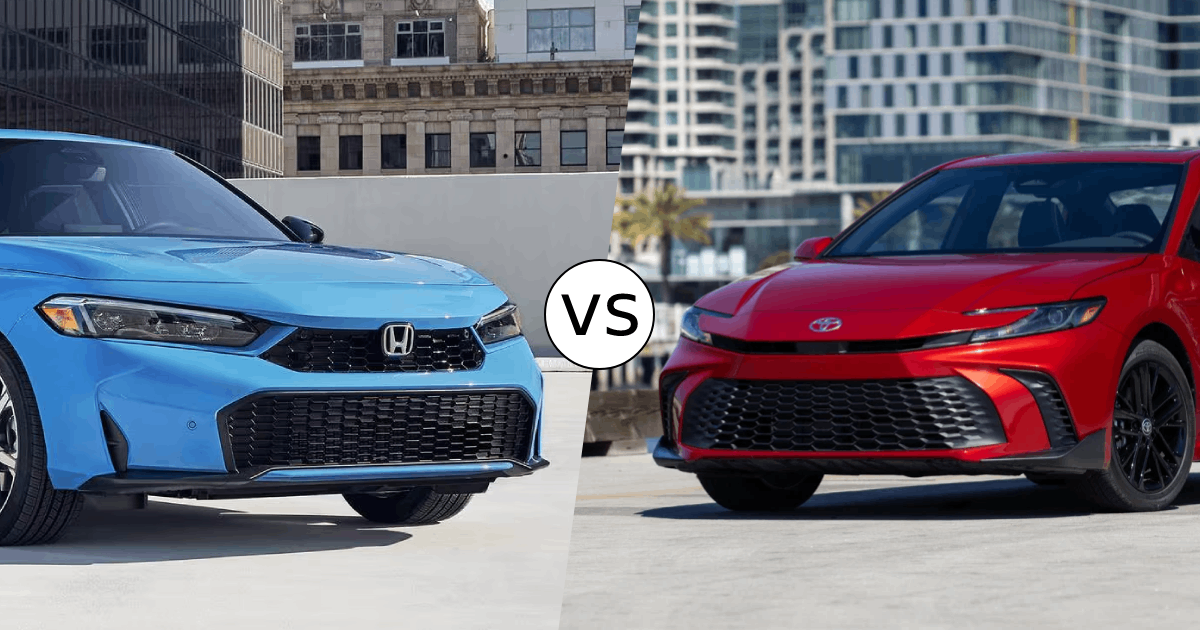
2025 Toyota Camry vs. Honda Civic

2025 Toyota Camry vs. Honda Civic

While many drivers choose SUVs, sedans are still popular options for many El Monte, California, drivers, and the 2025 Toyota Camry and Honda Civic are savvy choices. Sedans are ideal for commuters using Interstate 10 into Los Angeles, taking a weekend getaway to Santa Monica, or heading out on a fun family adventure at Disneyland Park in Anaheim. How do you choose between the 2025 Toyota Camry and Honda Civic? While both these popular sedans have similarities, they also have slight differences. Use this guide created by Longo Toyota of El Monte, California, to choose between the Honda Civic and Toyota Camry based on the specs and features that fit your Southern California lifestyle. more 2025 Toyota Camry vs. Honda Civic: Which Sedan Wins the Battle? In this head-to-head battle of the Honda Civic vs. the Toyota Camry, we'll look at the key specifications that set them apart from each other, while highlighting some of the similarities that help make them two of the most beloved sedans on the market. Engine Performance and Powertrain Comparison Many people choose a vehicle based on its engine and performance capabilities, including the fuel economy ratings. 2025 Toyota Camry Engine Options Toyota offers the 2025 Camry in four trims, all of which have the same powertrain under the hood. A 2.5-liter four-cylinder engine combines with an electric motor to produce 232 horsepower with all-wheel drive and 225 horsepower with front-wheel drive. 2025 Honda Civic Engine Specifications One difference between the Camry and Civic is that the 2025 Honda Civic offers two powertrain options. You can get the Civic as a gas-only version or a hybrid. The gas-only models have a 2.0-liter naturally aspirated Atkinson inline four-cylinder engine that delivers 150 horsepower. Choose the hybrid, and you get the same four-cylinder engine mated to an electric motor to produce 181 horsepower. The Civic is available in front-wheel drive or all-wheel drive. Fuel Economy and Efficiency Analysis El Monte, California, area drivers appreciate the fuel economy of the 2025 Camry and Civic. The Camry's hybrid engine has an estimated 51 mpg combined, while the 2025 Civic's hybrid version achieves about 46 mpg combined. Choose the Civic gas-only models, and you get 39 mpg combined. Both sedans offer impressive fuel economy, making it easy to spend weekends in Temecula for wine tasting or in Santa Barbara for a fresh seafood dinner. Interior Design, Comfort, and Space In the Honda Civic vs. Toyota Camry specs showdown, we'll look at the interior of these two sedans. Cabin Layout and Material Quality With two rows of seats, up to five people can ride comfortably inside the Camry and Civic. Both sedans allow the driver and front-seat passenger easy access to the infotainment systems and display screens.  As you move up the trim levels of both these sedans, you'll appreciate the attractive features such as leather seats, heated front seats, and ambient lighting that enhances the mood of your driving experience. Technology Features and Infotainment Both Toyota and Honda excel at innovative technologies, including their infotainment systems. Inside the 2025 Camry, Toyota gives this sedan a standard 8.0-inch touchscreen, or you can choose the optional 12.3-inch version for improved clarity. The Honda Civic comes with a 7.0-inch touchscreen or an optional 9.0-inch version. Both sedans have Apple CarPlay and Android Auto smartphone integration with an available wireless option. Toyota and Honda do not skimp on driver-assistance features for the 2025 Camry and Civic. The Camry has a robust suite of features with its Toyota Safety Sense 3.0, which includes advanced features such as a pre-collision system with pedestrian detection, a lane mitigation system, and dynamic radar cruise control. You'll find similar driver-assist features in the 2025 Civic with the Honda Sensing technologies. Key features include a collision mitigation braking system, adaptive cruise control, and a driver attention monitor. Trim Levels and Pricing Structure Let's look at the Toyota Camry vs. Honda Civic trim levels and MSRP pricing. 2025 Toyota Camry Trim Breakdown Toyota offers the Camry in four trims: the LE, SE, XLE, and the top-tier XSE. Prices start at $28,700 for the entry-level LE and move up to $34,900 for the XSE. 2025 Honda Civic Trim Options The 2025 gas-only Civic comes in two trims: the LX starting at $24,250 and the Sport starting at $26,250. The Civic Hybrid also offers two trims: the Sport Hybrid starting at $28,950 and the Sport Touring Hybrid starting at $31,950. Value Analysis by Trim Level While the Toyota may have higher price points, you get a more powerful engine, better fuel economy, and a larger infotainment system. The Civic comes as a gas or hybrid, at a lower price point, and is a bit smaller than the Camry. Both Toyota and Honda vehicles are historically known for their dependability and capability, adding to their desirable resale value. In addition, they have similar warranties. They both come with a limited warranty of 3 years/36,000 miles and a powertrain warranty of 5 years/60,000 miles. The Camry has a hybrid component warranty of 10 years/150,000 miles, while the Civic's hybrid warranty coverage is only 8 years/100,000 miles. Final Verdict: Which Should You Choose? Deciding between the Civic and Camry is a personal choice. The Camry is only offered as a hybrid, while the Civic comes as a hybrid or gas-only version. However, the Camry gets better fuel economy, has more power, and comes with more standard technology features than the 2025 Honda Civic. The two sedans have similar starting prices, so your decision will be based on your preference. If you choose the 2025 Toyota Camry, we can help you find the right trim for your El Monte lifestyle, and our finance department will secure an auto loan or lease deal with terms you're comfortable with. Learn More About the 2025 Camry and 2025 Civic Are you excited about learning more about the 2025 Toyota Camry vs. the 2025 Honda Civic? Contact our team at Longo Toyota in El Monte, California, to take the 2025 Toyota Camry for a test drive to see how well it handles on the Los Angeles area freeways and city streets.

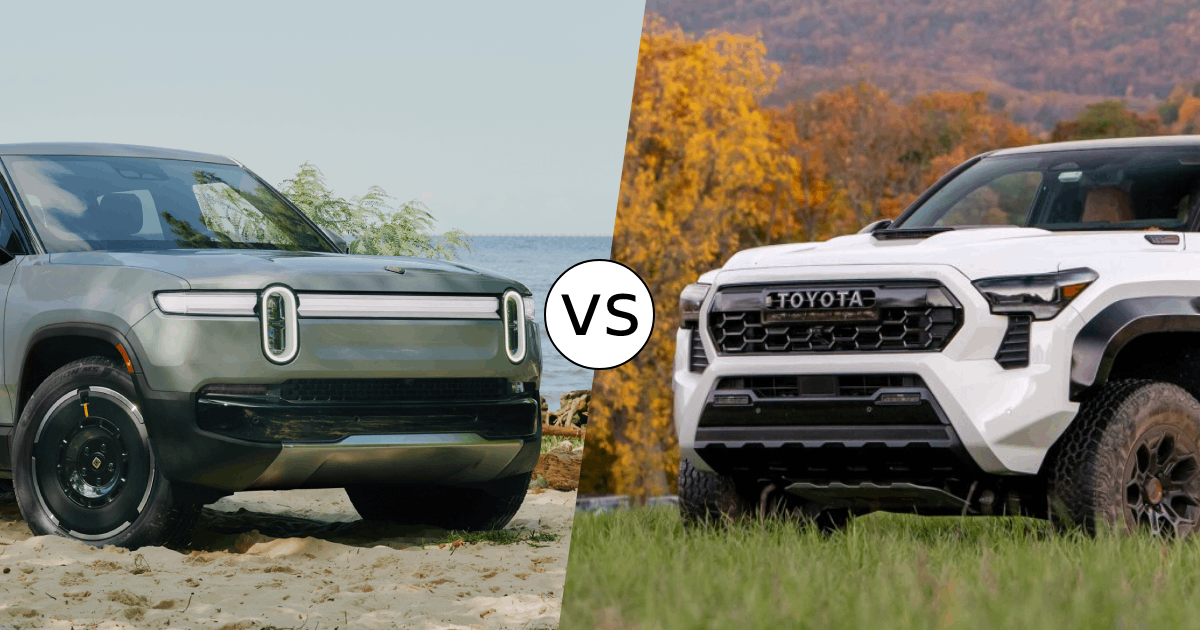
2025 Toyota Tacoma i-Force MAX vs. Rivian R1T

2025 Toyota Tacoma i-Force MAX vs. Rivian R1T

Electric and hybrid vehicles are reshaping the pickup truck market, giving drivers more choices than ever. The 2025 Toyota Tacoma i-Force MAX and Rivian R1T are two such examples, the former being a hybrid and the latter an electric. While both trucks are excellent off-road and have excellent utility and innovation, their technologies and pricing cater to different buyers. This guide compares the 2025 Toyota Tacoma i-Force MAX vs. Rivian R1T to help you make an informed choice. more Powertrain Performance: Hybrid vs. Electric Technology The Toyota Tacoma i-Force MAX uses a hybrid powertrain that combines a turbocharged 2.4-liter inline-four engine with an electric motor to produce 326 horsepower and 465 lb-ft of torque. The powertrain combines smooth hybrid performance with the convenience and reliability of a gas engine. In contrast, Rivian's R1T comes with two, three, or four motors. The most powerful quad-motor electric drivetrain produces 1,025 horsepower and 1,198 lb-ft of torque, allowing for a 2.5-second 0-60 mph time. While the Rivian R1T dominates in raw acceleration because of its powerful electric motors, the Tacoma i-Force MAX offers smoother and more predictable hybrid performance with a balanced ride quality. The Tacoma delivers an enjoyable driving experience, especially on-road, while the R1T is best off-road thanks to its adjustable air suspension and advanced terrain modes. Rivian's R1T beats most rivals with its 11,000 pounds maximum towing capacity. The Toyota Tacoma i-Force MAX offers a respectable 6,000 pounds, which is suitable for most recreational towing needs and lighter work tasks. Range, Efficiency, and Fuel Economy Breakdown The Tacoma i-Force MAX receives an EPA-estimated 23 mpg city and 24 mpg highway, which is reasonable and offers a balance of power and efficiency for its class. Its 18.2-gallon fuel tank is estimated to provide 400 to 436.8 miles of driving range. The Rivian R1T offers a driving range of up to 420 miles when configured with two motors and the largest battery pack. DC fast charging adds 140 miles of range in 20 minutes, making the truck ideal for long-distance trips. While the cost per mile is more affordable than gasoline, the initial purchase is quite a lot higher than the Tacoma. This puts the R1T out of most people's reasonable budget. Off-Road Capabilities and Adventure-Ready Features The Tacoma's top two hybrid trims (the Toyota Tacoma TRD Pro and Trailhunter) are off-roading beasts. Both models feature front tow hooks, composite skid plates for underbody protection, a specialized off-road suspension, massive 33-inch tires, and crawl control. A rugged build and up to 11.5 inches of ground clearance make for confident driving on trails. The TRD Pro is tuned for high-speed and high-performance off-roading, with 2.5-inch FOX® Internal Bypass QS3 shocks with rear piggyback-style remote reservoirs and IsoDynamic Performance front seats with a dampening system. The Trailhunter is designed specifically for overlanding, featuring an Old Man Emu® 2.5-inch forged monotube position-sensitive shocks with rear piggyback-style remote reservoirs, a high-clearance front bumper, rock rails, and an ARB® steel rear bumper with recovery hooks. The Rivian R1T offers unique features like Tank Turn, an adjustable suspension, and multiple off-road terrain modes (all-purpose, all-terrain, snow, sport, soft sand, rally, drift, rock crawl, and conserve, making it highly capable in tough conditions. With up to 14.9 inches in its highest off-road setting, the electric truck is the better candidate for extreme adventures. Cargo and Utility: Bed vs. Tank Turn and Frunk The Tacoma's 6-foot or 5-foot bed features an integrated deck rail system with cargo tie-down clamps, a power outlet, and multiple storage options, which is ideal for work and recreation. While the short bed offers 37.4 cubic feet of cargo space, the longer bed is roomier at 45.5 cubic feet. The maximum payload capacity for the i-FORCE MAX model is up to 1,705 pounds. The R1T has a 4.5-foot bed that offers 29.2 cubic feet of storage space when the tonneau cover is closed and a total slightly higher payload capacity of 1,764 pounds. Its unique front trunk (“frunk”) has 10 cubic feet of space, the gear tunnel has 12 cubic feet of space, and the underbed can store 14 cubic feet. The R1T offers innovative storage of camping gear, tools, and outdoor equipment, thanks to lockable storage and a configurable bed door. Pricing and Value Proposition Analysis The base Tacoma with the i-Force MAX hybrid powertrain starts at $46,720 and rises to $64,135 in the range-topping TRD Pro trim. This offers excellent value across the lineup, especially given its proven durability, off-road capability, and resale potential. The Rivian R1T's starting price is much higher at about $70,990 and increases to $115,990 for the top trim. That said, it offers innovative electric performance, faster acceleration, and longer all-electric range, making it ideal for people who prioritize technology over affordability. Expert Verdict: Which Truck Wins and Why The Toyota Tacoma i-Force MAX is the more practical all-around pickup truck. Its off-road capabilities, reasonable towing capacity, reliable hybrid powertrain, and affordable price point make it a dependable choice for work and play. The Rivian R1T is perhaps better suited for those with bigger budgets who want the latest electric propulsion technology and extreme off-road capability. For most drivers seeking traditional truck reliability, versatility, and everyday usability, the Tacoma hybrid is the smarter choice. Visit Longo Toyota to test drive the new model today.

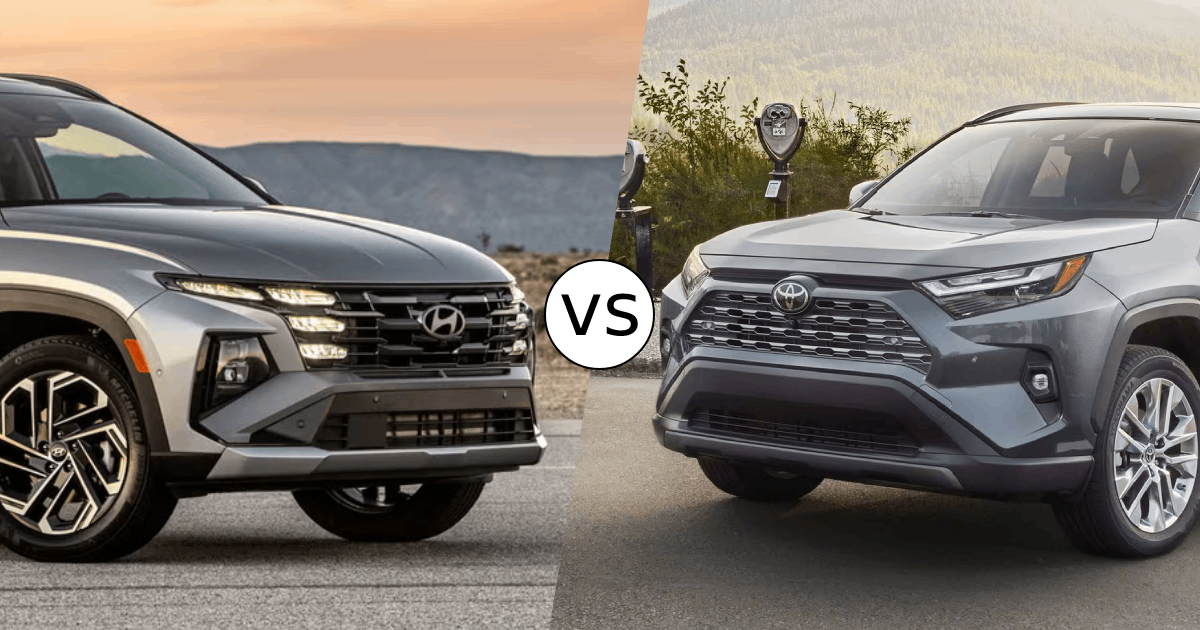
2025 Toyota RAV4 vs 2025 Hyundai Tucson

2025 Toyota RAV4 vs 2025 Hyundai Tucson

Considering updating your ride to a new compact SUV? Take a look at this comparison between the 2025 Toyota RAV4 and the 2025 Hyundai Tucson. We'll help you explore the specs, features, and power so you can see how the RAV4 comes out on top. Then, visit Longo Toyota to take the RAV4 out for a test drive. more Key Similarities and Differences at a Glance Both the RAV4 and the Tucson have four-cylinder engines, but the RAV4's produces more horsepower. Each has room for five people and comes with comprehensive safety suites for confidence behind the wheel. What Makes Each SUV Stand Out The RAV4 stands out for its excellent fuel economy, which means fewer stops at the gas station whether you're driving around town or on a cross-country road trip. The Tucson stands out with its higher towing capacity. Engine Performance and Powertrain Options The RAV4's 2.5-liter Dynamic Force four-cylinder engine delivers 203 horsepower. Compare this to the Tucson's 2.5-liter four-cylinder that puts out 187 horsepower, and you can see which one will be more engaging when you get behind the wheel. Press the gas pedal in the RAV4, and you'll reach 60 mph in just eight seconds, while it takes the Tucson 9.3 seconds to get there. Fuel Economy and Efficiency Analysis If fuel economy is a priority for your next SUV, both the RAV4 and the Tucson are good choices, but the RAV4 is slightly better. EPA Ratings Comparison RAV4 with gas engine and FWD: 27 city / 35 highway / 30 combined RAV4 with gas engine and AWD: 27 city / 34 highway / 30 combined Tucson with gas engine and FWD: 25 city / 33 highway / 28 combined Tucson with gas engine and AWD: 24 city / 30 highway / 26 combined Hybrid Model Efficiency Showdown If you want an even more efficient version of either the RAV4 or the Tucson, both offer hybrid models. The RAV4 Hybrid gets up to 41 mpg in the city and 38 mpg on the highway, while the plug-in hybrid gets 94 MPGe with a 42-mile all-electric range. The Tucson Hybrid delivers 38 mpg in the city and 38 mpg on the highway. It also offers a plug-in hybrid that gets 80 MPGe combined and has a 33-mile all-electric range. Interior Space and Comfort Features There's plenty of room in these SUVs for five people to get comfortable. Standard and available features enhance this comfort as you run errands or commute to work in El Monte. Front and Rear Passenger Space The Tucson is slightly larger than the RAV4, but the 37.8 inches of rear legroom in the RAV4 is still plenty for even your taller passengers to stretch their legs. If you're sitting in the back of the Tucson, you'll have 41.3 inches of legroom. Climate Control and Interior Ambiance The rugged charm of the RAV4 is enhanced by a mix of soft-touch materials and a functional design. Higher trims come with Toyota's premium SofTex synthetic leather for an upscale look and feel. Choose from dark brown or blue interior lighting to set the mood for your drive. Adjusting the climate in the RAV4 is easy with ergonomic climate controls that feature physical knobs. The Tucson has a very different feel in the cabin. Instead of warm, it has a futuristic, tech-forward dashboard. Setting the mood may take some time, especially with the optional 64-color configurable lighting available on higher trims. Cargo Capacity and Practicality Whether you're packing up for a trip to Crystal Lake or Monrovia Canyon Park, you'll have the cargo capacity to load up your gear in either the RAV4 or the Tucson. Cargo Volume with Seats Up and Down If you have a lot of luggage or groceries, fold down the seats in the RAV4 to expand the cargo area to 69.8 cubic feet. When you have people in the rear seats, you'll still have up to 37.6 cubic feet of storage space. Fold the rear seats down in the Tucson to get 80.3 cubic feet of cargo space, and you'll have 38.7 cubic feet with the seats up. Reliability and Warranty Coverage Both the RAV4 and the Tucson have excellent reliability scores. They received similar ratings from J.D. Power, with the Tucson just edging out the RAV4 for the 2025 model year, scoring 81 out of 100 compared to the Toyota's 80 out of 100. Resale Value and Depreciation Toyota is known for producing reliable vehicles that last, and the RAV4 is a prime example. It will cost you less in the long run because, after driving it for years, it will have excellent resale value. Expected Resale Value After 5 Years When you buy a new RAV4 at Longo Toyota, it will retain about 60% of its original price after five years. If you own a Tucson, it will only retain about 54% of its original value. Market Demand and Brand Reputation The Toyota RAV4 remains a dominant force in the compact SUV market. This strength is driven by its reputation for reliability and fuel efficiency, especially among hybrid models. The Tucson has gained some market share and brand recognition, and its longer warranty is appealing, but the RAV4 remains a powerhouse from a long-standing brand you know you can rely on. Final Verdict: Which SUV Should You Choose? Now that you know how the 2025 Toyota RAV4 and Hyundai Tucson stack up against each other, it's time to come to Longo Toyota and take a closer look at the latest RAV4. Our team is here to answer your questions about features, powertrains, and capability. Take one out for a test drive and see how it feels behind the wheel. We know you'll love how it drives. Call us at (626) 539-2403, or stop by at 3534 Peck Road, El Monte, CA 91731.

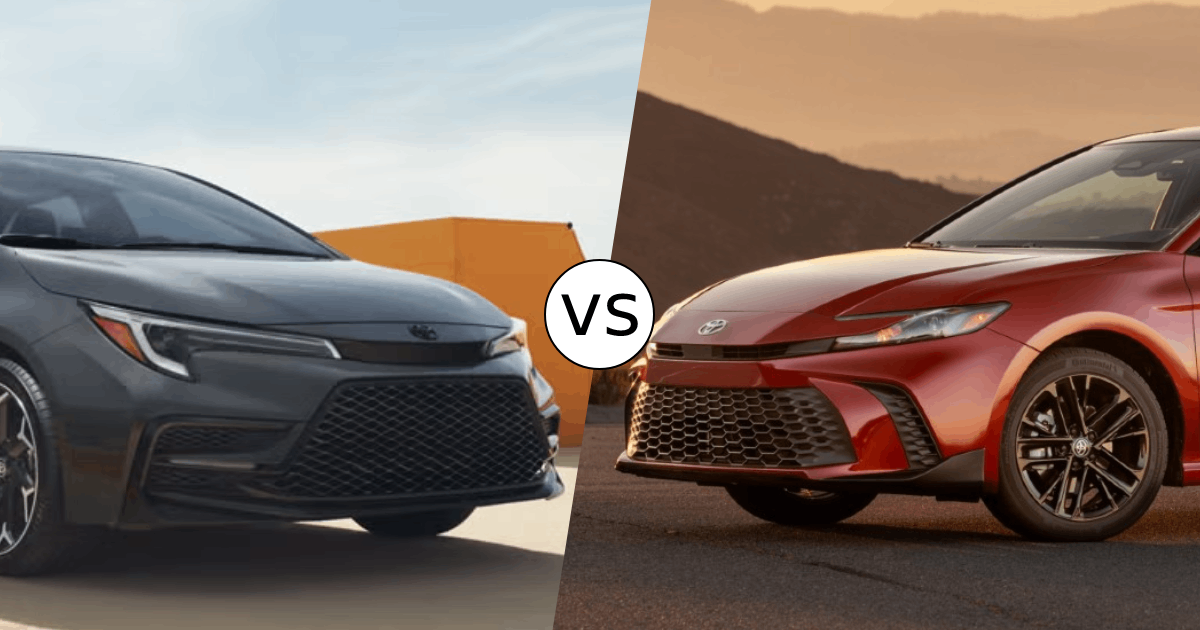
2025 Toyota Camry vs. Corolla

2025 Toyota Camry vs. Corolla

Choosing between the Toyota Camry and the Corolla can be difficult. Both are excellent choices if you're shopping for a Toyota sedan in El Monte, but they address different buyer preferences. One provides power and roominess, while the other focuses on economy. Our Longo Toyota team has investigated the differences between the Corolla and the Camry, including the most common car comparison specs, so you can choose the one that's right for you. more Performance and Engine Comparison The 2025 Camry went hybrid-only this year. Toyota's fifth-generation hybrid system pairs a 2.5L four-cylinder with electric motors, delivering 225 hp in front-wheel drive and 232 hp with all-wheel drive (AWD). The Corolla uses a smaller setup — the hybrid version has a 1.8L engine making 138 hp. Gas-powered Corollas get 169 hp with their 2.0L engine and continuously variable transmission (CVT). Real-world testing shows the performance gap clearly. The Camry XSE Hybrid hits 60 mph in 6.6 seconds in Sport mode. Car and Driver tested the XSE AWD and got a 0-to-60 mph time of 6.8 seconds, while the Corolla FX required 8.1 seconds to reach 60 mph. That difference matters when you're merging onto Interstate 405. Fuel Economy and Efficiency Analysis These sedans are both fuel-efficient. The 2025 Camry LE is EPA-rated at 53 mpg city/50 mpg highway/51 mpg combined; the LE AWD gets 51 mpg city/49 mpg highway/50 mpg combined ratings. The SE, XLE, and XSE trims achieve 48 mpg city/47 mpg highway/47 mpg combined. The Corolla LE is rated at 32 mpg city/41 mpg highway/35 mpg combined, while the updated ratings for Corolla Hybrid models are 50 mpg city and 43 mpg highway. These figures may differ slightly depending on the configuration. Interior Space and Comfort Comparison The difference in interior space is immediately apparent when you get inside their cabins. The Camry offers more cargo room, with 15.1 cubic feet of trunk space compared to 13.1 cubic feet for the Corolla. Rear passengers get 38 inches of legroom in the Camry compared to 34.8 inches in the Corolla. Those extra 3.2 inches make a real difference during long drives navigating L.A. traffic. Their technology packages reflect each car's market position. Higher Camry trims come with a 12.3-inch touch screen, wireless Apple CarPlay and Android Auto, plus over-the-air updates. The base Camry LE comes standard with an 8-inch screen, dual-zone climate control, and a wireless charging pad. The XLE and XSE models add 12.3-inch digital instrument displays. The Corolla LE starts with an 8-inch infotainment touch screen and wireless phone connectivity, and the FX trim adds a 10.5-inch touch screen and sport seats. Safety Features and Ratings Safety technology comes standard on both, though the Camry edges ahead in ratings. U.S. News and World Report gives the Corolla a rating of 9.3 out of 10 for safety, while the Camry scores 9.6. That small gap reflects the Camry's structural advantages due to its larger size and more standard safety features than the Corolla. The 2025 Camry earned the Insurance Institute for Highway Safety's Top Safety Pick status with "Good" ratings across moderate overlap front crash, side impact, roof strength, and head restraint protection. Standard safety equipment is generous across both lineups. Toyota's Safety Sense 3.0 includes forward collision warning, lane-departure alerts, adaptive cruise control, automatic high beams, pedestrian detection, and traffic sign recognition as standard on every model. The Camry has eight airbags and comprehensive protection systems. Blind-spot monitoring and rear cross-traffic alert are standard on the Camry but cost extra on the Corolla. Pricing and Trim Level Breakdown The 2025 Corolla LE gas-powered version starts at $22,325 MSRP; the Hybrid LE starts at $23,825. The SE gas-powered model has a starting MSRP of $24,765, with its hybrid version costing $26,265 MSRP. The XSE trim, available only in a gas-powered version, costs $28,040, while the XLE Hybrid has a $28,190 MSRP. The Camry LE starts at $28,700 MSRP and the SE at $31,000, while the XLE and XSE models' MSRPs are $33,700 and $34,900, respectively. A starting MSRP comparison shows $28,700 for the Camry versus $22,325 for the Corolla. Toyota's manufacturer financing specials make both accessible, and our Longo Toyota finance department is skilled at matching buyers with offers. These incentives help bridge the price gap, particularly for qualified buyers seeking to purchase a newer Toyota. Exterior Design and Styling Differences Let's look at the Camry vs. the Corolla's sizes; the difference is apparent when you view them side by side. The Camry is larger than the Corolla in all dimensions, which affects interior space and highway feel. Their exterior designs target different buyers. The Camry features sculpted body lines, amber lighting accents, a honeycomb grille, and contemporary styling with 18- or 19-inch wheels. LED headlights and taillights, along with a fresh grille, create a polished look. The Corolla features classic sedan styling, characterized by a sloped hood, LED headlights, and a black mesh grille. The Corolla has 16-inch alloy wheels as standard, with other options available. Reliability and Maintenance Considerations Both cars benefit from Toyota's legendary reputation for reliability. The 2025 U.S. Vehicle Dependability Study awarded Toyota named the Corolla the best compact car and the Camry the best midsize car — both models regularly last beyond 200,000 miles with proper maintenance. Edmund's five-year ownership costs show the complete picture. The average Camry costs about $31,797 to own, while a Corolla costs about $28,363. Both cars offer a three-year/36,000-mile basic warranty and five-year/60,000-mile powertrain coverage. The Camry hybrid includes an eight-year/100,000-mile hybrid component warranty and 10-year/150,000-mile battery coverage; these are also extended to the Corolla Hybrid models. Find Your Perfect Toyota Sedan What matters most for your driving needs in El Monte? The Corolla is ideal for daily commuters who seek Toyota reliability without paying for features they won't use. Its size is especially well-suited for navigating crowded El Monte streets or searching for parking. Choose the Camry if you need extra power for confident freeway merging, more space for passengers and cargo, premium features such as larger screens and nicer materials, and smoother rides during long commutes. Its hybrid-only powertrain delivers both performance and efficiency, while the available AWD comes in handy on trips to the mountains or during the rare rainy days in Southern California. Test-Drive Both Cars at Longo Toyota Today Experiencing both cars on real roads is essential to your decision. You can take a virtual test-drive of both vehicles, or contact us to test-drive the 2025 Camry and Corolla back-to-back on El Monte's streets and highways. Our team can explain current deals and financing options and help you find the trim and color combination that best suits you. There's no reason to wait; we're eager to answer your questions and introduce you to both models.

2025 Toyota Prius vs. Kia Niro

2025 Toyota Prius vs. Kia Niro

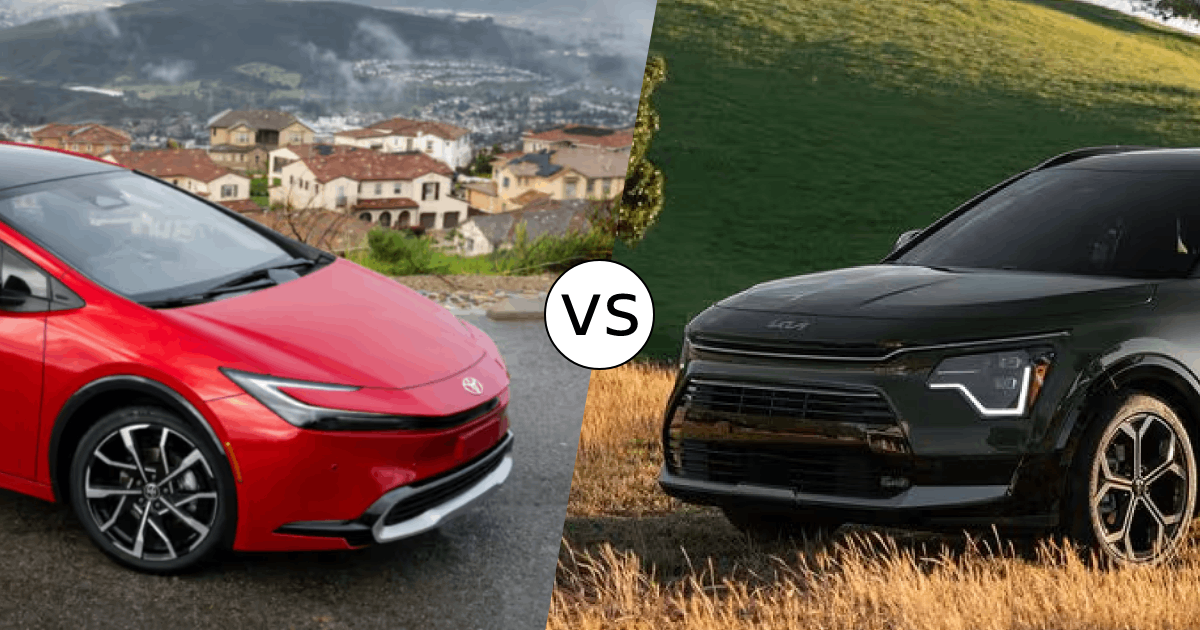
If you're shopping for a hybrid, you've probably narrowed it down to two standout choices: the 2025 Toyota Prius and the Kia Niro. Both cars deliver solid fuel efficiency and eco-friendly driving, but they couldn't be more different in their approach. One prioritizes maximum fuel economy and advanced hybrid tech, while the other focuses on practical crossover utility and family-friendly space. Our Longo Toyota team has broken down the details of both vehicles’ design, performance, safety, and value so you can figure out which hybrid works best for your El Monte life. more Design and Interior Features These two hybrids take opposite design approaches. Toyota’s 2025 Prius has a bold, aerodynamic look with sharp angles and futuristic styling. It's all about slicing through the air for maximum efficiency, even if that means looking a bit unconventional. Meanwhile, Kia's Niro plays it safe with mainstream crossover appeal. The Prius turns heads at every stoplight, while the Niro blends right into suburban driveways. A look inside the cabins tells you which automaker prioritizes what. The Kia has 105.1 cubic feet of passenger volume compared to the Prius’ 91.2 cubic feet. Your back seat passengers will appreciate the Niro's generous 39.8 inches of legroom vs. the Prius’ 34.8 inches. Front seat riders get a slight edge in the Prius, though, with 43.2 inches of legroom. Toyota provides 38 inches of front headroom, while rear passengers get 36.4 inches, which works fine for most adults. Kia's Niro offers 22.8 cubic feet behind the rear seats, expanding to 63.7 cubic feet with seats folded. The standard Prius gives you 23.8 cubic feet, while the Prius Plug-In Hybrid (formerly known as the Prius Prime) drops to just 20.3 cubic feet behind rear seats, expanding to 26.7 cubic feet with seats down. Both hybrids keep up with modern demands; Kia's dual 10.25-inch screens for the instrument cluster and touch screen come with five USB ports and wireless device charging. Toyota counters with an 8-inch standard touch screen (12.3-inch available, standard on the Limited trim), plus six USB-C ports and wireless Android Auto/Apple CarPlay. Performance and Efficiency Power and acceleration reveal different automotive philosophies. Toyota's 2025 Prius has a 2.0-liter four-cylinder engine delivering from 194 to 220 hp, depending on which version you choose, with 139 lb-ft of torque and quick 0-to-60 mph times of 6.6 to 7.2 seconds. This acceleration is necessary when merging onto Los Angeles County freeways. Kia's standard Niro hybrid uses a smaller 1.6-liter four-cylinder paired with an electric motor for 139 horsepower total, hitting 0 to 60 mph in a leisurely 8.9 seconds. The plug-in hybrid version produces 180 hp with 195 lb-ft of torque. Fuel economy is where the Prius dominates. Toyota's regular 2025 Prius hybrid achieves 57 mpg city/56 mpg highway/57 mpg combined, and its Prius Plug-In Hybrid delivers 220 hp while returning up to 127 MPGe in electric/hybrid mode and 48 to 52 mpg in gas/hybrid mode. Kia's regular hybrid manages 53 mpg city/45 mpg highway/49 mpg combined, while the plug-in gets 53 to 54 combined mpg. The Prius also wins on electric-only driving capabilities. Toyota's Prius plug-in hybrid version can travel up to 44 miles on electric power, with other models getting 40 miles of electric range. Kia's plug-in hybrid offers 32 to 33 miles of electric-only range, still useful for short commutes around El Monte but noticeably less than the Prius. Charging times differ: the Toyota takes four hours with Level 2 charging or 11 hours with standard household charging, while Kia offers faster two- to three-hour Level 2 charging. Safety and Reliability Safety awards and ratings favor Toyota in this Prius vs. Kia Niro matchup. The Prius won the Insurance Institute of Highway Safety's (IIHS) Top Safety Pick+ award for 2025, and the National Highway Traffic Safety Administration (NHTSA) gave the Prius Plug-In Hybrid a five-star overall safety rating. The Prius Plug-in Hybrid averaged five out of five stars from the NHTSA compared to the Kia Niro's 4.28 out of five stars. While Kia also received a five-star overall rating from NHTSA, the lower average suggests Toyota performs more consistently across all testing categories. Both cars come with abundant modern safety features, though they're bundled differently. Kia's Niro includes auto emergency braking with pedestrian and cyclist detection, blind-spot collision warning, rear cross-traffic collision-avoidance assist, lane-keeping and lane-following assist, and highway-driving assist as standard equipment. It also comes with pedestrian detection, blind-spot monitoring, and rear cross-traffic alert. Toyota matches these capabilities while delivering the superior overall safety performance reflected in those higher ratings. Reliability and warranty coverage create an interesting trade-off between proven history and extensive protection. Toyota's legendary reliability reputation is backed up by real data — the Prius Prime earned an 8.1 out of 10 quality rating from iSeeCars compared to the Niro's 7.4 out of 10. Kia's warranty protection is good; it offers a five-year/60,000-mile basic warranty and a 10-year/100,000-mile powertrain warranty, while Toyota provides a three-year/36,000-mile basic warranty and a five-year/60,000-mile powertrain warranty. Hybrid-related components that require repairs needed to correct defects in materials or workmanship are covered for eight years/100,000 miles. Which Hybrid Fits Your California Lifestyle? The winner of the 2025 Kia Niro vs. the Toyota Prius showdown depends on what matters most to you. The Prius excels for efficiency-focused commuters who want maximum fuel economy, quicker acceleration, and longer electric driving range. Its 57-mpg combined rating and 40- to 44-mile electric range make perfect sense for daily San Gabriel Valley commuters who prioritize operating costs and environmental impact. The IIHS Top Safety Pick+ award and stronger reliability ratings add extra peace of mind for long-term ownership. But families needing more passenger space and cargo capacity may prefer the Niro's 105 cubic feet of passenger volume and 63.7 cubic feet of maximum cargo space. Value considerations reveal interesting trade-offs between initial costs and long-term ownership. Toyota's base 2025 Prius starts at $28,350 MSRP for the regular hybrid; the Plug-In Hybrid SE costs around $33,375 MSRP. Kia's 2025 Niro starts at $26,990 MSRP, while the plug-in hybrid begins at $34,490 MSRP, slightly less expensive than Toyota's plug-in model. However, depreciation patterns strongly favor Toyota: over five years, the Niro loses 40.4% of its value while the Prius loses just 31.1%, potentially saving you thousands in resale value. Test-Drive a Prius at Longo Toyota Today If you're in the market for the best overall hybrid experience, the 2025 Toyota Prius delivers great value through its unmatched fuel economy, stronger safety ratings, better acceleration, and superior resale value. Are you curious about how the Prius handles? Try our virtual test-drive tool, or use our convenient online contact form to schedule a visit and an in-person test-drive through El Monte. Our friendly staff is ready to provide expert guidance on choosing the right Toyota hybrid.

2025 Toyota Sienna vs. Honda Odyssey

2025 Toyota Sienna vs. Honda Odyssey

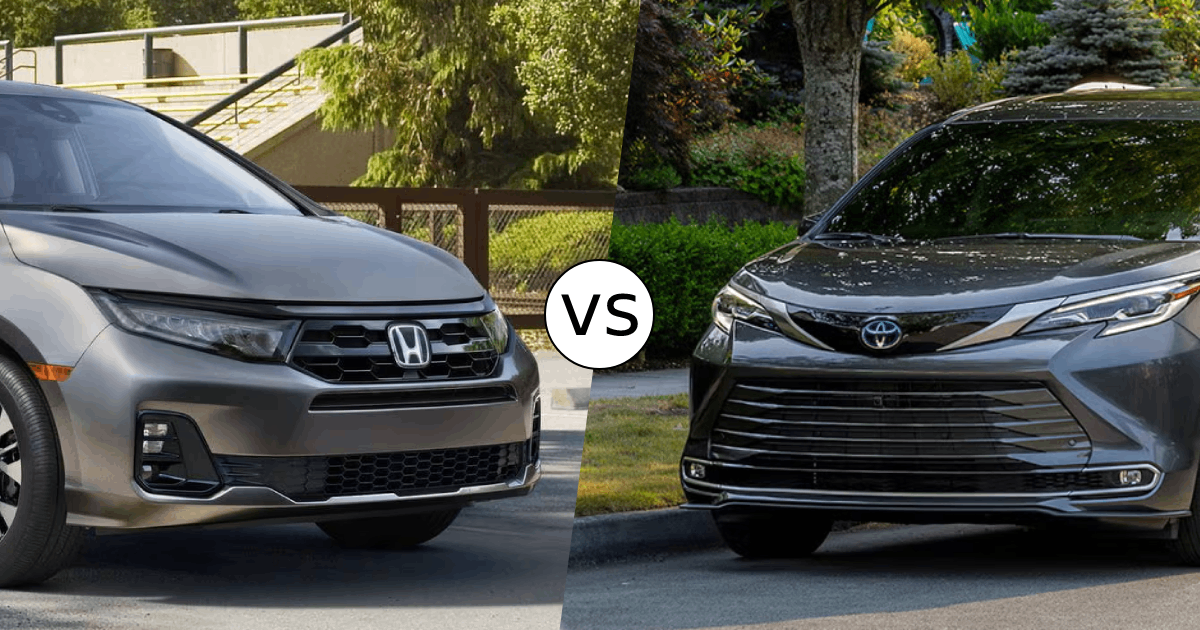
If you're shopping for a family minivan, you'll want to check out the biggest players in the market: the 2025 Toyota Sienna and the 2025 Honda Odyssey. Each model shines in different areas. The Sienna offers impressive fuel savings, while the Odyssey has superior cargo space. To figure out which minivan is right for your family, the Honda Odyssey vs. the Toyota Sienna, join our team at Longo Toyota in El Monte, California, as we dig into what makes each model tick. more Pricing and Value The Odyssey comes in four trims with a range of starting MSRPs: EX-L: $42,795 Sport: $43,895 Touring: $47,495 Elite: $51,695 The Sienna offers six trims: LE: $39,485 XLE: $44,295 XSE: $46,940 Limited: $50,500 Woodland Edition: $50,725 Platinum: $56,445 The Sienna's and the Odyssey's price ranges are largely similar, but with a nearly $5,000 difference between their top trims, Honda's best is about 10% cheaper. For more savings, Honda also sweetens the deal with $500 back for existing owners, as well as exclusive lease deals. However, there's more to consider than just the ticket price. You need to think long-term too. Kelley Blue Book ranked the Toyota Sienna in seventh place for best resale value for minivans. It also named Toyota as the best brand for resale value for the eighth time in nine years, demonstrating the automaker's dedication to quality and value. Performance and Efficiency The Honda Odyssey uses a 3.5-liter V-6 that outputs 280 horsepower. With a 6.4-second 0-to-60 mph sprint time, the Odyssey is responsive at red lights. The hybrid Toyota Sienna pairs a 2.5-liter four-cylinder with an electric motor, producing 245 horsepower. With a 7.5-second 0-to-60 sprint time, the Sienna isn't as fast off the line as the Odyssey. Both vans can tow up to 3,500 pounds, enough for a small camper or Jet Ski. When it comes to gas mileage, the Sienna is miles ahead of the Odyssey. The front-wheel-drive model gets 36 mpg in both the city and on the highway, while all-wheel-drive (AWD) models get 34 mpg city and 36 mpg highway. The Odyssey is much less efficient, only getting 19 mpg city and 28 mpg highway. That translates to about $500-$750 saved yearly on gas with the Sienna, depending on how much you drive and your local prices. Toyota also offers AWD, which Honda doesn't. If you live somewhere snowy or wet, that can be a significant deciding factor. The Sienna sips fuel like a compact car while handling winter roads like an SUV. Interior Features and Passenger Comfort Both minivans can hold eight passengers, but they offer different seating and storage configurations. Honda's Magic Slide second-row seats are brilliant engineering — slide them sideways for easier third-row access, tilt them forward, or remove them completely for massive hauling space. Every Odyssey includes heated front seats standard, which is ideal for chilly morning school runs. To compare, Toyota's second-row seats are bolted in place, making it a less versatile option, especially if you regularly haul sports gear or large furniture. For interior dimensions, the Sienna and the Odyssey are evenly matched, with less than an inch difference in leg and headroom. The Honda has slightly more legroom in the first and second rows with 40.9 inches, while the Sienna has a bit more room in the third row with 38.7 inches. The Toyota also has more headroom in the first and second rows, but the Honda is barely taller in the third row. For cargo capacity, the Honda Odyssey absolutely dominates. Behind the third row, the Odyssey has 32.8 cubic feet, while the Sienna has 33.5 cubic feet, making them nearly identical for daily grocery runs. However, fold that third row down, and the Honda jumps to 86.6 cubic feet versus Toyota's 75.2. The Sienna maxes out at 101 cubic feet. The Odyssey is cavernous by comparison, with up to 155.8 cubic feet of space with all the seats down — that's a 44 cubic foot difference. Safety and Reliability Both vans have your back with top-tier safety features. They've each earned Top Safety Pick awards from the Insurance Institute for Highway Safety. Honda edges ahead with a 9.0/10 U.S. News safety score and perfect five-star National Highway Traffic Safety Administration crash ratings. Toyota's not far behind at 8.9/10. Overall, you can't go wrong with either van when it comes to protecting your family. Both pack similar tech such as forward collision warning, lane-keep assist, and driver-fatigue systems. For warranty coverage, J.D. Power gives Honda a tiny lead — 77/100 versus Toyota's 76/100. However, Toyota offers a massive 10-year/150,000-mile warranty for the hybrid battery. That's serious peace of mind Honda can't match with its traditional powertrain. Both brands stand behind their vans with solid warranties, but Toyota goes the extra mile by covering those expensive hybrid components for the long haul. When you're talking about buying a family vehicle that'll last the next decade, that warranty difference matters. Design and Exterior Features The 2025 Odyssey's refreshed aesthetic includes a new grille, reshaped bumpers, and fresh 18/19-inch wheels. It comes in seven paint options: Crystal Black Pearl, Modern Steel Metallic, Smoke Blue Pearl, Solar Silver Metallic, Platinum White Pearl, Radiant Red Metallic II, and Sonic Gray Pearl. Overall, the Odyssey is practical but stylish. The Toyota Sienna's design direction is much bolder, shaking off the soccer-parent reputation of older minivans. It turns heads with a wide grille and thin Bi-LED headlights, exclusive 20-inch machined-finish alloy wheels, and upscale chrome accents. If Honda is business casual, Toyota is weekend warrior chic. The Odyssey stretches 205.2 inches long, 78.5 inches wide, 69.6 inches tall, making it 1.5 inches longer and 1.1 inches taller than the Sienna. Yet despite being physically bigger, it also weighs 135 pounds less than the hybrid Sienna. This size advantage directly translates to the Odyssey's extra interior room and cargo capacity, while the Sienna's more compact footprint helps with tight parking spots and contributes to better fuel economy. Which Minivan Wins Your Family's Heart? Edmunds rated the Sienna at 8.3/10 versus the Odyssey's 8.1/10. The Sienna won points for clever small-item storage solutions and its exclusive AWD option, while the Odyssey scored high marks for flexible seating arrangements and overall passenger comfort. When comparing the Odyssey vs. the Sienna, both are excellent choices. It mostly depends on your family's priorities. If you want to check out the Sienna for yourself, visit us at Longo Toyota for a test-drive. Our team is here to show you why the Sienna will make a great family hauler for years to come.

2025 Ford Maverick vs. Toyota Tacoma

2025 Ford Maverick vs. Toyota Tacoma

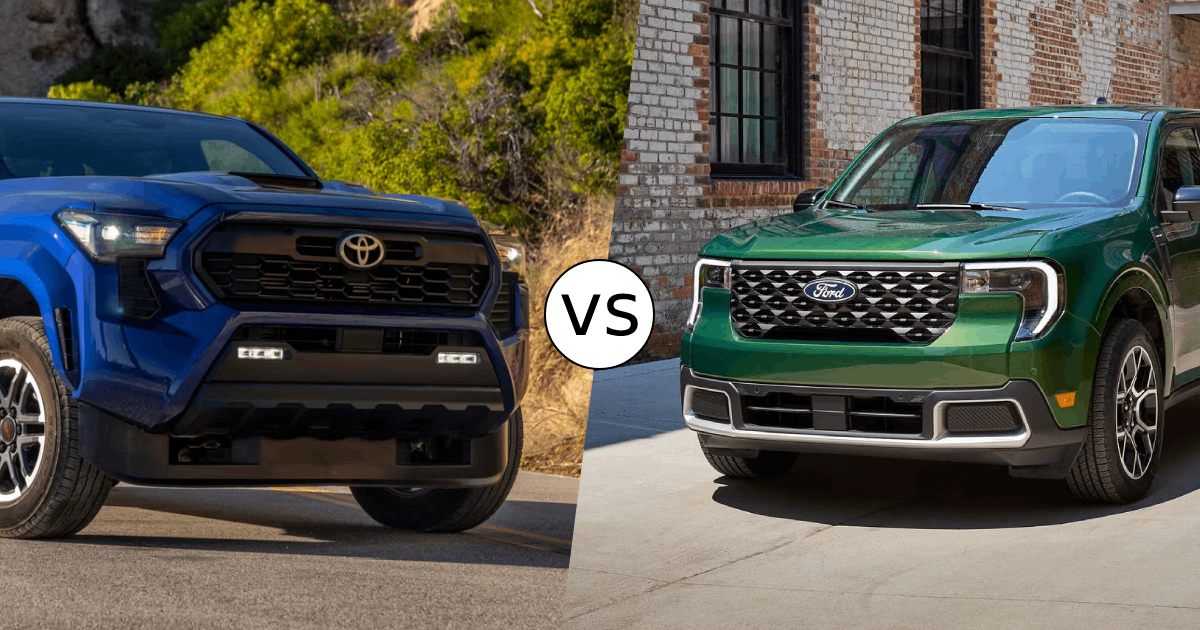
If you're shopping for a pickup truck, two names probably keep popping up: the 2025 Ford Maverick and the Toyota Tacoma. If you live in Southern California, you need a truck that works. It has to handle weekend trips to the mountains, but it also needs to get through daily traffic without being a nightmare to park. The Ford Maverick is marketed as a compact and budget-friendly vehicle, while the Tacoma has built its reputation on its proven reliability and extensive capabilities. Let's break down everything you need to know. Our Longo Toyota team has compared their sizes and real-world performance, and by the end of this article, you'll know which truck belongs in your El Monte driveway. more 2025 Ford Maverick Specs at a Glance The 2025 Ford Maverick is a value-oriented compact pickup truck that aims to bridge the gap between SUVs and pickups. Below are some of the most important specifications you should know if you're in the market for a 2025 Ford Maverick. Pricing Starting MSRP: $28,145 for the Maverick XL $40,995 MSRP for the Maverick Tremor 2.5L Hybrid (Standard) Standard with front-wheel drive (FWD) with an all-wheel-drive (AWD) option available Horsepower: 191 hp Torque: 155 lb-ft Transmission: Continuously variable transmission Towing capacity: Up to 2,000 pounds Payload capacity: Up to 1,500 pounds 2.0L EcoBoost Turbo (optional) Available with AWD and advanced four-wheel drive (4WD) Horsepower: 250 hp Torque: 275 lb-ft Transmission: 8-speed automatic Maximum towing capacity: 4,000 pounds (with tow package) Payload capacity: Up to 1,500 pounds 2025 Toyota Tacoma Specs at a Glance The 2025 Toyota Tacoma is a bigger and more powerful truck than the Maverick Pricing: Starting MSRP: $31,590 MSRP for the Tacoma SR Up to $63,735 for the Tacoma TRD Pro 2.4L Turbo i-FORCE (standard) Standard with rear-wheel drive Horsepower: 228 hp Torque: 243 lb-ft Transmission: 8-speed automatic Towing capacity: Up to 3,500 pounds Payload capacity: Up to 1,460 pounds 2.4L Turbo i-FORCE MAX Hybrid (available) Standard with part-time 4WDemand. Horsepower: 326 hp Torque: 465 lb-ft Transmission: 8-speed automatic Towing capacity: Up to 6,500 pounds Payload capacity: Up to 1,680 pounds Size and Dimensions Let's do a Toyota Tacoma vs. Ford Maverick size comparison. The Maverick measures 199.8 inches long, which is compact for a pickup truck, while the Tacoma stretches to 213 inches. You'd notice the difference right away when parking at busy shopping centers. The Maverick wins on maneuverability for daily driving. You can squeeze into parking spots that would challenge bigger trucks, but this smaller size comes with trade-offs. The Tacoma's extra length also means more interior space, and the bed is bigger as well. When you're hauling furniture or loading camping gear, those extra inches can make a difference. Performance and Power Under the Hood The Tacoma's strongest engine generates 326 hp in the i-FORCE MAX hybrid version, while the Maverick's 2.0L EcoBoost Turbo produces 250 hp. That's not a small difference. Imagine that you're merging onto the 405 freeway in one of these trucks. The Tacoma pulls away confidently while the Maverick struggles to keep up with the traffic flow. When you're climbing grades heading to Big Bear, the power difference becomes even more obvious. The Tacoma's hybrid system delivers instant torque. Step on the gas, and it responds immediately. The Maverick feels a bit sluggish by comparison. California driving demands quick acceleration, and the Tacoma lends assurance, whether you're navigating stop-and-go traffic or passing slower vehicles. Towing and Payload Capabilities When properly equipped, the Ford Maverick can tow up to 4,000 pounds, but the Toyota Tacoma has a maximum towing capacity of 6,500 pounds when properly equipped. Payload capacities are closer. The Maverick can haul up to 1,500 pounds, but the Tacoma edges ahead with 1,680 pounds. Daily Driving Experience The Maverick and the Tacoma feel completely different on the road. The Maverick's compact size provides easier maneuverability and a smoother ride, making it feel car-like. The Tacoma's larger build feels bulkier in city settings, but you'll be grateful for its capabilities when you leave paved roads behind. If you test-drive both vehicles, you'll notice that the Maverick seems nimble, but the Tacoma feels more commanding. Which one you prefer depends on what you actually need from your truck. Value and Investment The Maverick costs less up front, but Toyota's reputation for reliability is substantial. The Tacoma holds its value better than most competitors when it's time to trade it in or sell it. More extensive capabilities typically result in a better resale value. The Tacoma's superior towing capacity and proven durability translate to stronger resale numbers. Take a Virtual Test-Drive of the 2025 Toyota Tacoma Today The choice is clear for serious truck buyers. The Maverick offers a city-friendly size and lower initial cost, but the Tacoma delivers real capability and long-term value. The Tacoma's horsepower, towing capacity, and overall value surpass those of the Maverick. If you're ready to experience the difference, take a virtual test-drive whenever you choose. You can also contact us at Longo Toyota in El Monte to schedule a test-drive at the dealership. Visit our finance department or apply for financing online. While you're on our website, take a look at our available specials to see which Tacomas have incentives.

2025 Toyota Prius vs. 2025 Honda Civic Hybrid

2025 Toyota Prius vs. 2025 Honda Civic Hybrid

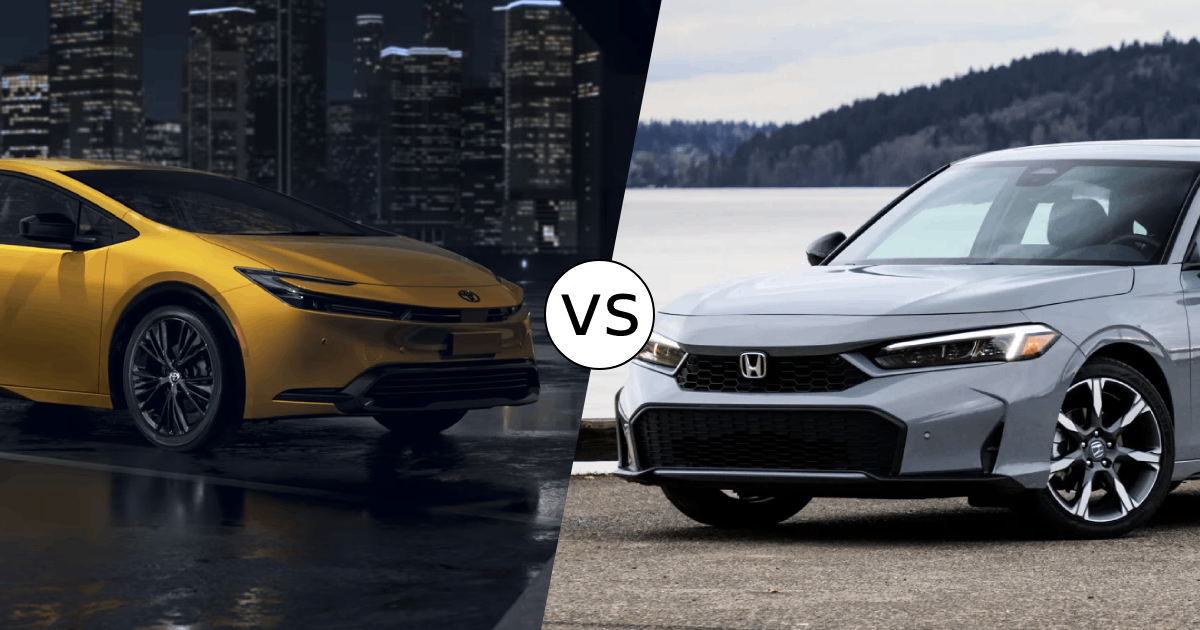
As hybrid vehicles become a bigger part of a growing car market, the battle is on between the 2025 Toyota Prius and the 2025 Honda Civic Hybrid. Both offer eco-friendly performance, modern technology, and stylish design, but only one is the smarter long-term choice. If you're unsure which one is right for you, you're not alone. This is why our Longo Toyota team has explored every little detail for each hybrid to find the key differences in performance, efficiency, interior capacity, safety, and value. more The Evolution of Hybrid Vehicles: An Overview The Toyota Prius, the original hybrid, has been around since the early 2000s in the U.S. But just because the model is reaching its 25th birthday doesn't mean that it is any less popular. Honda, meanwhile, has been more cautious in its approach but is making a more aggressive play with the 2025 Honda Civic Hybrid. The Prius has slowly evolved through the years but still maintains its sleek, modern look. The Civic Hybrid offers improved dynamics and a new hatchback option. Why These Models Are Getting Noticed in 2025 As an eco-conscious driver in 2025, you're likely looking for a fuel-efficient car that also provides comfort, connectivity, and sportiness. Both the Prius and Civic Hybrid deliver on these fronts while catering to different kinds of drivers. Toyota has built fuel efficiency around a stylish new look, while Honda has leaned toward a sportier, more powerful driving experience. Performance and Efficiency Analysis The 2025 Honda Civic Hybrid boasts 200 horsepower and 232 lb-ft of torque, offering quick acceleration and stronger hill-climbing capability. It can reach 60 mph in just 6.2 seconds, which is faster than the Prius. The 2025 Toyota Prius generates up to 196 horsepower and 139 lb-ft of torque. While slower than the Civic, it consistently delivers smoother, quieter starts and transitions between electric and gas modes more seamlessly. If fuel economy is your top priority, the Prius is still the industry leader. It has an EPA-estimated fuel efficiency of over 50 mpg in most trims, while the Civic Hybrid achieves a max of around 48 mpg for its hatchback configuration. Driving Experience and Handling The Prius provides a smooth, controlled ride in urban environments. Its low center of gravity and excellent noise insulation enhances its comfort on longer trips. The steering feel is tuned for ease rather than engagement, perfect for relaxed commutes. The Civic Hybrid leans toward sportier handling, with firmer steering and a tighter turning radius. While this may appeal to some drivers, the stiffer ride can feel less comfortable when battling streets laden with potholes or paving that leaves a lot to be desired. Its emphasis on agility trades off some of the smoothness many drivers prefer. This makes the Prius stand out with its relaxing driving experience that is smooth yet still agile. Interior and Comfort Features Toyota's design is sleek and futuristic, an appealing choice if you want your car to reflect modern tastes. Honda sticks to a more conventional cabin design but adds high-quality trim that feels nearly luxurious in upper trims. The Civic Hybrid hatchback offers up to 25 cubic feet of cargo space behind the rear seats, providing slightly more room than the Prius, which ranges from 20 to 24 cubic feet depending on the trim. Both models comfortably seat five passengers, and while the Prius's sleek, aerodynamic roofline may slightly reduce rear headroom, it contributes to the vehicle's modern design and overall efficiency. Both vehicles offer wireless Apple CarPlay, Android Auto, and touch screens above 8 inches in size. However, the 2025 Prius edges ahead with its more intuitive user interface and available 12.3-inch display in higher trims. Toyota's digital gauge cluster is also more visually engaging, offering drivers a greater range of customizable views. Toyota continues to lead with hybrid-exclusive features, such as predictive efficiency guidance and an electric vehicle mode ideal for short errands. Its technology suite is designed to maximize real-world fuel economy and reduce emissions intelligently. The Civic Hybrid benefits from Honda's refined infotainment layout and offers an available 12-speaker Bose audio system. However, it doesn't push innovation quite as far as the Prius when it comes to hybrid-specific features. Safety and Driver-Assistance Features Safety is something that both Toyota and Honda take seriously, which makes sense because both rides are chock-full of active safety features. Toyota includes its Safety Sense 3.0 suite standard on all trims, offering lane tracing assist, full-speed adaptive cruise control, and proactive driving assistance. Honda's Sensing Suite provides similar features but falls short when it comes to seamless calibration of these features. 2025 Prius vs. Civic Hybrid: Which Hybrid Should You Choose? The 2025 Toyota Prius leads with top-tier fuel economy and a smooth drive. Its advanced hybrid-specific features, such as solar roof panels and predictive efficiency tools, further set it apart. While it's not as quick as the Civic Hybrid and has slightly less cargo space, its overall efficiency and proven reliability make it a solid choice for long-term value. The 2025 Honda Civic Hybrid stands out with its 200-horsepower engine, sporty handling, and spacious hatchback cargo area. It also features a refined interior with premium finishes. However, its lower fuel efficiency and shorter hybrid history leave it trailing behind the Prius in long-term dependability and overall leadership in hybrid technology. User Preferences and Lifestyle Considerations If you value power, sharper handling, and cargo flexibility, the Civic Hybrid hatchback may be a more appealing option. But if daily fuel savings, hybrid technology, and long-term peace of mind are your top priorities, the 2025 Toyota Prius remains the smarter investment. From its proven performance to its innovative design, the Prius continues to set the standard. Schedule a Test Drive of a 2025 Toyota Prius at Longo Toyota Today When you're ready to experience the 2025 Prius for yourself, visit the friendly team at Longo Toyota in El Monte, California. We're here to answer your questions, show you our full Prius lineup, and schedule your test drive. Call us at 626-539-2113 or complete our secure online form to get started. One trip around the block, and you'll understand why, in the 2025 Toyota Prius vs 2025 Honda Civic Hybrid debate, the Prius remains the true hybrid icon.

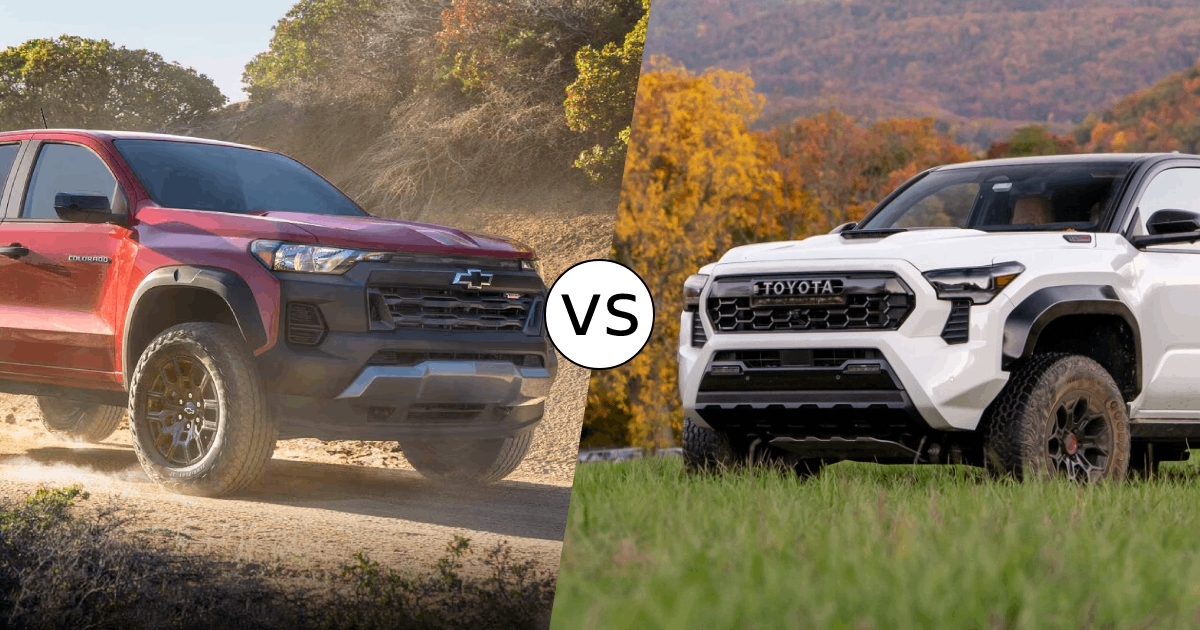
2025 Toyota Tacoma vs. 2025 Chevrolet Colorado

2025 Toyota Tacoma vs. 2025 Chevrolet Colorado

The fight for supremacy in the midsize pickup space is heating up as two top contenders prepare for the ultimate showdown. The 2025 Toyota Tacoma, with a complete redesign that adds extra sophistication to its off-road profile, faces the 2025 Chevrolet Colorado, newly refined to provide capabilities and power you can trust. This comparison is about Toyota's precision engineering versus Chevrolet's brute power, where every horsepower, pound of towing capacity, and approach angle could affect the outcome. If you'd like to know which truck will come out on top when capability meets efficiency and reliability faces off against pure muscle, our team at Longo Toyota in El Monte, California, has prepared this guide to answer all your questions. more Engine and Performance The 2025 Toyota Tacoma offers multiple powertrain options. The standard setup in most trims features a turbocharged 2.4-liter four-cylinder engine that produces 278 horsepower and 317 lb-ft of torque; the base SR trim is equipped with a detuned 228-horsepower version. The Tacoma stands out with its i-FORCE MAX hybrid system, a first in its segment, which combines turbo power and electric assistance to deliver 326 horsepower and 465 lb-ft of torque. This hybrid provides impressive performance and excellent fuel economy, achieving 23 mpg combined, which makes it a standout for efficiency. The 2025 Chevrolet Colorado utilizes a tried-and-true turbocharged 2.7-liter four-cylinder engine across all models, producing 310 horsepower and 430 lb-ft of torque. While this engine provides adequate power and eliminates trim-level confusion, it lacks the technological sophistication and fuel efficiency of a Toyota's hybrid system. The Colorado feels dated compared to the Tacoma's electrified powertrain. Additionally, the Tacoma's available six-speed manual transmission is a significant plus point if you're a driving enthusiast, whereas the Colorado's standard eight-speed automatic limits driver choice and engagement. Towing Capacity and Payload When it comes to hauling heavy loads, the Colorado excels with its segment-leading 7,700-pound towing capacity, easily beating the Tacoma's 6,500 pounds (6,000 for hybrids). However, the Tacoma boasts a superior payload capacity of 1,705 pounds versus the Colorado's 1,570 pounds, plus the flexibility of multiple cab and bed configurations that the Colorado, which is only available as a four-door crew cab, can't match. Off-Roading Capabilities The Toyota Tacoma features a dual-suspension setup. Entry-level SR, SR5, and TRD PreRunner models have traditional leaf springs, while higher trims feature coil-spring rear suspension for better ride quality and articulation. The Tacoma's approach angle allows for descending slopes up to 26.6 degrees, providing that crucial extra margin when navigating challenging terrain. The Chevrolet Colorado has its own impressive off-road arsenal, featuring independent front suspension, a solid rear axle, and leaf springs across most trim levels. The ZR2 variant takes things up a notch with Multimatic DSSV dampers and 12.2 inches of ground clearance. The ZR2 Bison takes it further with 35-inch tires and hydraulic bump stops for rock crawling and jumps. While the Colorado's maximum descent angle is 26 degrees, the Tacoma's 0.6-degree edge might matter in extreme situations. Interior and Comfort The redesigned Tacoma interior showcases Toyota's attention to detail with premium materials, high-resolution displays, and improved ergonomics. A raised seating position eliminates the previous floor-sitting feel, while added headroom and a more adjustable steering column suit a wider range of drivers. Material quality throughout the Tacoma's cabin reflects durability, with sturdy switchgear and design elements that echo its rugged exterior. The dashboard is functional yet modern, seamlessly integrating technology. Climate control remains single-zone across most trim levels, although heated and cooled front seats are available on higher trims, such as the Limited. The Chevrolet Colorado's updated cabin features improvements in design and facilities. It offers user-friendly controls and modern styling, with dual-zone climate control providing better comfort than the Tacoma's single-zone system. Materials prioritize durability with decent visual appeal, though surfaces lack the premium touch of higher Tacoma trims. Infotainment and Connectivity The Tacoma's infotainment system features an 8.0-inch touch screen on base models and an impressive 14.0-inch display on higher trims. It includes wireless Apple CarPlay and Android Auto for seamless smartphone integration. The available JBL audio system features a unique detachable Bluetooth speaker, ideal for outdoor activities — a clever addition that reflects Toyota's understanding of its adventure-oriented customer base. The Colorado offers an 11.3-inch touch screen with Google Assistant and Amazon Alexa for advanced voice control. It also supports wireless Apple CarPlay and Android Auto, matching the Tacoma's technology offerings. However, the Colorado's available Bose audio system falls short by comparison, being neither as rich in features nor as innovative as the Tacoma's JBL audio system. Safety and Reliability Toyota's Tacoma stands out with its standard Toyota Safety Sense 3.0 suite, featuring automatic emergency braking, lane centering, adaptive cruise control, road sign recognition, and automatic high beams. Blind-spot monitoring and rear cross-traffic alert are included on all but the base SR trim, where they're available as part of an upgrade package. The Colorado offers a solid safety package with standard automatic emergency braking, lane- keep assist, and automatic high beams. Advanced features, such as blind-spot monitoring, rear cross-traffic alert, and adaptive cruise control, are also available through optional packages. While comprehensive, the Colorado's safety offerings don't quite match the Tacoma's standard equipment level across all trims. The Tacoma has consistently ranked among the most dependable pickups, with owners frequently reporting trouble-free operation well beyond 200,000 miles. Toyota's proven track record includes excellent resale value retention and lower-than-average maintenance costs over time. While the Colorado has shown improvement in recent years and benefits from General Motors' extensive dealer network, it hasn't yet established the same level of long-term reliability confidence that Toyota has built through decades of consistent performance. Choosing Between the Toyota Tacoma and the Chevrolet Colorado The Toyota Tacoma wins hands down in this showdown. It has been a top-selling midsize truck for over a decade and consistently ranks among the highest in its class. But don't just take our word for it; arrange a test-drive with our team here at Longo Toyota and see for yourself why the Tacoma is the ultimate choice in this segment. Plus, with our attractive financing deals, getting behind the wheel of a brand- new Tacoma has never been easier. Contact us today to learn more.

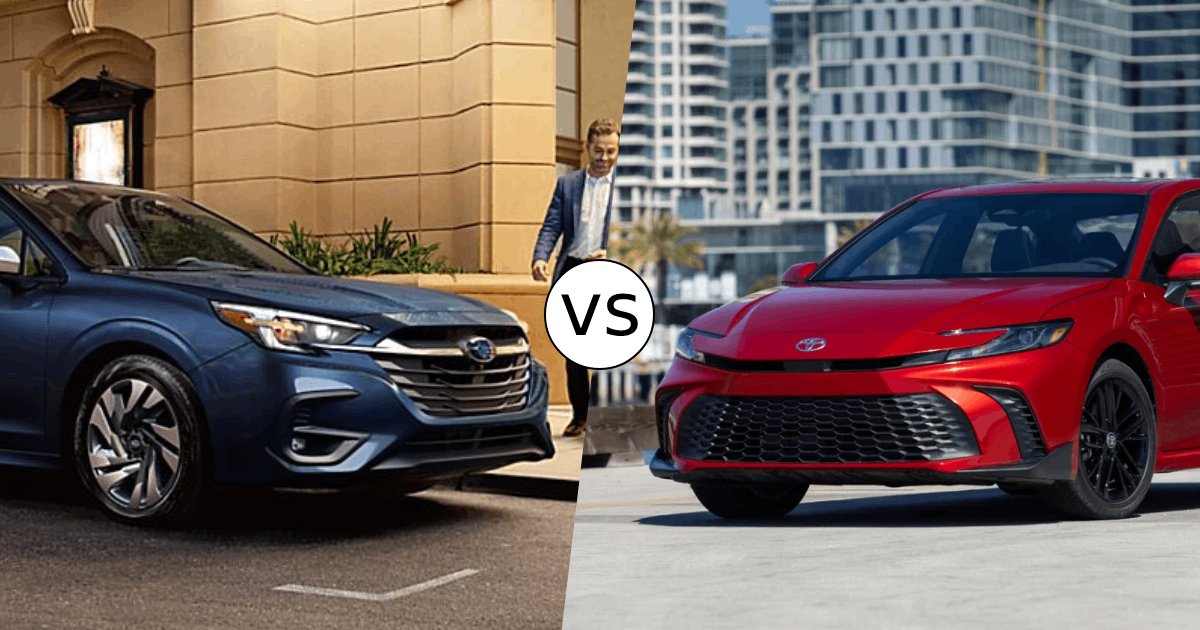
2025 Toyota Camry vs Subaru Legacy

2025 Toyota Camry vs. 2025 Subaru Legacy

In the midsize sedan category, the Toyota Camry and Subaru Legacy are popular nameplates. Whether you want space, performance, tech, or comfort features, these two sedans bring a lot to the table. In this 2025 Toyota Camry vs. 2025 Subaru showdown, our team at Longo Toyota will compare the two family cars and look at their features, performance, and style to help you find the one that's best for your needs. more Performance and Engine Specifications The Camry and Subaru deliver excellent performance thanks to a potent mix of engines and drivetrain options. For 2025, the Camry comes with two hybrid powertrains. A front-wheel-drive model delivers 225 from a 2.5-liter four-cylinder and two electric motors. All-wheel-drive (AWD) models come with a third motor that increases the output to 232 horsepower. Both models send power to the wheels via a continuously variable transmission. Like the Camry, the 2025 Subaru Legacy has two powertrains. Base models come with a 2.5-liter four-cylinder engine that outputs 182 horsepower, while the Sport and Touring XT models use a turbocharged 2.4-liter four-cylinder that outputs 260 horsepower. Like all Subarus, the Legacy comes with standard AWD and a continuously variable transmission. Comparative Analysis of Acceleration and Handling Both the Camry and the Legacy are capable vehicles, but acceleration isn't their strongest suit. The Legacy's base engine is slower than the Camry, but the Legacy's turbocharged 2.4-liter engine is faster than even the AWD Camry. Still, the Camry XSE AWD can accelerate from 0 to 60 mph in 6.8 seconds, which is rather impressive for a midsize family sedan. The base 2025 Camry models prioritize comfort, while the SE and XSE are sportier, delivering improved cornering ability. Whether you choose a base or higher trim, the Legacy offers a comfortable ride and decent body control in corners. However, the top trims' powerful engines deliver a more thrilling driving experience. Fuel Economy and Efficiency The 2025 Toyota Camry offers exceptional fuel economy and efficiency thanks to its advanced hybrid powertrain. According to the EPA's estimates, the LE gets 53 mpg city and 50 mpg highway or 51 mpg city and 49 mpg highway with AWD, making it the most efficient in the lineup. The range-topping XSE AWD Camry gets an EPA-estimated 44 mpg city and 43 mpg highway, which is still impressive considering its sporty suspension tuning and engaging driving dynamics. The most fuel-efficient 2025 Subaru Legacy features the standard engine and reaches an EPA-estimated 27 mpg city, 35 mpg highway, and 30 mpg combined. Turbocharged models get 24 mpg city, 32 mpg highway, and 27 mpg combined. If your main priority is fuel economy and performance, the Camry gives you the best value for your money. Interior Comfort and Technology With a passenger room of 105.5 cubic feet, the Subaru Legacy has the largest interior of both vehicles. The Camry's suave interior also seats five people comfortably, with plenty of head and leg room and a total passenger space of 104.4 cubic feet. A standout feature of the Camry's dashboard design is the enormous trim piece that stretches from the infotainment display to the passenger's side. The Camry's base trims come with standard features such as cloth upholstery, dual-zone automatic climate controls, five USB ports, and rear air vents. Higher trim levels such as the XLE and the XSE are more refined, including leather seating surfaces, ambient lighting, a heated steering wheel and heated seats, soundproof glass, and several other premium features. The Legacy's cavernous cabin provides generous legroom for both front and rear occupants. Its clean interior features high-quality materials and a high level of craftsmanship. Like the Camry, the Legacy comes with intuitive controls and a comfortable setup. Cloth seating is standard on the Legacy's base trims, but the Limited and Touring models get leather upholstery. If you're a tall driver, you'll appreciate the manual thigh extension feature available on the driver's seats. In terms of cargo space, both the Camry and Legacy have a 15.1 cubic feet trunk. The Camry's trunk has a lower liftover height and wide opening for easy loading and unloading, whereas the Legacy's 60/40-split folding rear seats allow for a more flexible storage. Infotainment and Connectivity Features The Camry comes standard with an 8-inch infotainment display unit. A bigger 12.3-inch display is standard on the XLE and XSE trims and is optional on the SE. A 12.3-inch digital gauge cluster is also standard on the two top trims, while lower models get a smaller version. Regardless of their size, the infotainment screens provide user-friendly and seamless connectivity options, including wireless Apple CarPlay and Android Auto. A six-speaker audio system is standard, but the XLE and XSE trims can upgrade to a nine-speaker JBL stereo system. The base Legacy features dual 7-inch displays running the latest version of Subaru's Starlink infotainment system, while the Premium model comes with an 11.6-inch vertical infotainment display. Both versions have Apple CarPlay and Android Auto, but only the Limited and Touring XT have in-dash navigation as standard. You also get a four-speaker sound system on the base trim, a six-speaker stereo on the Premium, and a 12-speaker Harman Kardon audio system on higher models. Safety Features Both the Camry and Legacy have stellar safety records thanks to their robust design and advanced protection and driver-assistance features — Subaru has its EyeSight driver-assistance system, while Toyota has its Safety Sense package. Both systems offer standard features such as automated emergency braking with pedestrian and cyclist detection, lane departure warning, lane-keep assist, and adaptive cruise control, making them ideal cars for family haulers. Experience the 2025 Toyota Camry at Longo Toyota The 2025 Toyota Camry combines exceptional performance with an upscale interior. With one of the best fuel economies in its class, the Camry provides two versions of a powerful hybrid powertrain to deliver an engaging driving experience. At Longo Toyota, we have one of the largest inventory of new Camrys in El Monte, California. Contact or visit us today to experience this popular family sedan in person and see how it can elevate your lifestyle.

Contact Us

Fill out this form below and we'll contact you shortly
*Required Fields