

Longo Toyota

#1 in the World since 1967*

Based on Toyota Motor Sales, USA 2025 Sales Report*
Based on Toyota Motor Sales, USA 2023 Sales Report*
Blog / Comparison

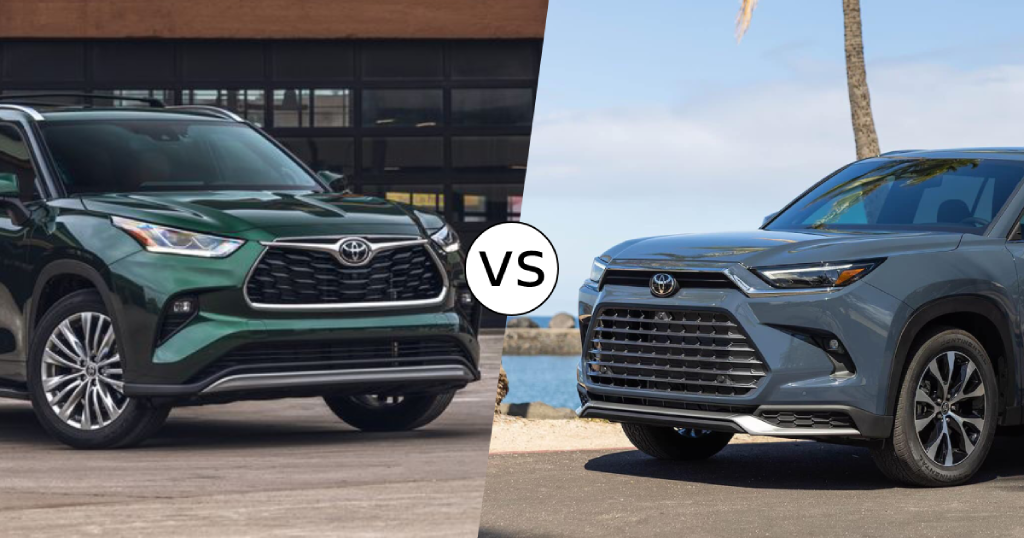
2024 Toyota Highlander vs Grand Highlander

Toyota Highlander vs Toyota Grand Highlander

The Toyota Highlander has been a favorite choice for active families for more than 20 years. This reliable vehicle pioneered the midsize crossover SUV field and has become one of the most popular models in its segment. Toyota has updated and innovated this popular five-door, front-wheel-drive vehicle over the years, and in 2023, the manufacturer took this SUV to the next level with the release of the Grand Highlander.

If you're looking for your next family-friendly SUV, these two outstanding models are well worth considering. Our team at Longo Toyota in El Monte, California, put together this comparative guide exploring the 2024 Highlander and Grand Highlander to help you make an informed decision.

Powertrain and Performance

The Grand Highlander and Highlander have plenty to offer if you're looking for a reliable eight-seater SUV. The midsize crossovers have the same base gas-powered and hybrid powertrains, but you can equip the Grand Highlander with Toyota's 362-horsepower Hybrid Max powertrain. The standard version is a 2.4-liter turbo four-cylinder engine with 265 horsepower. The optional 2.5-liter I-4 hybrid makes 243 horsepower.

The basic gas powertrain pairs with an eight-speed automatic transmission and offers front- or all-wheel drive, while the Highlander Hybrid uses a continuously variable transmission. In the Grand Highlander, the Hybrid Max powertrain powers the front and rear axles via an efficient six-speed automatic transmission and a mechanical driveshaft, and it's available with front- or all-wheel drive.

The smaller Highlander performs slightly better when it comes to fuel efficiency, with respectable ratings of 21-22mpg city and 28-29 mpg highway. The larger Grand Highlander rates 1 mpg lower, on average. Both vehicles have a maximum towing capacity of 5,000 pounds with the standard engine.

Size and Cargo Capacity

The 2024 Grand Highlander is a larger version of the already-substantial three-row Highlander. This robust SUV creates a demanding road presence. It has an exterior length of 201.4 inches and a 116.1-inch wheelbase, which is 4 inches longer than the 2024 Highlander. The Grand Highlander's larger dimensions translate into more interior space, which can make all the difference for busy, growing families.

Your passengers will appreciate the generous 34 inches of legroom in the second and third rows. And if cargo capacity is a priority, you can enjoy 97.5 cubic feet of space when you fold the second- and third-row seating flat in the Grand Highlander, which exceeds the max cargo space of 84.3 cubic feet in the Highlander.  

Safety and Driver-Assistive Features

The Highlander and Grand Highlander offer the latest Toyota Safety Sense (TSS) technology. This impressive package of advanced safety and driver-assistance features includes the following: 

  • A pre-collision system with pedestrian detection.
  • Lane departure alert with steering assist.
  • Automatic high beams.
  • Lane-tracing assist.
  • Road sign assist.
  • Dynamic radar cruise control.

While the Highlander offers the standard TSS 2.5+, the Toyota Grand Highlander features the more advanced TSS 3.0, which includes a rear cross-traffic alert system and blind-spot monitoring. If you opt for the latter, you'll also get Toyota's advanced Proactive Driving-Assist technology, which can detect objects or curves in the road and provide gentle braking and/or steering support, helping to prevent collisions.  

Interior Design

The Toyota Highlander provides various conveniences and luxuries, such as a panoramic moonroof, QI wireless charging, and an 11-speaker JBL sound system. Driver-focused features include heated and ventilated seating, a heated steering wheel, and a 12.3-inch fully digital gauge cluster that displays turn-by-turn directions, safety information, and alerts. Passengers will appreciate the triple-zone air-conditioning. The Grand Highlander upgrades the interior with an increase in cabin space and legroom, thoughtfully located storage areas, and seven USB ports. SofTex-trimmed seats, a 12.3-inch touch screen, and an impressive multimedia system with a 1200-watt, 11-speaker JBL sound system are available across all trims. 

Infotainment and Connectivity 

The Highlander and Grand Highlander deliver well-integrated infotainment technologies to make journeys convenient, safe, and entertaining. Both models include Toyota's Audio Multimedia system with wireless Apple CarPlay and Android Auto compatibility. Connected Services, a suite of convenience-enhancing features, is also standard. It includes Drive Connect for satellite navigation, Service Connect for vehicle data, maintenance and service alerts, and Wi-Fi Connect, which allows passengers to seamlessly connect to the internet on the go. As a new owner, you'll receive an initial free trial on these subscription-based services. 

Price 

Price is an important factor when evaluating your next vehicle purchase, and despite the considerable difference in size and specifications, there's only a few thousand dollars difference in the MSRP for these two SUVs. The 2024 Highlander has a starting MSRP of $39,270 in comparison to the Grand Highlander's starting MSRP of $43,320, making both models well worth considering. If you're thinking of upgrading to one of the upper-level Highlander trims, the Grand Highlander may be a valid option.

Trim Levels

The 2024 Highlander is available in five trims: the LE, XLE, XSE, Limited, and Platinum. The latter boasts features such as an upgraded suspension, 20-inch alloy wheels, a panoramic view monitor, and an advanced exterior lighting system. Toyota offers the Grand Highlander in three models: the entry-level XLE and the upgraded Limited and Platinum models. A 12.3-inch multi-information display, a power tilt/slide panoramic roof, and a panoramic view monitor are some inclusions on the higher trims. 

If you're looking to upgrade to the top-tier Highlander Limited or Platinum trim, you may want to consider buying a Grand Highlander, which offers outstanding features. 

Explore the 2024 Toyota Highlander and Grand Highlander at Longo Toyota Today

The best way to discover the differences between these 2024 SUVs is to check them out firsthand and take them for a test drive. Our team at Longo Toyota in El Monte, California, is here to help you learn everything you need to know about these two vehicles to make an informed purchase decision. Visit our dealership today to experience these latest Toyota offerings and drive home in the model that's right for you. 

Posted in:

Related Posts

Orange 2027 Toyota Tundra TRD Pro driving across a desert off-road trail

2027 Toyota Tundra Trailhunter vs. TRD Pro: What's the Difference?

The short answer: the Trailhunter is an overlanding package based on the SR5, built to give you trail capability straight from the factory. The TRD Pro is a separate grade and the most off-road-focused version of the Tundra, with race-inspired hardware and a performance orientation. If you want to see what Toyota has in the showroom while you read, you can browse new Toyota inventory anytime. At Longo Toyota, we hear from plenty of El Monte and Southern California shoppers who want to understand the 2027 Toyota Tundra Trailhunter vs TRD Pro before they commit. Full 2027 specifications haven't been released yet, so this guide keeps the comparison high-level. Two Off-Road Tundras, Two Different Missions Both are built for rough ground, but they put the emphasis in different places. What they can do overlaps a lot. An overlanding-minded truck can run recreational trails, and a performance-minded truck can still carry you to a campsite. Trailhunter: Built for Overlanding The Trailhunter is a rugged overlanding package based on the SR5. Toyota aims it at customers who want strong trail performance from the factory, with genuine overlanding character. The idea is simple: the traction and suspension hardware you need for remote travel comes installed, along with underbody protection, so you start with a capable foundation. Even so, the badge doesn't guarantee every accessory an extended trip might call for. Plan your gear separately. TRD Pro: Built for Performance The TRD Pro is the most off-road-focused version of the Tundra. Toyota gives it race-inspired hardware and a distinctive visual identity, with a focus on how the truck handles rough terrain, mainly damping and stability. For 2027, that starts with newly designed, Tundra-tuned FOX enhanced shocks that are adjustable. An available TRD Performance package adds hardware and tuning for drivers who want more dynamic performance. Suspension Comparison This is where the two split most clearly. The Trailhunter rides on an Old Man Emu upgraded suspension. Over on the TRD Pro you’ll find newly designed, Tundra-tuned, adjustable FOX enhanced QS3 shocks, engineered for feel, stability and adjustability over rough terrain. Shocks control how the suspension moves after an impact and how it handles repeated bumps. The Trailhunter's setup supports its role as a trail-ready starting point. The TRD Pro's adjustable shocks put the emphasis on feel and control over broken surfaces. Springs, tires, and vehicle weight also shape ride quality, so a shock brand alone won't make one truck more capable. Toyota hasn't released 2027 suspension specifics yet, and we won't guess at measurements. Off-Road Equipment and Capability Equipment is where the Trailhunter's overlanding purpose shows up in hardware. The TRD Pro's list, so far, leans on its shocks, tow hooks, and available seating and performance options. Trailhunter Equipment for Remote Travel Toyota has outfitted the Trailhunter with several pieces of hardware that matter when you're far from pavement: Front recovery hooks give you a point to attach recovery gear. Additional underbody protection shields components from rocks and debris. Multi-Terrain Select adjusts the truck's response to different surfaces. Crawl Control helps manage low-speed progress over difficult ground. A locking rear differential helps when the rear wheels have uneven traction. Follow the manufacturer's instructions and ratings for any recovery work. A hook being there doesn't make it suitable for every technique. TRD Pro Equipment for Rugged Terrain The TRD Pro comes with standard red tow hooks, plus available ISO-dynamic seats designed to help support comfort and stability over rough terrain. The available TRD Performance package adds more hardware and tuning. Toyota hasn’t announced the rest of the 2027 TRD Pro equipment list or the package contents, so we aren’t making item-by-item comparisons yet. Wheels and Tires The Trailhunter rides on Michelin LTX Trail 265/70R18 tires and unique bronze-colored wheels. The tires are part of what makes the truck trail-ready, and the bronze finish gives it a distinct look. Toyota hasn't announced TRD Pro tire and wheel details for 2027. Tires affect loose-surface traction and ride comfort, and they change road noise and how a truck behaves in the wet. A more aggressive look won't necessarily mean better results in every condition. For loaded travel, check tire load ratings and recommended inflation pressures too. Exterior Styling and Design The 2027 Tundra's new design starts with the front end. Toyota describes crisp, square geometry, a wide stance, and a center lower-bumper treatment, with rectangular fog lights integrated into the bumper. A rugged hexagonal grille theme adapts to different trims, so the Trailhunter and TRD Pro each wear it their own way. On the TRD Pro, the distinctive visual identity now includes the new Honeycomb exterior color. On the Trailhunter, the bronze-colored wheels stand out. Keep in mind that styling and function are different things. Protection hardware and suspension add capability; a grille or paint color adds none. Which Adventures Suit Each Tundra? Both options can take you off pavement. The better fit depends on what you want the hardware to do. Whichever you lean toward, our virtual test drives are a handy way to start getting a feel for the Tundra lineup. Best for Overlanding and Extended Trips The Trailhunter fits destination-focused travel and camping access, and it suits long stretches on unpaved routes. Extended trips also depend on loaded weight and cargo organization, plus passenger comfort, so check trim-specific ratings before you pack. Choose the Trailhunter if: You want overlanding character and factory trail capability in one package. You value built-in recovery hooks and additional underbody protection. You want a locking rear differential, Multi-Terrain Select, and Crawl Control ready from day one. Best for Rough-Terrain Performance On rough terrain, the TRD Pro's appeal is how its hardware behaves. The adjustable FOX QS3 shocks are engineered for feel and stability over rough terrain. Performance branding is not a license for unsafe speed, so always match your pace to visibility and surface conditions, and follow access rules. Choose the TRD Pro if: You want race-inspired off-road hardware. You like the idea of adjustable shocks tuned for stability over rough terrain. You are interested in the available TRD Performance package and available ISO-dynamic seats. What Is Confirmed for 2027 and What Is an Expected Carryover? For the Trailhunter, Toyota has confirmed the Old Man Emu suspension, Michelin LTX Trail 265/70R18 tires, bronze-colored wheels, front recovery hooks, additional underbody protection, Multi-Terrain Select, Crawl Control, a locking rear differential and its SR5 foundation. On the TRD Pro side, confirmed items include the newly designed FOX enhanced shocks, standard red tow hooks, available ISO-dynamic seats, the available TRD Performance package and the new Honeycomb color. For reference, the 2026 TRD Pro has Multi-Terrain Select as standard. An electronically locking rear differential and Multi-Terrain Monitor are also standard. That is 2026 equipment. Toyota hasn't confirmed 2027 details for the TRD Pro in these areas, and we won't assume them. Toyota has said additional 2027 Tundra details and specifications are scheduled to be announced in fall 2026. The lineup continues with a twin-turbo V6 and an available i-FORCE MAX hybrid, but Toyota hasn’t yet said which powertrains pair with the Trailhunter package or the TRD Pro, or published 2027 horsepower and torque figures. Until then, treat anything beyond the list above as unconfirmed. Which 2027 Tundra Is the Better Choice for Most Buyers? Neither option wins for everyone. The right choice depends on how you use your truck, your budget, your comfort expectations, and your cargo needs. If you want an integrated foundation for destination-oriented travel, and the confirmed equipment matches your plans, the Trailhunter may suit you. Drivers drawn to race-inspired hardware, adjustable shocks, and available performance equipment, and who want that feel on rough terrain, should look at the TRD Pro. If most of your miles are on pavement around El Monte and greater Southern California, weigh daily ride quality, cabin usability, and parking against specialized off-road gear. A standard Tundra with the right options may serve you just as well. Compare equivalent configurations and verify equipment and final details before deciding. Shop New Tundra Inventory at Longo Toyota Longo Toyota sits on a 50-acre campus in El Monte, and we’re a full-service new and used Toyota dealership offering sales, leasing, financing, service, parts and collision repair. When you're ready to compare Tundra trims, browse new Toyota inventory to see what is available now. Specs and packages can change, so please confirm final details with us before buying, and review each truck's window sticker. Questions about the 2027 Toyota Tundra Trailhunter vs TRD Pro? Contact our team. If you're planning your purchase, you can also get pre-qualified for financing.

Front of Toyota Corolla

2026 Toyota Corolla vs. 2026 Nissan Sentra: Which Compact Sedan Wins?

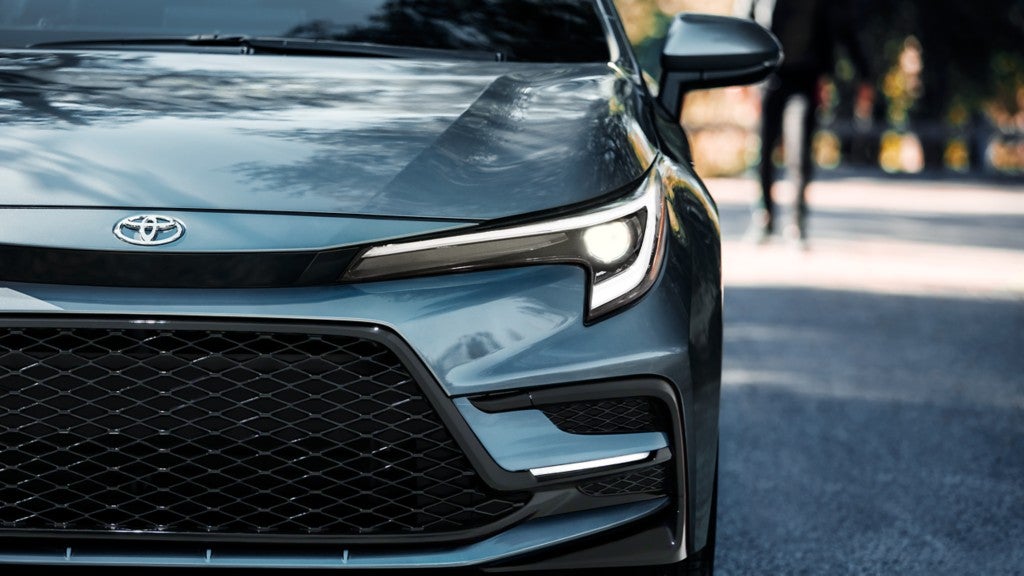
Compact sedans remain some of the most practical vehicles on the market, and the 2026 Toyota Corolla and 2026 Nissan Sentra are two of the strongest options in the segment. Both deliver good value and competitive fuel efficiency at accessible price points, with modern features that punch above their price tag. Below is a side-by-side look at what each model brings to the table so you can decide which one fits your priorities. 2026 Toyota Corolla vs. 2026 Nissan Sentra: First Impressions The 2026 Toyota Corolla carries decades of earned reputation for reliability. Its cabin is practical, and the lineup is broad, including a popular hybrid variant with available AWD. The Nissan Sentra has matured into a genuinely competitive option, known for its smooth ride and standard safety features. Both cars make a strong case, but for different priorities. The Corolla's biggest wins come from its hybrid powertrain with available AWD, higher combined MPG across the lineup, ten standard airbags, and Toyota Safety Sense 3.0 on every grade. The Sentra counters with a slightly lower entry price and a bit more trunk space. Where they overlap: both use similarly sized 2.0L four-cylinder engines, both run CVT transmissions, and both seat five comfortably. If you'd like to compare trims in person, you can browse Corolla inventory at Longo Toyota in El Monte, CA, anytime. Quick Comparison Table: Pricing, Trims, and Key Specs Feature 2026 Toyota Corolla 2026 Nissan Sentra Available Grades LE, SE, XSE; Hybrid LE, SE, XLE S, SV, SR, SL Engine 2.0L Dynamic Force 4-cylinder 2.0L naturally aspirated 4-cylinder Horsepower/Torque 169 hp / 151 lb-ft 149 hp / 146 lb-ft Transmission CVT Xtronic CVT Combined MPG 35 (gas) / 50 (hybrid) 32-33 (varies by trim) Cargo Capacity 13.1 cu. ft. 14.3 cu. ft. AWD Availability Yes, on Hybrid grades No, FWD only Pricing and Trim Levels Compared Both sedans target budget-conscious buyers without sacrificing much comfort or technology, and both open at similar entry points in the compact segment. The Sentra starts marginally lower, but the gap is small enough that it rarely decides the purchase on its own. What separates them is what each dollar buys further up the range. The Corolla lineup runs from the well-equipped LE through the sportier SE and feature-rich XSE, then adds three separate hybrid grades in LE, SE, and XLE. That gives you six distinct configurations and a genuine choice between gas and hybrid at nearly every price point. Nissan keeps things simpler with S, SV, SR, and SL, and skips a hybrid option entirely, so Sentra buyers who want electrified efficiency have to look elsewhere. Pricing shifts with incentives, regional offers, and equipment, so the most reliable way to compare is against current inventory. Our team at Longo Toyota in El Monte can walk you through the full Corolla lineup and help identify which grade fits your budget. Fuel Economy and Powertrain Performance Both sedans use a 2.0L four-cylinder engine, but the numbers tell different stories. The Corolla's Dynamic Force engine produces 169 hp and 151 lb-ft, compared to the Sentra's naturally aspirated 2.0L rated at 149 hp and 146 lb-ft. That difference shows up on the highway, in merging and passing situations that matter for drivers logging freeway miles around Southern California. Fuel efficiency favors the Corolla at every level. Gas grades return 32 city / 41 highway / 35 combined on the LE and 31 / 40 / 34 on the SE and XSE, against the Sentra's 33 combined on S and SV and 32 on SR and SL. The Sentra's Xtronic CVT is smooth in daily driving, but the Corolla holds the efficiency edge across the entire comparison. The hybrid is where the gap becomes decisive. The Corolla Hybrid LE and XLE reach an EPA-estimated 53 city / 46 highway / 50 combined, roughly 50 percent better than anything in the Sentra lineup. Toyota's hybrid system pairs a 1.8-liter engine with electric motors for 138 net combined horsepower, tuned for efficiency rather than outright output, and the payoff is a car that can go well past 500 miles between fill-ups. Choose all-wheel drive and you still see 48 combined on the LE, or 44 on the SE AWD, figures no front-wheel-drive Sentra comes close to matching. The Sentra offers no hybrid and no AWD at any trim. The Sentra has no hybrid or AWD counterpart, so buyers who want either feature will only find them on the Corolla. Interior Comfort, Technology, and Safety Features The Sentra's cabin is well finished for the segment, with quilted leatherette arriving on the top SL grade, and its trunk edges out the Corolla at 14.3 cubic feet versus 13.1. The Corolla answers with a cabin that scales further as you move up. A 7-inch digital instrument cluster is standard on LE and SE, with a 12.3-inch display on the XSE and Hybrid XLE and available on SE grades through the Premium Package. Apple CarPlay and Android Auto are standard across both lineups. On safety, both cars arrive well-equipped. Toyota Safety Sense 3.0 is standard on every Corolla grade, covering Pre-Collision with Pedestrian Detection, Lane Departure Alert with Steering Assist, Full-Speed Range Dynamic Radar Cruise Control, Lane Tracing Assist, Road Sign Assist, and Proactive Driving Assist. Nissan matches the general approach with its own standard suite including automatic emergency braking and blind-spot monitoring. The clearest measurable difference is occupant protection: every Corolla carries ten airbags as standard equipment, including a front passenger seat cushion airbag, against eight on the Sentra. Reliability, Resale Value, and Long-Term Ownership Costs Toyota's reliability record is consistently rated among the best in the industry by sources like Consumer Reports and J.D. Power, and the Corolla has long been a benchmark for low-maintenance, long-lasting transportation. Resale value follows a similar pattern. The Corolla historically depreciates slower than most compact sedans, which helps owners recover more of their investment at trade-in or resale. Nissan's competitive pricing has helped the Sentra close some of that gap, though it still trails the Corolla on long-term value retention. Toyota backs the Corolla with a 3-year/36,000-mile basic warranty, and the model is widely recognized for strong long-term ownership value. The Verdict: Which Compact Sedan Is Right for You? The 2026 Toyota Corolla vs. 2026 Nissan Sentra comparison comes down to what matters most to you. If maximum cargo space or the lowest possible entry price is the priority, the Sentra is a capable, well-equipped choice with standard safety tech across every trim. For most Southern California and El Monte drivers, though, the Corolla comes out ahead. It offers better combined fuel economy at every comparable grade, a hybrid powertrain with available AWD that the Sentra lineup has no answer for, Toyota Safety Sense 3.0 and ten airbags standard on every grade, and a well-established reliability and resale record. Those advantages compound over a five-plus year ownership window, even with both models opening at similar price points. Those advantages add up to smarter total-ownership value over a five-plus year window, even with both models starting at similar price points. Visit Longo Toyota If you're ready to explore the 2026 Toyota Corolla, engineered by Toyota Motor Corporation, in person, browse our new inventory across all Corolla trims. Longo Toyota is located at 3534 North Peck Road in El Monte, CA, with a full showroom and financing department on-site to make car buying easier. Call our sales team at 626-539-2113 or contact us online to schedule a test drive. Frequently Asked Questions Is the Corolla or Sentra more reliable? The Corolla has a longer, more established reputation for durability and low maintenance needs, with reliability ratings from Consumer Reports and J.D. Power consistently among the best in the compact car segment. Sentra build quality has come a long way in recent years, but it hasn't quite caught up to Toyota's track record. Which has better gas mileage, the Corolla or Sentra? The Corolla leads at every level. Gas grades return 34 to 35 combined depending on trim, against 32 to 33 for the Sentra. The Corolla Hybrid widens the gap dramatically, reaching an EPA-estimated 50 combined on LE and XLE grades and 44 to 48 with all-wheel drive, an option the Sentra doesn't offer at all. Which holds its value better, the Corolla or Sentra? The Corolla historically retains its value better than the Sentra, making it the stronger pick for buyers planning to sell or trade in within a few years. The Sentra is narrowing the gap with competitive pricing, but the Corolla still leads on long-term resale performance. Does the Corolla or Sentra offer more standard safety features? Both offer full standard safety suites. Toyota Safety Sense 3.0 comes standard on every Corolla grade, covering Pre-Collision with Pedestrian Detection, Lane Departure Alert with Steering Assist, Lane Tracing Assist, and Proactive Driving Assist. Nissan equips every Sentra with its own standard suite including automatic emergency braking and blind-spot monitoring. The Corolla adds a measurable edge in passive protection with ten standard airbags to the Sentra's eight.

2026 Toyota Camry vs. Kia K5

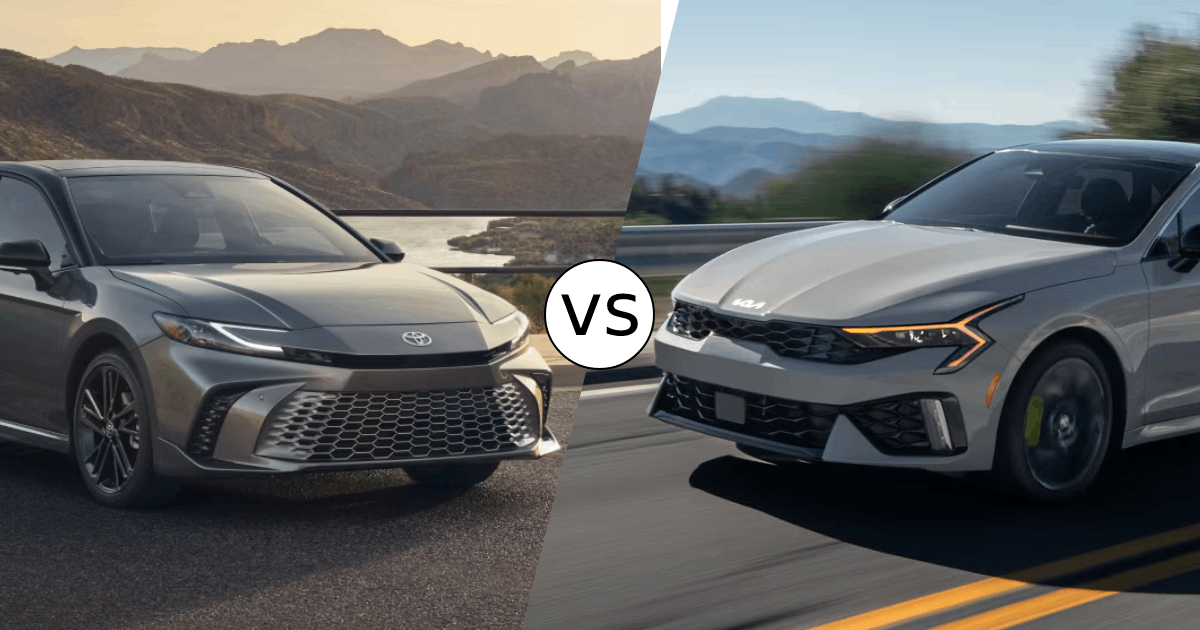
2026 Toyota Camry vs. Kia K5: Which Sedan is Right for You?

Midsize sedans have never been more competitive, and the 2026 Toyota Camry vs. Kia K5 is one of the most debated matchups in the segment right now. At Longo Toyota, the world's largest Toyota dealership on 50+ acres in El Monte, CA, we talk with cross-shoppers every day who want a clear, honest answer. Both cars have genuine appeal, and neither is a bad choice. When you stack them side by side across the categories that matter most to everyday drivers, though, the Camry's standard hybrid efficiency and long-term ownership value give it a decisive edge. Explore our new Camry inventory to see current trims and configurations while you read through our comparison. Meet the 2026 Toyota Camry: What Sets It Apart The 2026 Toyota Camry is built on Toyota's TNGA-K platform with a fully hybrid powertrain lineup across every trim. It delivers everyday practicality and driving refinement without asking you to trade fuel savings for performance or comfort for technology. Powertrain Options and Hybrid Advantage One of the most significant changes to the 2026 Camry is its move to an all-hybrid lineup. Every trim includes hybrid technology, and the practical benefits are hard to ignore. For daily commuters, the electric motor provides immediate, smooth torque in stop-and-go traffic, cuts down on fuel stops per week, and lowers running costs meaningfully over time. The standard FWD setup pairs a 2.5-liter four-cylinder engine with an electric motor for a combined 225 hp. The available AWD system raises output to 232 hp without a steep efficiency penalty. The K5's base 2.5-liter engine produces 191 hp on gasoline alone, and the performance-oriented K5 GT jumps to 290 hp with its turbocharged engine. That turbo output is impressive, but it comes with a corresponding increase in fuel consumption. Interior Refinement and Cabin Quality Inside the 2026 Camry, soft-touch surfaces and a clean instrument panel with well-positioned controls create a comfortable environment for daily commutes and longer trips alike. Front seat comfort is a standout, with available ventilated seats and a power-adjustable driver's seat across most trims. The infotainment system features a large touchscreen with wireless Apple CarPlay and Android Auto. A standard Qi-compatible wireless charger and an available JBL Premium Audio system round out the tech package. Rear passenger space is generous, making the Camry a practical choice for families. The K5 offers an available Bose Premium Audio option and a stylish interior, but material quality in lower trims doesn't quite match what the Camry delivers at similar price points. Toyota Safety Sense 3.0 and Standard Tech Toyota Safety Sense 3.0 comes standard on every 2026 Camry, regardless of trim. The suite includes a Pre-Collision System with Pedestrian Detection, Lane Departure Alert with Steering Assist, Automatic High Beams, Full-Speed Range Dynamic Radar Cruise Control, and Proactive Driving Assist. These aren't reserved for higher trims. They're part of every Camry from the base model up, which matters when you're comparing total value at comparable price points. Meet the Kia K5: What It Brings to the Table The Kia K5 is a legitimate competitor, and it deserves honest credit. Its exterior design stands out with sharper lines and a more aggressive stance than most traditional sedans in the class. The K5 GT's turbocharged 2.5-liter engine produces 290 hp and delivers a spirited, performance-forward character that appeals to drivers who prioritize driving excitement. The GT-Line trim adds sporty visual details and chassis tuning that reinforce that athletic positioning. For buyers whose priorities lean heavily toward bold styling and performance feel, the K5 makes a compelling case. When the focus shifts to efficiency, proven reliability, and total ownership value, however, the K5 shows its limitations relative to the Camry. 2026 Toyota Camry vs. Kia K5: Full Specs Comparison Feature 2026 Toyota Camry 2026 Kia K5 Powertrain 2.5L Hybrid (all trims standard) 2.5L naturally aspirated / 2.5L Turbo (GT) Base Output 225 hp (FWD) / 232 hp (AWD) 191 hp (base) / 290 hp (GT) Combined MPG Up to 51 MPG combined (LE FWD, EPA-estimated); 47 MPG combined (SE/Nightshade/XLE/XSE) 30 MPG combined (base LXS FWD, EPA-estimated) Standard Safety Suite Toyota Safety Sense 3.0 (all trims) Kia Drive Wise (standard) 5-Year Depreciation 34.3% (iSeeCars) 39.8% (iSeeCars) The table tells the core story. The Camry's hybrid efficiency and across-the-board safety technology are structural advantages, not trim-level extras. The depreciation gap is especially significant for buyers thinking beyond the purchase price. Reliability and Long-Term Ownership Value The purchase price is just the starting point. Fuel costs, maintenance, and resale value determine what a car actually costs to own over time. Toyota's Proven Track Record Toyota's reliability record is one of the most thoroughly documented in the industry, consistently validated by J.D. Power, Consumer Reports, and years of real ownership data. The Camry's reputation for reaching well beyond 200,000 miles with routine maintenance is backed by decades of consumer experience, not marketing language. Toyota also includes ToyotaCare with every new Camry, covering complimentary factory-scheduled maintenance for two years or 25,000 miles, whichever comes first, plus 24-hour roadside assistance for two years with unlimited mileage. That dependability translates directly into lower total cost of ownership and stronger resale values. What the Data Says About the K5 Kia has improved its quality significantly, and the K5's warranty coverage is genuinely reassuring. The numbers still favor the Camry, though. iSeeCars data shows the Camry depreciates approximately 34.3% over five years compared to 39.8% for the K5. That roughly 5.5-percentage-point gap represents real money when you sell or trade the car. For buyers planning to keep their vehicle for many years, the Camry's deeper reliability history and stronger resale performance make it the more financially sound decision. Fuel Efficiency and Real-World Performance Fuel efficiency is where the Camry pulls decisively ahead. With its full transition to hybrid powertrains, even entry-level trims deliver fuel economy the K5 can't match. For a driver covering 15,000 miles per year, the difference between approximately 30 MPG and up to 51 MPG combined represents hundreds of dollars in annual fuel savings that compound over the life of ownership. The Camry Hybrid's electric motor delivers immediate torque that makes Southern California stop-and-go traffic significantly more manageable than a conventional gas engine allows. The K5 GT and GT-Line trims offer genuinely engaging performance, but that experience comes at the cost of efficiency and day-to-day practicality. The Camry strikes a better balance for most drivers. If you're ready to feel that efficiency in person, explore our new Camry inventory and schedule a test drive at your convenience. Why the Camry Is the Smarter Buy for Most Shoppers If head-turning design and a high-output turbo engine are your top priorities, the K5 GT delivers that experience at a competitive price. Kia has built something worth respecting. For the majority of Southern California drivers, though, the priorities look different. Long-term reliability, strong resale value, and full safety technology included without a trim-level upgrade matter more over the life of the vehicle. The Camry satisfies all of those priorities in one well-rounded package. Every trim comes hybrid, so you're not giving up efficiency to get performance. Toyota Safety Sense 3.0 is standard across the board, not reserved for pricier configurations. The depreciation data confirms what Toyota owners have experienced for decades: the Camry holds its value better than the segment average, outperforming the K5 on five-year resale value. For drivers logging significant daily miles around the LA area, the fuel savings alone make the Camry's entry price easy to justify. Experience the 2026 Camry at Longo Toyota The best way to understand what the 2026 Camry offers is to experience it yourself. We carry an extensive selection of 2026 Camry models across multiple trims at our El Monte, CA campus, so you can compare configurations and find the one that fits your lifestyle and budget. If you have questions before your visit or want to get the conversation started, reach out to our team online and we'll help you get set up. If you've been weighing the 2026 Toyota Camry vs. Kia K5 and want to move forward with confidence, a test drive at Longo Toyota is the clearest next step.