

Longo Toyota

#1 in the World since 1967*

Based on Toyota Motor Sales, USA 2025 Sales Report*
Based on Toyota Motor Sales, USA 2023 Sales Report*
Blog / Comparison

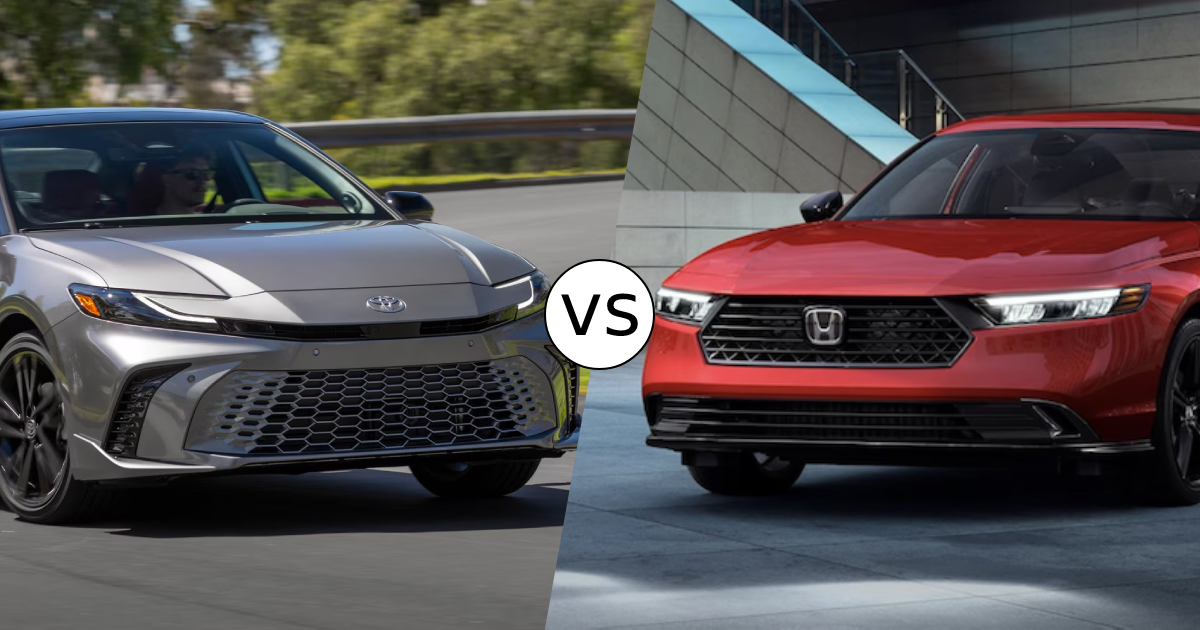
2025 Toyota Camry Hybrid vs Honda Accord Hybrid

2025 Toyota Camry Hybrid vs Honda Accord Hybrid

When it comes to choosing a hybrid sedan, the ninth-generation 2025 Toyota Camry Hybrid and the new Honda Accord Hybrid are two top choices. Both vehicles offer excellent fuel efficiency, advanced technology, and a comfortable driving experience. However, there are key differences in their interiors and efficiency that may sway your decision, especially if you're considering the superior quality and features of the Toyota Camry Hybrid. 

Keep reading as our team at Longo Toyota compares these two hybrids to help you make an informed decision. We cover interior comfort and convenience, advanced technology, power and performance, and fuel economy to see which one comes out on top:

Interior Comfort and Convenience

The interior of the 2025 Toyota Camry Hybrid is expected to be completely redesigned for the new model year. According to the latest reports, the design will focus on luxury, comfort, and cutting-edge technology. The cabin will feature high-quality materials, including standard cloth seats and dual-zone climate control. For something extra, you can opt for the XLE or XSE models for leather upholstery, heated seats, a heated steering wheel, and ambient lighting for a premium feel. The driver and passengers will appreciate the spacious seating, with ample legroom and headroom in front and rear to ensure comfort on long drives. 

The new Honda Accord Hybrid also offers a comfortable and well-appointed interior, though it may not match the premium feel of the Camry Hybrid. Most of the seats are upholstered with cloth and if you want leather, you'll have to fork out for the higher trims. The Accord Hybrid features high-quality materials and an ergonomic design with two spacious rows of seats. It has a generous trunk with up to 16.7 cubic feet of cargo space. This is marginally larger than the Camry's 15.1 cubic feet of cargo space, but both are more than enough for everyday needs. 

Advanced Technology

The Camry Hybrid offers a range of advanced technology features in its high-tech interior, such as a standard 8-inch touch screen infotainment system with wireless Apple CarPlay, Android Auto, and dual Bluetooth phone connectivity. The SE offers an available larger 12.3-inch touch screen, and this comes standard on the XLE and XSE models. All trims come with a digital gauge cluster display, but the two higher models get a 10-inch Head Up Display for speed, traffic, and warning indicators on the dashboard. The available nine-speaker JBL premium audio system on the XLE and XSE delivers an exceptional listening experience. 

The infotainment system on the Honda Accord includes a smaller 7-inch standard touch screen with Apple CarPlay and Android Auto compatibility, providing easy access to your favorite apps and media. However, unlike the Camry, the Accord only offers wireless connectivity if you pay for the larger touch screen. Like the Camry, you can opt for a larger 12.3-inch touch screen display and a 10.2-inch digital gauge cluster is standard. The available 12-speaker premium audio system offers decent sound quality if you prioritize music on your drives.

Power and Performance

The new Toyota hybrid is equipped with a 2.5-liter four-cylinder engine and a fifth-generation Toyota Hybrid System for improved handling and performance. The new hybrid model delivers up to 225 horsepower with the front-wheel-drive (FWD) version and up to 232 horsepower with the all-wheel-drive (AWD) version. The AWD version comes with enhanced traction for extra grip in all weather and road conditions, but you have the choice depending on what suits you and your lifestyle best.

The Accord comes with either a smaller turbocharged 1.5-liter four-cylinder on base models or a smaller 2.0-liter four-cylinder automatic (variable gear ratios) hybrid engine. Paired with two electric motors, it delivers a total of 204 horsepower. It doesn't come with the choice of AWD; instead FWD is the only choice across all trims. Regardless of the drivetrain version you choose, you're promised more power and performance and more choices with the latest version of the Toyota Camry.

How Fuel Efficiency Compares

Both 2025 models for the Toyota Camry Hybrid and the Honda Accord Hybrid are yet to be rated by the Environmental Protection Agency (EPA). However, when looking at previous models, we can draw some conclusions on the expectations for the newer models. 

The 2024 Toyota Camry Hybrid was rated at an impressive 51 mpg in the city and 53 mpg on the highway. The last hybrid model to be rated by the EPA is the 2024 Honda Accord Hybrid where it scored 51 mpg in the city and 44 mpg on the highway. While neither option is bad, the new hybrid Camry is still the better choice if you prioritize fuel efficiency and saving money at the pump. Keep in mind that it offers this fuel efficiency despite having a more powerful engine so you get the best of both worlds. 

Schedule a Test Drive at Longo Toyota Today

The Toyota Camry and the Honda Accord are two excellent eco-friendly options, blending a mix of efficiency, performance, and modern technology. The 2025 Toyota Camry excels with its sleek design, intuitive infotainment system, and enhanced fuel economy, making it a fantastic choice for everyday driving. The best way to decide which new vehicle is right for you is with a test-drive. Visit Longo Toyota and take the new hybrid Camry out for a ride. Discover the balance of power and efficiency in this new eco-friendly variant. Ready to hit the road? Contact us today to arrange your test-drive.
Posted in:

Related Posts

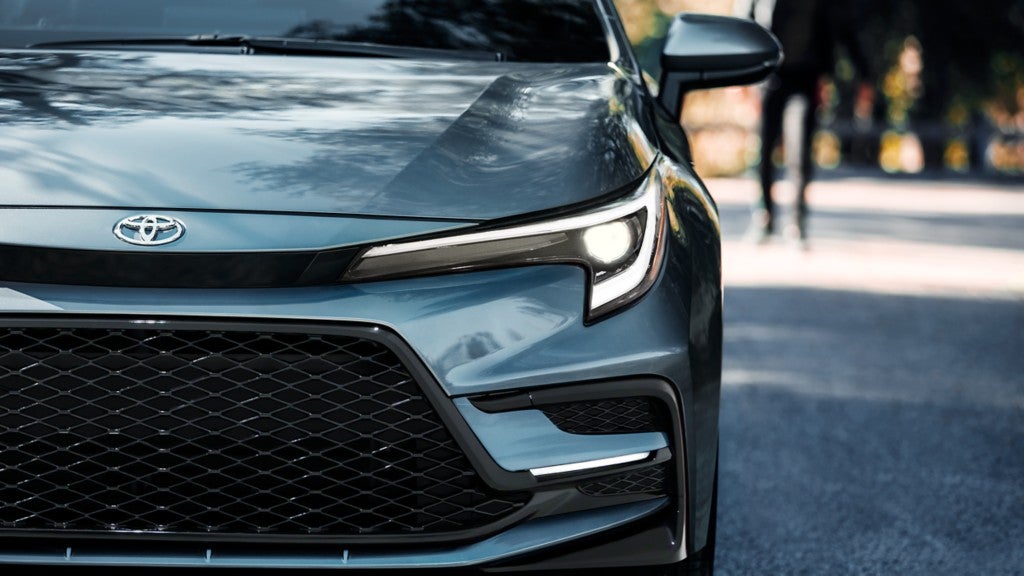
Front of Toyota Corolla

2026 Toyota Corolla vs. 2026 Nissan Sentra: Which Compact Sedan Wins?

Compact sedans remain some of the most practical vehicles on the market, and the 2026 Toyota Corolla and 2026 Nissan Sentra are two of the strongest options in the segment. Both deliver good value and competitive fuel efficiency at accessible price points, with modern features that punch above their price tag. Below is a side-by-side look at what each model brings to the table so you can decide which one fits your priorities. 2026 Toyota Corolla vs. 2026 Nissan Sentra: First Impressions The 2026 Toyota Corolla carries decades of earned reputation for reliability. Its cabin is practical, and the lineup is broad, including a popular hybrid variant with available AWD. The Nissan Sentra has matured into a genuinely competitive option, known for its smooth ride and standard safety features. Both cars make a strong case, but for different priorities. The Corolla's biggest wins come from its hybrid powertrain with available AWD, higher combined MPG across the lineup, ten standard airbags, and Toyota Safety Sense 3.0 on every grade. The Sentra counters with a slightly lower entry price and a bit more trunk space. Where they overlap: both use similarly sized 2.0L four-cylinder engines, both run CVT transmissions, and both seat five comfortably. If you'd like to compare trims in person, you can browse Corolla inventory at Longo Toyota in El Monte, CA, anytime. Quick Comparison Table: Pricing, Trims, and Key Specs Feature 2026 Toyota Corolla 2026 Nissan Sentra Available Grades LE, SE, XSE; Hybrid LE, SE, XLE S, SV, SR, SL Engine 2.0L Dynamic Force 4-cylinder 2.0L naturally aspirated 4-cylinder Horsepower/Torque 169 hp / 151 lb-ft 149 hp / 146 lb-ft Transmission CVT Xtronic CVT Combined MPG 35 (gas) / 50 (hybrid) 32-33 (varies by trim) Cargo Capacity 13.1 cu. ft. 14.3 cu. ft. AWD Availability Yes, on Hybrid grades No, FWD only Pricing and Trim Levels Compared Both sedans target budget-conscious buyers without sacrificing much comfort or technology, and both open at similar entry points in the compact segment. The Sentra starts marginally lower, but the gap is small enough that it rarely decides the purchase on its own. What separates them is what each dollar buys further up the range. The Corolla lineup runs from the well-equipped LE through the sportier SE and feature-rich XSE, then adds three separate hybrid grades in LE, SE, and XLE. That gives you six distinct configurations and a genuine choice between gas and hybrid at nearly every price point. Nissan keeps things simpler with S, SV, SR, and SL, and skips a hybrid option entirely, so Sentra buyers who want electrified efficiency have to look elsewhere. Pricing shifts with incentives, regional offers, and equipment, so the most reliable way to compare is against current inventory. Our team at Longo Toyota in El Monte can walk you through the full Corolla lineup and help identify which grade fits your budget. Fuel Economy and Powertrain Performance Both sedans use a 2.0L four-cylinder engine, but the numbers tell different stories. The Corolla's Dynamic Force engine produces 169 hp and 151 lb-ft, compared to the Sentra's naturally aspirated 2.0L rated at 149 hp and 146 lb-ft. That difference shows up on the highway, in merging and passing situations that matter for drivers logging freeway miles around Southern California. Fuel efficiency favors the Corolla at every level. Gas grades return 32 city / 41 highway / 35 combined on the LE and 31 / 40 / 34 on the SE and XSE, against the Sentra's 33 combined on S and SV and 32 on SR and SL. The Sentra's Xtronic CVT is smooth in daily driving, but the Corolla holds the efficiency edge across the entire comparison. The hybrid is where the gap becomes decisive. The Corolla Hybrid LE and XLE reach an EPA-estimated 53 city / 46 highway / 50 combined, roughly 50 percent better than anything in the Sentra lineup. Toyota's hybrid system pairs a 1.8-liter engine with electric motors for 138 net combined horsepower, tuned for efficiency rather than outright output, and the payoff is a car that can go well past 500 miles between fill-ups. Choose all-wheel drive and you still see 48 combined on the LE, or 44 on the SE AWD, figures no front-wheel-drive Sentra comes close to matching. The Sentra offers no hybrid and no AWD at any trim. The Sentra has no hybrid or AWD counterpart, so buyers who want either feature will only find them on the Corolla. Interior Comfort, Technology, and Safety Features The Sentra's cabin is well finished for the segment, with quilted leatherette arriving on the top SL grade, and its trunk edges out the Corolla at 14.3 cubic feet versus 13.1. The Corolla answers with a cabin that scales further as you move up. A 7-inch digital instrument cluster is standard on LE and SE, with a 12.3-inch display on the XSE and Hybrid XLE and available on SE grades through the Premium Package. Apple CarPlay and Android Auto are standard across both lineups. On safety, both cars arrive well-equipped. Toyota Safety Sense 3.0 is standard on every Corolla grade, covering Pre-Collision with Pedestrian Detection, Lane Departure Alert with Steering Assist, Full-Speed Range Dynamic Radar Cruise Control, Lane Tracing Assist, Road Sign Assist, and Proactive Driving Assist. Nissan matches the general approach with its own standard suite including automatic emergency braking and blind-spot monitoring. The clearest measurable difference is occupant protection: every Corolla carries ten airbags as standard equipment, including a front passenger seat cushion airbag, against eight on the Sentra. Reliability, Resale Value, and Long-Term Ownership Costs Toyota's reliability record is consistently rated among the best in the industry by sources like Consumer Reports and J.D. Power, and the Corolla has long been a benchmark for low-maintenance, long-lasting transportation. Resale value follows a similar pattern. The Corolla historically depreciates slower than most compact sedans, which helps owners recover more of their investment at trade-in or resale. Nissan's competitive pricing has helped the Sentra close some of that gap, though it still trails the Corolla on long-term value retention. Toyota backs the Corolla with a 3-year/36,000-mile basic warranty, and the model is widely recognized for strong long-term ownership value. The Verdict: Which Compact Sedan Is Right for You? The 2026 Toyota Corolla vs. 2026 Nissan Sentra comparison comes down to what matters most to you. If maximum cargo space or the lowest possible entry price is the priority, the Sentra is a capable, well-equipped choice with standard safety tech across every trim. For most Southern California and El Monte drivers, though, the Corolla comes out ahead. It offers better combined fuel economy at every comparable grade, a hybrid powertrain with available AWD that the Sentra lineup has no answer for, Toyota Safety Sense 3.0 and ten airbags standard on every grade, and a well-established reliability and resale record. Those advantages compound over a five-plus year ownership window, even with both models opening at similar price points. Those advantages add up to smarter total-ownership value over a five-plus year window, even with both models starting at similar price points. Visit Longo Toyota If you're ready to explore the 2026 Toyota Corolla, engineered by Toyota Motor Corporation, in person, browse our new inventory across all Corolla trims. Longo Toyota is located at 3534 North Peck Road in El Monte, CA, with a full showroom and financing department on-site to make car buying easier. Call our sales team at 626-539-2113 or contact us online to schedule a test drive. Frequently Asked Questions Is the Corolla or Sentra more reliable? The Corolla has a longer, more established reputation for durability and low maintenance needs, with reliability ratings from Consumer Reports and J.D. Power consistently among the best in the compact car segment. Sentra build quality has come a long way in recent years, but it hasn't quite caught up to Toyota's track record. Which has better gas mileage, the Corolla or Sentra? The Corolla leads at every level. Gas grades return 34 to 35 combined depending on trim, against 32 to 33 for the Sentra. The Corolla Hybrid widens the gap dramatically, reaching an EPA-estimated 50 combined on LE and XLE grades and 44 to 48 with all-wheel drive, an option the Sentra doesn't offer at all. Which holds its value better, the Corolla or Sentra? The Corolla historically retains its value better than the Sentra, making it the stronger pick for buyers planning to sell or trade in within a few years. The Sentra is narrowing the gap with competitive pricing, but the Corolla still leads on long-term resale performance. Does the Corolla or Sentra offer more standard safety features? Both offer full standard safety suites. Toyota Safety Sense 3.0 comes standard on every Corolla grade, covering Pre-Collision with Pedestrian Detection, Lane Departure Alert with Steering Assist, Lane Tracing Assist, and Proactive Driving Assist. Nissan equips every Sentra with its own standard suite including automatic emergency braking and blind-spot monitoring. The Corolla adds a measurable edge in passive protection with ten standard airbags to the Sentra's eight.

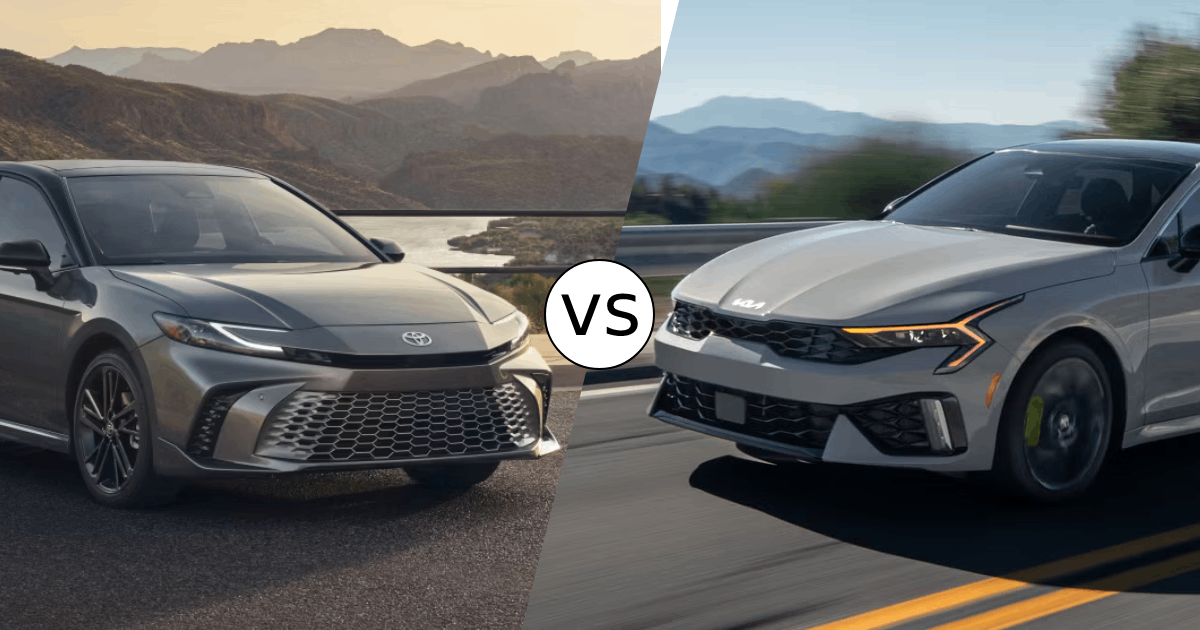
2026 Toyota Camry vs. Kia K5

2026 Toyota Camry vs. Kia K5: Which Sedan is Right for You?

Midsize sedans have never been more competitive, and the 2026 Toyota Camry vs. Kia K5 is one of the most debated matchups in the segment right now. At Longo Toyota, the world's largest Toyota dealership on 50+ acres in El Monte, CA, we talk with cross-shoppers every day who want a clear, honest answer. Both cars have genuine appeal, and neither is a bad choice. When you stack them side by side across the categories that matter most to everyday drivers, though, the Camry's standard hybrid efficiency and long-term ownership value give it a decisive edge. Explore our new Camry inventory to see current trims and configurations while you read through our comparison. more Meet the 2026 Toyota Camry: What Sets It Apart The 2026 Toyota Camry is built on Toyota's TNGA-K platform with a fully hybrid powertrain lineup across every trim. It delivers everyday practicality and driving refinement without asking you to trade fuel savings for performance or comfort for technology. Powertrain Options and Hybrid Advantage One of the most significant changes to the 2026 Camry is its move to an all-hybrid lineup. Every trim includes hybrid technology, and the practical benefits are hard to ignore. For daily commuters, the electric motor provides immediate, smooth torque in stop-and-go traffic, cuts down on fuel stops per week, and lowers running costs meaningfully over time. The standard FWD setup pairs a 2.5-liter four-cylinder engine with an electric motor for a combined 225 hp. The available AWD system raises output to 232 hp without a steep efficiency penalty. The K5's base 2.5-liter engine produces 191 hp on gasoline alone, and the performance-oriented K5 GT jumps to 290 hp with its turbocharged engine. That turbo output is impressive, but it comes with a corresponding increase in fuel consumption. Interior Refinement and Cabin Quality Inside the 2026 Camry, soft-touch surfaces and a clean instrument panel with well-positioned controls create a comfortable environment for daily commutes and longer trips alike. Front seat comfort is a standout, with available ventilated seats and a power-adjustable driver's seat across most trims. The infotainment system features a large touchscreen with wireless Apple CarPlay and Android Auto. A standard Qi-compatible wireless charger and an available JBL Premium Audio system round out the tech package. Rear passenger space is generous, making the Camry a practical choice for families. The K5 offers an available Bose Premium Audio option and a stylish interior, but material quality in lower trims doesn't quite match what the Camry delivers at similar price points. Toyota Safety Sense 3.0 and Standard Tech Toyota Safety Sense 3.0 comes standard on every 2026 Camry, regardless of trim. The suite includes a Pre-Collision System with Pedestrian Detection, Lane Departure Alert with Steering Assist, Automatic High Beams, Full-Speed Range Dynamic Radar Cruise Control, and Proactive Driving Assist. These aren't reserved for higher trims. They're part of every Camry from the base model up, which matters when you're comparing total value at comparable price points. Meet the Kia K5: What It Brings to the Table The Kia K5 is a legitimate competitor, and it deserves honest credit. Its exterior design stands out with sharper lines and a more aggressive stance than most traditional sedans in the class. The K5 GT's turbocharged 2.5-liter engine produces 290 hp and delivers a spirited, performance-forward character that appeals to drivers who prioritize driving excitement. The GT-Line trim adds sporty visual details and chassis tuning that reinforce that athletic positioning. For buyers whose priorities lean heavily toward bold styling and performance feel, the K5 makes a compelling case. When the focus shifts to efficiency, proven reliability, and total ownership value, however, the K5 shows its limitations relative to the Camry. 2026 Toyota Camry vs. Kia K5: Full Specs Comparison Feature 2026 Toyota Camry 2026 Kia K5 Powertrain 2.5L Hybrid (all trims standard) 2.5L naturally aspirated / 2.5L Turbo (GT) Base Output 225 hp (FWD) / 232 hp (AWD) 191 hp (base) / 290 hp (GT) Combined MPG Up to 51 MPG combined (LE FWD, EPA-estimated); 47 MPG combined (SE/Nightshade/XLE/XSE) 30 MPG combined (base LXS FWD, EPA-estimated) Standard Safety Suite Toyota Safety Sense 3.0 (all trims) Kia Drive Wise (standard) 5-Year Depreciation 34.3% (iSeeCars) 39.8% (iSeeCars) The table tells the core story. The Camry's hybrid efficiency and across-the-board safety technology are structural advantages, not trim-level extras. The depreciation gap is especially significant for buyers thinking beyond the purchase price. Reliability and Long-Term Ownership Value The purchase price is just the starting point. Fuel costs, maintenance, and resale value determine what a car actually costs to own over time. Toyota's Proven Track Record Toyota's reliability record is one of the most thoroughly documented in the industry, consistently validated by J.D. Power, Consumer Reports, and years of real ownership data. The Camry's reputation for reaching well beyond 200,000 miles with routine maintenance is backed by decades of consumer experience, not marketing language. Toyota also includes ToyotaCare with every new Camry, covering complimentary factory-scheduled maintenance for two years or 25,000 miles, whichever comes first, plus 24-hour roadside assistance for two years with unlimited mileage. That dependability translates directly into lower total cost of ownership and stronger resale values. What the Data Says About the K5 Kia has improved its quality significantly, and the K5's warranty coverage is genuinely reassuring. The numbers still favor the Camry, though. iSeeCars data shows the Camry depreciates approximately 34.3% over five years compared to 39.8% for the K5. That roughly 5.5-percentage-point gap represents real money when you sell or trade the car. For buyers planning to keep their vehicle for many years, the Camry's deeper reliability history and stronger resale performance make it the more financially sound decision. Fuel Efficiency and Real-World Performance Fuel efficiency is where the Camry pulls decisively ahead. With its full transition to hybrid powertrains, even entry-level trims deliver fuel economy the K5 can't match. For a driver covering 15,000 miles per year, the difference between approximately 30 MPG and up to 51 MPG combined represents hundreds of dollars in annual fuel savings that compound over the life of ownership. The Camry Hybrid's electric motor delivers immediate torque that makes Southern California stop-and-go traffic significantly more manageable than a conventional gas engine allows. The K5 GT and GT-Line trims offer genuinely engaging performance, but that experience comes at the cost of efficiency and day-to-day practicality. The Camry strikes a better balance for most drivers. If you're ready to feel that efficiency in person, explore our new Camry inventory and schedule a test drive at your convenience. Why the Camry Is the Smarter Buy for Most Shoppers If head-turning design and a high-output turbo engine are your top priorities, the K5 GT delivers that experience at a competitive price. Kia has built something worth respecting. For the majority of Southern California drivers, though, the priorities look different. Long-term reliability, strong resale value, and full safety technology included without a trim-level upgrade matter more over the life of the vehicle. The Camry satisfies all of those priorities in one well-rounded package. Every trim comes hybrid, so you're not giving up efficiency to get performance. Toyota Safety Sense 3.0 is standard across the board, not reserved for pricier configurations. The depreciation data confirms what Toyota owners have experienced for decades: the Camry holds its value better than the segment average, outperforming the K5 on five-year resale value. For drivers logging significant daily miles around the LA area, the fuel savings alone make the Camry's entry price easy to justify. Experience the 2026 Camry at Longo Toyota The best way to understand what the 2026 Camry offers is to experience it yourself. We carry an extensive selection of 2026 Camry models across multiple trims at our El Monte, CA campus, so you can compare configurations and find the one that fits your lifestyle and budget. If you have questions before your visit or want to get the conversation started, reach out to our team online and we'll help you get set up. If you've been weighing the 2026 Toyota Camry vs. Kia K5 and want to move forward with confidence, a test drive at Longo Toyota is the clearest next step.

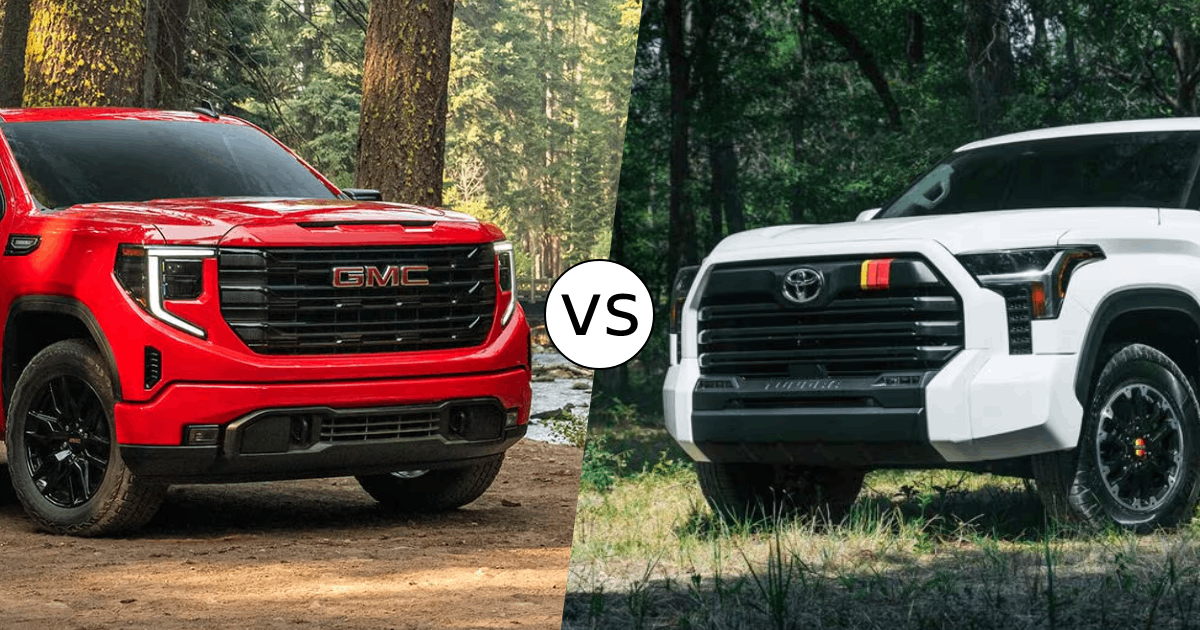
2026 Toyota Tundra vs. GMC Sierra 1500

2026 Toyota Tundra vs. GMC Sierra 1500

Choosing a full-size pickup truck is rarely simple. You're not just buying a vehicle. You're committing to how you work, haul, and live for the next several years. The 2026 Toyota Tundra and the GMC Sierra 1500 both occupy serious ground in this segment, but put them side by side and real differences start to show. For buyers weighing the 2026 Toyota Tundra vs GMC Sierra, this guide covers everything from powertrain performance to long-term ownership confidence. If you already know the Tundra is your direction, browse our new Tundra inventory to see what's available now. more Why the 2026 Toyota Tundra vs GMC Sierra Comparison Matters The full-size truck market is more competitive than it's ever been. Buyers today want more than raw horsepower. They're after efficiency, technology, durability, and genuine versatility. Both the Tundra and Sierra 1500 answer that call, just in different ways, which is exactly why this comparison deserves a close look. Whether you're towing trailers on weekends, hauling materials to a job site, or grinding through Los Angeles traffic every morning, the right powertrain and feature set will make a tangible difference across years of ownership. Powertrain Advantage: The i-FORCE MAX Hybrid Changes Everything Powertrain is where the Tundra makes its most compelling argument. Toyota engineered the i-FORCE MAX hybrid system specifically for full-size truck demands, delivering serious torque alongside real efficiency gains. The Sierra 1500 sticks to conventional combustion options. Both approaches have merit, but in today's driving environment, the hybrid advantage is hard to ignore. 2026 Toyota Tundra Engine Options The Tundra offers two engine choices, both built around a 3.4L twin-turbocharged V6. The standard i-FORCE V6 produces 389 hp and 479 lb.-ft. of torque through a 10-speed automatic, delivering strong output well suited to daily driving and moderate towing. The i-FORCE MAX hybrid variant raises the bar considerably, pairing that twin-turbo V6 with an electric motor integrated into the transmission for 437 hp and 583 lb.-ft. of torque. That torque boost is immediately noticeable when pulling away from a stop or climbing grades with a loaded trailer. Toyota made the i-FORCE MAX available across multiple trim levels, so you don't have to buy at the top of the lineup to access it. 2026 GMC Sierra 1500 Engine Options The Sierra gives buyers more combustion choices: the TurboMax 2.7L V6 at 310 hp and 430 lb.-ft., a 5.3L V8 at 355 hp, a 6.2L V8 at 420 hp, and a Duramax 3.0L turbo-diesel at 305 hp and 495 lb.-ft. That variety serves specific power requirements well. The diesel's 495 lb.-ft. is the Sierra's strongest comparison point against the Tundra's hybrid, and it suits drivers who prioritize torque efficiency on long highway runs. What the Sierra doesn't offer is any electrified option in the half-ton space. Why the Tundra's Hybrid Powertrain Wins in the Real World Stop-and-go traffic is where the Tundra's hybrid system really earns its keep. The electric motor assists during low-speed acceleration, cutting fuel consumption precisely when it's most likely to spike. The diesel's advantages show up primarily on the highway, but it also demands ongoing maintenance of the SCR (selective catalytic reduction) system, DPF (diesel particulate filter), and regular DEF (diesel exhaust fluid) top-ups. Those are real ownership costs, not minor footnotes. The Tundra's hybrid delivers instantaneous low-RPM torque without the fluid requirements and regeneration management that diesel ownership involves. For drivers splitting time between city commutes and weekend hauling, that flexibility is a practical advantage the Sierra's current lineup simply can't match. Towing and Payload: Where the Tundra Pulls Ahead Both trucks are capable haulers, though they reach their limits differently. The Sierra 1500 can claim a higher maximum towing number when equipped with the 6.2L V8 or Duramax diesel and the Max Trailering Package, reaching up to 13,300 lbs. That headline matters if you're regularly pushing the upper ceiling of half-ton towing. The Tundra's gas i-FORCE V6 reaches up to 12,000 lbs when properly equipped, while the i-FORCE MAX hybrid configuration tops out at 11,450 lbs. For context, most truck owners tow somewhere between 8,000 and 10,000 lbs. At that range, both Tundra powertrains are well within capacity, and the hybrid adds meaningful fuel efficiency on every trip. Payload is where day-to-day utility becomes concrete. The Sierra 1500 edges ahead in maximum payload figures when configured for it, which matters for contractors regularly loading heavy materials. The Tundra's composite bed floor and practical cargo layout still make it a highly capable work tool, and the hybrid's torque delivery keeps loads moving confidently without the fuel penalty you'd normally expect from a conventional V8. Trim Levels and Value: Tundra vs. Sierra 1500 Lineup Breakdown Both trucks span broad ranges, from work-ready base models to near-luxury flagships. The Tundra lineup runs SR, SR5, Limited, Platinum, 1794 Edition, TRD Pro, and Capstone. Toyota Safety Sense comes standard across every trim, meaning even the entry-level SR includes advanced driver assistance without an upcharge. The i-FORCE MAX hybrid is available from the Limited through the Capstone, including the TRD Pro, so buyers don't have to sacrifice efficiency for luxury or off-road capability. The Sierra 1500 scales through Pro, SLE, Elevation, SLT, AT4, AT4X, Denali, and Denali Ultimate. GMC invests heavily in the Denali identity, and the Denali Ultimate's features (including available 16-way massage seats) represent a legitimate luxury achievement. At the top of the market, the Sierra makes a real case. The Tundra Capstone counters with its own premium interior and the hybrid powertrain available at that flagship tier. At most price points below the flagship, the Tundra's standard safety technology and hybrid availability create a stronger value argument. If you'd like to experience how the Tundra feels before committing, you can schedule a virtual test drive from anywhere. Off-Road Capability: TRD Pro vs. AT4 and AT4X The Tundra's TRD Pro comes equipped with Fox 2.5-inch internal bypass shocks, multi-terrain select with rock crawl mode, crawl control, skid plates covering the engine, transfer case and fuel tank, Goodyear Wrangler TrailRunner AT tires, and a locking rear differential. The i-FORCE MAX hybrid is available in the TRD Pro, adding trail efficiency alongside the off-road hardware. Toyota's off-road heritage runs deep, and the TRD Pro reflects that clearly. The Sierra's AT4 counters with an electronic locking rear differential, skid plates, all-terrain tires, and hill descent control. The AT4X steps up further with electronic locking front and rear differentials, enhanced suspension, and additional skid protection. For serious technical terrain, the AT4X's front locking differential gives it an edge over the TRD Pro in extreme scenarios. For most trail drivers, though, the TRD Pro's Fox suspension, crawl control, and hybrid availability deliver a more complete package at its price point. Reliability, Ownership Costs, and Long-Term Confidence Toyota's reliability reputation is consistently recognized across decades of automotive data. The Tundra has historically ranked among the most dependable full-size trucks on the market, with owners reporting high-mileage use without major mechanical issues. Toyota's hybrid components carry an 8-year / 100,000-mile warranty, which adds meaningful long-term confidence for i-FORCE MAX buyers. The Sierra 1500 is a well-engineered truck, and recent generations have improved in dependability. For buyers planning to keep their truck for a decade or more, though, Toyota's track record gives it a consistent edge in consumer satisfaction and long-term ownership studies. The diesel Sierra's DEF and DPF maintenance requirements are manageable but represent ongoing costs and service considerations the Tundra's hybrid avoids entirely. Resale value historically trends stronger for Toyota trucks in this segment, though you should verify current figures through sources like J.D. Power or Consumer Reports before making a final decision. 2026 Toyota Tundra vs. GMC Sierra 1500: Full Specs at a Glance Specification 2026 Toyota Tundra (i-FORCE MAX Hybrid) 2026 GMC Sierra 1500 (TurboMax 2.7L) 2026 GMC Sierra 1500 (Duramax 3.0L Diesel) Engine Type 3.4L Twin-Turbo V6 + Electric Motor 2.7L Twin-Turbo V6 3.0L Turbo-Diesel Horsepower 437 hp 310 hp 305 hp Torque 583 lb.-ft. 430 lb.-ft. 495 lb.-ft. Transmission 10-speed Automatic 8-speed Automatic 10-speed Automatic Max Towing 11,450 lbs. 9,400 lbs. 13,300 lbs. Fuel Economy (City/Hwy) 20/24 MPG 19/22 MPG 23/29 MPG The i-FORCE MAX's torque advantage over the base TurboMax is decisive. The Duramax diesel's towing ceiling and fuel economy are the Sierra's strongest comparison points, and they're worth acknowledging honestly. For buyers who don't need that diesel ceiling, the Tundra hybrid delivers better efficiency than the TurboMax, more torque than either Sierra gas option, and none of the diesel maintenance overhead. The Verdict: Why the Tundra Is the Smarter Truck The 2026 Toyota Tundra vs GMC Sierra debate doesn't have one universal answer, but for most buyers, the Tundra presents the stronger overall case. Its i-FORCE MAX hybrid delivers 583 lb.-ft. of torque with no diesel fluid requirements, backed by Toyota's proven hybrid reliability and an 8-year / 100,000-mile hybrid warranty. Standard safety technology across every trim, competitive towing for the vast majority of real-world use cases, and historically stronger resale values round out the long-term ownership argument. The Sierra Denali Ultimate and AT4X are legitimate achievements in their respective niches. But across the full range of buyers, the Tundra's combination of performance, efficiency, and dependability is the harder package to beat. Find Your Tundra at Longo Toyota Explore available Tundra models at Longo Toyota, the world's largest Toyota dealership, spanning over 50 acres in El Monte, CA. Whether you're interested in the TRD Pro, a hybrid-equipped Limited, or the flagship Capstone, our team can walk you through every configuration. If you currently own a truck, you can estimate your trade-in value as a natural first step toward upgrading. When you're ready to move forward, get pre-qualified for financing online or contact our team to schedule a visit to our El Monte, CA location. When the numbers are clear and the decision is close, sitting behind the wheel tends to make everything easier.