

Longo Toyota

#1 in the World since 1967*

Based on Toyota Motor Sales, USA 2025 Sales Report*
Based on Toyota Motor Sales, USA 2023 Sales Report*

Blog

All New Inventory Local Comparison Electric Vehicle Vehicle Tips Review Hybrid Service Toyota News Locaal
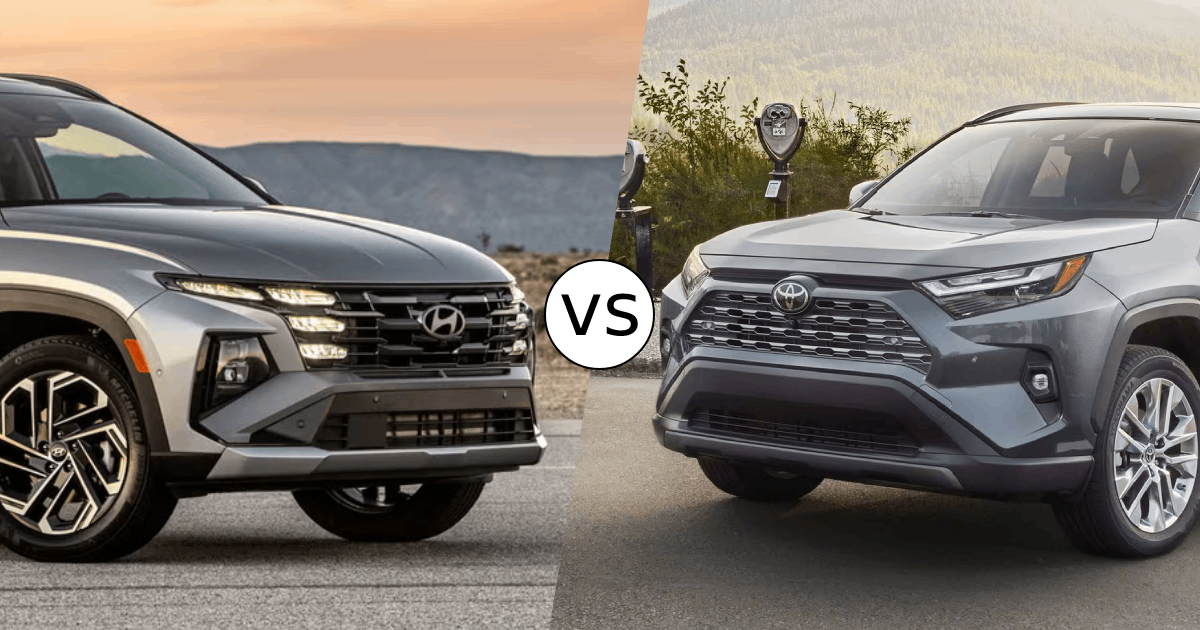
2025 Toyota RAV4 vs 2025 Hyundai Tucson

2025 Toyota RAV4 vs 2025 Hyundai Tucson

Considering updating your ride to a new compact SUV? Take a look at this comparison between the 2025 Toyota RAV4 and the 2025 Hyundai Tucson. We'll help you explore the specs, features, and power so you can see how the RAV4 comes out on top. Then, visit Longo Toyota to take the RAV4 out for a test drive. more Key Similarities and Differences at a Glance Both the RAV4 and the Tucson have four-cylinder engines, but the RAV4's produces more horsepower. Each has room for five people and comes with comprehensive safety suites for confidence behind the wheel. What Makes Each SUV Stand Out The RAV4 stands out for its excellent fuel economy, which means fewer stops at the gas station whether you're driving around town or on a cross-country road trip. The Tucson stands out with its higher towing capacity. Engine Performance and Powertrain Options The RAV4's 2.5-liter Dynamic Force four-cylinder engine delivers 203 horsepower. Compare this to the Tucson's 2.5-liter four-cylinder that puts out 187 horsepower, and you can see which one will be more engaging when you get behind the wheel. Press the gas pedal in the RAV4, and you'll reach 60 mph in just eight seconds, while it takes the Tucson 9.3 seconds to get there. Fuel Economy and Efficiency Analysis If fuel economy is a priority for your next SUV, both the RAV4 and the Tucson are good choices, but the RAV4 is slightly better. EPA Ratings Comparison RAV4 with gas engine and FWD: 27 city / 35 highway / 30 combined RAV4 with gas engine and AWD: 27 city / 34 highway / 30 combined Tucson with gas engine and FWD: 25 city / 33 highway / 28 combined Tucson with gas engine and AWD: 24 city / 30 highway / 26 combined Hybrid Model Efficiency Showdown If you want an even more efficient version of either the RAV4 or the Tucson, both offer hybrid models. The RAV4 Hybrid gets up to 41 mpg in the city and 38 mpg on the highway, while the plug-in hybrid gets 94 MPGe with a 42-mile all-electric range. The Tucson Hybrid delivers 38 mpg in the city and 38 mpg on the highway. It also offers a plug-in hybrid that gets 80 MPGe combined and has a 33-mile all-electric range. Interior Space and Comfort Features There's plenty of room in these SUVs for five people to get comfortable. Standard and available features enhance this comfort as you run errands or commute to work in El Monte. Front and Rear Passenger Space The Tucson is slightly larger than the RAV4, but the 37.8 inches of rear legroom in the RAV4 is still plenty for even your taller passengers to stretch their legs. If you're sitting in the back of the Tucson, you'll have 41.3 inches of legroom. Climate Control and Interior Ambiance The rugged charm of the RAV4 is enhanced by a mix of soft-touch materials and a functional design. Higher trims come with Toyota's premium SofTex synthetic leather for an upscale look and feel. Choose from dark brown or blue interior lighting to set the mood for your drive. Adjusting the climate in the RAV4 is easy with ergonomic climate controls that feature physical knobs. The Tucson has a very different feel in the cabin. Instead of warm, it has a futuristic, tech-forward dashboard. Setting the mood may take some time, especially with the optional 64-color configurable lighting available on higher trims. Cargo Capacity and Practicality Whether you're packing up for a trip to Crystal Lake or Monrovia Canyon Park, you'll have the cargo capacity to load up your gear in either the RAV4 or the Tucson. Cargo Volume with Seats Up and Down If you have a lot of luggage or groceries, fold down the seats in the RAV4 to expand the cargo area to 69.8 cubic feet. When you have people in the rear seats, you'll still have up to 37.6 cubic feet of storage space. Fold the rear seats down in the Tucson to get 80.3 cubic feet of cargo space, and you'll have 38.7 cubic feet with the seats up. Reliability and Warranty Coverage Both the RAV4 and the Tucson have excellent reliability scores. They received similar ratings from J.D. Power, with the Tucson just edging out the RAV4 for the 2025 model year, scoring 81 out of 100 compared to the Toyota's 80 out of 100. Resale Value and Depreciation Toyota is known for producing reliable vehicles that last, and the RAV4 is a prime example. It will cost you less in the long run because, after driving it for years, it will have excellent resale value. Expected Resale Value After 5 Years When you buy a new RAV4 at Longo Toyota, it will retain about 60% of its original price after five years. If you own a Tucson, it will only retain about 54% of its original value. Market Demand and Brand Reputation The Toyota RAV4 remains a dominant force in the compact SUV market. This strength is driven by its reputation for reliability and fuel efficiency, especially among hybrid models. The Tucson has gained some market share and brand recognition, and its longer warranty is appealing, but the RAV4 remains a powerhouse from a long-standing brand you know you can rely on. Final Verdict: Which SUV Should You Choose? Now that you know how the 2025 Toyota RAV4 and Hyundai Tucson stack up against each other, it's time to come to Longo Toyota and take a closer look at the latest RAV4. Our team is here to answer your questions about features, powertrains, and capability. Take one out for a test drive and see how it feels behind the wheel. We know you'll love how it drives. Call us at (626) 539-2403, or stop by at 3534 Peck Road, El Monte, CA 91731.

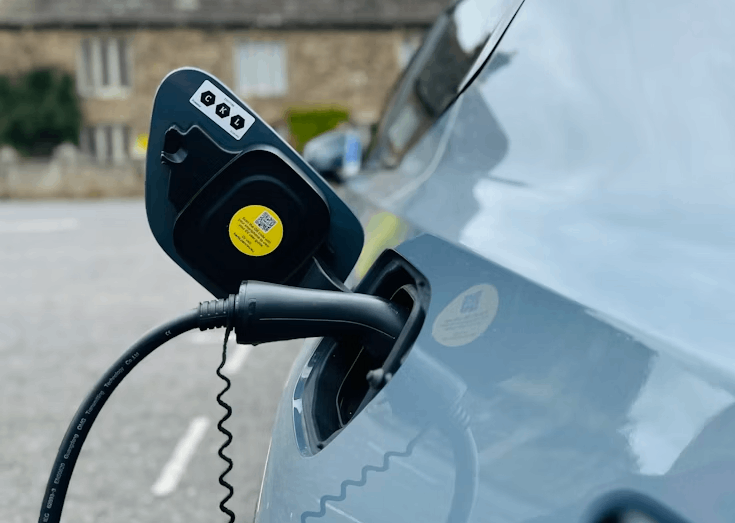
Plug in Hybrid connection

What Is a Battery Electric Vehicle and a Plug-In Hybrid Electric Vehicle?

Electric vehicles (EVs) are no longer a future concept. They're now available in great numbers and include various types, including battery electric vehicles and plug-in hybrid electric vehicles. If you're considering ditching gas for good, or maybe just cutting back, understanding these two main types can help you avoid a costly mistake. more Understanding Battery vs. Plug-In Hybrid Electric Vehicle Basics A battery electric vehicle runs completely on electricity and has neither a gas tank nor a tailpipe. A battery pack powers its electric motors to keep you on the road. These vehicles are incredibly simple compared with regular cars, with fewer than 20 moving parts vs. more than 2,000 in a gas engine. That's why they're so quiet, ideal for those 6 a.m. commutes through El Monte when everyone else is still sleeping. Plug-in hybrids have a different setup. These cars have both a battery and a gas engine and can switch between them. You can drive maybe 10 to 40 miles on just electricity before the gas engine kicks in. The battery's generally bigger than the one in regular hybrids, so you get more electric-only time with better power and torque. You charge the car like a battery electric vehicle, but it also charges itself while driving through regenerative braking. Battery vs. Plug-In Hybrid Electric Vehicles: Head-To-Head Comparison The biggest difference between battery electric vehicles vs. plug-in hybrid electric vehicles is their range. If you have a reliable place to charge at home, owning a battery electric vehicle means you'll wake up every morning with a "full tank," while a plug-in hybrid gives you the flexibility of using electric power for short trips and gas for longer ones. Range used to be a real problem for battery electric vehicles, but this has changed with modern models. The Lucid Air can go 512 miles on a single charge, while the Chevrolet Silverado EV goes 492 miles. The Tesla Model S has a range of 402 miles. Even affordable options, such as the Nissan LEAF, achieve 149 to 212 miles, while the Toyota bZ4X reaches 250 miles. Plug-in hybrids give you about 15 to 48 miles of electric-only range. The Mercedes-Benz S-Class S580e gets 48 miles, BMW models get around 34 miles, and the Prius PHEV delivers 40 to 45 miles before needing to switch to gas. Charging is where you'll really notice the difference. Battery electric vehicles require regular charging. Your options are Level 1 (regular house outlet), Level 2 (240V), or direct current (DC) fast charging. Level 1 can take 40 to 50 hours to hit 80%, while you can get a full charge with Level 2 in four to 10 hours. DC fast charging gets you to 80% in 20 minutes to an hour. Plug-in hybrids charge faster since their batteries are smaller. Level 1 chargers take five to six hours for a full charge, and Level 2 chargers take one to two hours. Most plug-in hybrids can't use DC fast charging, but you probably won't need it. Ownership Cost Analysis Battery electric vehicles cost about $618 annually to maintain, or $3,090 over five years. You're mostly dealing with tires, cabin air filters, and brake fluid. Plug-in hybrids cost about $716 to $749 per year since they have both electric and gas systems to maintain. Maintenance may include oil changes, battery checks, and filter swaps. In comparison, regular gas cars may cost up to $833 annually, or $4,165 over five years. Insurance is where things get expensive. EV owners pay about 49% more than gas car drivers, at $3,442 vs. $2,320 per year on average. Insurance for some models is reasonable, with the Toyota RAV4 Hybrid costing $1,776 annually, the Kia Niro Hybrid at $1,791, the Hyundai KONA EV at $1,867, and the Nissan Leaf at $1,932. Plug-in hybrids, such as the Chrysler Pacifica Hybrid ($1,986) and Honda Clarity PHEV ($2,404), fall somewhere in the middle. Operating costs are where EVs really shine, especially with SoCal gas prices. Charging at home typically costs $2 to $5 for a full battery, though public fast chargers cost more. A Chevrolet Bolt costs about $2.81 for 100 miles, compared with $10 to $13.70 for gas cars going the same distance. You'll need an electrician to install home charging at a cost of $500 to $1,200 for labor and $500 to $700 for the charging unit. The federal tax credit can save you up to $7,500, depending on various conditions. Choosing the Right EV for Your Needs Choosing between a battery electric vehicle and a plug-in hybrid requires an evaluation of how you drive. Battery electric vehicles work great for predictable routines, such as daily commutes, errands around town, and trips where you know you can charge. If you've got home charging and drive mostly in the Los Angeles area, a battery electric vehicle probably makes sense. Plug-in hybrids are better for long road trips, places where charging may be unreliable, or if you're not yet ready to go full electric. First-time buyers often overthink the range aspect. An EV with a range of 250 miles handles most people's needs, while long-distance drivers might want a plug-in hybrid or a fully electric model with a range of 400 miles or more. Explore EVs at Longo Toyota At Longo Toyota in El Monte, California, we have a range of battery electric vehicles and plug-in hybrids, including the RAV4, Prius, and bZ4X. If you're ready to learn more, contact our experts today. We'll help you determine whether a battery electric vehicle or a plug-in hybrid fits your lifestyle and budget. an electric car being charged by a charger by John Cameron is licensed with Unsplash License

Tom’s Watch Bar

The Best Los Angeles Sports Bars for Game Day Fun

There’s nothing quite like game day in Los Angeles. Whether you’re rooting for the Lakers, Dodgers, Rams, or your favorite college team, this city knows how to bring fans together. And while watching from home has its perks, the real excitement comes from gathering with a crowd, cheering in unison, and soaking in the energy of a packed sports bar. Luckily, LA is home to countless sports bars that offer wall-to-wall TVs, ice-cold drinks, and menus filled with game-day eats. From laid-back neighborhood spots to massive venues built for big crowds, Los Angeles has it all—so let’s dive into some of the best sports bars within a short drive of the city. more Tom’s Watch Bar If you’re looking for a sports bar that takes viewing seriously, Tom’s Watch Bar at LA Live is a must-visit. This place is essentially a sports fan’s dream, with a massive 360-degree viewing experience and TVs covering every wall. Whether it’s the NFL, NBA, UFC, or international soccer, Tom’s makes sure no big play goes unseen. The menu offers everything from sliders and wings to craft beers, making it a perfect spot for groups. Plus, its location near Crypto.com Arena makes it an ideal pre-game or post-game stop for Lakers or Kings fans. Busby’s West Busby’s West in Santa Monica is one of those sports bars that seems to have it all. Not only do they have tons of screens showing every major game, but they also offer pool, shuffleboard, and even a dance floor for when the game’s over. The space is huge, making it great for big groups, and the vibe is always lively without being overwhelming. Their food menu covers everything from pizza to burgers, while the drink selection keeps the party going. It’s the kind of place where you can spend an entire day—watching sports, eating, playing games, and celebrating wins with fellow fans. 33 Taps With locations in Silver Lake and Hollywood, 33 Taps is a go-to for fans who want to pair good sports viewing with a quality dining experience. As the name suggests, this bar offers an impressive selection of beers on tap, featuring both local brews and popular favorites. The sports coverage is equally strong, with TVs positioned perfectly around the restaurant so you’ll always have a clear view. Their food menu stands out, too—think hearty burgers, nachos piled high, and plenty of vegetarian-friendly options. The atmosphere is fun and welcoming, making it a solid pick for both die-hard fans and casual watchers. The Parlor Located on Melrose Avenue, The Parlor is one of LA’s most stylish sports bars. With a modern interior, spacious outdoor patio, and more than 50 HD TVs, it’s built for an elevated game day experience. The vibe here is energetic but upscale, attracting a mix of locals and visitors who want to watch the game in a trendy setting. Their menu features upgraded takes on sports bar staples, plus craft cocktails and local beers. The Parlor also hosts themed viewing parties for big sporting events, so it’s a great place to be when your team is making a playoff run. Big Wangs Big Wangs is a Downtown LA favorite, known for its no-frills, fun-loving approach to sports and food. The star of the menu is, of course, their wings—served in a variety of sauces and perfect for sharing with friends. With plenty of big screens and affordable drinks, this spot has built a loyal following among locals who just want a casual place to hang out and watch the game. The atmosphere is lively and a bit rowdy at times, making it a great fit if you’re looking to really get into the spirit of cheering alongside fellow fans. Barney’s Beanery A true LA institution, Barney’s Beanery has been serving sports fans since 1920. With multiple locations around the city, including the iconic one in West Hollywood, it’s a go-to spot for nearly any sporting event. TVs line the walls, and the menu is massive—covering everything from burgers and chili to breakfast dishes for those early games. Barney’s has a quirky, eclectic vibe that makes it feel different from your typical sports bar. It’s a place with history, personality, and a reputation for being a reliable spot to catch the big game, no matter the season. From the high-energy vibes of Tom’s Watch Bar to the historic charm of Barney’s Beanery, Los Angeles is overflowing with sports bars where fans can come together to celebrate every play, every point, and every win. Whether you’re in the mood for trendy and upscale or casual and classic, you’ll find a sports bar in LA that matches your style. So next time game day rolls around, don’t just watch from your couch—head out and join the action. And if you’re planning to hit your favorite spots in comfort and style, Longo Toyota has the perfect ride to get you there.

2025 Toyota Tundra Dashboard

2025 Toyota Tundra Interior Features

The 2025 Toyota Tundra interior combines durability and comfort with high-quality materials, family-friendly features, advanced technology, and a contemporary design. It's built for work tasks, weekday commutes, and rugged weekend adventures. Toyota offers the 2025 Tundra in seven trims, from the practical SR to the luxurious Capstone, catering to different needs and lifestyles. Check out this guide from our team at Longo Toyota in El Monte, California, and visit our dealership to see the 2025 Toyota Tundra interior features firsthand. more Toyota Tundra Dashboard and Infotainment Features The 2025 Toyota Tundra has a driver-focused dashboard with customizable displays, providing easy access to navigation, media, and vehicle controls. SR and SR5 models feature an 8-inch touch-screen infotainment system, and the higher trims upgrade to a 14-inch display. Wireless Android Auto and Apple CarPlay compatibility come standard across the lineup. The nonhybrid Limited comes equipped with a 4.2-inch color digital gauge cluster, while the base SR and SR5 models use a combination of analog gauges and the 4.2-inch cluster. The Limited Hybrid and higher trims include a 12.3-inch digital driver's display. Climate control features also vary by trim. The SR has single-zone automatic climate control, whereas the Limited and above upgrade to a dual-zone system. This feature is also available on the SR5 as part of the optional SR5 Premium Package. Seating and Comfort The 2025 Tundra's driver's seat offers substantial room, especially in higher trims. Both the Double Cab and CrewMax options feature 41 inches of headroom, 41.2 inches of legroom, 62.5 inches of hip room, and 65 inches of shoulder room, ample for even your tallest passengers. Eight-way power-adjustable driver and front passenger seats are available on all but the SR. Seat quality increases significantly with higher price points. Base models feature durable fabrics and hard plastics, while upper-level trims incorporate premium materials, such as SofTex- and semi-aniline-trimmed seating surfaces. Heated and ventilated front seats are standard on the Limited and higher, providing year-round comfort in Southern California's changeable climate. The 2025 Toyota Tundra Platinum, 1794 Edition, and Capstone come standard with massaging front seats. Passenger Space and Amenities The interior dimensions differ between the Double Cab and CrewMax options, with the latter offering significantly more space. While both configurations accommodate five passengers, the Double Cab features approximately 38.5 inches of headroom and 33.3 inches of legroom, and the CrewMax provides around 36.9-38.5 inches of headroom (depending on the optional moonroof) and 41.6 inches of legroom, respectively. Rear passengers enjoy 60.5 inches of hip room, regardless of your chosen cab style. A 60/40-split folding rear seat is standard, and the Limited and higher add a center armrest and cupholders. The Platinum, 1794 Edition, and Capstone have heated and ventilated second-row seats for optimal passenger comfort. Toyota designed the 2025 Tundra with abundant storage. Available features include a fixed center console with a bin, multiple cup holders, an inbuilt sunglasses holder, and a rear under-seat compartment that you can customize with removable and adjustable partitions for better organization. Safety, Driver-Assist, and Connectivity Technologies Every 2025 Tundra includes Toyota Safety Sense 2.5, which incorporates a pre-collision system with pedestrian detection, full-speed range dynamic radar cruise control, lane departure alert with steering assist, lane tracing assist, automatic high beams, and road sign assist. Select trims offer a blind-spot monitor with rear cross-traffic alert and front and rear parking assist with automatic braking. Audio systems range from a six- or nine-speaker setup to a premium 12-speaker JBL arrangement with a subwoofer and amplifier, which is standard on the Platinum, 1794 Edition, TRD Pro, and Capstone. Wireless smartphone charging is standard on the Platinum and higher trims and available on the Limited as part of a package. All models come with a 30-day or 3-GB trial to Wi-Fi Connect. The 2025 Tundra SR5, Limited, and Platinum offer the new Tow Tech Package, which features a wireless trailer camera system for enhanced safety and convenience. Interior Color and Customization Options The 2025 Toyota Tundra offers a range of interior color choices, which vary depending on the trim level. Options include Black, Boulder, Cockpit Red, Saddle Tan, and the Capstone-exclusive two-tone Black and White combination. The TRD Pro's Cockpit Red SofTex-trimmed seats feature contrast stitching and technical camo pattern inserts. In the 1794 Edition, you'll find American walnut wood grain interior trim. You can select features such as ambient lighting and a power tilt/slide panoramic roof with a power sunshade for a personalized cabin experience. Practical Features for Work and Recreation The Tundra's spacious cabin is designed for both work and recreation. Its practical features include ample passenger and cargo volume, advanced connectivity, thoughtful storage solutions, and durable materials. The pickup truck offers integrated towing technologies, such as a built-in brake controller that syncs with dash controls for easy adjustment and a standard tow hitch receiver and wiring harness for effortless connections when pulling a boat or jobsite equipment. The Platinum and Capstone models come with a 120-volt/400-watt power outlet in the rear seat, and this feature is available on the SR5 and Limited as part of an option package. For the 2025 model year, the Tundra introduces a new power tailgate with knee lift assist (on select trims), allowing for hands-free operation when your hands are full, and updated camera views for improved visibility when towing or parking. Explore the 2025 Tundra Interior at Longo Toyota The 2025 Tundra is a dependable, no-nonsense full-size pickup truck that balances ruggedness with comfort, making it suitable for both work and family needs. It offers seven different trims to fit various budgets and requirements, each with ample space, useful technology, and quality materials. If you need a vehicle that can handle challenging jobsites and weekend mountain trips, the Tundra is a great choice. To find the model that best fits your lifestyle and explore the Tundra's impressive interior features, contact us or visit our Longo Toyota dealership to schedule a test drive.

2025 Toyota Camry vs. Corolla

2025 Toyota Camry vs. Corolla

Choosing between the Toyota Camry and the Corolla can be difficult. Both are excellent choices if you're shopping for a Toyota sedan in El Monte, but they address different buyer preferences. One provides power and roominess, while the other focuses on economy. Our Longo Toyota team has investigated the differences between the Corolla and the Camry, including the most common car comparison specs, so you can choose the one that's right for you. more Performance and Engine Comparison The 2025 Camry went hybrid-only this year. Toyota's fifth-generation hybrid system pairs a 2.5L four-cylinder with electric motors, delivering 225 hp in front-wheel drive and 232 hp with all-wheel drive (AWD). The Corolla uses a smaller setup — the hybrid version has a 1.8L engine making 138 hp. Gas-powered Corollas get 169 hp with their 2.0L engine and continuously variable transmission (CVT). Real-world testing shows the performance gap clearly. The Camry XSE Hybrid hits 60 mph in 6.6 seconds in Sport mode. Car and Driver tested the XSE AWD and got a 0-to-60 mph time of 6.8 seconds, while the Corolla FX required 8.1 seconds to reach 60 mph. That difference matters when you're merging onto Interstate 405. Fuel Economy and Efficiency Analysis These sedans are both fuel-efficient. The 2025 Camry LE is EPA-rated at 53 mpg city/50 mpg highway/51 mpg combined; the LE AWD gets 51 mpg city/49 mpg highway/50 mpg combined ratings. The SE, XLE, and XSE trims achieve 48 mpg city/47 mpg highway/47 mpg combined. The Corolla LE is rated at 32 mpg city/41 mpg highway/35 mpg combined, while the updated ratings for Corolla Hybrid models are 50 mpg city and 43 mpg highway. These figures may differ slightly depending on the configuration. Interior Space and Comfort Comparison The difference in interior space is immediately apparent when you get inside their cabins. The Camry offers more cargo room, with 15.1 cubic feet of trunk space compared to 13.1 cubic feet for the Corolla. Rear passengers get 38 inches of legroom in the Camry compared to 34.8 inches in the Corolla. Those extra 3.2 inches make a real difference during long drives navigating L.A. traffic. Their technology packages reflect each car's market position. Higher Camry trims come with a 12.3-inch touch screen, wireless Apple CarPlay and Android Auto, plus over-the-air updates. The base Camry LE comes standard with an 8-inch screen, dual-zone climate control, and a wireless charging pad. The XLE and XSE models add 12.3-inch digital instrument displays. The Corolla LE starts with an 8-inch infotainment touch screen and wireless phone connectivity, and the FX trim adds a 10.5-inch touch screen and sport seats. Safety Features and Ratings Safety technology comes standard on both, though the Camry edges ahead in ratings. U.S. News and World Report gives the Corolla a rating of 9.3 out of 10 for safety, while the Camry scores 9.6. That small gap reflects the Camry's structural advantages due to its larger size and more standard safety features than the Corolla. The 2025 Camry earned the Insurance Institute for Highway Safety's Top Safety Pick status with "Good" ratings across moderate overlap front crash, side impact, roof strength, and head restraint protection. Standard safety equipment is generous across both lineups. Toyota's Safety Sense 3.0 includes forward collision warning, lane-departure alerts, adaptive cruise control, automatic high beams, pedestrian detection, and traffic sign recognition as standard on every model. The Camry has eight airbags and comprehensive protection systems. Blind-spot monitoring and rear cross-traffic alert are standard on the Camry but cost extra on the Corolla. Pricing and Trim Level Breakdown The 2025 Corolla LE gas-powered version starts at $22,325 MSRP; the Hybrid LE starts at $23,825. The SE gas-powered model has a starting MSRP of $24,765, with its hybrid version costing $26,265 MSRP. The XSE trim, available only in a gas-powered version, costs $28,040, while the XLE Hybrid has a $28,190 MSRP. The Camry LE starts at $28,700 MSRP and the SE at $31,000, while the XLE and XSE models' MSRPs are $33,700 and $34,900, respectively. A starting MSRP comparison shows $28,700 for the Camry versus $22,325 for the Corolla. Toyota's manufacturer financing specials make both accessible, and our Longo Toyota finance department is skilled at matching buyers with offers. These incentives help bridge the price gap, particularly for qualified buyers seeking to purchase a newer Toyota. Exterior Design and Styling Differences Let's look at the Camry vs. the Corolla's sizes; the difference is apparent when you view them side by side. The Camry is larger than the Corolla in all dimensions, which affects interior space and highway feel. Their exterior designs target different buyers. The Camry features sculpted body lines, amber lighting accents, a honeycomb grille, and contemporary styling with 18- or 19-inch wheels. LED headlights and taillights, along with a fresh grille, create a polished look. The Corolla features classic sedan styling, characterized by a sloped hood, LED headlights, and a black mesh grille. The Corolla has 16-inch alloy wheels as standard, with other options available. Reliability and Maintenance Considerations Both cars benefit from Toyota's legendary reputation for reliability. The 2025 U.S. Vehicle Dependability Study awarded Toyota named the Corolla the best compact car and the Camry the best midsize car — both models regularly last beyond 200,000 miles with proper maintenance. Edmund's five-year ownership costs show the complete picture. The average Camry costs about $31,797 to own, while a Corolla costs about $28,363. Both cars offer a three-year/36,000-mile basic warranty and five-year/60,000-mile powertrain coverage. The Camry hybrid includes an eight-year/100,000-mile hybrid component warranty and 10-year/150,000-mile battery coverage; these are also extended to the Corolla Hybrid models. Find Your Perfect Toyota Sedan What matters most for your driving needs in El Monte? The Corolla is ideal for daily commuters who seek Toyota reliability without paying for features they won't use. Its size is especially well-suited for navigating crowded El Monte streets or searching for parking. Choose the Camry if you need extra power for confident freeway merging, more space for passengers and cargo, premium features such as larger screens and nicer materials, and smoother rides during long commutes. Its hybrid-only powertrain delivers both performance and efficiency, while the available AWD comes in handy on trips to the mountains or during the rare rainy days in Southern California. Test-Drive Both Cars at Longo Toyota Today Experiencing both cars on real roads is essential to your decision. You can take a virtual test-drive of both vehicles, or contact us to test-drive the 2025 Camry and Corolla back-to-back on El Monte's streets and highways. Our team can explain current deals and financing options and help you find the trim and color combination that best suits you. There's no reason to wait; we're eager to answer your questions and introduce you to both models.

2025 Toyota Corolla

The Secret to The Toyota Corolla's Legendary Reliability

The Toyota Corolla has built its rock-solid reputation as a dependability champion through years of proven performance and satisfied owners. This car consistently tops reliability charts, making it perfect for El Monte drivers who'd rather skip flashy bells and whistles in favor of a ride that just works. At Longo Toyota, we'll explore the factory methods, engineering, and real-life statistics that explain why Toyota Corollas are reliable and continue to set the bar in 2025. more The Philosophy Behind Toyota's Reliability Toyota's reliability comes from its Toyota Production System (TPS), a manufacturing methodology that prioritizes quality through continuous improvement and rigorous checks, which is inspired by the Japanese philosophy known as Kaizen. TPS is based on two pillars: Just-in-Time production (manufacturing at a pace that meets only the immediate needs, thereby reducing excess and waste) and Jidoka (smart automation with human oversight for quality control). This combination allows Toyota to efficiently and effectively build top-quality cars. Toyota has also chosen to stick with proven methods instead of chasing tech and flashy marketing. It makes careful, incremental improvements rather than complete overhauls, a strategy that has delivered results, with J.D. Power ranking Toyota third out of 29 car brands for overall dependability. Core Engineering Features That Make Corollas Last The Corolla's longevity starts with a straightforward engine. There's one choice: a 2.0-liter four-cylinder engine that produces 169 horsepower and 151 pound-feet of torque. It's not as powerful as some other engines, but it's built to last, not win races. The Corolla's front-wheel drive with a continuously variable automatic transmission is a simple setup, but this means there are fewer things to break. Toyota engines typically last around 200,000 miles and often reach beyond 300,000 miles before needing major work. Toyota's careful approach shows throughout the Corolla. Parts are built tougher than needed — a buffer that other carmakers often skip to save money or boost performance statistics. The suspension and frame contribute to long-term strength, while electrical systems keep working year after year. Real-World Reliability Data: What the Statistics Show The Corolla's reliability isn't just talk. Hard facts show its dependability, with the 2022 model scoring 85 out of 100 from J.D. Power and winning the Compact Car award in J.D. Power's 2025 Vehicle Dependability Study. Consumer Reports expects the 2025 Corolla to beat most new cars in reliability, while RepairPal ranks the Toyota Corolla first among 36 compact cars with a reliability rating of 4.5 out of 5 stars. Both the National Highway Traffic Safety Administration and the Insurance Institute for Highway Safety gave the 2025 Corolla high safety marks. The Toyota brand backs up the Corolla's success. Consumer Reports’ 2025 rankings place Toyota third for reliability, just behind Subaru and Lexus. J.D. Power ranks it third in the mass market with 162 problems per 100 vehicles, just behind Lexus (140) and Buick (143). Resale and trade-in values for the Corolla also speak to its reliability. CarEdge ranks the Toyota Corolla first for the lowest five-year depreciation, and Kelly Blue Book describes the 2025 model's resale value as “enviable.” Most and Least Reliable Corolla Model Years (2015-2025) Some Corolla years shine brighter than others. The 2015 models stand out as exceptional performers with nicer interiors, roomier cabins, improved legroom, and upgraded materials. For newer options, 2018-2021 Corollas offer modern features and advanced safety. Consumer Reports picks the 2019 model as a top used car choice, featuring adult-friendly back seats, the Toyota Safety Sense P system, and a combined fuel economy of 32 mpg. Not all years hit the same notes. The 2014 Corolla experienced interior rattles, wobbly dashboard pieces, and airbag issues. This year sticks out as a rare miss in Corolla's normally strong track record. Common Problems and How Toyota Addresses Them Even reliable cars such as the Corolla face occasional hiccups. Some 2024 owners report infotainment issues, including slow startup times, poor Bluetooth connections, and random music playback. Other reported issues include trouble with the exhaust system parts (muffler, pipes, catalytic converter) and with engine and transmission behavior. Toyota tackles these issues through software updates and factory improvements. It typically addresses problems promptly via service bulletins, recalls when needed, and design tweaks in later model years. This quick response to fixing things helps maintain its strong reputation for reliability. It's not about never having problems — it's about solving them properly when they happen. Maintenance Requirements That Support Long-Term Reliability Proper care helps Corollas reach impressive mileage numbers. A well-maintained Toyota Corolla can run for 250,000 to 300,000 miles, with many owners keeping them for 15 years or more. Toyota's recommended maintenance schedule includes tire rotations every 5,000 miles, oil changes every 10,000 miles, and replacement of the cabin and engine air filters every 30,000 miles. Experience the Toyota Corolla's Reliability Today If you're looking for dependable transportation in El Monte, the Toyota Corolla's careful engineering and proven track record stand out, making it a solid choice. Experience Toyota's legendary reliability and visit us at Longo Toyota to see our Corolla lineup and discover why drivers trust these cars year after year.

Mr. Jack O’Lanterns Pumpkin Patch

Where to Get Pumpkins Near El Monte, CA

Fall is in the air, and that means one thing—pumpkin season is officially here! Whether you’re on the hunt for the perfect jack-o’-lantern, looking to snap some festive photos, or just want to spend a fun-filled afternoon with your family, there are plenty of pumpkin patches near El Monte ready to welcome you. The best part? You don’t have to drive far. There are several charming, exciting, and festive pumpkin patches all within a 30-minute drive of El Monte. From classic hayrides and corn mazes to petting zoos and bounce houses, there’s something for everyone right in your backyard. So grab your flannel, gather the family, and let’s explore the best pumpkin patches near El Monte this fall! more Mr. Jack O’Lanterns Pumpkin Patch Just about 25 minutes away in the heart of Los Angeles, Mr. Jack O’Lanterns Pumpkin Patch is a go-to spot for urban pumpkin fun. This family-owned patch offers a wide selection of pumpkins, plus games, carving kits, bounce houses, and festive photo ops. It’s ideal for those who want the full fall experience without the long drive or massive crowds. Bonus: They even offer local delivery if you’re in a pinch! Whittier Pumpkin Patch Only 15 minutes from El Monte, the Whittier Pumpkin Patch is a neighborhood favorite. This spot is cozy and great for younger kids, offering pony rides, bounce houses, and lots of family-friendly activities. Their pumpkins range from tiny tabletop gourds to big carving beauties. It’s an easy choice for a laid-back fall outing that still packs in plenty of charm. Pasadena Pumpkin Patch Located just 20 minutes north, the Pasadena Pumpkin Patch sits right near the Rose Bowl and offers a classic pumpkin-picking experience. The patch features hay bales, fall-themed decor, and a wide range of pumpkins. It’s not as elaborate as some larger farms, but it more than makes up for that with convenience, local vibes, and plenty of great photo spots. It’s also a good option if you want to combine pumpkin picking with a day in Old Town Pasadena. Cal Poly Pomona Pumpkin Fest A fall favorite, the Cal Poly Pomona Pumpkin Fest is a full-scale seasonal event with thousands of pumpkins, a petting zoo, corn maze, sunflower fields, and more. Open through October, this fest is a great pick for families looking for a full day of fun. It’s about a 25-minute drive from El Monte, and totally worth it for the immersive farm experience. Be sure to buy tickets online in advance—it’s a popular spot that draws crowds every weekend. Shawn’s Pumpkin Patch Though it’s closer to 30 minutes depending on traffic, Shawn’s Pumpkin Patch is worth mentioning for its vibrant, carnival-style atmosphere. It features everything from obstacle courses and petting zoos to corn pits and pumpkin decorating stations. It’s especially great for younger children and makes for a fun weekend adventure if you’re up for a short drive west. You’ll find it off Sepulveda Boulevard, packed with fall fun in every corner. Tina’s Pumpkin Patch Also flirting with the 30-minute drive limit is Tina’s Pumpkin Patch in Sherman Oaks. Located at the Westfield Fashion Square, this patch includes pony rides, petting zoos, a train ride, and of course, a great variety of pumpkins. It’s compact, accessible, and filled with fun—perfect for a combo of pumpkin hunting and mall shopping or dining. Lopez Ranch Pumpkin Patch Lopez Ranch is a quiet gem tucked along Ventura Boulevard. It’s a smaller, traditional patch with high-quality pumpkins and a laid-back atmosphere. This one is perfect for folks who want a no-fuss pumpkin-picking experience without the crowds or the chaos. Families and couples love the nostalgic charm and beautiful displays. Irwindale Spooktacular Just about 10 minutes from El Monte, the Irwindale Spooktacular event hosted at Irwindale Park features pumpkin picking, costume contests, games, and other seasonal activities. While not a traditional patch, it’s a great local community event that gives off all the cozy fall feels. Check the city’s parks and rec website for updated dates and times. Downey Pumpkin Patch Located just 20 minutes south, the Downey Pumpkin Patch delivers a fun experience with inflatable slides, carnival games, and a nice selection of pumpkins. It’s very family-oriented and ideal for younger kids who want a little bit of everything. The patch is well organized and often includes food vendors or treats nearby. Montebello Pumpkin Patch Only a stone’s throw from El Monte, the Montebello Pumpkin Patch is one of the easiest options on the list. This small but cheerful patch offers local families a great way to enjoy fall without traveling far. Expect pumpkins of all sizes, cute photo backdrops, and family-friendly attractions. It’s ideal for a quick trip after school or on a weekend afternoon. Fall Fun Just Minutes from El Monte There’s no shortage of pumpkin-filled adventures near El Monte this fall. Whether you’re looking for a full-blown festival experience like the Cal Poly Pomona Pumpkin Fest, or something smaller and closer to home like the Montebello or Whittier Pumpkin Patch, there’s a perfect patch waiting for you. From hayrides to pony rides, and everything in between, your next fall family memory is just around the corner. And if you're out pumpkin hunting and thinking it might be time to upgrade your ride, don’t forget to stop by Longo Toyota, right here in El Monte. They’re proud to serve local families and help you drive into every season in style. Happy pumpkin picking, El Monte! 🍂🎃

Tierra Mia Coffee

Where to Grab a Cup of Coffee in West Covina, CA

West Covina might be famous for its shopping spots and sunny SoCal charm, but let’s not overlook one very important part of the city’s local flavor—its coffee scene. Whether you're rushing out the door and need a quick caffeine fix or you're searching for a cozy café to get some work done or catch up with friends, there are plenty of great places to grab coffee in and around West Covina. From trendy modern shops to family-run favorites, this part of the San Gabriel Valley has something brewing for every kind of coffee lover. Let’s take a tour through some of the best coffee shops within a 30-minute drive of West Covina, CA—each offering a unique atmosphere and a seriously good cup of joe. more Tierra Mia Coffee If you haven’t tried Tierra Mia Coffee, you’re missing out on one of the most flavorful and creative coffee experiences near West Covina. Located in El Monte (just a quick drive from the heart of the city), Tierra Mia brings a Latin twist to classic espresso drinks. Their signature Horchata Latte and Mocha Mexicano are fan favorites, and their bakery case is stocked with fresh pastries like tres leches muffins and guava cheese danishes. The vibe is energetic and welcoming, perfect for a quick pick-me-up or a mid-morning hangout with friends. Café Valer Café Valer, tucked inside West Covina’s Plaza West Covina mall, is a hidden gem that brings upscale coffeehouse vibes without the fuss. Their signature coffee is smooth and strong, often featuring single-origin beans and inventive drinks like lavender lattes and Spanish-style café con leche. The stylish interior—with marble tables, hanging lights, and Instagrammable drinks—makes it a go-to for anyone looking for both quality and aesthetics. Plus, they serve light bites like sandwiches and desserts, making it easy to linger a little longer. Reborn Coffee Located just a short drive over in Brea, Reborn Coffee is a minimalist’s dream with a modern, clean design and a dedication to craft coffee. Reborn’s beans are carefully roasted and brewed with precision, and their cold brew game is strong (try the Nitro Cold Brew if you like bold and smooth). The staff is super knowledgeable and always ready to explain what makes their coffee stand out, from their patented water purification process to their direct-sourcing model. It’s a sleek spot for true coffee aficionados. Stereoscope Coffee For those who enjoy sipping on high-end coffee in a modern, artistic space, Stereoscope Coffee in Buena Park is well worth the short drive. This specialty coffee shop focuses on precision brewing and single-origin beans, offering everything from hand-poured pour-overs to velvety flat whites. Their interiors are minimalist, filled with natural light, and perfect for working, reading, or just enjoying a peaceful cup. It’s a must-visit if you appreciate the science behind coffee just as much as the taste. Bad Coffee Despite the name, there’s nothing “bad” about this Pomona-based favorite. Bad Coffee is a playful, stylish café that’s big on flavor and personality. Their signature Bad Latte (featuring brown sugar and oat milk) has built a cult following, and their seasonal drinks—like ube cold brews and strawberry matcha—are worth the drive. The space is colorful and welcoming, often filled with students, creatives, and folks just looking for a chill environment to enjoy a good drink. They also sell fun merch and offer creative pastries that change often. Great Coffee is Always Nearby in West Covina From Latin-inspired lattes to minimalist espresso bars, West Covina is surrounded by a diverse lineup of coffee shops that each bring something special to the table. Whether you're grabbing something quick at Café Valer or taking a coffee road trip to Bad Coffee in Pomona, there's no shortage of great spots to satisfy your caffeine cravings. And while you’re out exploring the area with a latte in hand, don’t forget to check out Longo Toyota —a local favorite just like these coffee shops. Whether you're fueling up your morning or your car, West Covina’s got you covered. ☕🚗

2025 Toyota Prius vs. Kia Niro

2025 Toyota Prius vs. Kia Niro

If you're shopping for a hybrid, you've probably narrowed it down to two standout choices: the 2025 Toyota Prius and the Kia Niro. Both cars deliver solid fuel efficiency and eco-friendly driving, but they couldn't be more different in their approach. One prioritizes maximum fuel economy and advanced hybrid tech, while the other focuses on practical crossover utility and family-friendly space. Our Longo Toyota team has broken down the details of both vehicles’ design, performance, safety, and value so you can figure out which hybrid works best for your El Monte life. more Design and Interior Features These two hybrids take opposite design approaches. Toyota’s 2025 Prius has a bold, aerodynamic look with sharp angles and futuristic styling. It's all about slicing through the air for maximum efficiency, even if that means looking a bit unconventional. Meanwhile, Kia's Niro plays it safe with mainstream crossover appeal. The Prius turns heads at every stoplight, while the Niro blends right into suburban driveways. A look inside the cabins tells you which automaker prioritizes what. The Kia has 105.1 cubic feet of passenger volume compared to the Prius’ 91.2 cubic feet. Your back seat passengers will appreciate the Niro's generous 39.8 inches of legroom vs. the Prius’ 34.8 inches. Front seat riders get a slight edge in the Prius, though, with 43.2 inches of legroom. Toyota provides 38 inches of front headroom, while rear passengers get 36.4 inches, which works fine for most adults. Kia's Niro offers 22.8 cubic feet behind the rear seats, expanding to 63.7 cubic feet with seats folded. The standard Prius gives you 23.8 cubic feet, while the Prius Plug-In Hybrid (formerly known as the Prius Prime) drops to just 20.3 cubic feet behind rear seats, expanding to 26.7 cubic feet with seats down. Both hybrids keep up with modern demands; Kia's dual 10.25-inch screens for the instrument cluster and touch screen come with five USB ports and wireless device charging. Toyota counters with an 8-inch standard touch screen (12.3-inch available, standard on the Limited trim), plus six USB-C ports and wireless Android Auto/Apple CarPlay. Performance and Efficiency Power and acceleration reveal different automotive philosophies. Toyota's 2025 Prius has a 2.0-liter four-cylinder engine delivering from 194 to 220 hp, depending on which version you choose, with 139 lb-ft of torque and quick 0-to-60 mph times of 6.6 to 7.2 seconds. This acceleration is necessary when merging onto Los Angeles County freeways. Kia's standard Niro hybrid uses a smaller 1.6-liter four-cylinder paired with an electric motor for 139 horsepower total, hitting 0 to 60 mph in a leisurely 8.9 seconds. The plug-in hybrid version produces 180 hp with 195 lb-ft of torque. Fuel economy is where the Prius dominates. Toyota's regular 2025 Prius hybrid achieves 57 mpg city/56 mpg highway/57 mpg combined, and its Prius Plug-In Hybrid delivers 220 hp while returning up to 127 MPGe in electric/hybrid mode and 48 to 52 mpg in gas/hybrid mode. Kia's regular hybrid manages 53 mpg city/45 mpg highway/49 mpg combined, while the plug-in gets 53 to 54 combined mpg. The Prius also wins on electric-only driving capabilities. Toyota's Prius plug-in hybrid version can travel up to 44 miles on electric power, with other models getting 40 miles of electric range. Kia's plug-in hybrid offers 32 to 33 miles of electric-only range, still useful for short commutes around El Monte but noticeably less than the Prius. Charging times differ: the Toyota takes four hours with Level 2 charging or 11 hours with standard household charging, while Kia offers faster two- to three-hour Level 2 charging. Safety and Reliability Safety awards and ratings favor Toyota in this Prius vs. Kia Niro matchup. The Prius won the Insurance Institute of Highway Safety's (IIHS) Top Safety Pick+ award for 2025, and the National Highway Traffic Safety Administration (NHTSA) gave the Prius Plug-In Hybrid a five-star overall safety rating. The Prius Plug-in Hybrid averaged five out of five stars from the NHTSA compared to the Kia Niro's 4.28 out of five stars. While Kia also received a five-star overall rating from NHTSA, the lower average suggests Toyota performs more consistently across all testing categories. Both cars come with abundant modern safety features, though they're bundled differently. Kia's Niro includes auto emergency braking with pedestrian and cyclist detection, blind-spot collision warning, rear cross-traffic collision-avoidance assist, lane-keeping and lane-following assist, and highway-driving assist as standard equipment. It also comes with pedestrian detection, blind-spot monitoring, and rear cross-traffic alert. Toyota matches these capabilities while delivering the superior overall safety performance reflected in those higher ratings. Reliability and warranty coverage create an interesting trade-off between proven history and extensive protection. Toyota's legendary reliability reputation is backed up by real data — the Prius Prime earned an 8.1 out of 10 quality rating from iSeeCars compared to the Niro's 7.4 out of 10. Kia's warranty protection is good; it offers a five-year/60,000-mile basic warranty and a 10-year/100,000-mile powertrain warranty, while Toyota provides a three-year/36,000-mile basic warranty and a five-year/60,000-mile powertrain warranty. Hybrid-related components that require repairs needed to correct defects in materials or workmanship are covered for eight years/100,000 miles. Which Hybrid Fits Your California Lifestyle? The winner of the 2025 Kia Niro vs. the Toyota Prius showdown depends on what matters most to you. The Prius excels for efficiency-focused commuters who want maximum fuel economy, quicker acceleration, and longer electric driving range. Its 57-mpg combined rating and 40- to 44-mile electric range make perfect sense for daily San Gabriel Valley commuters who prioritize operating costs and environmental impact. The IIHS Top Safety Pick+ award and stronger reliability ratings add extra peace of mind for long-term ownership. But families needing more passenger space and cargo capacity may prefer the Niro's 105 cubic feet of passenger volume and 63.7 cubic feet of maximum cargo space. Value considerations reveal interesting trade-offs between initial costs and long-term ownership. Toyota's base 2025 Prius starts at $28,350 MSRP for the regular hybrid; the Plug-In Hybrid SE costs around $33,375 MSRP. Kia's 2025 Niro starts at $26,990 MSRP, while the plug-in hybrid begins at $34,490 MSRP, slightly less expensive than Toyota's plug-in model. However, depreciation patterns strongly favor Toyota: over five years, the Niro loses 40.4% of its value while the Prius loses just 31.1%, potentially saving you thousands in resale value. Test-Drive a Prius at Longo Toyota Today If you're in the market for the best overall hybrid experience, the 2025 Toyota Prius delivers great value through its unmatched fuel economy, stronger safety ratings, better acceleration, and superior resale value. Are you curious about how the Prius handles? Try our virtual test-drive tool, or use our convenient online contact form to schedule a visit and an in-person test-drive through El Monte. Our friendly staff is ready to provide expert guidance on choosing the right Toyota hybrid.

2025 Toyota Sienna vs. Honda Odyssey

2025 Toyota Sienna vs. Honda Odyssey

If you're shopping for a family minivan, you'll want to check out the biggest players in the market: the 2025 Toyota Sienna and the 2025 Honda Odyssey. Each model shines in different areas. The Sienna offers impressive fuel savings, while the Odyssey has superior cargo space. To figure out which minivan is right for your family, the Honda Odyssey vs. the Toyota Sienna, join our team at Longo Toyota in El Monte, California, as we dig into what makes each model tick. more Pricing and Value The Odyssey comes in four trims with a range of starting MSRPs: EX-L: $42,795 Sport: $43,895 Touring: $47,495 Elite: $51,695 The Sienna offers six trims: LE: $39,485 XLE: $44,295 XSE: $46,940 Limited: $50,500 Woodland Edition: $50,725 Platinum: $56,445 The Sienna's and the Odyssey's price ranges are largely similar, but with a nearly $5,000 difference between their top trims, Honda's best is about 10% cheaper. For more savings, Honda also sweetens the deal with $500 back for existing owners, as well as exclusive lease deals. However, there's more to consider than just the ticket price. You need to think long-term too. Kelley Blue Book ranked the Toyota Sienna in seventh place for best resale value for minivans. It also named Toyota as the best brand for resale value for the eighth time in nine years, demonstrating the automaker's dedication to quality and value. Performance and Efficiency The Honda Odyssey uses a 3.5-liter V-6 that outputs 280 horsepower. With a 6.4-second 0-to-60 mph sprint time, the Odyssey is responsive at red lights. The hybrid Toyota Sienna pairs a 2.5-liter four-cylinder with an electric motor, producing 245 horsepower. With a 7.5-second 0-to-60 sprint time, the Sienna isn't as fast off the line as the Odyssey. Both vans can tow up to 3,500 pounds, enough for a small camper or Jet Ski. When it comes to gas mileage, the Sienna is miles ahead of the Odyssey. The front-wheel-drive model gets 36 mpg in both the city and on the highway, while all-wheel-drive (AWD) models get 34 mpg city and 36 mpg highway. The Odyssey is much less efficient, only getting 19 mpg city and 28 mpg highway. That translates to about $500-$750 saved yearly on gas with the Sienna, depending on how much you drive and your local prices. Toyota also offers AWD, which Honda doesn't. If you live somewhere snowy or wet, that can be a significant deciding factor. The Sienna sips fuel like a compact car while handling winter roads like an SUV. Interior Features and Passenger Comfort Both minivans can hold eight passengers, but they offer different seating and storage configurations. Honda's Magic Slide second-row seats are brilliant engineering — slide them sideways for easier third-row access, tilt them forward, or remove them completely for massive hauling space. Every Odyssey includes heated front seats standard, which is ideal for chilly morning school runs. To compare, Toyota's second-row seats are bolted in place, making it a less versatile option, especially if you regularly haul sports gear or large furniture. For interior dimensions, the Sienna and the Odyssey are evenly matched, with less than an inch difference in leg and headroom. The Honda has slightly more legroom in the first and second rows with 40.9 inches, while the Sienna has a bit more room in the third row with 38.7 inches. The Toyota also has more headroom in the first and second rows, but the Honda is barely taller in the third row. For cargo capacity, the Honda Odyssey absolutely dominates. Behind the third row, the Odyssey has 32.8 cubic feet, while the Sienna has 33.5 cubic feet, making them nearly identical for daily grocery runs. However, fold that third row down, and the Honda jumps to 86.6 cubic feet versus Toyota's 75.2. The Sienna maxes out at 101 cubic feet. The Odyssey is cavernous by comparison, with up to 155.8 cubic feet of space with all the seats down — that's a 44 cubic foot difference. Safety and Reliability Both vans have your back with top-tier safety features. They've each earned Top Safety Pick awards from the Insurance Institute for Highway Safety. Honda edges ahead with a 9.0/10 U.S. News safety score and perfect five-star National Highway Traffic Safety Administration crash ratings. Toyota's not far behind at 8.9/10. Overall, you can't go wrong with either van when it comes to protecting your family. Both pack similar tech such as forward collision warning, lane-keep assist, and driver-fatigue systems. For warranty coverage, J.D. Power gives Honda a tiny lead — 77/100 versus Toyota's 76/100. However, Toyota offers a massive 10-year/150,000-mile warranty for the hybrid battery. That's serious peace of mind Honda can't match with its traditional powertrain. Both brands stand behind their vans with solid warranties, but Toyota goes the extra mile by covering those expensive hybrid components for the long haul. When you're talking about buying a family vehicle that'll last the next decade, that warranty difference matters. Design and Exterior Features The 2025 Odyssey's refreshed aesthetic includes a new grille, reshaped bumpers, and fresh 18/19-inch wheels. It comes in seven paint options: Crystal Black Pearl, Modern Steel Metallic, Smoke Blue Pearl, Solar Silver Metallic, Platinum White Pearl, Radiant Red Metallic II, and Sonic Gray Pearl. Overall, the Odyssey is practical but stylish. The Toyota Sienna's design direction is much bolder, shaking off the soccer-parent reputation of older minivans. It turns heads with a wide grille and thin Bi-LED headlights, exclusive 20-inch machined-finish alloy wheels, and upscale chrome accents. If Honda is business casual, Toyota is weekend warrior chic. The Odyssey stretches 205.2 inches long, 78.5 inches wide, 69.6 inches tall, making it 1.5 inches longer and 1.1 inches taller than the Sienna. Yet despite being physically bigger, it also weighs 135 pounds less than the hybrid Sienna. This size advantage directly translates to the Odyssey's extra interior room and cargo capacity, while the Sienna's more compact footprint helps with tight parking spots and contributes to better fuel economy. Which Minivan Wins Your Family's Heart? Edmunds rated the Sienna at 8.3/10 versus the Odyssey's 8.1/10. The Sienna won points for clever small-item storage solutions and its exclusive AWD option, while the Odyssey scored high marks for flexible seating arrangements and overall passenger comfort. When comparing the Odyssey vs. the Sienna, both are excellent choices. It mostly depends on your family's priorities. If you want to check out the Sienna for yourself, visit us at Longo Toyota for a test-drive. Our team is here to show you why the Sienna will make a great family hauler for years to come.

Toyota Hybrid Battery

How Long Does a Toyota Camry Hybrid Battery Last?

Hybrid vehicles have been around for quite some time, but there still is some mystery surrounding batteries. Namely, how long these batteries can last. If you're wondering how long a Toyota Camry hybrid battery lasts, you're in the right place. Knowing what to expect from your hybrid battery will help you plan your vehicle's maintenance schedule and your budget for potential replacements, and enhance the value of your investment. more How Camry Hybrid Batteries Work The Camry hybrid operates on an innovative dual-power system that combines a regular gas engine with an electric motor. The battery pack stores energy and releases it when needed. The system automatically decides whether to use electric power, gas power, or both. Regenerative braking converts kinetic energy into electricity, which is stored in the battery. Temperature control is essential for battery health. The battery should stay under 110 degrees Fahrenheit to avoid heat damage. Since excessive heat accelerates battery degradation, built-in cooling fans, coolant pumps, and sensors are designed to maintain your vehicle's optimal temperature. Toyota Hybrid Battery Lifetime and Types Toyota uses two main battery types in its Camry hybrids. Although nickel-metal hydride batteries typically last between eight and ten years, are more affordable, and exceptionally reliable, they tend to be bulky and unable to store as much energy. Most Toyota hybrid vehicles use both nickel-metal hydride and lithium-ion batteries, depending on the specific model. Lithium-ion batteries are a relatively new technology and typically last between 10 and 12 years. While they're lighter, more powerful, and fit in smaller spaces, they cost more upfront and require advanced cooling systems to maintain optimal performance. Signs Your Camry Hybrid Battery Is Failing The warning lights on your dashboard serve as early warnings of potential issues. Yellow warning lights indicate minor issues such as outdated software or temporary diagnostic errors. Red warning lights suggest serious hybrid system faults that require immediate attention, potentially indicating battery pack failure or inverter malfunction. You'll notice changes as the battery starts to decline. Some common signs include: Poor performance Slower acceleration Slower engine response times Check engine light coming on More gas consumption Some other signs? The battery charge indicator may act strangely, and your gas engine may run more often than usual. The hybrid system may also make strange noises, or the cooling fans may run all the time to keep the system cool. You know the usual noises of your ride, so if you notice any big changes, it's important to take your Camry Hybrid in for a checkup. Extending the Life Span of Your Hybrid Battery Regular maintenance significantly affects the longevity of your battery. It's recommended to clean your cooling fan every two or three years. Replacing the cabin filter every year or 15,000 miles can resolve many issues. You should perform a hybrid health check every 5,000 miles, check the battery cooling system regularly, and clean the filter every 20,000 miles or two years. Heat poses a significant threat, especially in hot climates, as it accelerates the chemical reactions in lithium-ion batteries, thereby increasing battery wear and reducing longevity. Park your car in the shade or a garage whenever you can. If you have a plug-in hybrid, precondition the car while it's still plugged in, and avoid charging immediately after driving in hot weather. Your driving habits also influence your battery life span. Keep your speed on the highway at a moderate level. Gentle regenerative braking can also help you recapture more energy lost through braking. When you can, try to avoid taking a lot of short journeys. Instead, use EV mode for slow, short trips to put less stress on the battery. Batteries lose charge over time when they sit around, and that's still true when it comes to hybrids and EVs. Make sure to drive around to keep your battery primed and ready to go. Try to keep the battery charge between 20% and 80% as much as you can. Don't use fast charging too often, as this can put additional wear on your battery. If you won't be driving for a while, charge the battery only partially before you park. Toyota Camry Hybrid Battery Replacement Battery replacement requires professional installation and specialized diagnostic tools. Depending on how well you take care of your car and how you drive, you could need to change the battery between 130,000 and 155,000 miles. When you need to replace your car's battery, you have a few choices. Reconditioned batteries are a better choice for older cars because they can save you about 50% compared to new ones. New batteries last the longest and come with a comprehensive warranty. Remanufactured batteries are a good choice because they are both cheap and work well. Maximize Your Camry Hybrid's Potential at Longo Toyota With proper care, regular maintenance, and professional service, your hybrid battery can potentially last well beyond 200,000 miles, providing excellent fuel efficiency and performance. If you're in El Monte, California, visit us for all your maintenance needs. Our expert technicians are well-versed in hybrid battery systems and can give your vehicle the specialized care it needs. When you're ready for professional hybrid battery service, maintenance, or replacement, contact us for expert guidance and genuine Toyota parts that keep your hybrid in optimal condition. Mechanic Working with Car Engine by Daniel Andraski is licensed with Pexels License

Russell's Pasadena

Where to Get Brunch in Pasadena, CA

Let’s be honest—there’s something magical about brunch. Whether you're a fan of sweet pancakes, hearty breakfast burritos, or a classic eggs Benedict with a mimosa in hand, Pasadena delivers a brunch scene that’s equal parts cozy and crave-worthy. Nestled against the San Gabriel Mountains and full of charming streets, Pasadena is the perfect city to relax and refuel on a late morning or early afternoon. And with so many fantastic spots within a 30-minute drive, you’ll never run out of delicious options. Here are some of the best brunch restaurants in and around Pasadena that are open to the public and sure to satisfy every appetite. more Russell's Located in Old Pasadena, Russell's is a classic brunch stop that’s been serving locals and visitors for years. The cozy, vintage-style interior and friendly service make it a go-to for anyone craving comfort food done right. Favorites here include the fluffy buttermilk pancakes, eggs Benedict, and their massive omelets. Plus, the coffee is strong, hot, and bottomless. It's the kind of place where every plate feels like a warm hug—and you’ll definitely leave full. Lincoln Pasadena Tucked away in an industrial-chic space on Lincoln Avenue, this brunch gem blends rustic charm with seriously tasty food. Lincoln Pasadena serves up modern American breakfast favorites with fresh, seasonal ingredients. Think avocado toast with a twist, lemon poppy seed pancakes, and killer breakfast sandwiches. The pastries from their in-house bakery are not to be missed—grab a few to go! The vibe is relaxed, the portions are generous, and the space is Instagram-worthy without trying too hard. Cafe Gratitude If you’re looking for a plant-based brunch that doesn’t skimp on flavor, Cafe Gratitude in nearby Larchmont (within a 30-minute drive) is worth the short trip. This vegan hotspot focuses on healthy, sustainable dishes with uplifting names like "I Am Thriving" (a quinoa and black bean bowl) and "I Am Warm-Hearted" (a classic vegan French toast). The environment is peaceful and uplifting, making it a great choice for a weekend recharge. Plus, their cold-pressed juices and turmeric lattes are as tasty as they are good for you. The Raymond 1886 For a slightly fancier brunch affair, The Raymond 1886 offers upscale California cuisine in a historic Pasadena cottage. Brunch here feels a bit like a special occasion—even if you’re just celebrating the weekend. Their eggs Benedict with house-made English muffins, short rib hash, and smoked salmon toast are must-tries. If you’re into craft cocktails, the bar program here is top-tier, with brunch-friendly sips like Bloody Marys and creative mimosas. It’s elegant without being stuffy—a true Pasadena classic. Lavender & Honey Espresso Bar More of a coffee-and-toast bruncher? Lavender & Honey is your place. This trendy espresso bar on North Allen Avenue specializes in artisanal toasts—try the signature honey-lavender toast or a loaded avocado version. Pair it with a lavender latte or classic pour-over, and you've got a light, delicious brunch that’s both beautiful and satisfying. The casual ambiance and friendly staff make it a great spot for a low-key weekend morning. Fiore Market Cafe Located in South Pasadena, just minutes from downtown Pasadena, Fiore Market Cafe feels like a hidden garden oasis. Their farm-to-table approach means everything tastes incredibly fresh, from their breakfast sandwiches on house-baked bread to seasonal salads and quiches. The outdoor patio is leafy and peaceful—perfect for a sunny brunch. It’s the kind of place you stumble upon and immediately add to your regular weekend rotation. Wrap-Up: Brunch in Pasadena is a Weekend Must Pasadena’s brunch scene is every bit as charming and diverse as the city itself. From cozy diners to plant-based cafes and refined brunch destinations, there’s a spot for every mood and every palate—all within a short drive. Whether you’re sipping a cappuccino, digging into pancakes, or catching up with friends over eggs Benedict, brunch in Pasadena is always a good idea. And if you’re heading out for your next weekend brunch adventure, make the ride just as smooth as the meal with a visit to Longo Toyota. With their reliable, stylish vehicles, you can cruise around Pasadena in comfort and style—one brunch spot at a time!

Contact Us

Fill out this form below and we'll contact you shortly
*Required Fields