


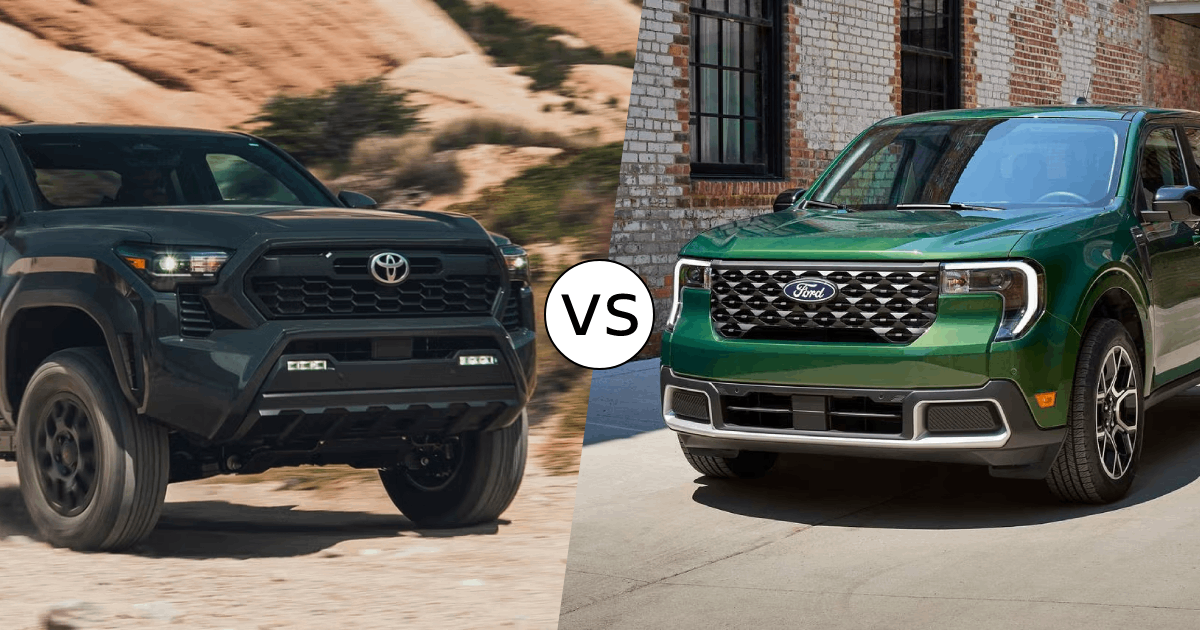
The 2026 Toyota Tacoma and Ford Maverick serve fundamentally different purposes in the pickup segment. At Longo Toyota, we help buyers understand this key distinction: the Tacoma delivers genuine truck capability with proven off-road credentials and serious towing capacity, while the Maverick functions as a compact urban pickup prioritizing efficiency over heavy-duty performance. Your choice depends on whether you need a rugged workhorse for demanding terrain and substantial loads, or a practical daily driver with occasional hauling capability.
2026 Toyota Tacoma vs Ford Maverick: Understanding Two Different Trucks
Comparing the Toyota Tacoma vs Ford Maverick means recognizing these aren’t direct competitors. The Tacoma targets buyers who need real off-road capability and heavy-duty performance. Body-on-frame construction and available 4WD systems make it the pick for serious trail running and towing substantial loads.
The Maverick serves urban drivers who want truck versatility in compact dimensions. Unibody construction and standard hybrid powertrain focus on efficiency and maneuverability rather than maximum capability.
Power and Performance Comparison
Engine Options and Specifications
The 2026 Toyota Tacoma delivers substantially more power across its lineup. Here’s how the engines stack up:
| Feature | 2026 Toyota Tacoma | 2026 Ford Maverick |
| Base Engine | Turbocharged 2.4L 4-cyl, 228 hp, 243 lb-ft | 2.5L 4-cyl hybrid, 191 hp |
| Higher Output Options | Up to 278 hp / 317 lb-ft (most trims); i-Force hybrid up to 326 hp / 465 lb-ft | Turbocharged 2.0L EcoBoost, 250 hp / 280 lb-ft |
| Transmission | 8-speed automatic or 6-speed manual | CVT (hybrid); 8-speed automatic (EcoBoost) |
The Tacoma’s turbocharged engine delivers the punch you need for highway merging and trailer towing, especially when navigating Southern California’s mountain grades. The available i-Force hybrid system pushes output to 326 horsepower and 465 lb-ft of torque, providing exceptional capability for demanding conditions.
This performance gap becomes obvious under load. The Tacoma’s powertrain responds with urgency when you’re passing on two-lane roads or accelerating up steep inclines near Angeles National Forest.
Drivetrain Systems
| Feature | 2026 Toyota Tacoma | 2026 Ford Maverick |
| Drivetrain | Rear-wheel drive base; available 4WD with differential locks | Front-wheel drive base; optional all-wheel drive |
| Off-Road Focus | 4WD system optimized for challenging terrain | AWD suited for typical tasks |
The Tacoma’s available part-time 4WD system includes a two-speed transfer case, locking rear differential, and multi-terrain select modes. These features provide serious control when you’re navigating rocky trails or muddy backroads throughout El Monte and the surrounding region.
The Maverick’s intelligent all-wheel drive primarily sends power to the front wheels, engaging the rear automatically when it detects slippage. This setup handles wet pavement and light snow but wasn’t engineered for serious off-road adventures.
Towing, Payload, and Work Capability
Towing capacity reveals the clearest performance gap between these trucks:
| Capability | 2026 Toyota Tacoma | 2026 Ford Maverick |
| Max Towing | Up to 6,500 lbs | Up to 4,000 lbs |
| Max Payload | Up to 1,705 lbs | Up to 1,500 lbs |
| Curb Weight | ~4,145 lbs | ~3,913 lbs |
| Fuel Tank Capacity | 18.2 gallons | 13.8 gallons |
The Tacoma’s 6,500-pound towing capacity handles substantial boat trailers, campers, and equipment trailers with confidence. That’s 62.5% more capability than the Maverick’s 4,000-pound maximum. This difference matters for contractors and outdoor enthusiasts regularly towing heavy loads.
The Tacoma’s 1,705-pound payload rating accommodates building materials, equipment, and gear for extended trips. These numbers qualify the Tacoma as a genuine work truck handling demanding job sites, while the Maverick functions better as a lifestyle vehicle with occasional hauling needs.
We invite you to browse our Tacoma selection and experience these capability differences firsthand.
Off-Road Performance and Trail-Ready Features
The Tacoma’s reputation rests heavily on its off-road prowess. Ground clearance reaches 9.4 inches on base models and increases to 10.6 inches on off-road trims. Approach angles hit 29 degrees while departure angles reach 23.5 degrees, letting you tackle steep obstacles without scraping bumpers. The available crawl control system automatically manages throttle and braking on technical trails.
Off-road enthusiasts appreciate the Tacoma’s available locking rear differential, which ensures power reaches both wheels even when one lifts off the ground. The multi-terrain select system adjusts engine, transmission, and traction control settings for mud, sand, rock, and other challenging surfaces throughout Southern California’s diverse terrain.
The Maverick’s 8.6 inches of ground clearance and lack of low-range gearing limit serious trail options. The truck handles dirt roads and mild trails adequately, but technical terrain quickly exceeds what it can do.
Build Quality and Durability
Construction Differences
| Aspect | 2026 Toyota Tacoma | 2026 Ford Maverick |
| Chassis | Body-on-frame (traditional truck durability) | Unibody (lighter, efficiency-focused) |
| Platform | Shared with Land Cruiser Prado | Compact crossover-based |
Body-on-frame construction gives the Tacoma significant durability advantages. The separate frame and body withstand twisting forces on rough terrain without transferring stress to the cab. This design philosophy has helped Toyota build trucks lasting 200,000 miles and beyond.
The Maverick’s unibody construction reduces weight and improves handling but sacrifices some long-term durability under harsh conditions. At the nation’s largest Toyota dealership, we see Tacomas return for routine maintenance with remarkably few major repairs even after years of hard use.
Cabin Design
The Tacoma’s cabin emphasizes ruggedness and utility. Front seats feel firm and supportive for long drives, with available leather seating and upgraded trim materials adding comfort in higher packages. The Double Cab configuration provides functional rear seating, while the deeper bed suits tall cargo better than the Maverick’s design.
Storage solutions prioritize different needs. The Tacoma’s bed depth accommodates equipment and gear that won’t fit in the Maverick’s shallower design, making it superior for work and recreational hauling.
Technology and Safety Features
The Tacoma comes with Toyota’s Audio Multimedia system on an 8-inch or 14-inch touchscreen depending on trim level. Wireless smartphone integration comes standard, and the available JBL audio system delivers impressive sound quality.
Toyota Safety Sense includes pre-collision warning, automatic emergency braking, lane departure alert, and adaptive cruise control as standard equipment. Both trucks offer comparable safety technology, with available 360-degree camera systems making maneuvering easier.
The Tacoma adds off-road specific technology like a multi-terrain monitor, which uses cameras to show wheel positioning and obstacles around the truck. This feature proves invaluable on tight trails where the Tacoma excels.
Ready to experience these features? Schedule a virtual test drive with our team.
Long-Term Value and Resale
Toyota trucks historically hold their value better than most competitors. Tacomas regularly appear near the top of resale value rankings, with three-year-old models retaining significant percentages of their original price. This strong resale value offsets the higher initial purchase price and makes the Tacoma a smart long-term investment.
The Maverick hasn’t established a resale track record given its recent introduction. The truck’s unique position should support decent resale values, though likely not matching the Tacoma’s legendary retention.
The Tacoma’s proven reliability reputation strengthens its value proposition. While maintenance for more complex 4WD systems requires attention, our service department helps keep costs manageable with competitive pricing and genuine parts.
Which Truck Should You Choose?
The Tacoma makes sense if you regularly venture off-road, tow substantial trailers, or need maximum durability for work purposes. Its proven reliability, superior capability, and strong resale value justify the investment when you’ll actually use these advantages.
The Maverick suits urban drivers wanting truck versatility without truck-sized compromises, particularly those prioritizing efficiency for daily commuting with only occasional hauling needs.
Consider these factors: The Tacoma delivers 62.5% more towing capacity, superior off-road capability with genuine 4WD systems, body-on-frame durability, and legendary resale value. These advantages matter significantly for buyers needing real truck capability rather than compact convenience.
Visit us at Longo Toyota to explore the Tacoma lineup. Get pre-qualified for financing before your visit to streamline the process. We’re located at 3534 North Peck Road in El Monte and open Monday through Sunday from 9 AM to 8 PM. Ready to experience the Tacoma difference? Contact our team today to schedule your test drive and discover why the Tacoma remains the choice for buyers needing genuine truck capability.
Frequently Asked Questions
Which truck tows more weight?
The Tacoma tows up to 6,500 pounds compared to the Maverick’s 4,000-pound maximum, providing 62.5% more capability when properly equipped.
Can the Maverick handle serious off-roading?
The Maverick handles light trails and dirt roads but lacks the ground clearance, low-range gearing, and locking differentials needed for technical terrain. The Tacoma excels in serious off-road conditions.
Which truck offers better long-term reliability?
Toyota’s reputation for reliability and the Tacoma’s proven track record suggest excellent long-term durability. The Maverick uses reliable components but hasn’t established a comparable track record.
How does payload capacity compare?
The Tacoma offers 1,705 pounds maximum payload versus the Maverick’s 1,500 pounds. The Tacoma’s superior capacity handles demanding work and recreational loads more effectively.
What makes the Tacoma better for work use?
Body-on-frame construction, higher towing and payload ratings, available 4WD with locking differentials, and proven durability make the Tacoma the superior choice for contractors and serious work applications.
Which truck has more cabin space?
The Tacoma provides more spacious, rugged interior design with better rear seat room in Double Cab configurations. The design prioritizes utility and durability over compact efficiency.
Connect with us


- March 2026
- February 2026
- January 2026
- December 2025
- November 2025
- October 2025
- September 2025
- August 2025
- July 2025
- June 2025
- May 2025
- April 2025
- March 2025
- February 2025
- January 2025
- December 2024
- November 2024
- October 2024
- September 2024
- August 2024
- July 2024
- June 2024
- May 2024
- April 2024
- March 2024
- February 2024
- January 2024
- December 2023
- November 2023
- October 2023
- September 2023
- August 2023
- July 2023
- June 2023
- May 2023
- April 2023
- March 2023
- February 2023
- January 2023
- December 2022
- November 2022
- October 2022
- September 2022
- August 2022
- July 2022
- June 2022
- May 2022
- April 2022