


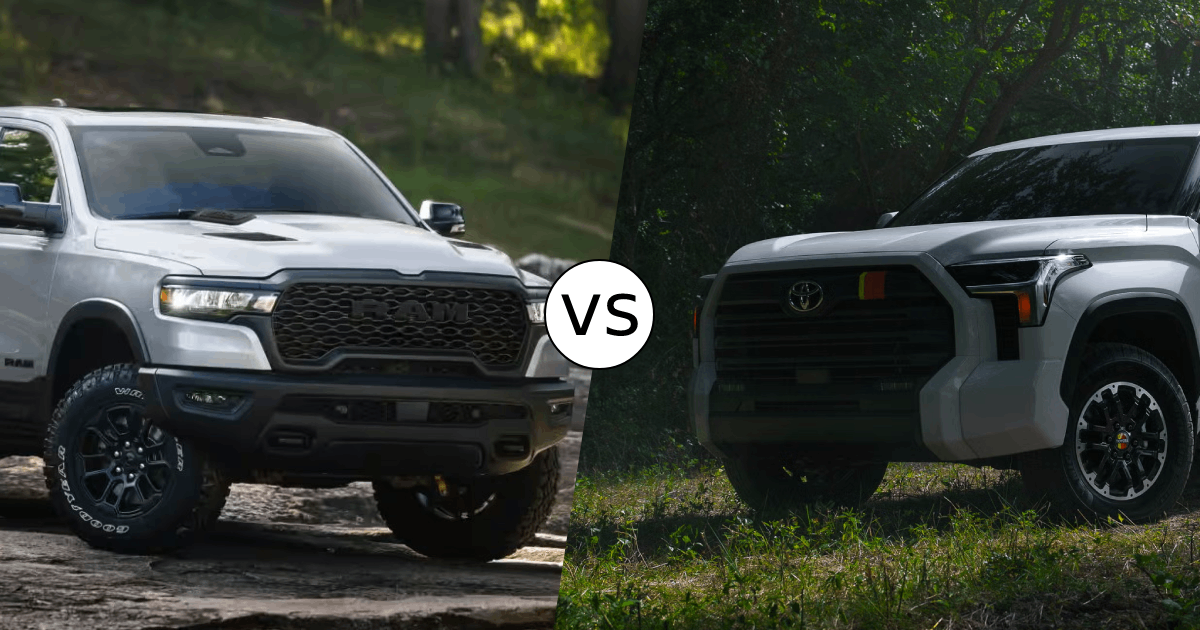
Choosing between the 2026 Toyota Tundra and Ram 1500 comes down to what kind of truck owner you are. The Tundra doubles down on hybrid tech and Toyota’s rock-solid reputation, while the Ram brings serious engine choices and interiors that feel surprisingly premium. Here at Longo Toyota, we see buyers in El Monte wrestling with this decision daily. What it usually comes down to: how much do you value long-term reliability versus having options?
Both companies have been refining their trucks for years, knowing how cutthroat this segment gets. The real differences show up when you dig into powertrains, towing numbers, and what you’ll actually spend over five years of ownership. Let’s break down how these trucks stack up where it counts.
2026 Toyota Tundra vs Ram 1500: Key Differences at a Glance
These trucks take completely different approaches to the full-size market. You’ve got trim levels from bare-bones work trucks to luxury models that cost more than some people’s houses. Base prices stay competitive, but things get interesting when you start adding features.
| Feature | 2026 Toyota Tundra | 2026 Ram 1500 |
| Engine Options | i-FORCE MAX Hybrid (Twin-Turbo V6 + Electric Motor) | Multiple options including HEMI V8, Twin-Turbo I6 |
| Horsepower/Torque | 437 hp / 583 lb-ft (i-FORCE MAX) | Varies by engine (HEMI V8: 395 hp / 410 lb-ft) |
| Maximum Towing Capacity | Up to 12,000 lbs | Up to 11,610 lbs |
| Fuel Economy (EPA Combined) | Approximately 20 mpg (i-FORCE MAX) | Approximately 22 mpg (best configuration) |
| Drivetrain Options | 4WD, AWD | 4WD, AWD |
| Seating Capacity | 5 passengers | 6 passengers |
| Standard Safety Technology | Toyota Safety Sense (all trims) | Available but varies by trim |
Toyota built their whole strategy around hybrid innovation and trucks that just keep running. Ram’s answer? Better ride quality and cabins that make you forget you’re in a work truck. These aren’t small differences. They shape everything from your morning commute to what that truck’s worth in three years.
The Tundra goes all-in on efficiency without giving up capability. Ram gives you choices for whatever specific job you need done. Getting clear on these basics helps you figure out which philosophy matches your needs.
Powertrain Technology and Performance
Here’s where the engineering philosophies really diverge. Ram spreads their bets across multiple engines: the beloved HEMI V8, a slick twin-turbo straight-six, and some other options. Toyota? They put everything into perfecting that i-FORCE MAX hybrid. Bold move, and it mostly pays off.
The transmission story tells you a lot about priorities. Toyota’s 10-speed automatic shifts smoother than Ram’s 8-speed, especially noticeable when you’re cruising at 75 mph or pulling a heavy trailer up the Grapevine. Both work fine, but those extra gears give the Tundra more flexibility across different driving situations.
Your performance priorities should drive this choice. Need maximum engine variety? Ram’s your answer. Want cutting-edge hybrid efficiency with torque that hits instantly? The i-FORCE MAX delivers.
Toyota’s i-FORCE MAX Hybrid Advantage
The i-FORCE MAX represents Toyota’s bet on the future. Twin-turbo 3.5-liter V6 paired with an electric motor, putting out 437 horsepower and a substantial 583 lb-ft of torque. That electric motor changes everything. No turbo lag, instant response, the kind of power delivery that makes conventional engines feel sluggish.
Toyota didn’t just adapt a car hybrid for truck duty. They built this system specifically for towing, hauling, and the punishment trucks endure. The electric motor fills in power gaps that traditional engines can’t handle, which becomes obvious when you’re pulling 10,000 pounds through mountain passes.
The hybrid benefits go deeper than raw numbers. Regenerative braking captures energy when you slow down, boosting efficiency in stop-and-go traffic. The system works seamlessly too. You don’t need to learn special techniques or accept compromises in truck capability.
Engine Options and Efficiency
Fuel economy matters when your truck is also your daily driver. The Ram 1500 manages roughly 20 city / 25-26 highway mpg in its most efficient setup, slightly beating the Tundra’s numbers. Ram’s eTorque mild-hybrid assists without the complexity of Toyota’s full hybrid setup.
The Tundra’s i-FORCE MAX hits approximately 18 city / 23-24 highway mpg. Not the absolute efficiency champion, but respectable considering you’re getting 437 horsepower and 583 lb-ft of torque. That’s serious power for the fuel economy.
Engine choice affects way more than fuel costs. Ram’s variety lets you match exactly what you need, whether that’s basic hauling or maximum performance. Toyota’s focused approach simplifies the decision while delivering solid all-around capability.
Towing Capacity and Work-Ready Capability
Towing capacity shows the Tundra’s engineering focus paying off. Properly equipped, it pulls up to 12,000 pounds versus the Ram 1500’s roughly 11,610-pound max. That nearly 400-pound difference matters when you’re towing big travel trailers or equipment around Southern California’s hills.
Payload tells a different story. The Ram 1500 can carry competitive weight in the bed, which helps if you prioritize cargo over trailer towing. Both handle substantial loads, but their sweet spots align with different types of work.
This often comes down to how you actually use the truck. Regular heavy trailer towing? The Tundra’s capacity advantage and hybrid torque make sense. Mostly loading the bed with materials? Ram’s specs work just as well.
Towing Technology and Integrated Features
Modern towing tech has become expected on full-size trucks. Both the Tundra and Ram 1500 include trailer sway control that automatically corrects dangerous wobbling. Integrated brake controllers handle trailer brakes without needing aftermarket installations.
Camera systems transform towing operations. Multiple angles help you line up hitches and monitor cargo while driving. What used to be guesswork becomes straightforward, even for occasional towers.
You’ll also find guidance systems that calculate turning radius with trailers attached. Both trucks provide steering suggestions for tight parking lots, reducing stress whether you’re new to towing or just appreciate the help.
Safety Features and Driver Assistance
Safety tech shows a clear philosophical difference. The Toyota Tundra includes Toyota Safety Sense standard across every trim level. Comprehensive driver assistance without expensive option packages. Ram 1500 offers capable safety systems, but many features cost extra on lower trims.
Toyota’s approach means everyone gets protection that competitors reserve for premium models. Lane departure alerts, adaptive cruise control, automatic emergency braking. All standard on every Tundra, reflecting Toyota’s belief that safety shouldn’t be optional.
Ram packages safety differently. The systems are good when you get them, but buyers often need higher trims or option packages to match what comes standard on the Tundra. This creates real cost differences when you’re building comparable trucks.
Toyota Safety Sense Standard Equipment
Toyota Safety Sense bundles multiple active safety features. Pre-collision warning with pedestrian detection helps prevent urban accidents. Dynamic radar cruise control maintains safe following distances on highways, reducing fatigue during long drives.
Lane departure alert with steering assist provides gentle lane-centering help. The system maintains natural driving feel while preventing unintended drift. These subtle assists prove valuable during momentary distractions or fatigue.
Standard inclusion across all Tundra trims appeals to safety-focused buyers and families. You don’t need to compromise your budget to get protection, which sets Toyota apart from competitors who reserve safety features for expensive packages.
Crash Test Ratings and Structural Design
Both trucks earn solid ratings from independent safety organizations. Strong frame designs and strategic crumple zones protect occupants during impacts. The Tundra’s structural engineering reflects Toyota’s reputation for building trucks that survive extreme conditions.
Ram 1500 balances safety with ride quality through sophisticated suspension design. Good handling characteristics prevent accidents as much as crash protection helps survive them. The comfortable ride doesn’t compromise structural integrity.
Frame strength matters beyond crash protection. Both trucks must handle towing stress, payload weight, and off-road punishment throughout their service lives. Build quality and durability remain areas where Toyota traditionally excels.
Reliability, Resale Value, and Long-Term Ownership
Toyota’s reliability reputation gives the Tundra clear advantages in long-term ownership. This isn’t just marketing; it translates directly to higher resale values. Historical data and owner experiences consistently favor Toyota in reliability comparisons.
The Ram 1500 offers compelling features and performance but hasn’t matched Toyota’s legendary dependability status. Modern Rams prove more reliable than previous generations, but perception affects resale values even when actual reliability differences narrow.
Reliability influences total ownership costs beyond purchase price. Trucks that need fewer repairs and hold stronger resale values ultimately cost less to own. These factors matter more than initial pricing if you’re planning to keep the truck for years.
Predicted Reliability and Maintenance Costs
Maintenance costs stay reasonable for both trucks with proper service. The Tundra’s proven powertrain may lead to lower expenses over time. Hybrid components in the i-FORCE MAX system show good reliability, with Toyota’s warranty coverage protecting against expensive repairs.
Ram’s diverse engine options could increase maintenance complexity down the road. However, modern engineering has improved reliability across all their powertrains. Regular service according to manufacturer schedules keeps both trucks running smoothly.
Usage patterns heavily influence actual maintenance expenses. Trucks used for heavy towing need more frequent service than those driven mainly for commuting. Both manufacturers provide detailed service schedules that help owners plan costs.
Resale Value and Warranty Protection
The Tundra typically holds value better than the Ram 1500, backed by strong brand loyalty and reliability perceptions. Toyota trucks often command higher percentages of original price after five years. This advantage makes the initial investment more justifiable when considering total ownership costs.
Both manufacturers offer competitive warranty packages protecting the initial ownership years. Coverage includes bumper-to-bumper and powertrain warranties extending beyond basic terms. Toyota’s reputation for straightforward warranty service adds value beyond written coverage.
Certified pre-owned programs provide additional protection for used truck buyers. Both Toyota and Ram offer extended warranties and vehicle inspections that reduce purchase risk. These programs help maintain resale values by providing buyer confidence.
Interior Quality and Technology Integration
The Ram 1500 earns recognition for upscale interiors that rival luxury vehicles. Large touchscreens, premium materials, refined design create sophisticated environments. The cabin feels more expensive than the pricing suggests, appealing to buyers who spend serious time in their trucks.
The Tundra offers comfortable, functional interiors that prioritize durability. While not matching Ram’s luxury feel, Toyota’s cabin provides solid tech features and ergonomic controls. Design emphasizes practicality that truck buyers often value most.
Technology integration varies between competitors. Ram’s Uconnect system gets praise for intuitive operation and responsive touchscreens. Toyota’s infotainment proves capable without feeling cutting-edge. Both support Apple CarPlay and Android Auto, ensuring modern connectivity.
Which Full-Size Truck Should You Choose?
This decision comes down entirely to your priorities. We recommend the 2026 Toyota Tundra for buyers seeking reliable, efficient trucks with strong resale value and superior towing capacity. The i-FORCE MAX hybrid’s 437 horsepower and 583 lb-ft of torque, combined with 12,000-pound towing capacity, make it ideal for serious work and Southern California’s demanding conditions. Standard Toyota Safety Sense across all trims and proven durability enhance long-term value.
The Ram 1500 appeals to buyers who prioritize engine variety and luxury appointments. Diverse powertrains allow precise capability matching, while upscale interiors and refined ride quality enhance daily driving comfort.
Both trucks excel in different ways, making them competitive full-size choices. The Tundra leads in reliability, resale value, and towing capacity. Ram counters with performance options and premium features. Your specific needs determine which strengths matter most.
Experience the 2026 Tundra at Longo Toyota
At Longo Toyota in El Monte, we help Southern California buyers experience the 2026 Tundra firsthand. As the nation’s largest Toyota dealership, our 50-acre campus includes an extensive showroom where you can compare configurations and explore the i-FORCE MAX hybrid’s capabilities. Start with a virtual test drive to experience the Tundra’s powertrain, or browse our current inventory to find your ideal truck.
Contact our sales team at 626-539-2113 to schedule your test drive and discover why the Tundra sets standards in the full-size truck segment. Whether you need maximum towing capacity for work or reliable capability for weekend adventures, experiencing the Tundra on Southern California roads helps you understand what sets it apart.
Connect with us


- February 2026
- January 2026
- December 2025
- November 2025
- October 2025
- September 2025
- August 2025
- July 2025
- June 2025
- May 2025
- April 2025
- March 2025
- February 2025
- January 2025
- December 2024
- November 2024
- October 2024
- September 2024
- August 2024
- July 2024
- June 2024
- May 2024
- April 2024
- March 2024
- February 2024
- January 2024
- December 2023
- November 2023
- October 2023
- September 2023
- August 2023
- July 2023
- June 2023
- May 2023
- April 2023
- March 2023
- February 2023
- January 2023
- December 2022
- November 2022
- October 2022
- September 2022
- August 2022
- July 2022
- June 2022
- May 2022
- April 2022