


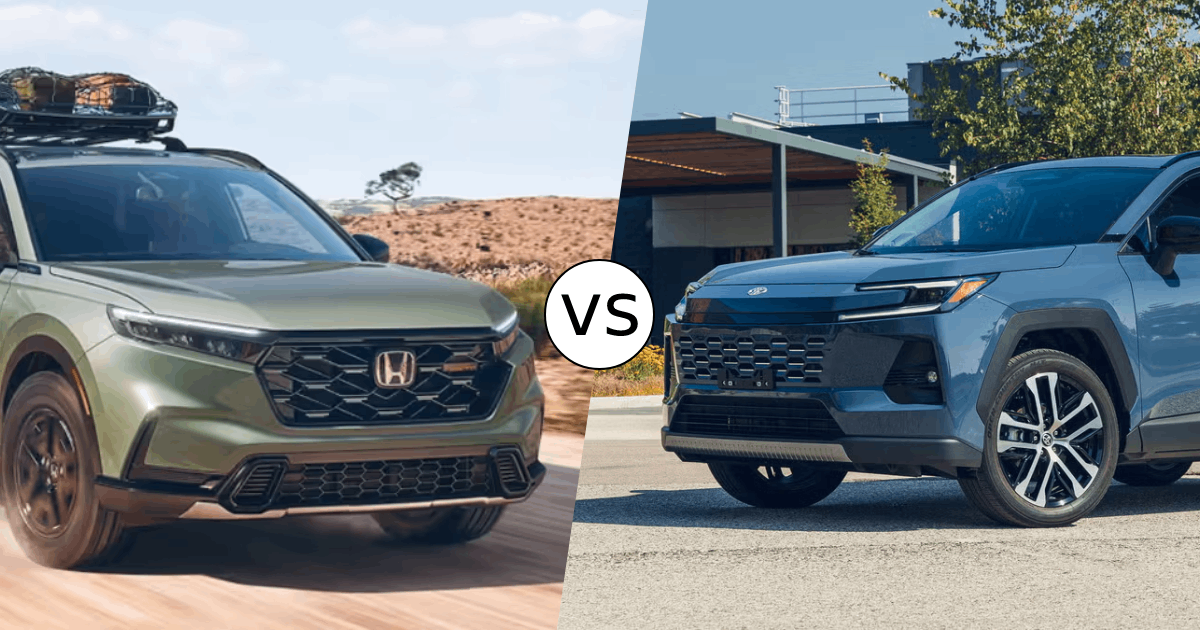
Walk into any dealership these days and you’ll hear the 2026 Toyota RAV4 vs 2026 Honda CR-V debate constantly. Both SUVs have built loyal followings, but Toyota just made a bold move that changes everything. The entire RAV4 lineup went hybrid-only. No gas engine option. No choice to make. It’s hybrid power across the board.
Honda took a different path with the CR-V, keeping both traditional and hybrid options available. Want the familiar turbocharged engine? You got it. Prefer hybrid efficiency? That’s there too. This flexibility worked before, but the automotive world is racing toward electrification faster than ever. Toyota jumped ahead by going all-in on hybrid technology, setting up the RAV4 for buyers who want proven fuel savings without dealing with charging infrastructure. Ready to explore our new Toyota inventory? Let’s see what separates these popular SUVs.
2026 Compact SUV Showdown: RAV4’s All-Hybrid Revolution vs. CR-V
Toyota didn’t just add a few hybrid models to the 2026 RAV4 lineup. They completely rewrote the playbook. Every single RAV4 now runs with electric assistance, no exceptions. This bold move demonstrates Toyota’s confidence in their hybrid tech. While other manufacturers are still figuring out electrified systems, Toyota has been perfecting hybrids across millions of vehicles globally. That experience really shows in how smoothly the RAV4’s hybrid system operates.
HEV Trim Lineup: Power and Efficiency
The standard hybrid trims span from the practical LE to the fully-loaded XSE, all using a 2.5L hybrid system that produces 226 hp with FWD or 236 hp with AWD. Meanwhile, the CR-V’s hybrid system delivers 204 hp from its 2.0L setup, while gas-only CR-V models manage just 190 hp from their 1.5L turbo engine.
The 2026 RAV4 HEV lineup covers LE, XLE Premium, Limited, Woodland, SE, and XSE trims. The LE handles what most families need: dependable transportation, excellent gas mileage, and Toyota’s famous durability. Step up through the trim levels and you’ll find genuine improvements like better interior materials, enhanced safety technology, or upgraded infotainment. The brilliant part about going all-hybrid? You get outstanding fuel economy regardless of which trim appeals to you.
PHEV Trims: Plug-In Performance
The plug-in RAV4 models take efficiency to another level with 324 hp and standard AWD across SE, XSE, Woodland, and GR SPORT variants. These PHEV models deliver up to 54 miles of all-electric driving range on the SE trim, which works perfectly for drivers with predictable daily commutes around Southern California who can plug in at home nightly. Running errands without using any gas creates real savings over time.
The GR SPORT variant adds some personality to the plug-in lineup, mixing environmental benefits with sportier suspension tuning and aggressive styling. It proves you don’t have to sacrifice driving excitement when choosing efficiency.
2026 Honda CR-V: Gas and Hybrid Configurations
Honda takes a different approach with the 2026 CR-V by maintaining both turbocharged gas and hybrid powertrains. Base LX, EX, and EX-L trims use the traditional 1.5L turbo engine, while efficiency-focused buyers can upgrade to Sport Hybrid, TrailSport Hybrid, Sport-L Hybrid, or Sport Touring Hybrid variants.
The CR-V hybrid has received positive reviews for smooth operation and solid fuel economy. Honda’s system performs well and provides meaningful efficiency gains over gas-only models. But splitting development between conventional and hybrid powertrains keeps Honda from becoming a pure efficiency champion in this Honda CR-V vs Toyota RAV4 battle. The market is clearly moving toward electrification, and the RAV4’s complete hybrid commitment places it ahead of that trend.
Powertrain Efficiency: Why RAV4’s All-Hybrid Strategy Wins
Comparing the 2026 RAV4 vs CRV efficiency numbers shows Toyota’s clear edge. EPA estimates demonstrate the RAV4 hybrid’s impressive fuel economy across its lineup:
- FWD LE/SE/XLE Premium: 47 city / 40 highway / 43 combined mpg
- AWD LE/SE: 46 city / 39 highway / 42 combined mpg
- AWD XLE Premium: 47 city / 40 highway / 43 combined mpg
- AWD XSE/Limited: 44 city / 39 highway / 42 combined mpg
- Woodland: 41 city / 35 highway / 38 combined mpg
The CR-V hybrid’s EPA estimates tell a different story:
- FWD hybrids: 43 city / 36 highway / 40 combined mpg
- AWD Sport/Sport-L/Sport Touring: 40 city / 34 highway / 37 combined mpg
- TrailSport AWD: 38 city / 33 highway / 35 combined mpg
The RAV4 beats the CR-V hybrid in every single configuration, with some trims delivering up to 5 mpg better city efficiency and up to 3 mpg better combined efficiency. For drivers logging serious annual mileage around El Monte and across Southern California, these differences add up to substantial fuel savings.
Toyota’s advantage goes beyond just numbers. The RAV4 hybrid system has been refined through multiple generations, producing real-world fuel economy that actually shows up in your monthly gas expenses. Toyota didn’t rush their hybrid development. They invested time to perfect it, and that patience delivers a more polished, better-integrated system throughout the lineup.
At Longo Toyota, the nation’s largest Toyota dealership, we consistently see RAV4 hybrid owners reporting fuel economy that meets or beats EPA estimates. That real-world performance builds trust in the technology.
Interior Design, Comfort, and Technology Compared
Cabin Quality and Passenger Space
Climb inside the 2026 Honda CRV vs 2026 Toyota RAV4 and you’ll see two distinct philosophies. The CR-V focuses on upscale materials and a premium feel, creating interiors that seem more expensive than their actual prices.
The RAV4 goes for a more durable approach without compromising comfort. Materials feel built to withstand years of use, which makes sense for an SUV many owners take camping and on family adventures. Passenger space works well in both vehicles. The CR-V provides slightly more rear legroom, while the RAV4 offers generous cargo space for groceries, sports equipment, and weekend trip supplies. Both SUVs seat five passengers comfortably.
Infotainment and Safety Features
The RAV4 comes with a standard 10.5-inch touchscreen on most trims, plus an available 12.9-inch upgrade that includes JBL audio. The CR-V uses a 9-inch touchscreen on all trims. The RAV4’s larger available screen creates a more modern, intuitive interface with better visibility.
Safety technology comes standard on both vehicles. The RAV4 includes Toyota Safety Sense 4.0 across all trims, while the CR-V features Honda Sensing. Both systems provide automatic emergency braking, lane departure warnings, and adaptive cruise control. The RAV4’s Toyota Safety Sense suite has been refined across millions of vehicles, building its reputation for reliable performance.
Long-Term Value: Reliability, Resale, and Ownership Costs
When examining RAV4 vs CR V reliability, Toyota’s track record provides a decisive edge. The RAV4 consistently ranks among the most dependable vehicles in reliability surveys, earning this reputation by building SUVs that simply keep running. This reliability directly impacts your finances through fewer surprise repairs and lower maintenance costs down the road.
The CR-V has developed its own solid reliability reputation. However, Toyota’s hybrid systems have proven themselves across millions of miles in every climate and driving situation imaginable. That extensive real-world validation gives buyers confidence that RAV4 hybrids will perform consistently long after the warranty expires.
Resale value mirrors reliability trends, and the RAV4 holds its value exceptionally well. Used car buyers consistently pay premium prices for RAV4 models because they understand they’re purchasing a vehicle with plenty of life remaining. This strong resale performance means RAV4 owners recover more of their initial investment when it’s time to upgrade, effectively reducing total ownership costs.
The Verdict: Why the 2026 RAV4 Is the Smarter Choice
This 2026 Toyota RAV4 vs Honda CRV comparison shows a clear winner for buyers prioritizing efficiency, reliability, and long-term value. Toyota’s all-hybrid commitment positions the RAV4 as the best compact hybrid SUV for drivers ready to embrace proven electrified technology.
The CR-V remains a capable, comfortable SUV. Its divided focus between gas and hybrid powertrains prevents complete commitment to either approach though. In a market sprinting toward electrification, the RAV4’s hybrid-only strategy looks increasingly brilliant.
Fuel costs alone justify choosing the RAV4, especially for drivers covering significant annual mileage. The savings accumulate quickly, offsetting any price premium for hybrid technology. Combined with Toyota’s reliability reputation and strong resale values, the RAV4 delivers a compelling total ownership package.
Experience the RAV4 at Longo Toyota
For Southern California residents considering the Honda CRV and RAV4 comparison, visiting Longo Toyota provides hands-on access to the complete RAV4 lineup. Our experienced team at our El Monte, CA location can explain differences between HEV and PHEV models, help identify which trim level fits your needs, and discuss financing options that make switching to hybrid power more affordable.
Browse our current RAV4 selection online or schedule a test drive by calling 626-539-2113 during our convenient hours, Monday through Sunday from 9 AM to 8 PM.
Longo Toyota’s state-of-the-art service facilities keep your RAV4 running perfectly for years to come. Factory-trained technicians use genuine Toyota parts and follow manufacturer specifications to maintain your hybrid’s efficiency and reliability. Schedule service Monday through Friday from 7 AM to 7 PM or Saturday from 7 AM to 5:30 PM by calling 626-539-2126.
Frequently Asked Questions
What is better, Honda CR-V or Toyota RAV4?
The RAV4 wins thanks to its all-hybrid lineup, superior reliability record, and stronger resale value. The CR-V offers a more premium interior feel and slightly more rear-seat space, but the RAV4’s proven hybrid technology and lower long-term ownership costs make it the smarter investment.
How does the RAV4 hybrid vs CR-V hybrid compare?
The RAV4 hybrid benefits from Toyota’s decades of hybrid expertise, resulting in smoother operation and proven long-term reliability. EPA estimates show the RAV4 achieving up to 48 city mpg compared to the CR-V hybrid’s 43 city mpg in comparable configurations.
Is the Toyota RAV4 vs Honda CR-V price competitive?
Pricing varies by trim level and available incentives, but both SUVs compete in similar ranges. The RAV4’s standard hybrid powertrain may carry a slight premium over base CR-V gas models, but lower fuel costs and stronger resale values offset that difference over time.
Which offers better fuel economy, the 2026 RAV4 vs CRV?
The RAV4’s all-hybrid lineup delivers superior fuel economy across all trim levels compared to the CR-V’s gas-only models. When comparing hybrid versions, the RAV4 achieves better efficiency thanks to Toyota’s more mature hybrid technology, with some configurations offering up to 5 mpg better city fuel economy and up to 3 mpg better combined fuel economy.
How do Honda hybrid vs Toyota hybrid systems compare?
Toyota’s hybrid systems benefit from more extensive development and real-world testing across millions of vehicles worldwide. While Honda’s hybrids work well, Toyota’s experience shows in smoother operation, better long-term reliability, and more consistent efficiency in varied driving conditions.
Should I consider the RAV4 hybrid vs Kia Sportage hybrid?
Both offer compelling hybrid options, but the RAV4’s proven reliability and strong resale value give it an edge for buyers prioritizing long-term value. Toyota’s reputation for dependability makes the RAV4 a safer bet for minimizing ownership headaches.
Connect with us


- July 2026
- June 2026
- May 2026
- April 2026
- March 2026
- February 2026
- January 2026
- December 2025
- November 2025
- October 2025
- September 2025
- August 2025
- July 2025
- June 2025
- May 2025
- April 2025
- March 2025
- February 2025
- January 2025
- December 2024
- November 2024
- October 2024
- September 2024
- August 2024
- July 2024
- June 2024
- May 2024
- April 2024
- March 2024
- February 2024
- January 2024
- December 2023
- November 2023
- October 2023
- September 2023
- August 2023
- July 2023
- June 2023
- May 2023
- April 2023
- March 2023
- February 2023
- January 2023
- December 2022
- November 2022
- October 2022
- September 2022
- August 2022
- July 2022
- June 2022
- May 2022
- April 2022